Artwork
Khulasa, a vizier, sees the daughter of Khassa, another vizier, and covets her, from a Tuti-nama (Tales of a Parrot): Fifty-first Night
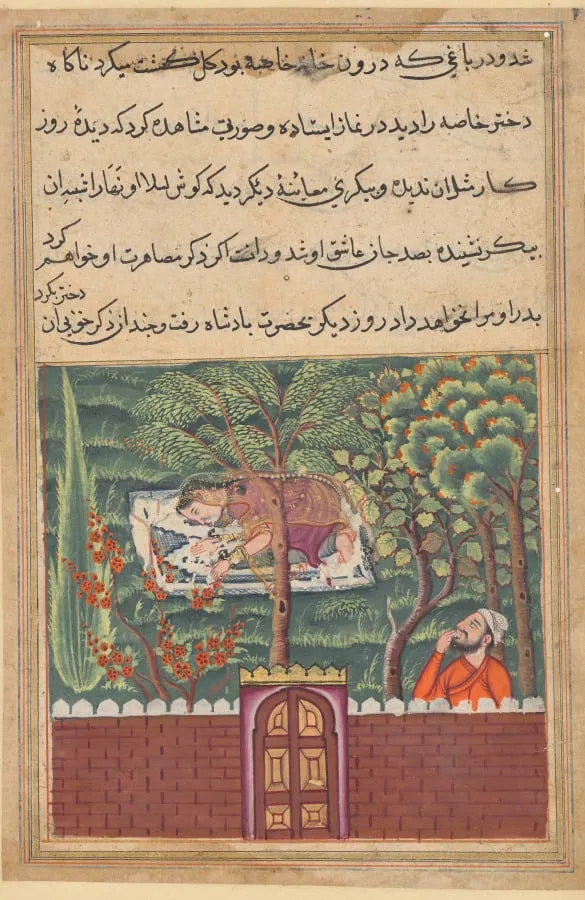
Khulasa, a vizier, sees the daughter of Khassa, another vizier, and covets her, from a Tuti-nama (Tales of a Parrot): Fifty-first Night is an unspecified painting by the Mughal Painting artist Unknown. It dates from 1560 and is held in the collection of the Cleveland Museum of Art.
About this work
The bright colors and tiny details show how artists decorated royal books back then.
You see a man in a garden watching a woman pray on a rug. He touches his finger to his lips, surprised. The woman doesn’t notice him.
This painting comes from a book of parrot tales told in Mughal India. The story says the man falls for her but knows she won’t marry him. The bright colors and tiny details show how artists decorated royal books back then.
To see more like this, look up *Mughal India, court of Akbar (reigned 1556–1605)*.
Overview
This painting illustrates a scene from the Tuti-nama, a collection of moral tales framed by the stories of a talking parrot, commissioned for the Mughal court. Created during the reign of Akbar, it belongs to a series of illustrated manuscripts designed to instruct and entertain royal audiences. The scene captures a moment of quiet tension between two figures in a garden setting, rendered with meticulous detail typical of imperial ateliers.
Subject & Meaning
Khulasa, a vizier, observes Khassa’s daughter in prayer, moved by her piety and grace. His gesture—finger to lips—conveys silent astonishment, not desire, underscoring his recognition of her virtue. The narrative emphasizes moral restraint: though captivated, he acknowledges her chastity and the impossibility of union. The scene functions as a lesson in self-control, aligning with the Tuti-nama’s broader ethical framework.
Technique & Style
Executed in opaque watercolor and gold on paper, the painting displays the refined draftsmanship and luminous palette characteristic of Mughal court illustration. Fine brushwork defines the textures of fabric, foliage, and stone, while the garden’s architectural elements frame the figures with geometric precision. The composition balances stillness and subtle emotion, avoiding dramatic action in favor of psychological nuance.
History & Provenance
The painting originated in the imperial workshop of Akbar’s court between 1560 and 1580, likely as part of a multi-volume manuscript commissioned to translate and illustrate Persian tales. It was produced by a team of artists under royal supervision, with each folio intended for the emperor’s personal library. The manuscript’s survival reflects its enduring value within Mughal cultural archives.
Context
The Tuti-nama was adapted from a 14th-century Arabic text and reimagined for Mughal audiences as a vehicle for ethical instruction through allegory. Its popularity at Akbar’s court coincided with broader efforts to synthesize Persian, Indian, and Islamic traditions. Illustrated manuscripts like this one served both as artistic prestige objects and tools for moral education among the elite.
Legacy
This work exemplifies the synthesis of narrative depth and visual sophistication that defined Mughal manuscript painting. Its influence extended to later imperial projects, shaping the visual language of courtly storytelling in South Asia. Surviving folios from the Tuti-nama remain key references for understanding the intersection of literature, ethics, and art in 16th-century India.
Artist & collection

 Domestic Scene
 Giacomo and Cardinal Marco, investing Andrea, Abbot of San Zeno, with his Benefice
 The Nymph of Fontainebleau
 Portrait of a Woman
 Madonna and Child with Saints in the Enclosed Garden
 Venus and Minerva
 Family Group of Four on Sofa
 Wall painting from Room H of the Villa of P. Fannius Synistor at Boscoreale
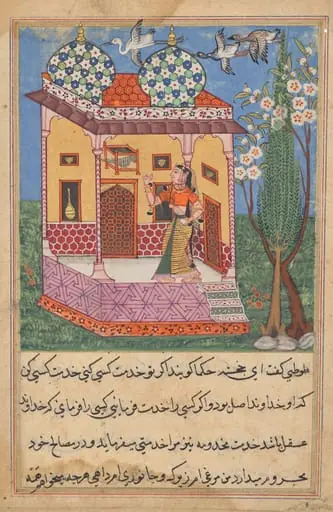 The Parrot Addresses Khujasta at the Beginning of the Twenty-sixth Night, from a Tuti-nama (Tales of a Parrot)
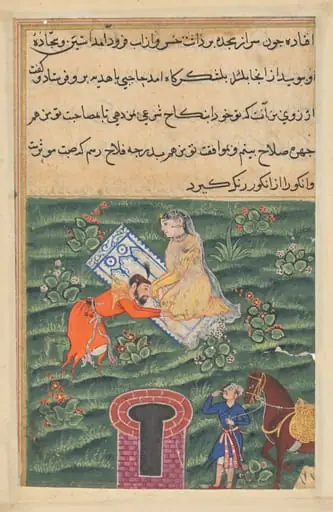 Khusrau, the King of Kings, pays homage to the pious daughter of Khassa, from a Tuti-nama (Tales of a Parrot): Fifty-first Night
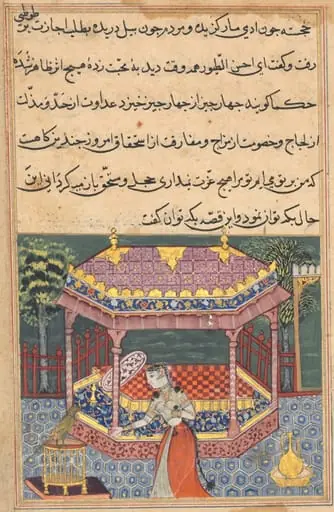 The parrot addresses Khujasta at the beginning of the thirty-seventh night, from a Tuti-nama (Tales of a Parrot)
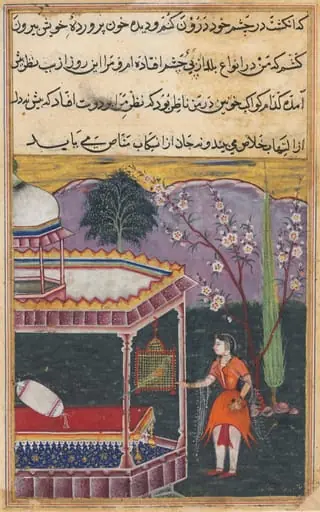 The Parrot Addresses Khujasta at the Beginning of the Eighth Night, from a Tuti-nama (Tales of a Parrot)
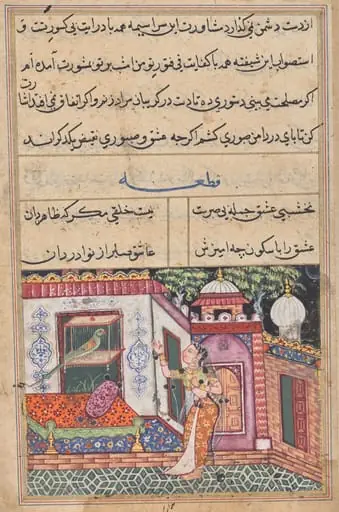 The Parrot Addresses Khujasta at the Beginning of the Eleventh Night, from a Tuti-nama (Tales of a Parrot)
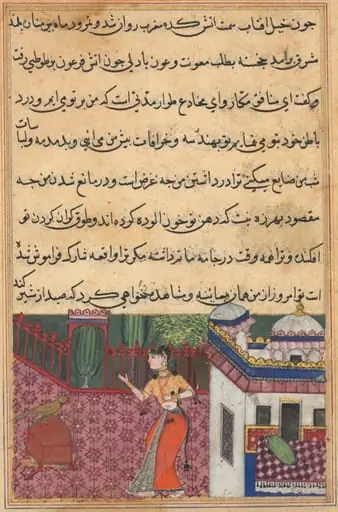 The parrot addresses Khujasta at the beginning of the thirty-third night, from a Tuti-nama (Tales of a Parrot)
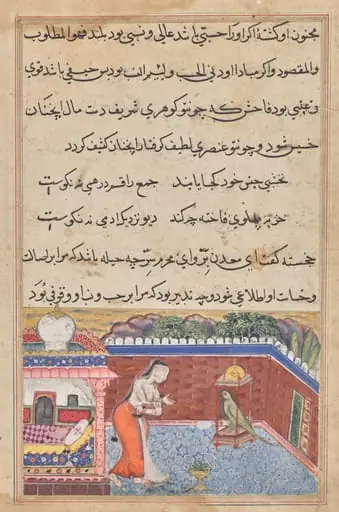 The parrot addresses Khujasta at the beginning of the thirty-first night, from a Tuti-nama (Tales of a Parrot)