Artwork
Malabar weaver
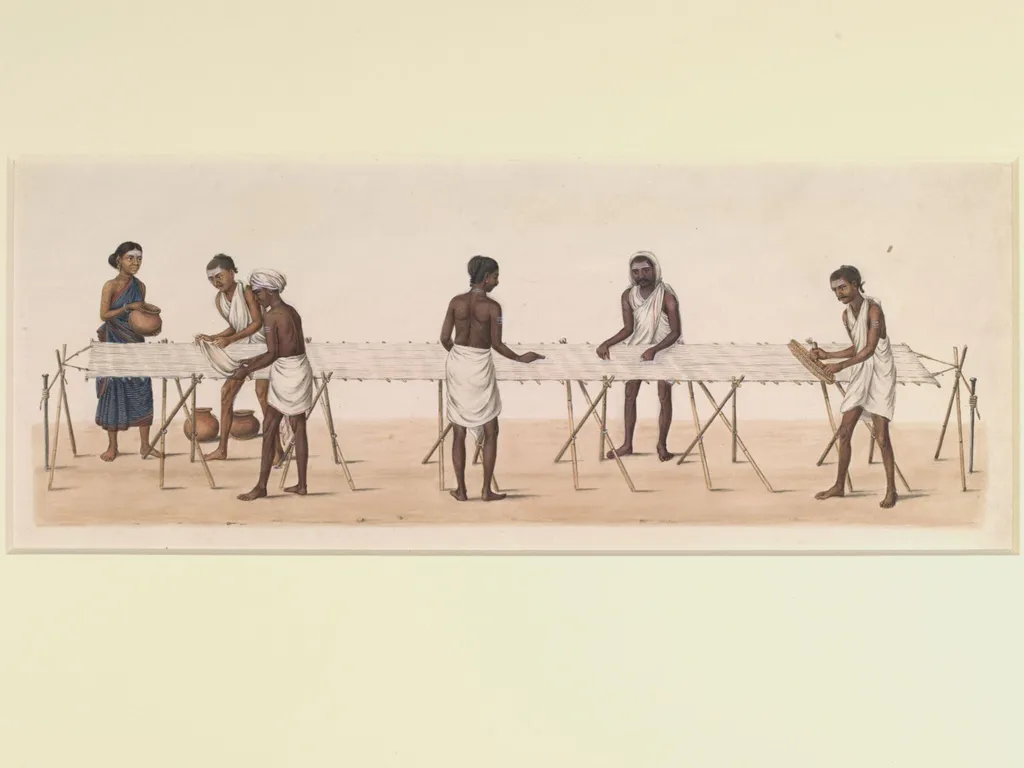
Malabar weaver is a paint painting by the Patna School of Painting artist Unknown. It dates from 1840 and is held in the collection of the Victoria and Albert Museum.
About this work
Overview
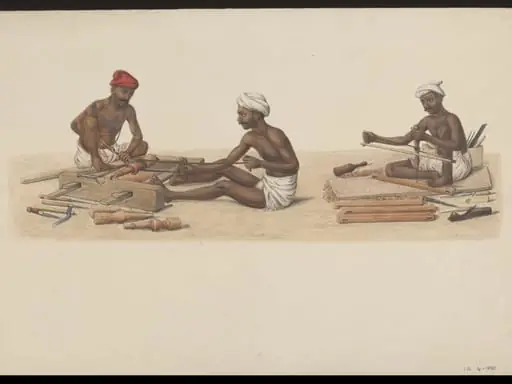
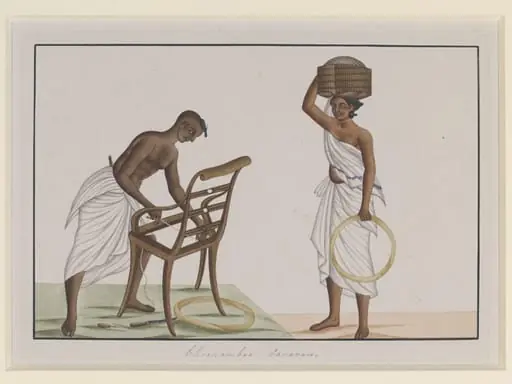
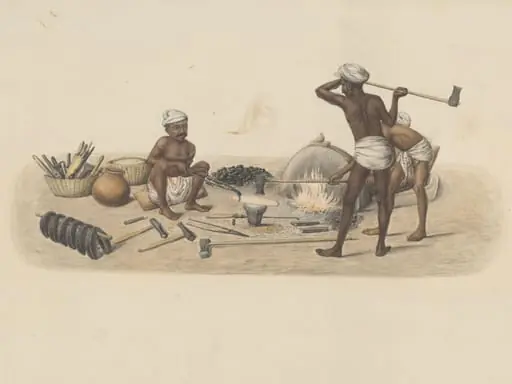
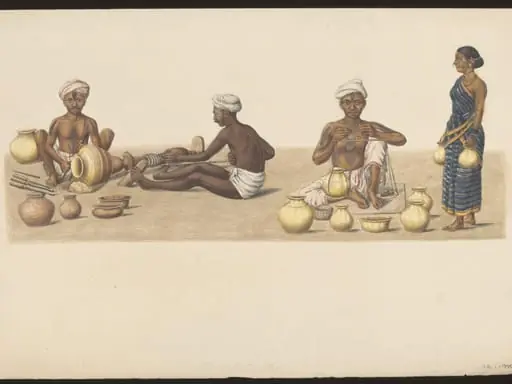
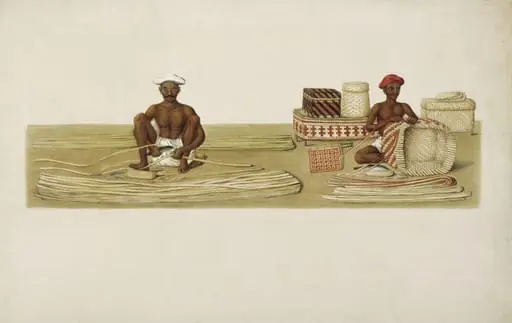
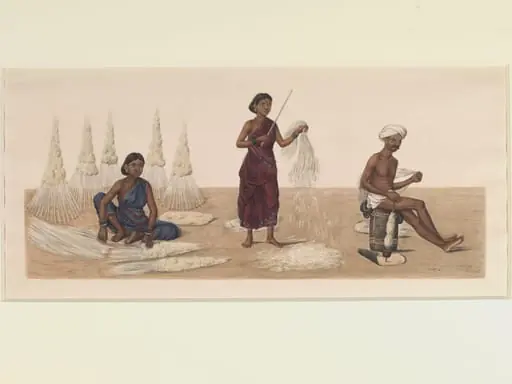
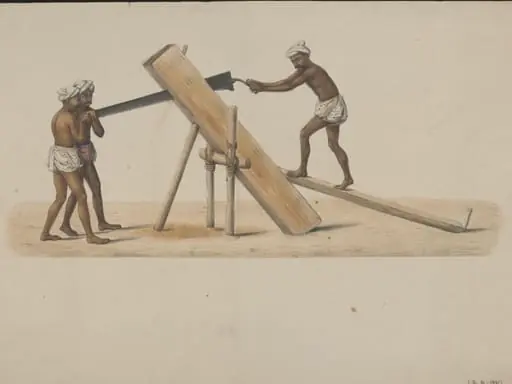
The work titled *Malabar Weaver* is a mid‑nineteenth‑century painting that forms part of a series of sixteen images portraying various regional occupations. Executed in 1840 by an unidentified hand, the canvas records a group of weavers at work in the Malabar area, offering a visual snapshot of textile production practices of that era.
Subject & Meaning
The composition shows six barefoot figures arranged in a line, each attending to long wooden frames stretched between poles. Dressed in plain white garments, they concentrate on the act of weaving; a woman on the left, distinguished by a blue sari, holds an object in her hands. The sparse floor and a few nearby clay pots emphasize the utilitarian setting.
Technique & Style
The artist employs a restrained palette of whites, browns and muted blues, allowing subtle shifts of light to model the skin and fabrics. Soft tonal transitions create a calm atmosphere, while the careful rendering of the wooden frames and woven threads conveys a sense of quiet, methodical labor.
History & Provenance
Created in 1840, the painting’s authorship remains unknown. It was produced as part of a larger documentary series intended to catalog regional professions across India. The work eventually entered the collection of the Victoria and Albert Museum, where it is displayed alongside the other occupational studies from the same series.
Context
The series to which this canvas belongs reflects a colonial interest in documenting indigenous crafts and economies. By focusing on the Malabar weaving tradition, the painting records a specific textile technique that contributed to local trade and cultural identity during the early nineteenth century.
Artist & collection

 Domestic Scene
 Giacomo and Cardinal Marco, investing Andrea, Abbot of San Zeno, with his Benefice
 The Nymph of Fontainebleau
 Portrait of a Woman
 Madonna and Child with Saints in the Enclosed Garden
 Venus and Minerva
 Family Group of Four on Sofa
 Wall painting from Room H of the Villa of P. Fannius Synistor at Boscoreale