Artwork
Carved marble slab, Coptic 6th-7th century, V&A Museum, London
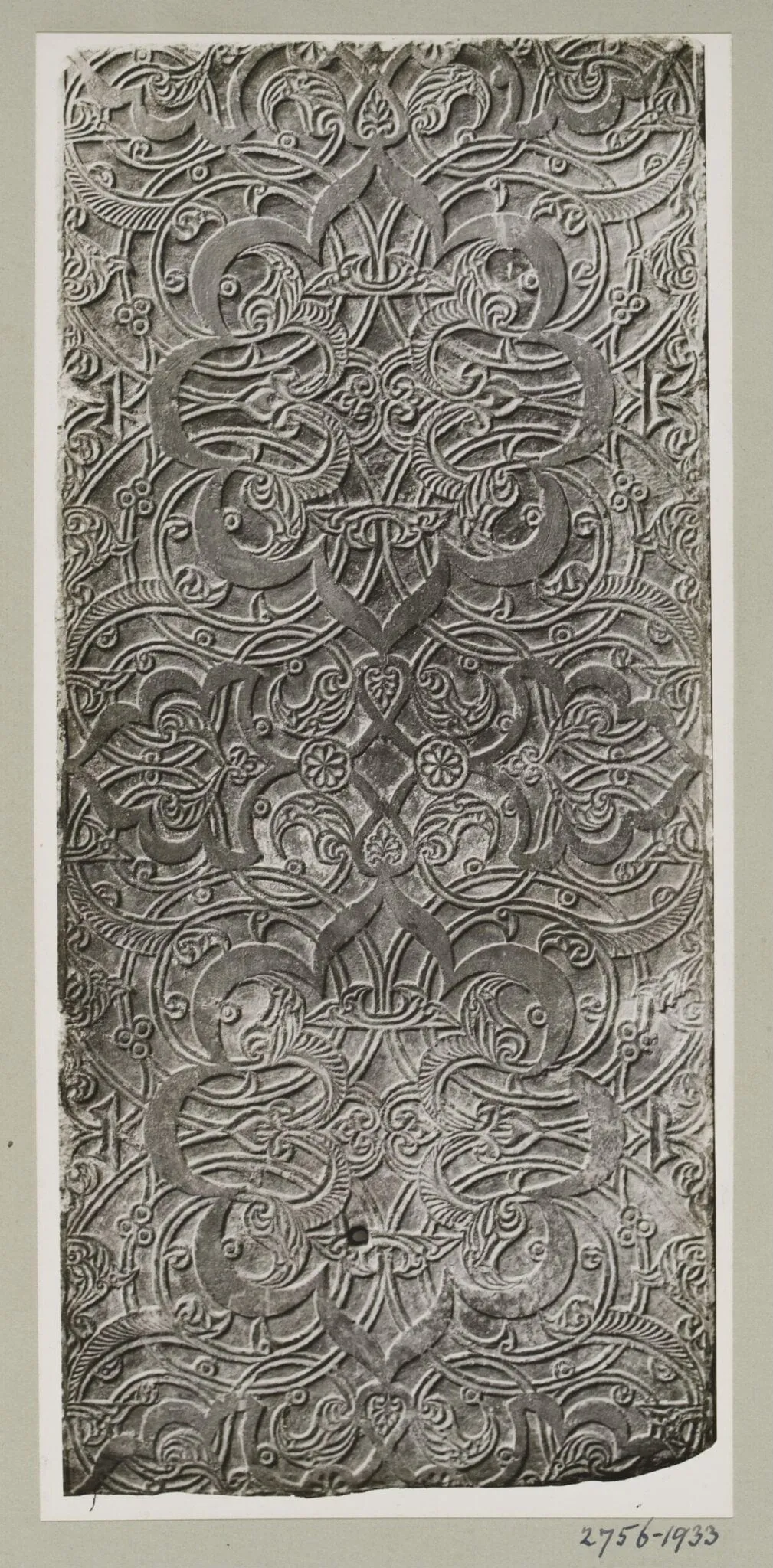
Carved marble slab, Coptic 6th-7th century, V&A Museum, London is a photographic photography by Unknown. It dates from 1934 and is held in the collection of the Victoria and Albert Museum. The image presents a black‑and‑white photograph of a marble slab carved during the Coptic period of the 6th to 7th centuries.
About this work
Overview
The image presents a black‑and‑white photograph of a marble slab carved during the Coptic period of the 6th to 7th centuries. The slab, now part of the Victoria and Albert Museum’s collection in London, is shown in two mounted prints, each capturing the intricate relief work that covers the stone’s surface.
Subject & Meaning
The relief consists of a dense network of intertwined scrolls, stylised foliage, and geometric motifs such as swirls and dotted patterns. While the precise iconography is not identified, the repetitive ornamental scheme reflects the Coptic tradition of decorative abstraction, intended to adorn ecclesiastical or funerary contexts with a sense of order and harmony.
Technique & Style
Carvers employed deep incisions alongside shallower cuts, creating a subtle relief that catches light differently across the marble. The juxtaposition of bold, protruding lines with finer, leaf‑like details produces a balanced visual rhythm, characteristic of early Byzantine‑influenced Coptic stonework.
History & Provenance
The slab originates from a period when Coptic artisans were active in Egypt, adapting classical motifs to Christian symbolism. Although the stone itself dates to the early medieval era, the photograph was taken in the modern era for museum documentation. The V&A acquired the object as part of its broader collection of early Christian art.
Artist & collection

 Domestic Scene
 Giacomo and Cardinal Marco, investing Andrea, Abbot of San Zeno, with his Benefice
 The Nymph of Fontainebleau
 Portrait of a Woman
 Madonna and Child with Saints in the Enclosed Garden
 Venus and Minerva
 Family Group of Four on Sofa
 Wall painting from Room H of the Villa of P. Fannius Synistor at Boscoreale
 Bas-relief portion of friez of fleur de lys in terra cotta
 Geometric composition on vaulting, Abbasid Palace in Citadel, Baghdad
 Schiebedeckel zum Bildnis Ronner (WAF 547 a)
 Ornament Panel: Triton and Two Infant Satyrs
 The Museum Series
 Decorative Panels
 Ornament Panel: Three Children Blowing Horns
 Grinling Gibbons Carving, Oxford
 Untitled
 Untitled
 Oblong Ornament Panel
 Brooch with Tablestones and Winged Griffins Above and at Bottom