Artwork
Diagrams of the Universe: The Two-and-a-Half Continents, the Universe in the Shape of a Person, and the Seven Levels of Hell
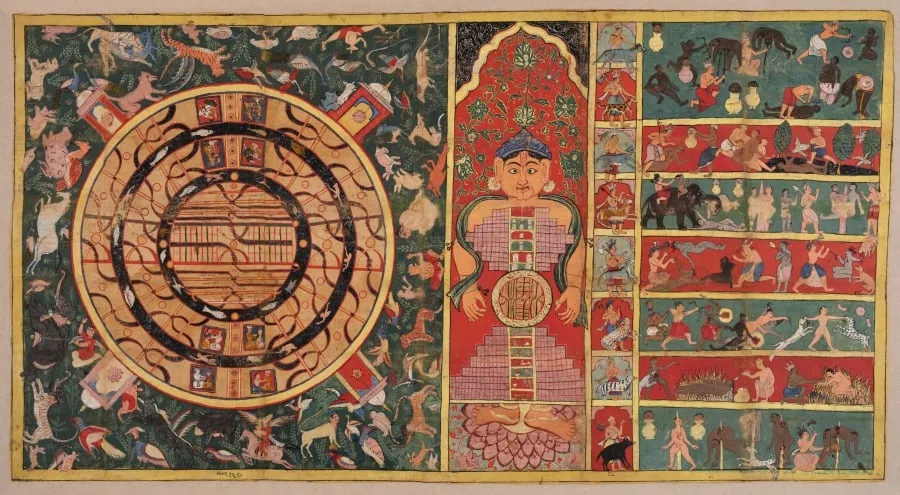
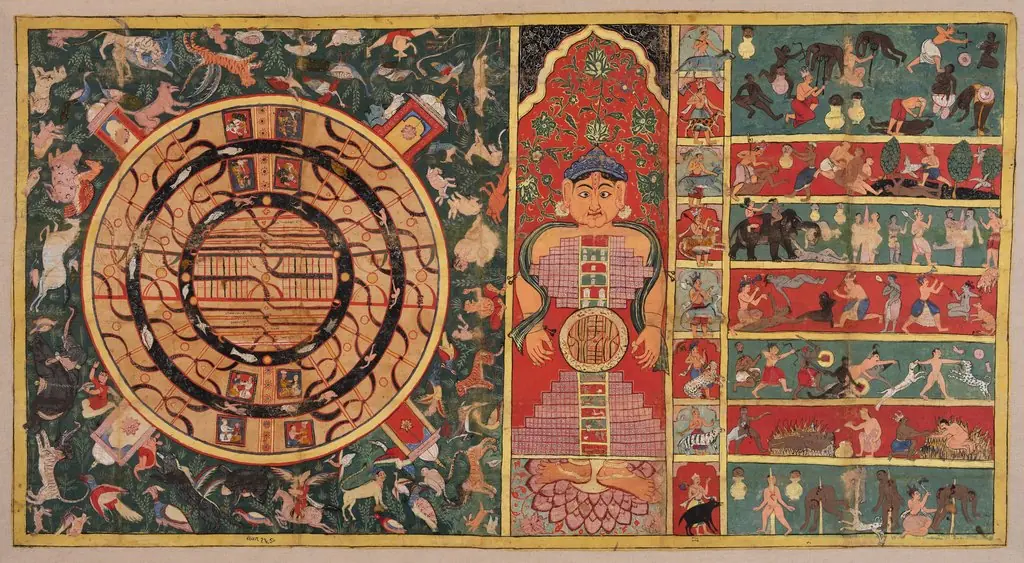
Diagrams of the Universe: The Two-and-a-Half Continents, the Universe in the Shape of a Person, and the Seven Levels of Hell is an unspecified painting by the Baroque artist Unknown. It dates from 1613 and is held in the collection of the Cleveland Museum of Art. This 1613 painting from Gujarat, India, illustrates the Jain cosmology, depicting the universe in a unique and detailed manner.
About this work
The top half is heaven, the bottom half is hell, and the middle is a round map of mountains and rivers.
You see a tall, skinny figure shaped like a person, split into layers. The top half is heaven, the bottom half is hell, and the middle is a round map of mountains and rivers. Tiny scenes show people suffering in fire pits on the right side.
This painting comes from Jain beliefs in Gujarat, India. It’s a map of the whole universe—how people imagined it in 1613. The artist drew it so anyone could understand the rules of life, death, and what comes after.
If you like this, look up more about the subject western india, gujarat.
Overview
This 1613 painting from Gujarat, India, illustrates the Jain cosmology, depicting the universe in a unique and detailed manner.
Subject & Meaning
The artwork represents the universe in anthropomorphic form, divided into heavenly realms above, hellish regions below, and an earthly realm at its center, symbolizing the Jain understanding of existence and the afterlife.
Technique & Style
The painting features a tall, slender figure segmented into layers, with the central earthly realm expanded into a round diagram showing geographical features, while the hellish regions are elaborated with scenes of suffering.
Context
Created within the Jain tradition in Gujarat, the painting serves as a visual representation of complex cosmological beliefs, aiming to convey the principles governing life, death, and the afterlife.
Artist & collection

 Domestic Scene
 Giacomo and Cardinal Marco, investing Andrea, Abbot of San Zeno, with his Benefice
 The Nymph of Fontainebleau
 Portrait of a Woman
 Madonna and Child with Saints in the Enclosed Garden
 Venus and Minerva
 Family Group of Four on Sofa
 Wall painting from Room H of the Villa of P. Fannius Synistor at Boscoreale
 Tantric Manuscript, "Sangrahani Sutra"
 Tantric Manuscript, "Sangrahani Sutra"
 Tantric Manuscript, "Sangrahani Sutra"
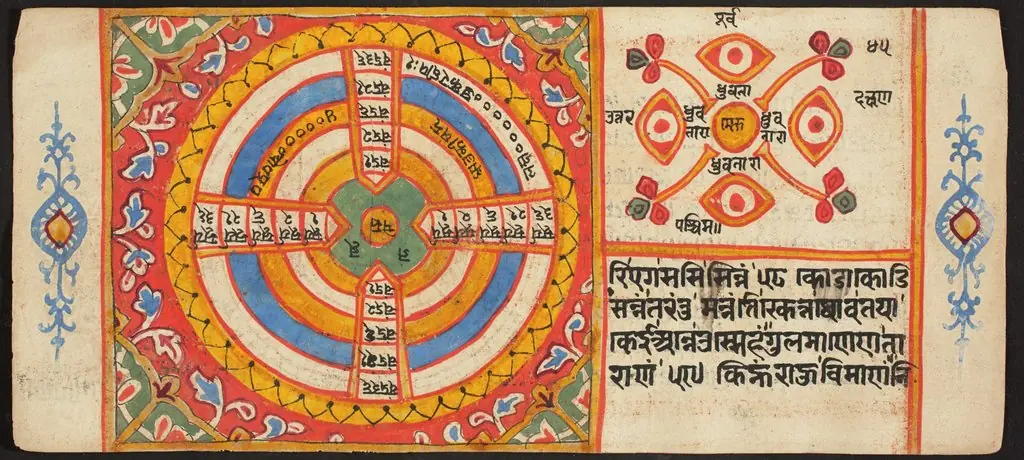 Tantric Manuscript "Sangrahani Sutra"
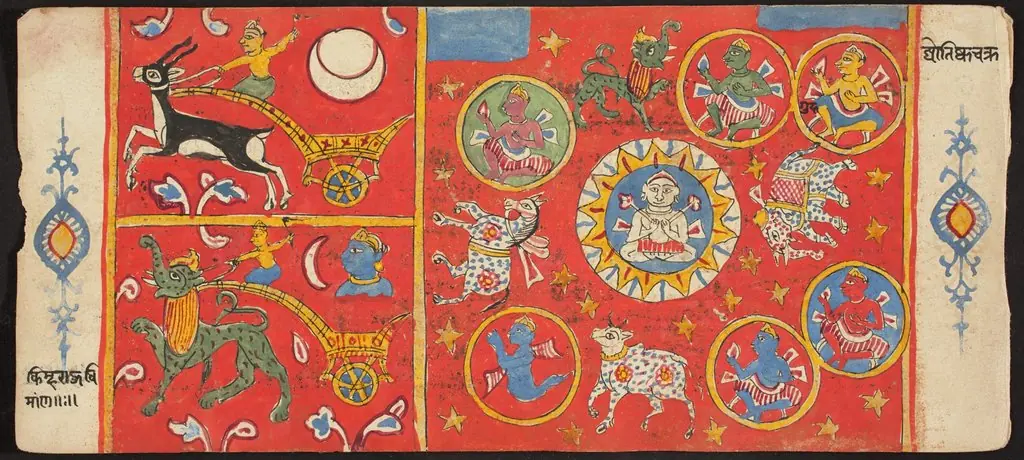 Tantric Manuscript "Sangrahani Sutra"
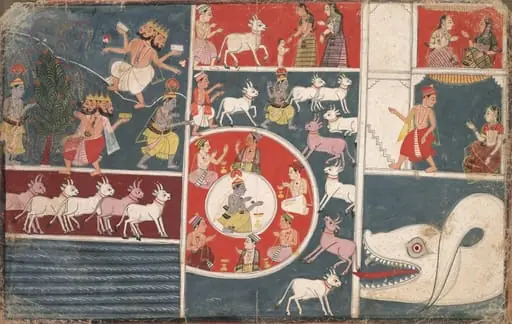 Krishna Playing the Flute and other Episodes from the Bhagavata Purana
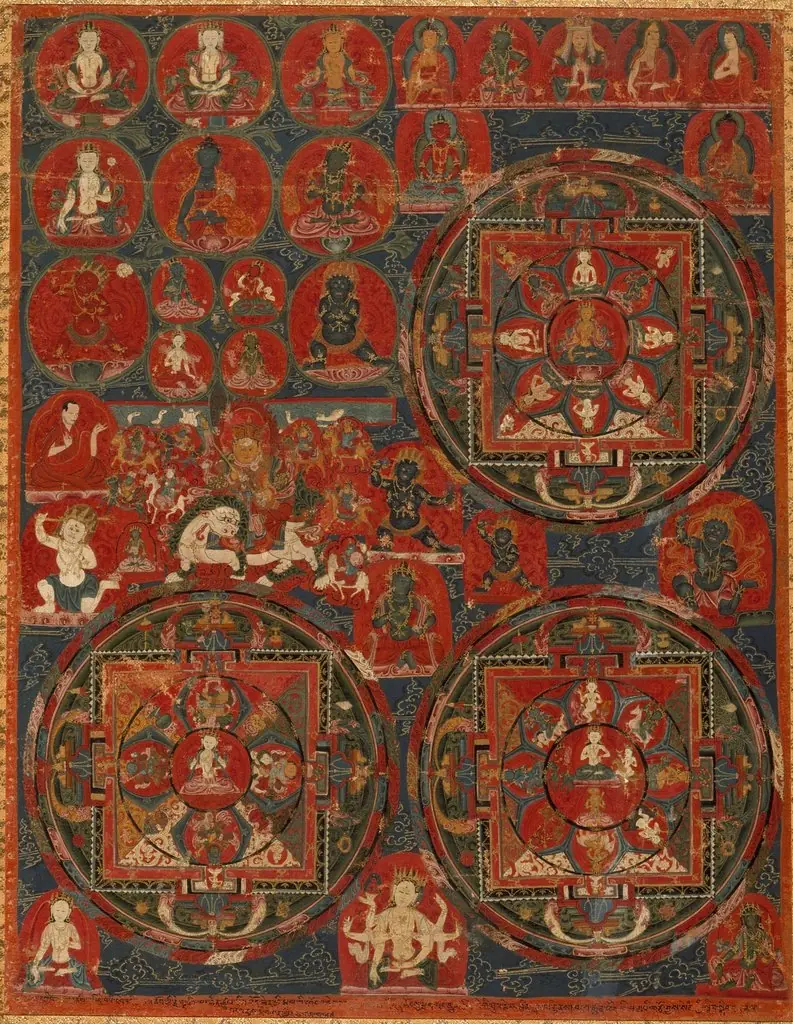 Three Mandalas
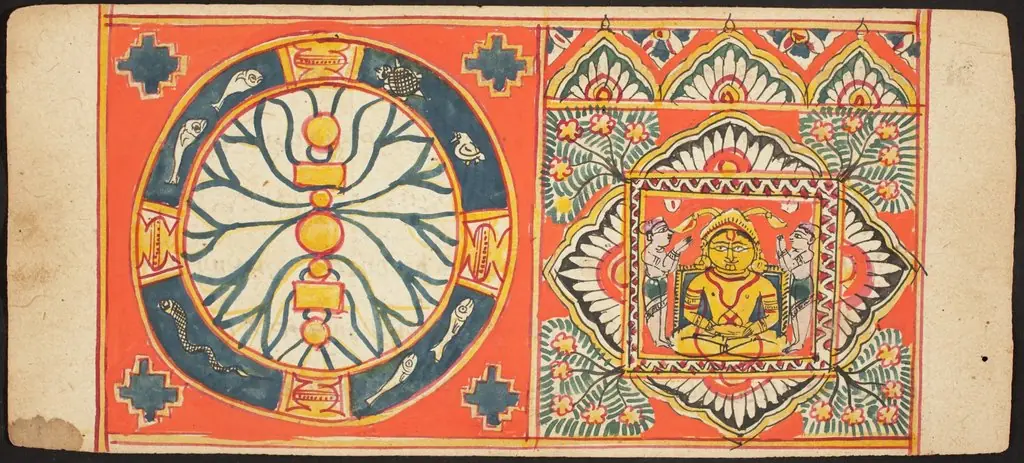 Tantric Manuscript "Sangrahani Sutra"
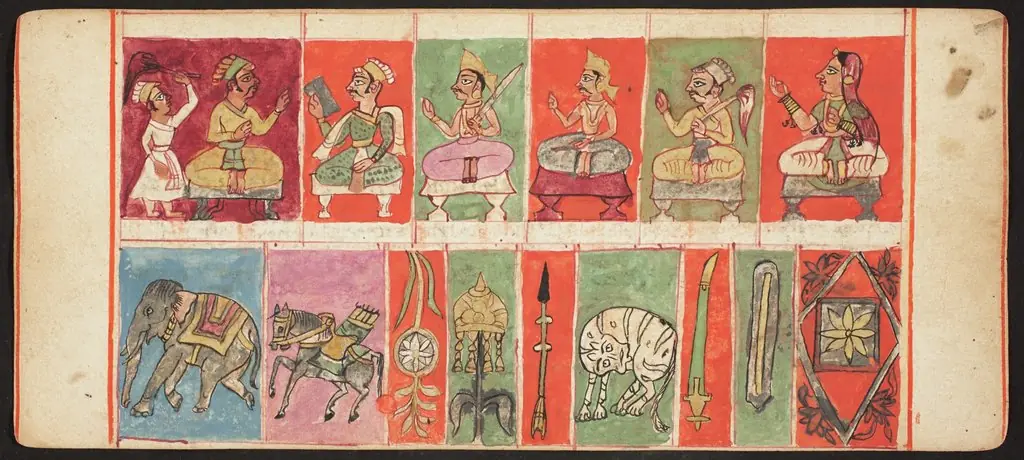 Tantric Manuscript, "Sangrahani Sutra"
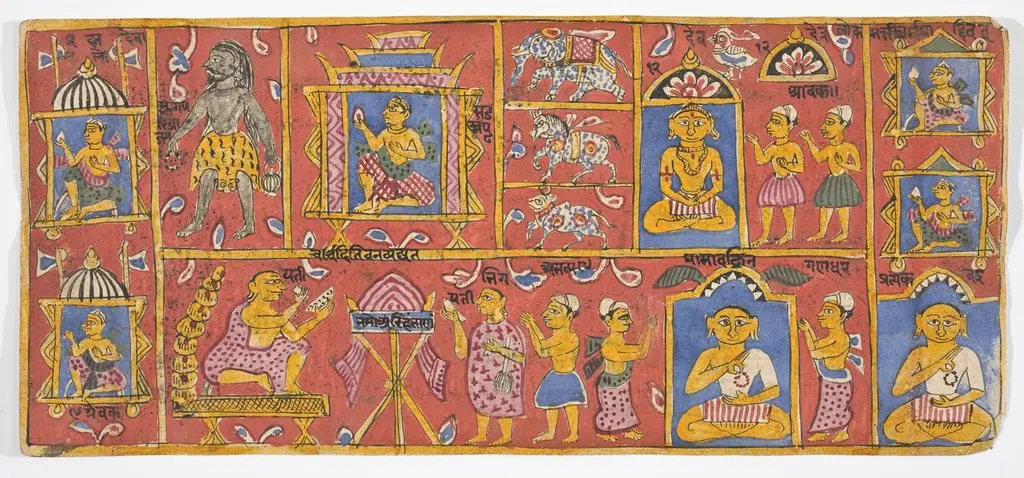 Tantric Manuscript "Sangrahani Sutra"
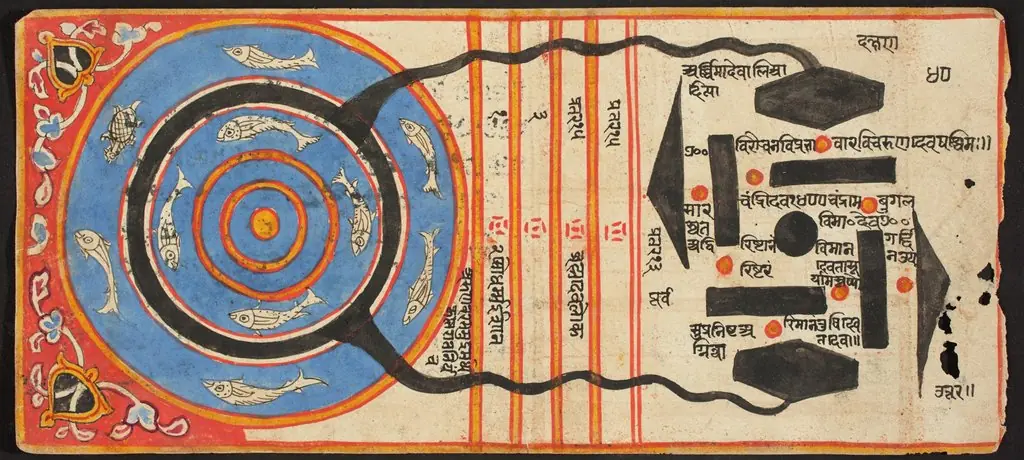 Tantric Manuscript "Sangrahani Sutra"
 Diagrams of the Universe: The Two-and-a-Half Continents, the Universe in the Shape of a Person, and the Seven Levels of Hell