Artwork
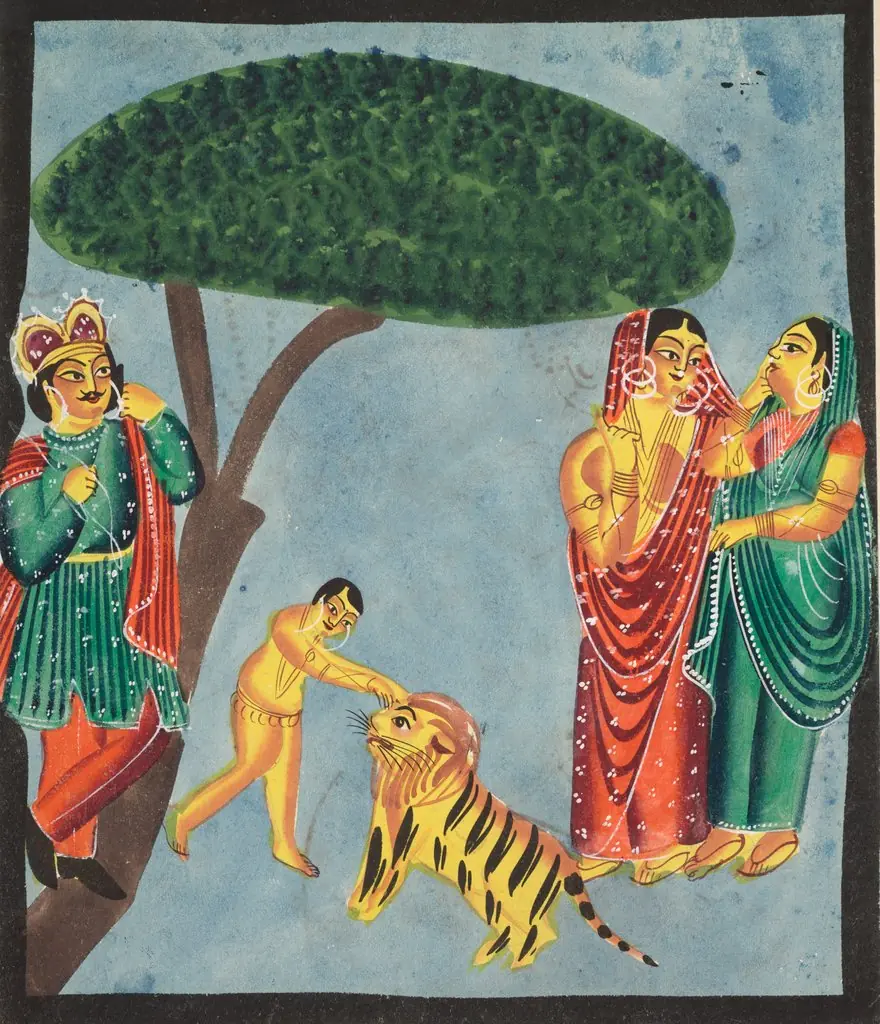
Dushyanta watching his son Bharat playing with the tiger at the end of the Abhijnanashakuntalam (verso), from a Kalighat album
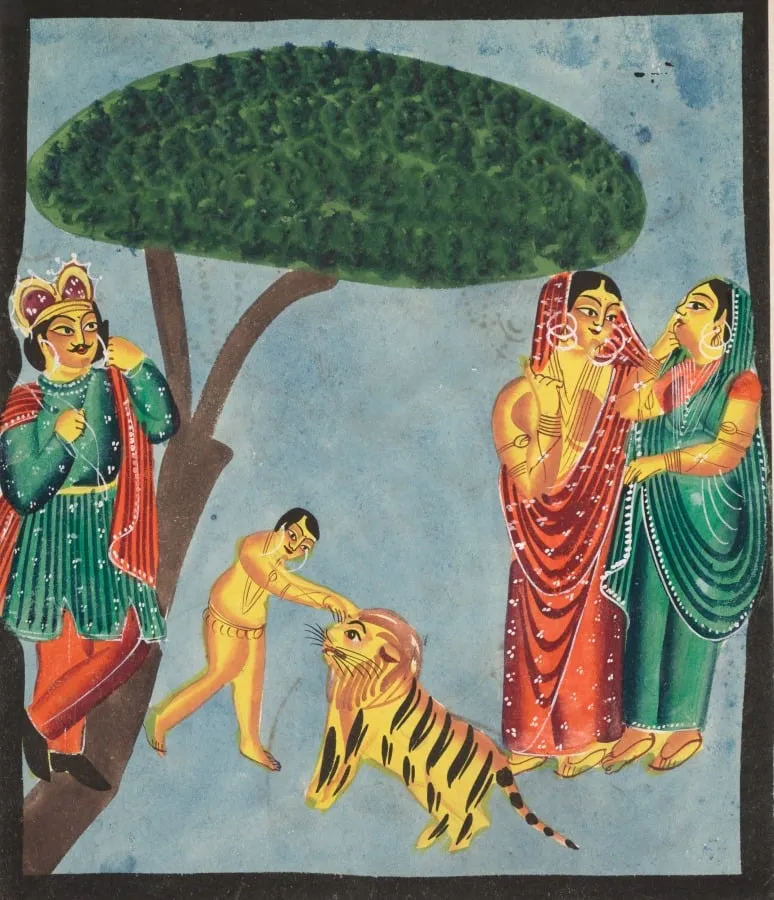
Dushyanta watching his son Bharat playing with the tiger at the end of the Abhijnanashakuntalam (verso), from a Kalighat album is an unspecified painting by the Patna School of Painting artist Unknown. It dates from 1890 and is held in the collection of the Cleveland Museum of Art.
About this work
Overview
The work, titled *Dushyanta watching his son Bharat playing with the tiger at the end of the Abhijnanashakuntalam (verso)*, is a small painted sheet from a Kalighat album. It depicts a scene under a leafy canopy where a man in vivid green and red garments observes a young boy, Bharat, gently handling a tiger cub, while two women in bright saris stand nearby. The background consists of a plain blue sky.
Subject & Meaning
The composition draws on the concluding episode of Kalidasa’s play *Abhijñānaśakuntalam*, portraying King Dushyanta’s paternal pride as he watches his son Bharat engage in a tender, playful interaction with a tiger cub. The calm contact between child and animal suggests themes of trust, royal lineage, and the harmonious relationship between humanity and nature within the narrative.
Technique & Style
Executed in the characteristic Kalighat idiom, the painting employs bold, black outlines that define figures rendered in flat, saturated colors. The brushwork is swift, emphasizing silhouette over detail, while the background remains a uniform azure, reinforcing the folk‑art aesthetic that emerged from Kolkata’s bustling riverbanks in the 19th century.
Context
Kalighat paintings originated in the vicinity of the Kalighat temple in Kolkata, where itinerant artists catered to a growing urban clientele. By the mid‑1800s these works often illustrated scenes from popular literature, mythology, and daily life, serving both as decorative objects and as visual commentaries on contemporary culture.
Legacy
Works such as this one illustrate how Kalighat artists adapted classical literary subjects for a popular audience, bridging elite literary tradition and vernacular visual culture. The painting’s preservation in an album format reflects the medium’s role in disseminating narrative art beyond elite patronage, influencing later Indian modernist painters who drew upon folk visual vocabularies.
Artist & collection

 Domestic Scene
 Giacomo and Cardinal Marco, investing Andrea, Abbot of San Zeno, with his Benefice
 The Nymph of Fontainebleau
 Portrait of a Woman
 Madonna and Child with Saints in the Enclosed Garden
 Venus and Minerva
 Family Group of Four on Sofa
 Wall painting from Room H of the Villa of P. Fannius Synistor at Boscoreale
 Hanuman and Sita
 Shiva and Kama
 Krishna steals the gopis' clothes
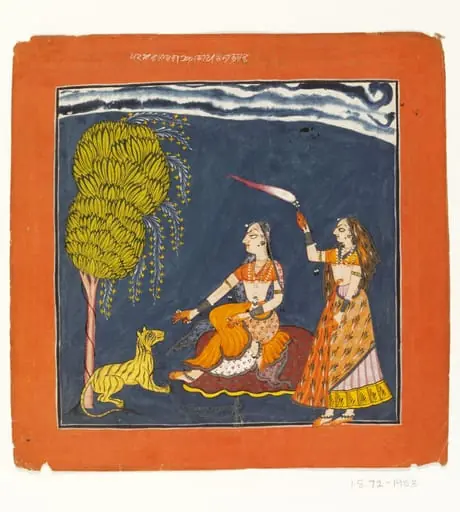 Patamanjari Ragini
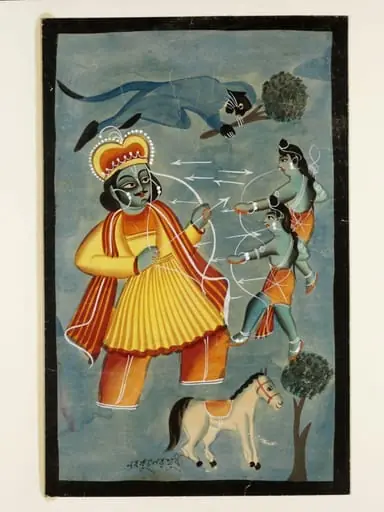 Rama, Lava and Kusha
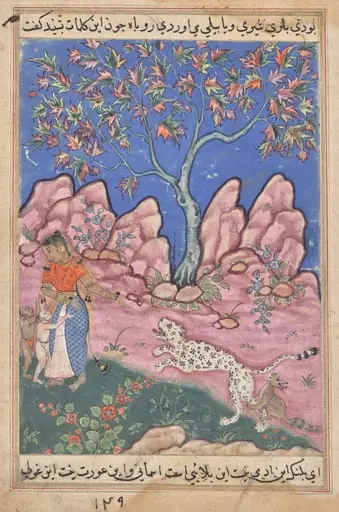 The woman conversing with her children, as the leopard returns, egged on by a fox who is tied to his leg, from a Tuti-nama (Tales of a Parrot): Thirtieth Night
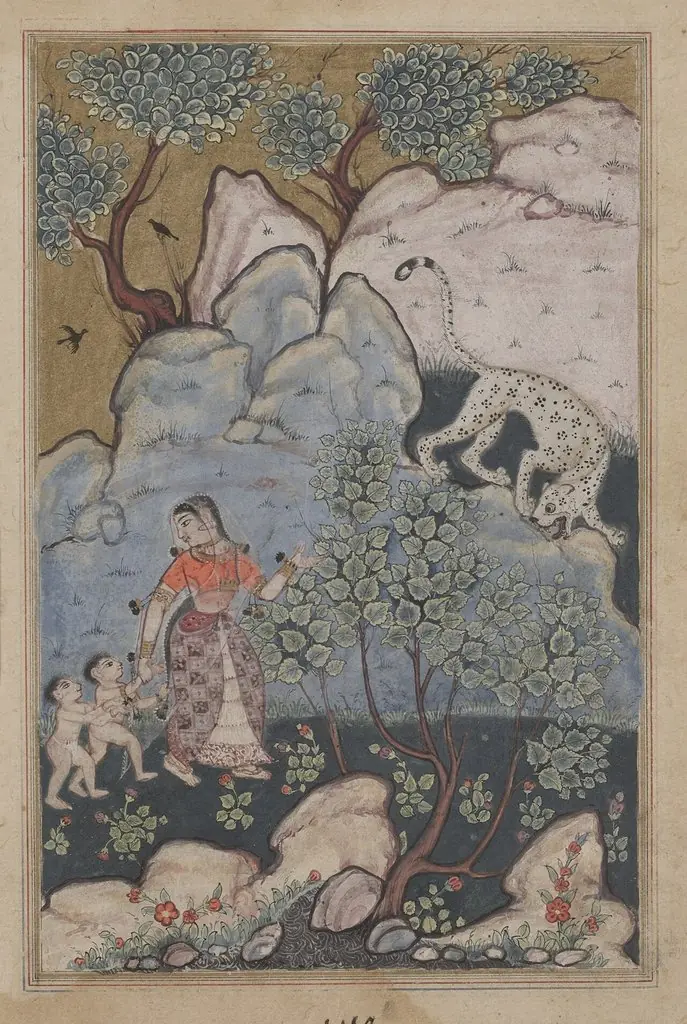 A woman with two children, having abandoned her home, goes into the forest where she encounters a leopard, from a Tuti-nama (Tales of a Parrot): Thirtieth Night
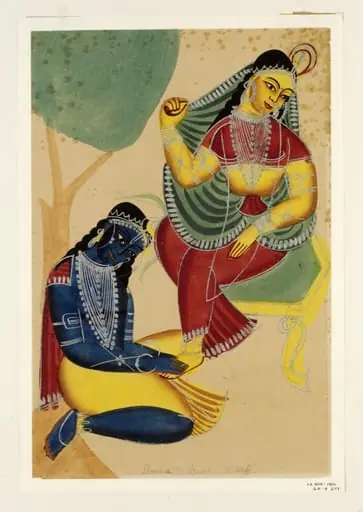 Krishna and Radha
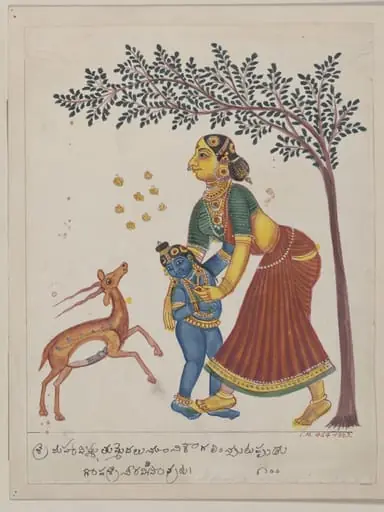 Yasoda protecting Krishna from the playful approaches of a gazelle
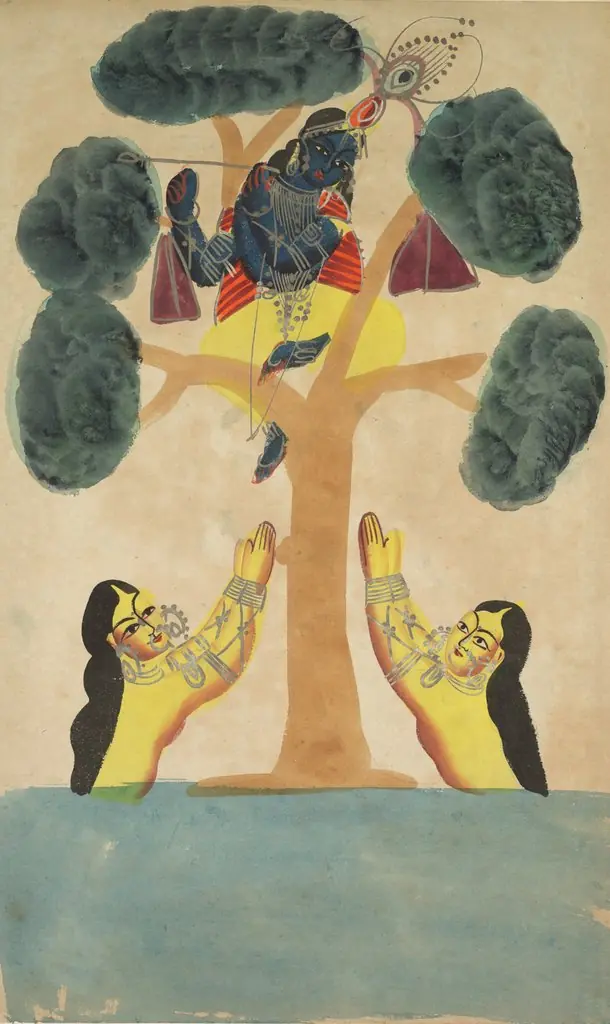 Krishna Steals the Clothes of the Cowgirls (Gopis) (recto), from a Kalighat album
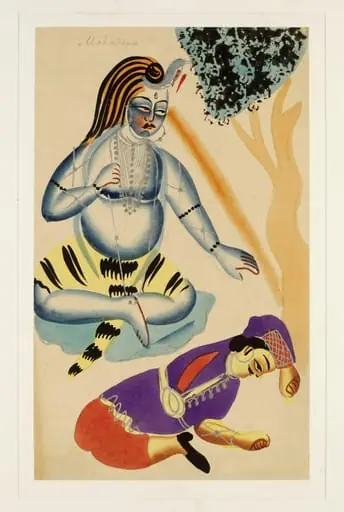 Shiva and Kama
 Dushyanta watching his son Bharat playing with the tiger at the end of the Abhijnanashakuntalam (verso), from a Kalighat album