Artwork
Emperor Humayan
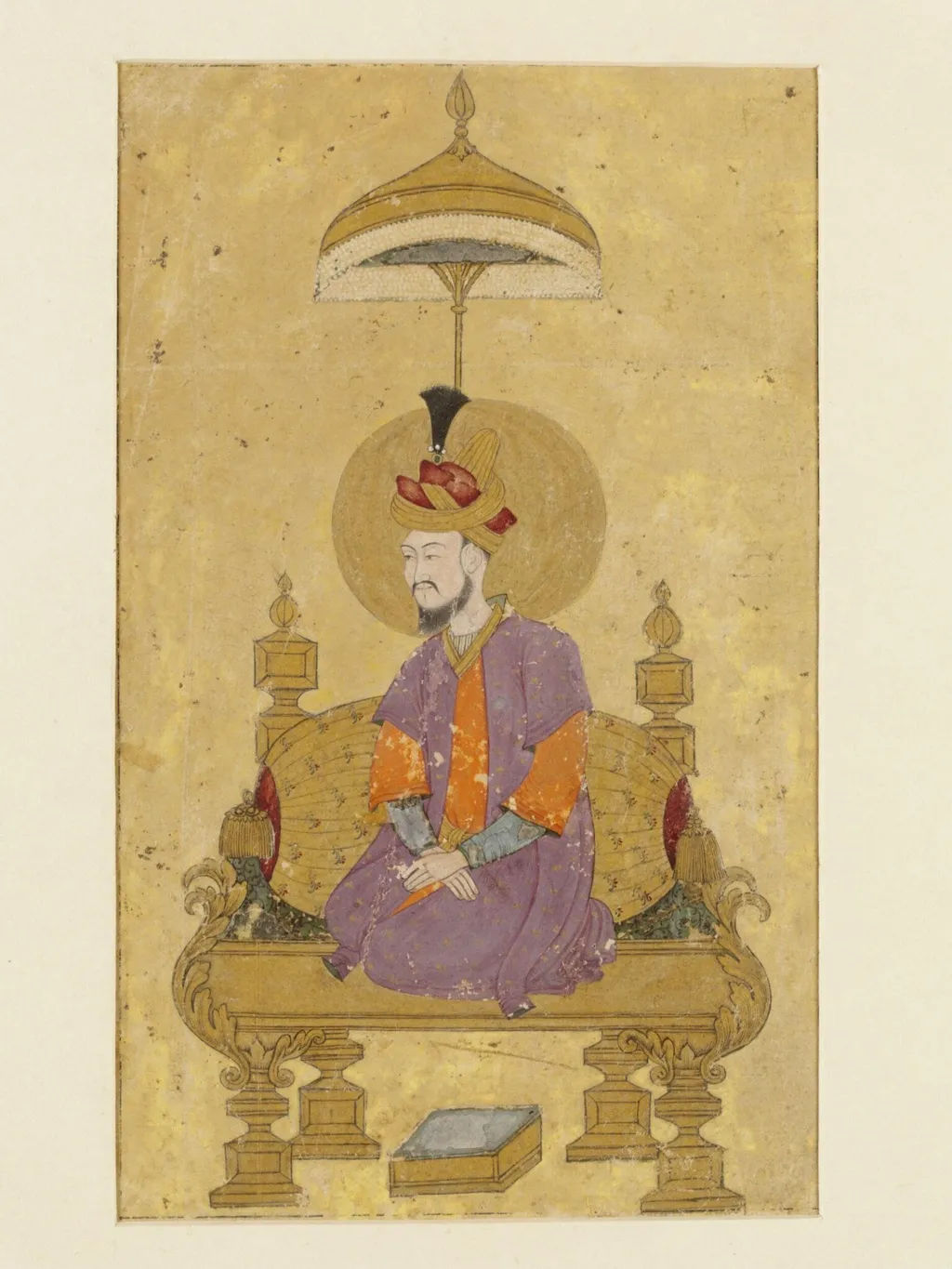
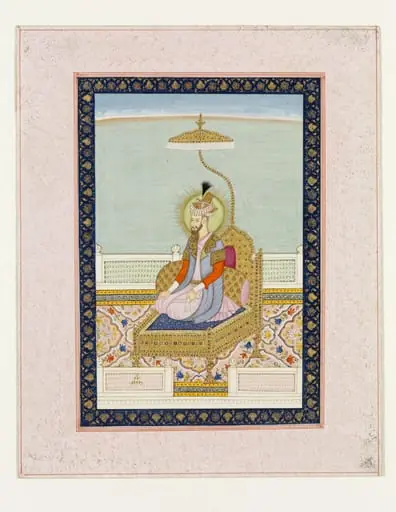
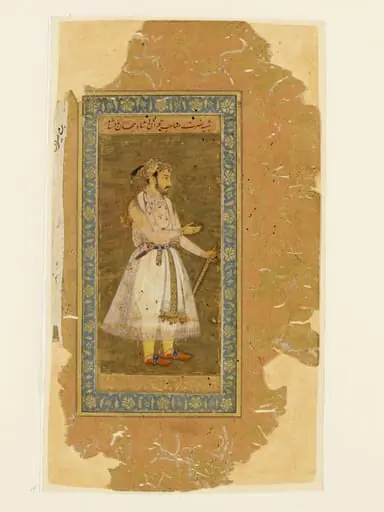
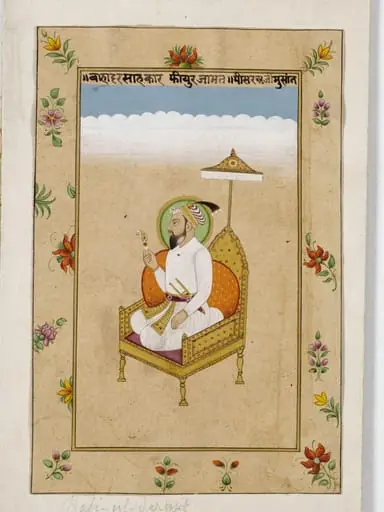
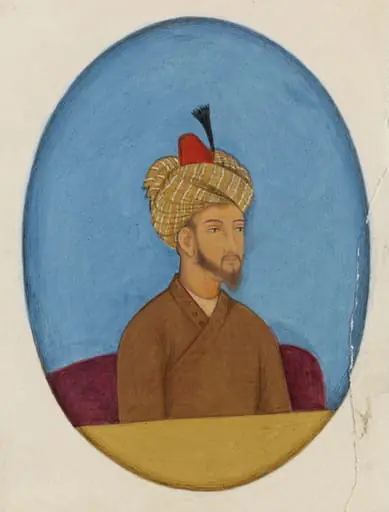
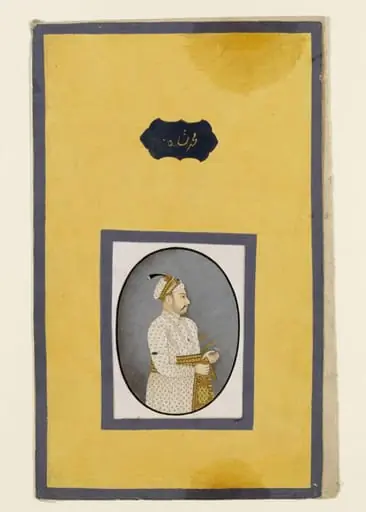
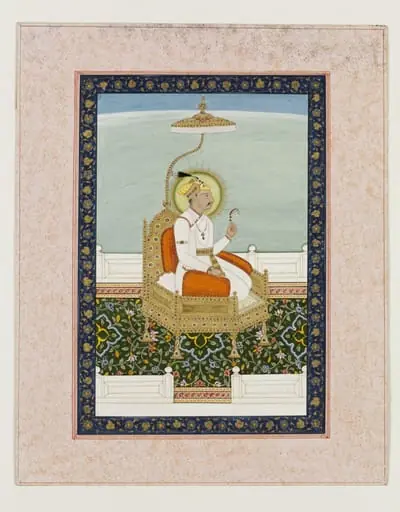
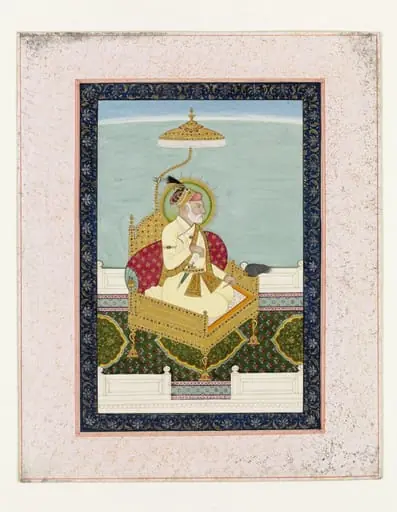
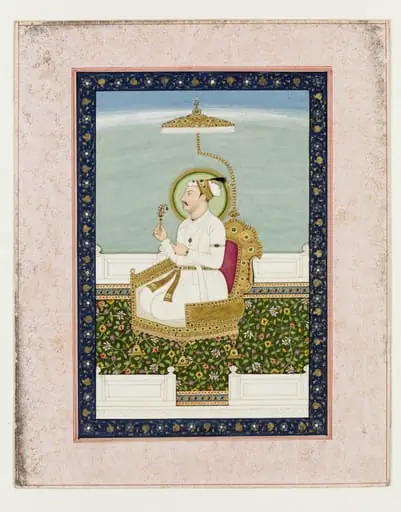
Emperor Humayan is a paint painting by Unknown. It dates from 1750 and is held in the collection of the Victoria and Albert Museum. This opaque watercolour on paper portrays Emperor Humayun, the second Mughal ruler, seated in formal repose.
About this work
Overview
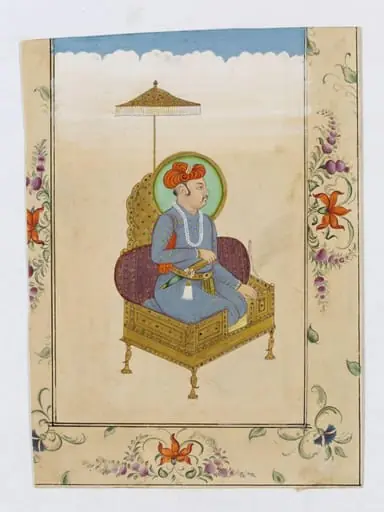
This opaque watercolour on paper portrays Emperor Humayun, the second Mughal ruler, seated in formal repose. Executed with fine brushwork, the work emphasizes imperial dignity through symbolic elements rather than naturalistic setting. The gold background and elevated throne isolate the figure, reinforcing his status within a stylized courtly space typical of early Mughal portraiture.
Subject & Meaning
His attire—purple robe, orange sleeves, and red turban—combines Persian and Indian motifs, reflecting the syncretic culture of the Mughal court.
Humayun is depicted not in action but in static sovereignty, seated on a throne with ornate carvings and crowned by a ceremonial canopy. The golden halo-like circle around his head signifies divine sanction, while the state umbrella, or chhatr, denotes royal authority. His attire—purple robe, orange sleeves, and red turban—combines Persian and Indian motifs, reflecting the syncretic culture of the Mughal court.
Technique & Style
The painting employs opaque watercolour with meticulous detail, characteristic of early Mughal manuscript illustration. Gold leaf highlights the throne, canopy, and halo, while fine lines define fabric folds and facial features. The flat, non-perspectival background and stylized proportions prioritize symbolic presence over spatial realism, aligning with Persianate traditions adapted under Mughal patronage.
History & Provenance
Created during the mid-16th century, likely in the imperial atelier following Humayun’s return to India, the work may have been part of a larger historical album. Its survival suggests continued reverence for the emperor’s image. The painting entered the Victoria and Albert Museum’s collection through colonial-era acquisitions, preserving a rare visual record of early Mughal court iconography.
Context
This portrait emerged during a period of cultural consolidation after Humayun’s exile in Persia, when Persian artistic conventions merged with Indian traditions. Such images were not public displays but private court objects, used to affirm lineage and legitimacy. The emphasis on regalia and symbolic geometry reflects a broader shift toward formalized imperial representation in Mughal visual culture.
Legacy
Though faded, the painting’s compositional elements—halo, canopy, throne—became standard in later Mughal portraiture, influencing depictions of Akbar and Jahangir. Its restrained symbolism, avoiding overt narrative, set a precedent for imperial imagery that prioritized presence over event. It remains a key example of how power was visually codified in early Mughal art.
Artist & collection

 Domestic Scene
 Giacomo and Cardinal Marco, investing Andrea, Abbot of San Zeno, with his Benefice
 The Nymph of Fontainebleau
 Portrait of a Woman
 Madonna and Child with Saints in the Enclosed Garden
 Venus and Minerva
 Family Group of Four on Sofa
 Wall painting from Room H of the Villa of P. Fannius Synistor at Boscoreale