Artwork
Emperor of Morocco sitting on the Steps of the old Moorish palace at Tangiers surrounded by his black Guard to receive the English presents
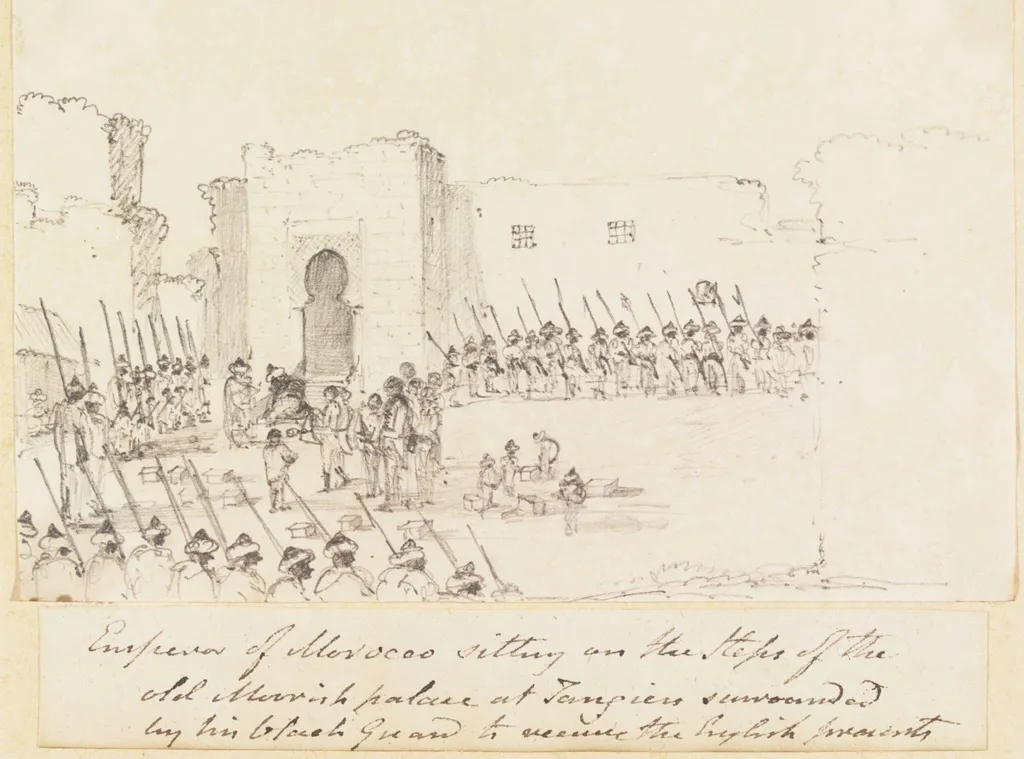
Emperor of Morocco sitting on the Steps of the old Moorish palace at Tangiers surrounded by his black Guard to receive the English presents is a drawing by the Romanticist artist Unknown. It dates from 1814 and is held in the collection of the Victoria and Albert Museum.
About this work
Overview
This 1814 drawing records a diplomatic encounter in Tangier, showing the Moroccan ruler seated on the stone steps of a historic Moorish palace. He is encircled by members of his black guard while English envoys present gifts. The composition is rendered in a rapid, sketch‑like manner, suggesting it was produced on site.
Subject & Meaning
The central figure is the Sultan of Morocco, portrayed in ceremonial robes, receiving tribute from British representatives. The presence of the black guard highlights the ruler’s personal security and the multicultural composition of his court, while the exchange of presents underscores the political overtures between Morocco and England during the early nineteenth century.
Technique & Style
Executed with loose, cross‑hatched lines, the drawing emphasizes contour and tonal variation through dense shading. The artist employed quick strokes to capture movement and atmosphere, focusing on the arrangement of figures and architectural elements rather than fine detail, a common approach for field sketches of the period.
History & Provenance
The work is attributed to a British officer who visited Morocco toward the close of the Peninsular War, a time when British diplomatic and military interests were expanding in the region. Its provenance traces back to military archives before entering the museum’s collection as a visual record of early nineteenth‑century Anglo‑Moroccan relations.
Context
In 1814, Morocco was navigating its position between European powers, while Britain sought allies against Napoleonic France. Tangier’s old Moorish palace, with its arches and towers, served as a ceremonial backdrop for such encounters, reflecting the blend of indigenous architecture and foreign diplomatic activity.
Artist & collection

 Domestic Scene
 Giacomo and Cardinal Marco, investing Andrea, Abbot of San Zeno, with his Benefice
 The Nymph of Fontainebleau
 Portrait of a Woman
 Madonna and Child with Saints in the Enclosed Garden
 Venus and Minerva
 Family Group of Four on Sofa
 Wall painting from Room H of the Villa of P. Fannius Synistor at Boscoreale
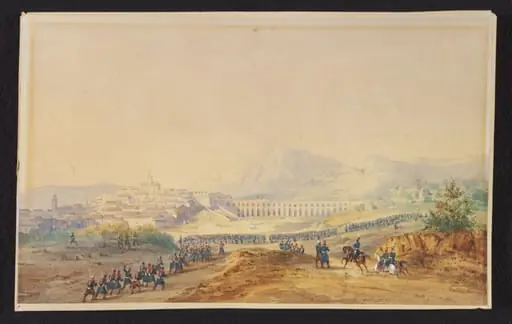 French troops at Médéa, Algeria
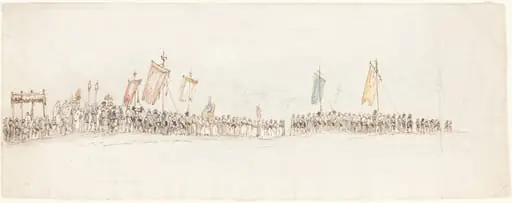 Religious Procession in Landeck
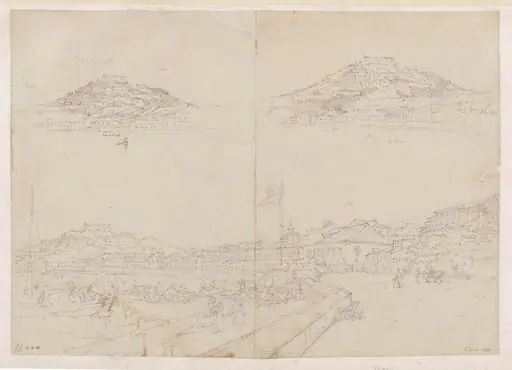 Penha Hill and the Praya Grande, Macau
![Study for "Militia Training" [recto], by James Goodwyn Clonney](https://artifactworldgallery.com/img/james-goodwyn-clonney--study-for-militia-training-recto--a77cf113ce2ae25d-w320.webp) Study for "Militia Training" [recto]
Study for "Militia Training" [recto] Lanciers en Marche (Lancers on the March)
 Journée du 10 Aout 1792
 The Murder of Sir Louis Cavagnari at Kabul. 1879
 General Sir Garnet Wolseley at Alexandria
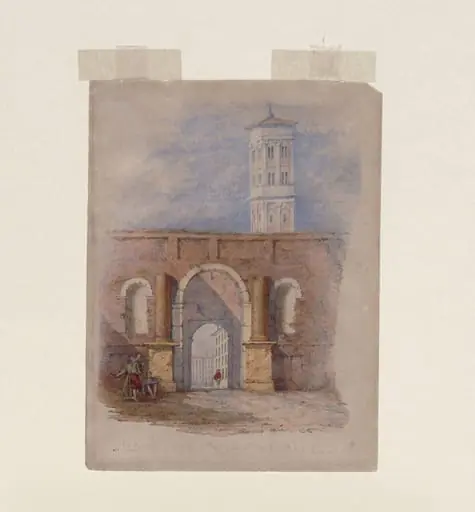 An Ancient Gateway in the Vicinity of St. Peter's, Rome
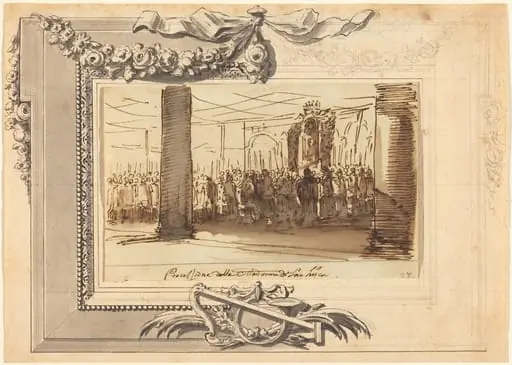 A Procession of the Madonna di San Luca
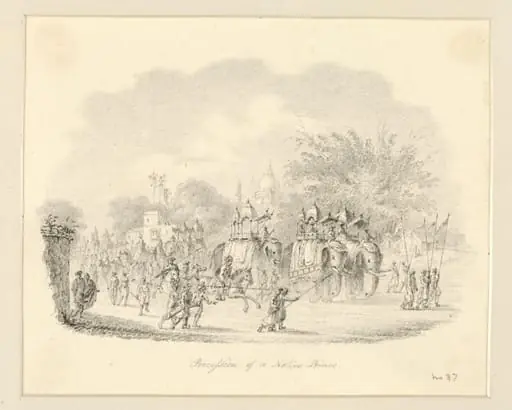 Reception of a Native Prince
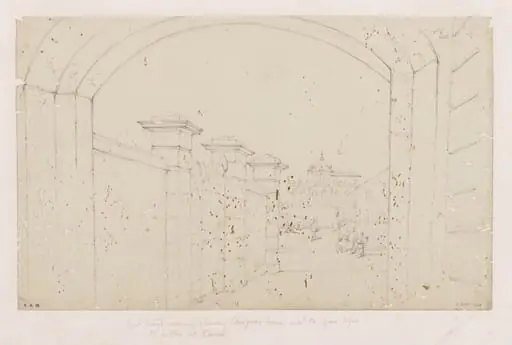 Chungqua's premises seen from the portico of the East India Company's 'factory' at Guangzhou (Canton)