Artwork
Farfuria este de formă tronconică, fiind smălțuită integral. Prezintă un decor floral-vegetal dispus pe fundul și pe buza vasului. Cromatică: fond alb; motive: verde; maro; albastru.
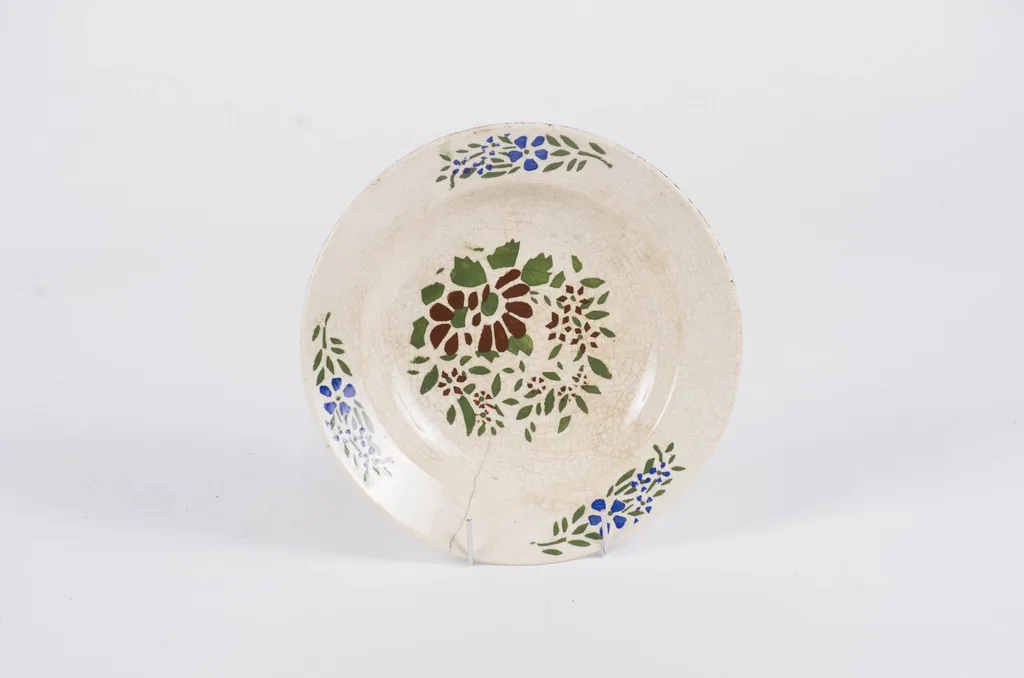
Farfuria este de formă tronconică, fiind smălțuită integral. Prezintă un decor floral-vegetal dispus pe fundul și pe buza vasului. Cromatică: fond alb; motive: verde; maro; albastru. is a print by Unknown. It dates from 1850 and is held in the collection of the ASTRA National Museum Complex. This is a conical-shaped ceramic dish, entirely glazed with a pale, off-white surface.
About this work
Overview
This is a conical-shaped ceramic dish, entirely glazed with a pale, off-white surface. Its decoration consists of hand-painted floral and vegetal motifs in green, dark red, and blue tones. The design is arranged with a central cluster of larger elements and a rim bordered by smaller vines and blossoms, creating a balanced yet informal composition that emphasizes natural forms over rigid symmetry.
Subject & Meaning
The absence of figurative or narrative content points to an emphasis on nature as a decorative ideal rather than a mythological or religious theme.
The decoration features clusters of leaves, berries, and flowers rendered in a loose, organic arrangement. These elements suggest a stylized representation of wild flora, possibly reflecting local botanical knowledge or symbolic associations with growth and abundance. The absence of figurative or narrative content points to an emphasis on nature as a decorative ideal rather than a mythological or religious theme.
Technique & Style
The dish was hand-painted using mineral pigments on a glazed kaolin-based clay body. Colors—green, deep red, and blue—are applied with a freehand brush, resulting in slightly uneven outlines and subtle variations in tone. The contrast between the matte-white glaze and the vivid pigments enhances the clarity of the motifs, characteristic of a regional ceramic tradition prioritizing artisanal expression over mass production.
History & Provenance
Though specific origins are unrecorded, the form and decoration align with early modern ceramic workshops in regions where kaolin clay was locally sourced. Similar pieces have been found in domestic contexts across Eastern Europe, suggesting this dish was part of everyday tableware rather than ceremonial use. Its preservation indicates careful handling, possibly within a household that valued durable, decorated ceramics.
Context
This piece belongs to a broader tradition of folk pottery that flourished in areas with access to fine white clays and limited industrial glazing. Its floral motifs echo regional embroidery and woodcarving patterns, indicating shared visual languages across crafts. Unlike courtly porcelain, this ware was made for practical use, blending utility with modest ornamentation suited to rural or small-town life.
Legacy
The dish exemplifies a pre-industrial ceramic aesthetic that valued handcrafted detail over uniformity. Its design principles influenced later regional pottery revivals, particularly in communities seeking to preserve pre-modern techniques. While not widely documented in major collections, it remains a representative example of vernacular ceramic art, valued for its quiet craftsmanship and connection to local material culture.
Artist & collection

 Domestic Scene
 Giacomo and Cardinal Marco, investing Andrea, Abbot of San Zeno, with his Benefice
 The Nymph of Fontainebleau
 Portrait of a Woman
 Madonna and Child with Saints in the Enclosed Garden
 Venus and Minerva
 Family Group of Four on Sofa
 Wall painting from Room H of the Villa of P. Fannius Synistor at Boscoreale
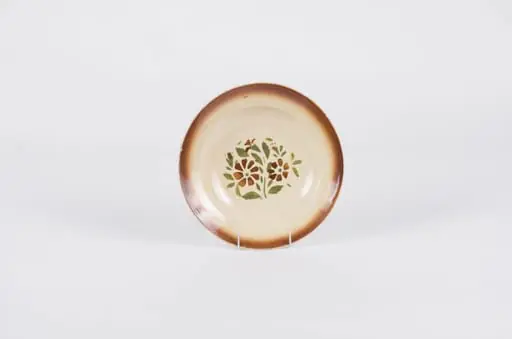 Vasul de formă tronconică este realizat din caolin. Pe fundul farfuriei se identifică motive florale dispuse sub forma unui buchet. Pe buza piesei este pictat un cerc de culoare maro. Cromatică: fond alb; motive: maro; verde.
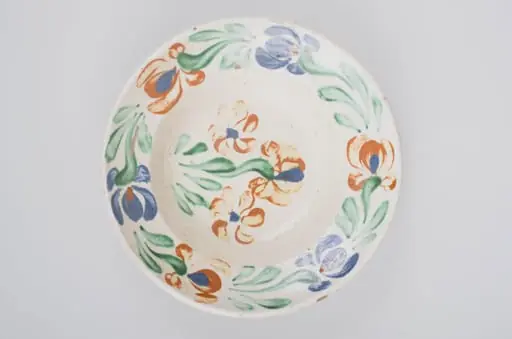 Farfurie cu fundul adâncit și buza evazată. Smălțuită numai în interior și scurgeri de smalț sub buză. Prezintă găuri pentru prinderea aței în vederea agățării. Decorată cu motive florale: central are trei flori iar pe margine un chenar floral. Cromatică: fond: alb; motive: maro; verde; albastru.
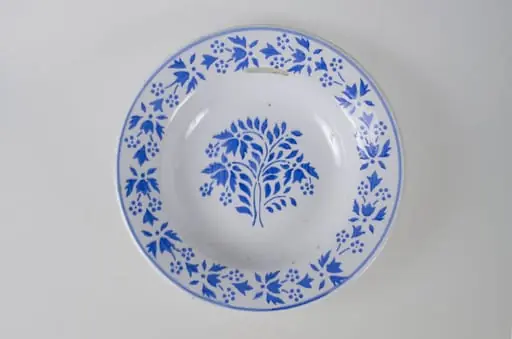 Farfuria are formă tronconică ușor adâncită. Pe buza vasului se identifică un registru decorativ floral, vegetal, continuu mărginit de o linie. Pe fund este o ștanță: o casă cu o pasăre pe acoperiș. Pe fundul vasului sunt două incizii în care este introdus șnurul folosit la agățarea vasului pe perete. Cromatică: fond: alb; motive: albastru.
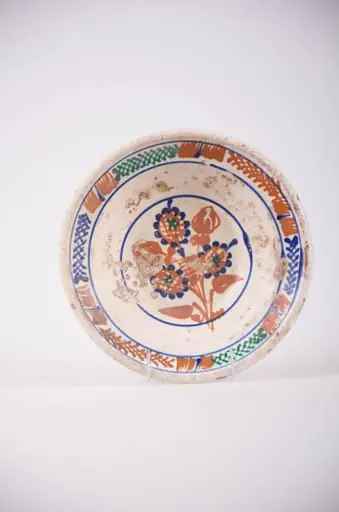 Farfurie de formă tronconică cu deschidere mare. Smălțuit în interior și ornamentat cu motive geometrice: cercuri; motive florale, pete de culoare și motiv vegetal: brăduț. Motivul floral se află pe fundul vasului și este înscris într-un cerc. Motivele vegetale și petele de culoare sunt amplasate pe marginea farfuriei și sunt încadrate de două cercuri. Cromatică: fond: alb; motive: maro; verde; albastru.
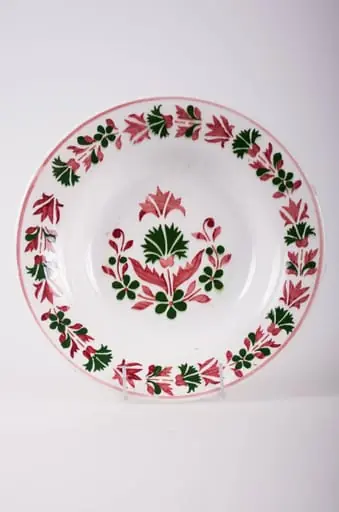 Farfurie de formă tronconică, adâncită; pe fund are găuri pentru agățare, Este decorată cu motive florale și geometrice; pe margine este decorat cu flori încadrate la exterior de o linie; în centru are mai multe flori. Pe fund are o marcă indescifrabilă. Cromatică: fond: alb; motive: vișiniu; verde.
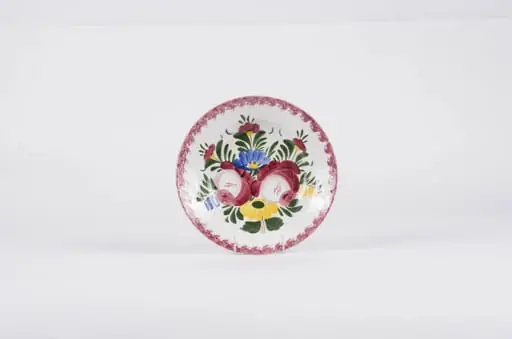 Vasul este de formă tronconică fiind smălțuit interior-exterior. Este confecționat din faianță Decorul este format din motive florale pictate pe fond alb; gura este decorată în stropi de culoare vișinie iar baza farfuriei este decorată cu motive florale. Se identifică șapte flori alcătuind motivul decorativ pe baza farfuriei. Pe spate inscripția este indescifrabilă. Cromatică: galben; albastru; verde; vișiniu; alb;
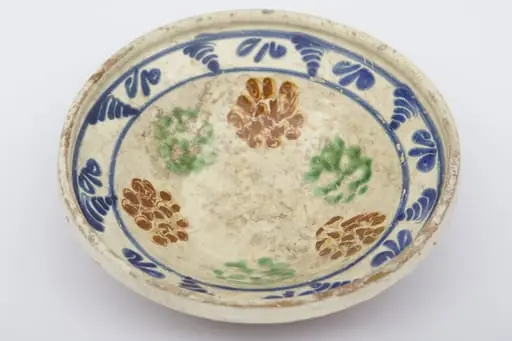 Vas ceramic de dimensiuni medii, smălțuit la interior, având formă tronconică. Blidul a fost decorat cu motive geometrizante și fitomorfe stilizate. Primul registru, dispus pe fundul piesei este format din șase flori verzi și maro, intercalate. Marginal, pe buza profilată a fost realizat cel de-al doilea registru, fiind trasate două linii circulare, care încadrează motive vegetale albastre, succesive. Blidul era folosit pentru servirea hranei. Prezintă uzură funcțională. Cromatică: fond: cărămiziu; crem; motive: albastru; maro; verde.
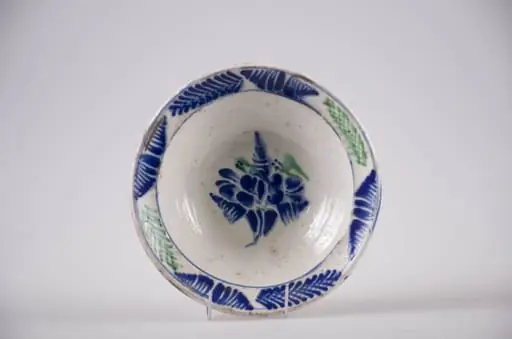 Blid de formă tronconică cu buza evazată, Smălțuit la interior. Decorul este format din ornamente florale dispuse pe motiv central: floare; motive marginale, fitomorfe: brăduț. Cromatică: verde și albastru pe fond alb.
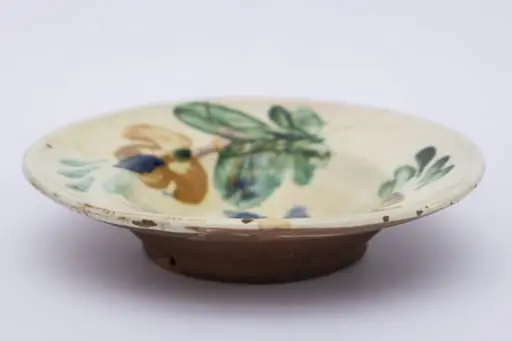 Farfurie de formă tronconică cu fundul adâncit și marginea evazată; smălțuită în interior. Ornament prin pictare ilustrând în plan central, pe fundul vasului, o floare albastră; pe margine chenar floral, reprezentat de două flori cărămizii cu frunze verzi. Pentru atârnare baza este perforată. Cromatică: fond: alb; motive: cărămiziu; verde; albastru; brun.