Artwork
farfurie
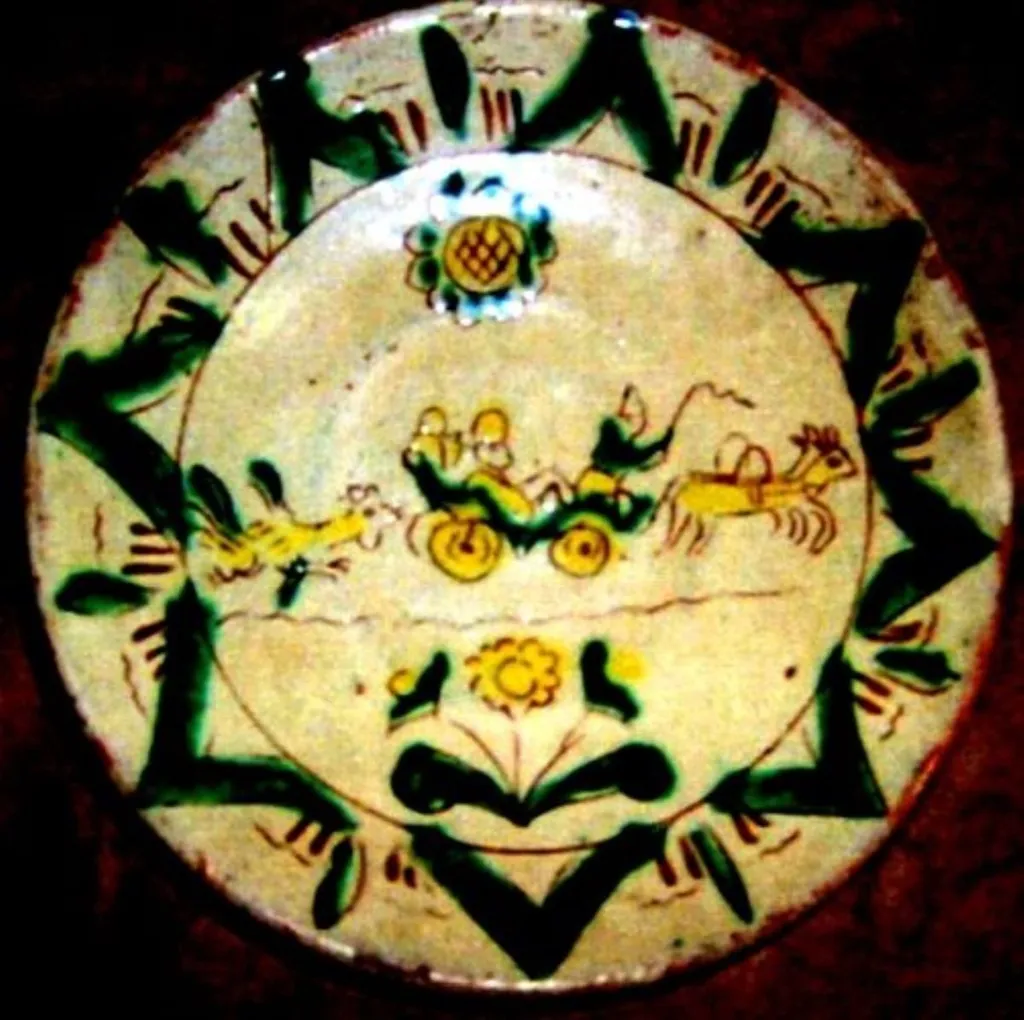
farfurie is a print by Unknown. It dates from 1965 and is held in the collection of the National Museum of Bukovina.
About this work
Overview
The design avoids perspective and shading, emphasizing pattern over naturalism, reflecting a folk aesthetic rooted in regional tradition.
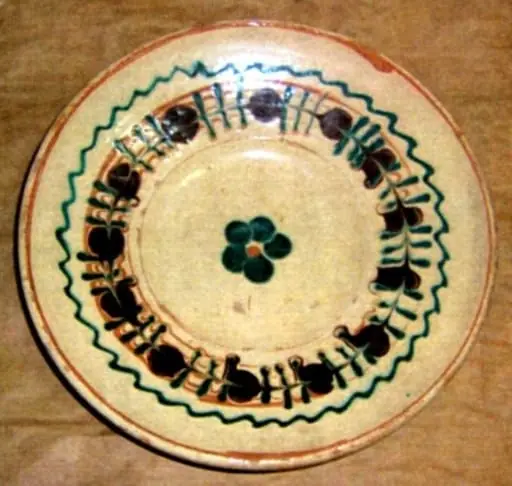
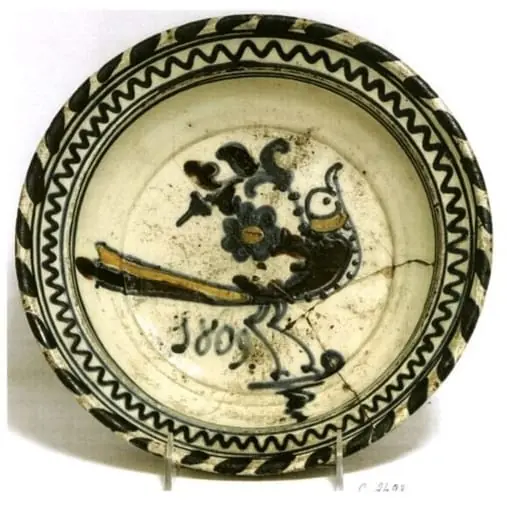
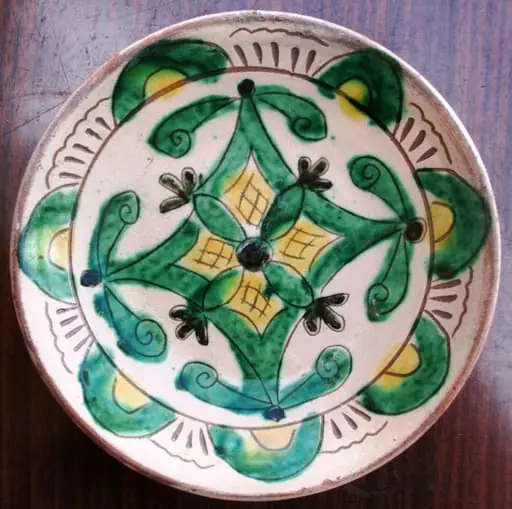
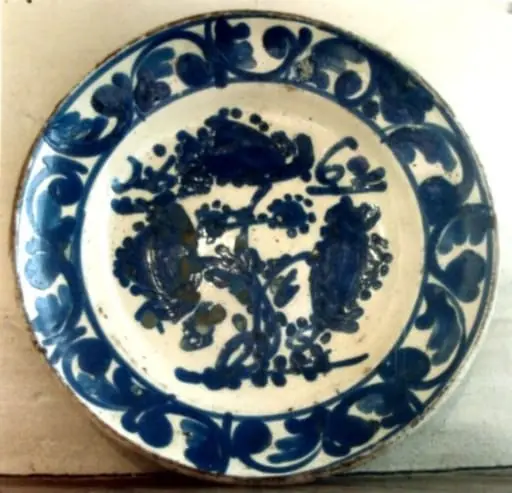
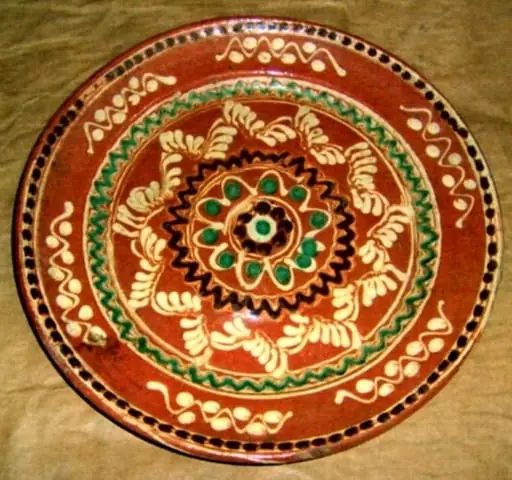
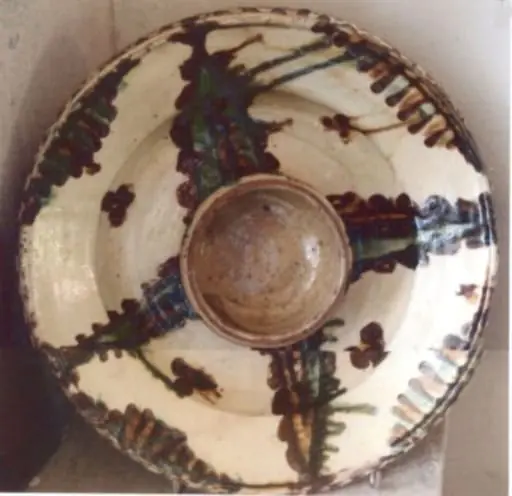
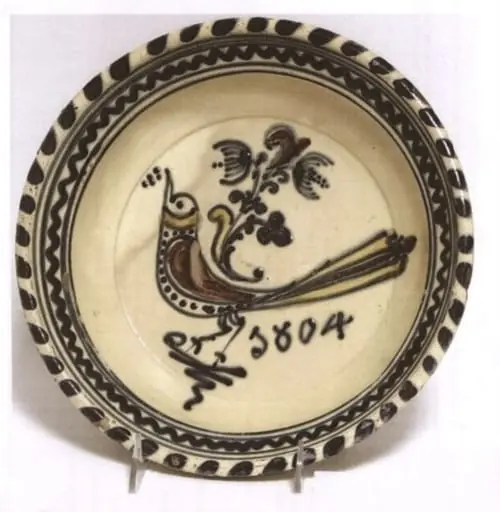
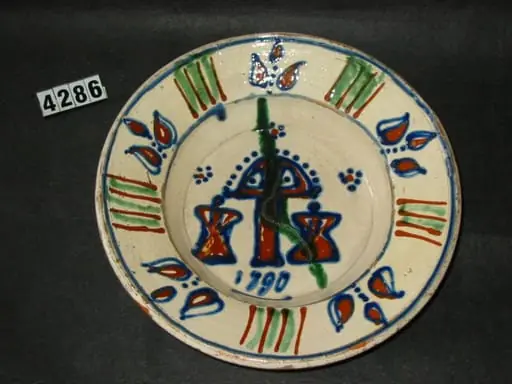
This circular ceramic plate, known as farfurie, features a stylized scene painted in flat, unmodulated colors. The composition centers on a yellow cart pulled by a horse, carrying two figures beneath a radiant, face-like sun. Decorative elements—green leaves and black swirling lines—frame the edge. The design avoids perspective and shading, emphasizing pattern over naturalism, reflecting a folk aesthetic rooted in regional tradition.
Subject & Meaning
The scene depicts a journey, possibly symbolic, with two indistinct figures traveling in a cart beneath a luminous sun. Their calm, featureless faces suggest anonymity or archetypal roles rather than individual identity. The sun, rendered as a glowing disc with a face, may represent a celestial force or seasonal cycle. The imagery evokes rural life and mythic storytelling, though its precise narrative remains open to interpretation.
Technique & Style
Painted with bold, unshaded hues on a light ground, the plate employs simplified forms and strong outlines. There is no attempt at depth or texture; figures and objects appear as silhouetted shapes. Decorative borders of leaves and spirals echo traditional folk motifs. The technique prioritizes rhythm and symmetry over realism, aligning with a broader Central European ceramic tradition that values symbolic clarity over naturalistic detail.
History & Provenance
Farfurie plates originate from rural pottery workshops in Romania, particularly associated with the Maramureș region. Produced from the 19th century onward, they were often made for domestic use or as ceremonial objects. This example likely dates to the late 1800s or early 1900s. Similar pieces are held in the Museum of Ethnography, where they are studied as expressions of local craftsmanship and visual culture.
Context
These plates belong to a broader tradition of folk ceramics in Eastern Europe, where household objects carried symbolic motifs tied to agriculture, cosmology, and communal life. The use of solar imagery and stylized animals reflects pre-Christian beliefs adapted into Christian-era material culture. Unlike fine art, farfurie was made for everyday use, yet its imagery preserved ancestral visual language passed through generations of potters.
Legacy
Farfurie plates remain important artifacts in the study of Romanian folk art, illustrating how rural communities encoded meaning into utilitarian objects. Their visual language influenced later ethnographic collections and regional revival movements. While production declined in the 20th century, surviving examples continue to inform contemporary interpretations of traditional design and the persistence of symbolic imagery in material culture.
Artist & collection
 Domestic Scene
 Giacomo and Cardinal Marco, investing Andrea, Abbot of San Zeno, with his Benefice
 The Nymph of Fontainebleau
 Portrait of a Woman
 Madonna and Child with Saints in the Enclosed Garden
 Venus and Minerva
 Family Group of Four on Sofa
 Wall painting from Room H of the Villa of P. Fannius Synistor at Boscoreale