Artwork
Farfurie adâncă, de formă tronconică, cu buză lată, răsfrântă. Piesa este modelată la roata olarului, fiind angobată cu humă albă (pe interiorul acesteia). Decorul este realizat prin pictare cu pensula și constă în motive decorative florale și vegetale (flori și frunze), dispuse central, pe fundul farfuriei și pe toată buza acesteia, sub formă de ghirlandă cu patru flori. Cromatica: alb, verde, maro. Farfuria este smălțuită pe interior, cu smalț transparent.
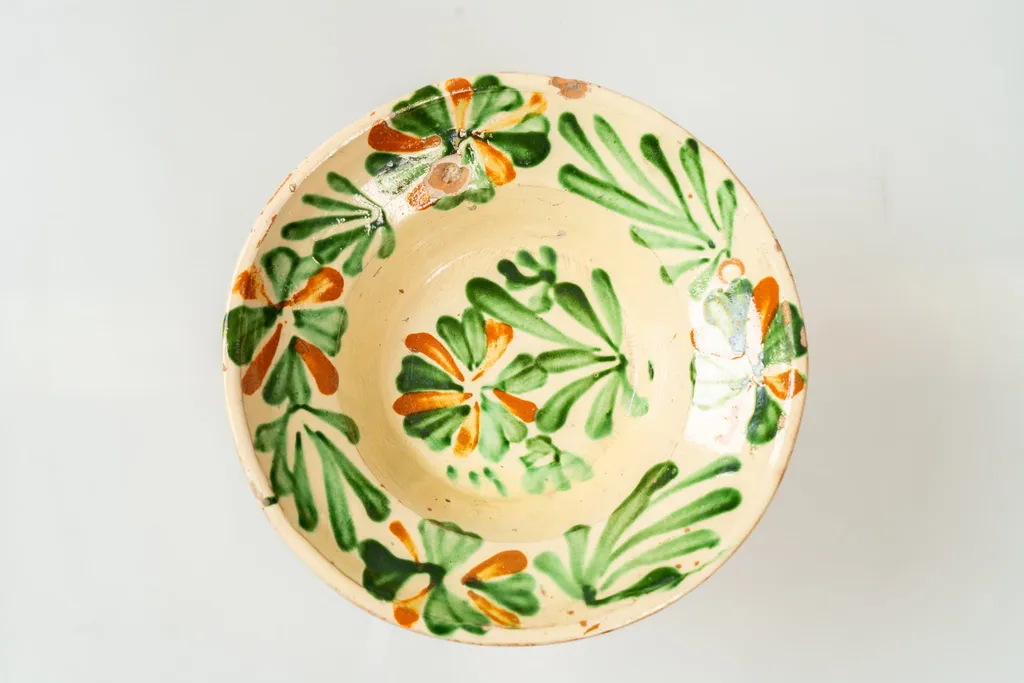
Farfurie adâncă, de formă tronconică, cu buză lată, răsfrântă. Piesa este modelată la roata olarului, fiind angobată cu humă albă (pe interiorul acesteia). Decorul este realizat prin pictare cu pensula și constă în motive decorative florale și vegetale (flori și frunze), dispuse central, pe fundul farfuriei și pe toată buza acesteia, sub formă de ghirlandă cu patru flori. Cromatica: alb, verde, maro. Farfuria este smălțuită pe interior, cu smalț transparent. is a print by Unknown. It dates from 1850 and is held in the collection of the Ethnographical Museum of Transylvania. This deep, conical ceramic dish features a broad, upturned rim and is formed on a potter’s wheel.
About this work
Overview
This deep, conical ceramic dish features a broad, upturned rim and is formed on a potter’s wheel. Its interior is coated with a white slip and covered in transparent glaze, while the exterior remains unglazed. The surface is decorated with hand-painted floral and vegetal motifs in muted tones of green, brown, and white, arranged in a continuous band along the rim and centered on the base.
Subject & Meaning
The decoration centers on stylized flowers and leaves, arranged in a symmetrical garland of four blooms encircling the rim.
The decoration centers on stylized flowers and leaves, arranged in a symmetrical garland of four blooms encircling the rim. These natural forms suggest an emphasis on organic abundance rather than symbolic narrative. The repetition and placement imply a connection to seasonal cycles or domestic rituals, common in regional ceramic traditions where ornamentation reflects environmental familiarity rather than religious or mythological themes.
Technique & Style
The vessel was wheel-thrown and finished with a white slip applied internally before painting. Decorative elements were executed with a fine brush using mineral-based pigments in earthy hues. The glaze is transparent and glossy, enhancing the slip’s whiteness while preserving the subtlety of the painted patterns. The style is restrained and rhythmic, typical of vernacular pottery where function and aesthetic are balanced without elaborate ornamentation.
History & Provenance
The piece lacks a documented maker or exact origin, but its form, slip, and painted motifs align with ceramic traditions from rural Eastern Europe, particularly the 19th to early 20th centuries. Similar wares were produced in household or small workshop settings for daily use. Its survival suggests it was valued enough to be preserved, though it was not part of elite or ceremonial assemblages.
Context
This dish belongs to a broader category of utilitarian ceramics made outside urban centers, where potters relied on locally sourced clay and pigments. Its design echoes regional folk aesthetics, where floral patterns were common but rarely replicated exactly. Such objects were part of domestic life—used for serving, storing, or ritual meals—and reflect a culture where craft was integrated into everyday routines rather than displayed as art.
Legacy
Though unsigned and unattributed, the piece contributes to the understanding of non-elite ceramic production in Eastern Europe. It represents a continuity of technique and motif passed through generations of unnamed artisans. Today, such objects are preserved in ethnographic collections as evidence of material culture, offering insight into the quiet, enduring practices of rural craftsmanship.
Artist & collection
Museum
Ethnographical Museum of Transylvania
Continue through works from the same source collection.
 Domestic Scene
 Giacomo and Cardinal Marco, investing Andrea, Abbot of San Zeno, with his Benefice
 The Nymph of Fontainebleau
 Portrait of a Woman
 Madonna and Child with Saints in the Enclosed Garden
 Venus and Minerva
 Family Group of Four on Sofa
 Wall painting from Room H of the Villa of P. Fannius Synistor at Boscoreale
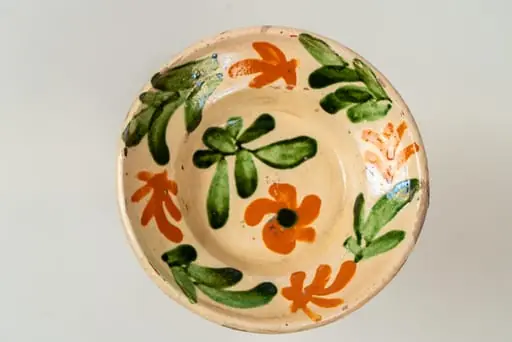 Farfurie mică, adâncă, cu buză răsfrântă. Piesa este modelată la roata olarului, angobată. Decorul este realizat prin pictare cu pensula și constă în motive decorative florale și vegetale (flori și frunze), dispuse central, pe fundul farfuriei și pe toată buza acesteia, sub formă de ghirlandă. Cromatica: alb, verde, siena naturală. Farfuria este smălțuită pe interior, cu smalț transparent.
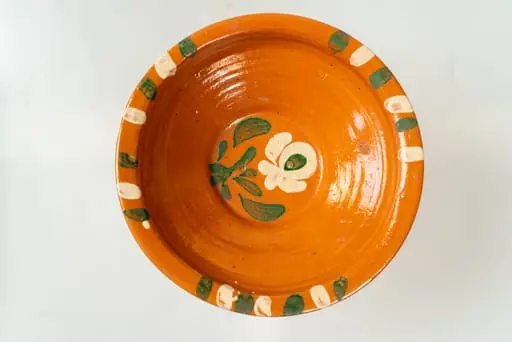 Farfurie adâncă, corpul de formă tronconică, cu buză îngustă, răsfrântă. Piesa este modelată la roata olarului, nefiind angobată. Decorul este realizat prin pictare cu pensula și constă în motive decorative florale (o floare cu frunze), dispuse central, pe fundul farfuriei și motive geometrice (linii groase, paralele), dispuse în trei registre, pe buza acesteia. Cromatica decorului: alb, verde. Farfuria este smălțuită pe interior, cu smalț transparent.
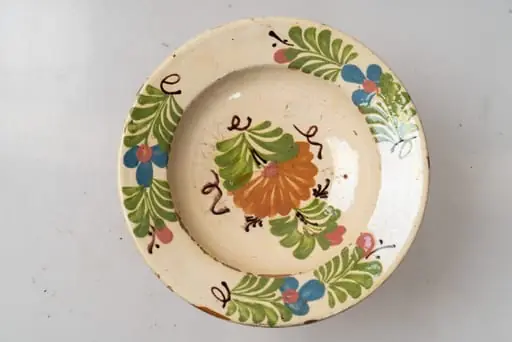 Farfurie adâncă, cu buza lată, răsfrântă; piesa este modelată din lut la roata olarului și este angobată cu humă albă pe fața interioară. Decorul este realizat prin pictare cu pensula și cu cornul și constă în motive florale și fitomorfe (o floare cu frunze și un boboc, pe centrul farfuriei și trei grupuri de flori cu frunze, pe buza farfuriei). Cromatica: alb, albastru, verde, siena naturală, roz-bej, maro. Fața ornamentată a farfuriei este acoperită cu un strat de smalț transparent.
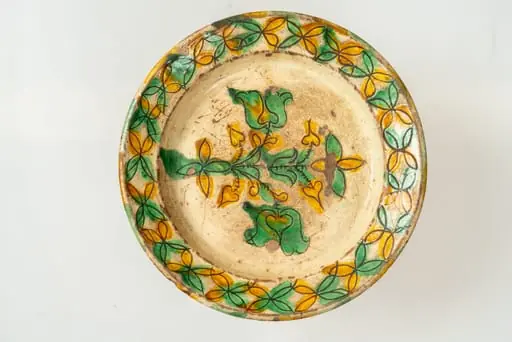 Farfurie de formă aplatizată, cu buză răsfrântă și muchie rotunjită. Piesa este modelată la roata olarului, angobată cu humă albă. Decorul este realizat prin sgrafitare în angoba crudă, peste care se aștern cu pensula culorile de smalț: verde și galben. Motivele decorative sunt florale și vegetale stilizate, dispuse pe fundul și pe buza farfuriei. Cromatica decorului: alb, galben, verde.
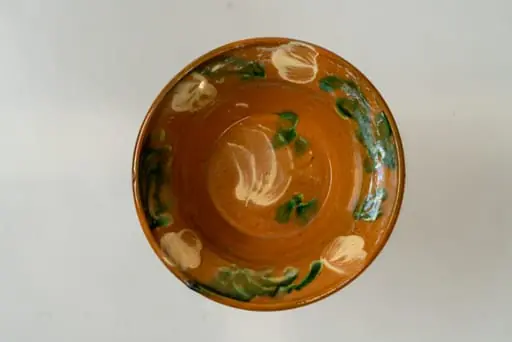 Farfurie mică, adâncă, de formă tronconică, cu buză lată, răsfrântă. Piesa este modelată la roata olarului, nefiind angobată. Decorul este realizat prin pictare cu pensula și constă în motive decorative florale și vegetale (flori și frunze), dispuse central, pe fundul farfuriei și pe toată buza acesteia, sub formă de ghirlandă. Cromatica: alb, verde. Farfuria este smălțuită pe interior, cu smalț transparent.
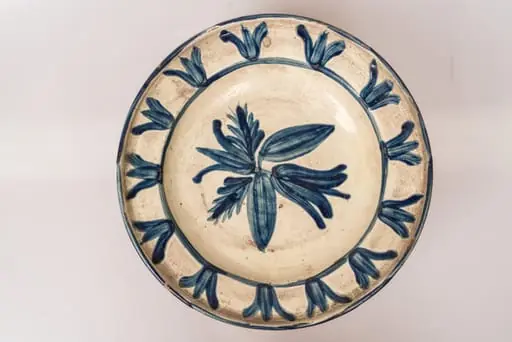 Farfurie semi-adâncă, cu buza răsfrântă și muchia buzei ușor concavă spre interior. Piesa este modelată la roata olarului și este angobată pe fața interioară cu humă albă. Decorul monocromatic este realizat prin pictare cu pensula și consta în motive florale stilizate: două flori de lalea cu doi boboci și două frunze, dispuse central pe fundul farfuriei și flori de lalea simple, înșiruite pe buza farfuriei. Bordura interioară a farfuriei și muchia buzei sunt marcate de câte o linie albastră. Cromatica: alb, albastru. Pe fața ornamentată farfuria este acoperită cu un strat de smalț transparent.
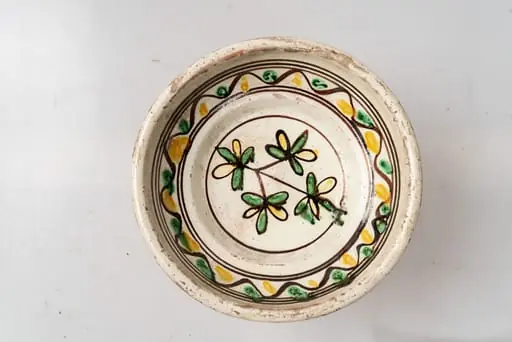 Farfurie adâncă, cu corp ușor rotunjit și buză îngustă rotunjită; piesa este modelată din lut la roata olarului și angobată cu humă albă pe fața interioară. Decorul este realizat prin pictare cu cornul și cu pensula și se compune din motive vegetale și florale foarte stilizate (un buchet central cu patru flori cu petale alungite, desenate cu contur maro și umplute cu culorile verde și galben, decor încadrat într-un cerc de culoare maro; un registru decorativ în zona mediană a peretelui, format dintr-o linie ondulată sub formă de cerc, având puncte verzi și galbene între bucle și încadrată între cercuri de culoare maro). Cromatica: alb, verde, maro, galben. Farfuria este acoperită pe fața ornamentată cu un strat de smalț transparent.
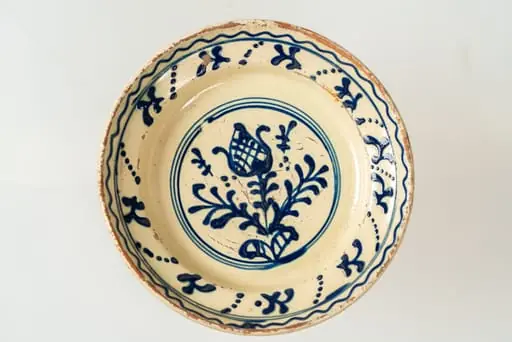 Farfurie semi-adâncă, cu corp scund și buză lată, răsfrântă, cu muchia buzei ușor concavă spre interior. Piesa este modelată la roata olarului, angobată cu humă albă pe fața interioară a acesteia. Decorul este realizat prin pictare cu pensula și cu cornul și constă în motive decorative florale și vegetale stilizate (flori și frunze), dispuse central, pe fundul farfuriei (încadrate in trei cercuri concentrice) și pe buza acesteia. Motive decorative geometrice: șiruri oblice de puncte, linie vălurită, linii sub formă de cerc. Cromatica decorului: alb, albastru. Farfuria este smălțuită pe fața interioară cu smalț transparent.
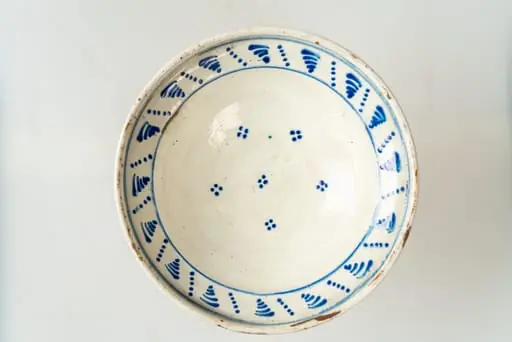 Farfurie adâncă, de tip castron. Piesă modelată la roata olarului, angobată cu alb pe fața interioară și decorată cu motive geometrice (grupuri și șiruri de puncte, grupuri de linii paralele, descrescătoare ca mărime, linii sub formă de cercuri concentrice), dispuse pe fundul farfuriei și pe buza acesteia. Farfuria este smălțuită pe fața interioară cu smalț transparent.