Artwork
Farfurie cu fundul adânc, rotunjit în interior, iar în exterior plat. Marginea farfuriei lată și răsfrântă oblic. Pe margine sunt motive geometrice compuse din patru grupuri de câte trei linii de culoare albă ca ornament. Interiorul farfuriei este smălțuit. Cromatică: fond: maro; motive: alb.
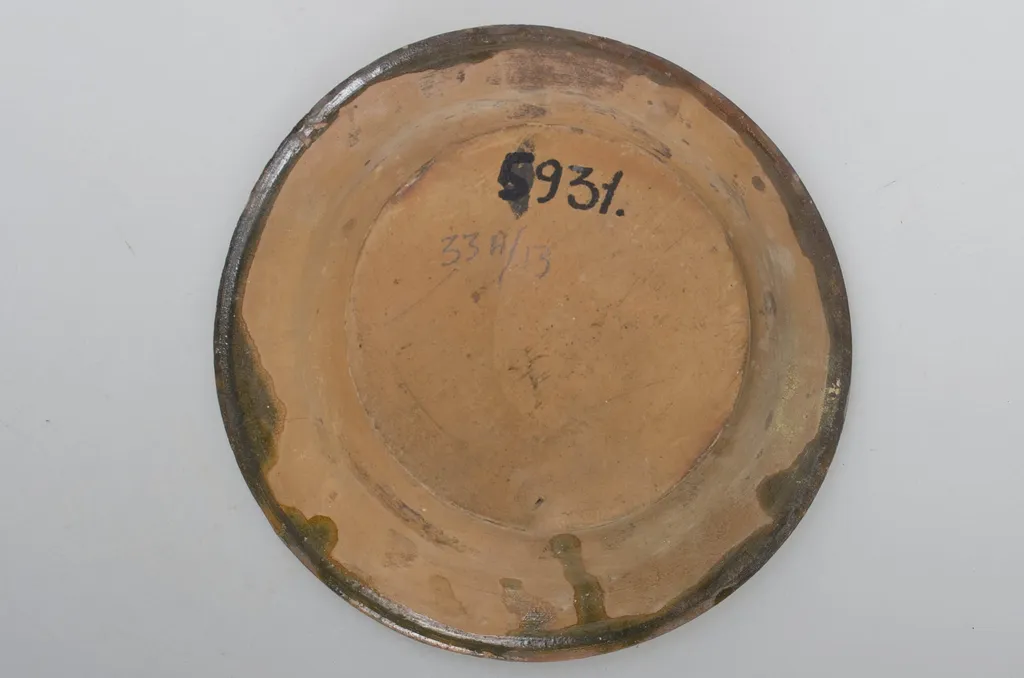
Farfurie cu fundul adânc, rotunjit în interior, iar în exterior plat. Marginea farfuriei lată și răsfrântă oblic. Pe margine sunt motive geometrice compuse din patru grupuri de câte trei linii de culoare albă ca ornament. Interiorul farfuriei este smălțuit. Cromatică: fond: maro; motive: alb. is a print by Unknown. It dates from 1850 and is held in the collection of the ASTRA National Museum Complex. A simple, hand-thrown ceramic plate with a rounded interior and flat exterior rim.
About this work
Overview
A simple, hand-thrown ceramic plate with a rounded interior and flat exterior rim. The wide, sloping edge features a repeating geometric ornament of white lines grouped in threes. The interior is glazed in a pale brown tone, while the exterior surface is unglazed and darker, showing signs of wear. Its minimal decoration and utilitarian form suggest everyday use in a pre-industrial setting.
Subject & Meaning
No figurative imagery is present; the design relies solely on abstract, linear patterns. The repetition of triple-line motifs may reflect symbolic or cultural conventions tied to domestic life, though no explicit narrative or ritual meaning is evident. The ornamentation serves primarily aesthetic and possibly identity-marking functions within its original context.
Technique & Style
The plate was formed by hand, with a smooth glazed interior contrasting the unglazed, textured exterior. White slip was applied along the rim to create precise, thin linear patterns. The geometric arrangement—grouped in threes—indicates intentional design rather than random decoration, consistent with regional ceramic traditions emphasizing rhythm and repetition.
History & Provenance
The object lacks documented origin, but its materials and construction align with folk pottery traditions from Eastern Europe, likely produced in the 19th or early 20th century. Wear patterns suggest prolonged domestic use. It may have been collected later by ethnographers or museums interested in vernacular material culture.
Context
This plate belongs to a broader category of utilitarian ceramics made in rural households or small workshops. Its simplicity, durability, and decorative restraint reflect functional priorities, while the geometric motifs connect it to local aesthetic systems that valued symmetry and pattern over figuration. Similar pieces appear in regional collections from Moldavia and Transylvania.
Legacy
Though not artistically celebrated, the plate contributes to understanding everyday material life in pre-modern communities. Its preservation in museum collections highlights efforts to document non-elite craftsmanship. It remains a quiet example of how ordinary objects carried cultural patterns through form and decoration.
Artist & collection

 Domestic Scene
 Giacomo and Cardinal Marco, investing Andrea, Abbot of San Zeno, with his Benefice
 The Nymph of Fontainebleau
 Portrait of a Woman
 Madonna and Child with Saints in the Enclosed Garden
 Venus and Minerva
 Family Group of Four on Sofa
 Wall painting from Room H of the Villa of P. Fannius Synistor at Boscoreale
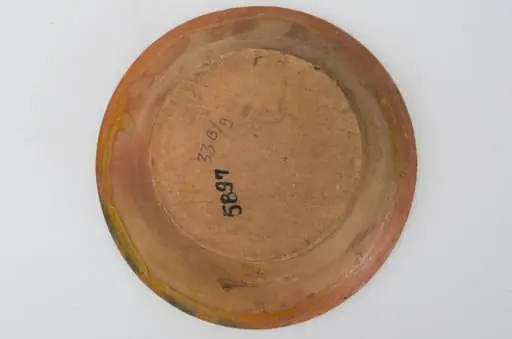 Formă tronconică, adâncită, cu buza evazată; este smălțuit în interior și exterior (buza); este decorat pe margine cu motive geometrice dispuse în 4 registre a câte 3 linii albe; cromatică: cărămiziu, verzui, alb.
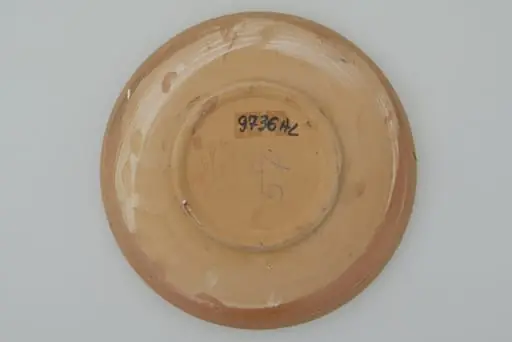 Farfurie tronconică de mici dimensiuni, cu fundul mic, pereții puțin înalți, dar puternic evazați. Centrul farfuriei prezintă o spirală, urmează un câmp jirăvit; urmează două cercuri maro și verde, din nou câmp jirăvit, urmează o ghirlandă cu trandafiri, sfârșindu-se cu un câmp jirăvit. Este prevăzută cu o gaură, pe partea posterioară, pentru prindere. Cromatică: fond: alb-gri; motive; maro; verde; cărămiziu.
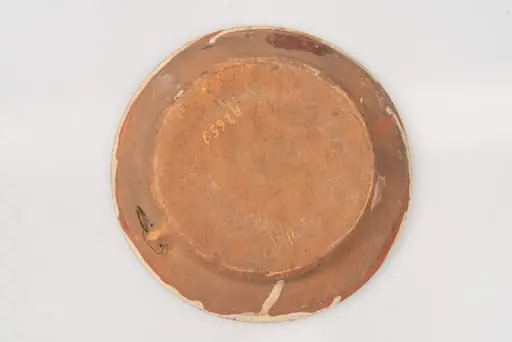 Farfurie de formă aplatizată, angobată cu humă albă pe suprafața interioară și decorată prin pictare cu cornul, cu motive geometrice și vegetale geometrizate, ce acoperă întreaga suprafață a piesei: registrul central de pe fundul farfuriei este decorat cu motivul brăduțului, flori de crin geometrizate și elemente vegetale (vrejuri), iar buza farfuriei cu două linii circulare în formă de zig-zag, intersectate, completate cu puncte albastre mari. Bordura interioară a farfuriei și muchia buzei sunt decorate cu linii circulare simple și linii circulare ondulate. Cromatica: alb, albastru. Suprafața ornamentată a farfuriei este acoperită cu un strat de smalț transparent.
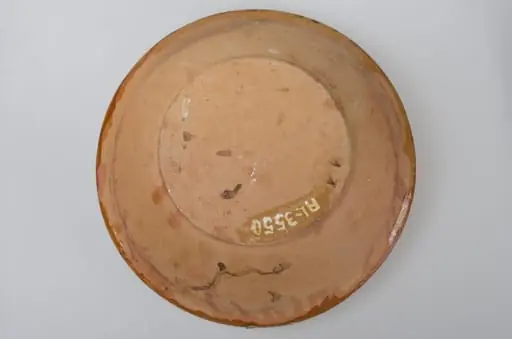 Vas de formă tronconică cu buza dreapta. Decorul este amplasat pe toată suprafața interioară și parțial în exterior, pe buză. Acesta este compus din motive geometrice (val); motive fitomorfe, plasate pe fund (frunza) și motive florale, tot pe fund (pansea). Blidul este smălțuit la interior și pe zona exterioară a buzei. Cromatică: fond: maron; motive: alb, verde.
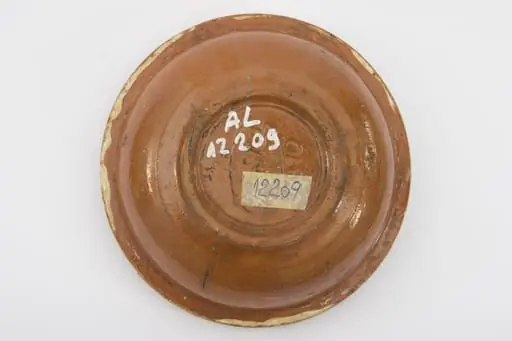 Obiect de uz casnic de formă tronconică foarte adâncită, cu buza foarte înaltă și ușor ieșită în afară în partea exterioară; este smălțuit interior și exterior (doar buza); în centru e decorat cu motive florale, iar pe margine cu o linie; pe fund are marca Granitul No 10; are gura puțin ciobită. Ccromatica: fond interior crem, fond exterior maro; motice: verde, albastru, maro.
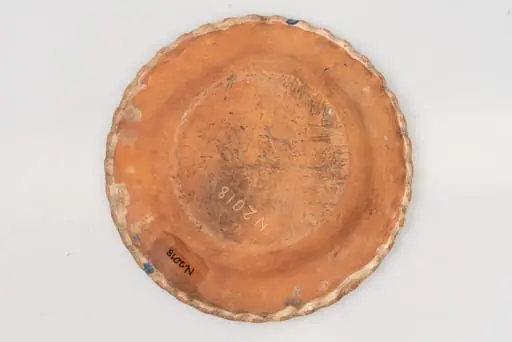 Farfurie de formă aplatizată, cu muchia buzei ușor ondulată. Este acoperită pe suprafața interioară cu un strat de angobă albă peste care este pictat cu pensula monocromatic format din motive geometrice și florale stilizate: registrul central de pe fundul farfuriei conține o tulpină cu trei flori de crin stilizate și două frunze la bază. Registrul decorativ marginal de pe buza farfuriei, înscris între două linii circulare albastre, conține un șir continuu de frunze duble între care se găsesc motive punctate (linii). Suprafața ornamentată a farfuriei este acoperită cu un strat de smalț transparent. Cromatica: alb, albastru.
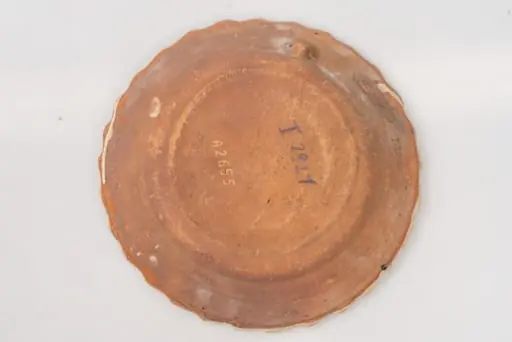 Farfurie semi-adâncă, cu buza evazată și muchia buzei ondulată; este angobată pe suprafața interioară cu un strat de humă albă peste care este pictat cu cornul decorul bogat, ce acoperă întreaga suprafață a farfuriei și este format din motive geometrice și vegetale stilizate: floare cu petale rotunde și mijlocul umplut cu linii hașurate intersectat, semicercuri cu contur albastru și interior verde, linii sub formă de V, linii punctate duble dispuse sub formă de stea, linii circulare, linii groase sub formă de virgulă, grupuri de puncte. Suprafața ornamentată a farfuriei este acoperită cu un strat de smalț transparent. Cromatica: alb, verde, albastru.
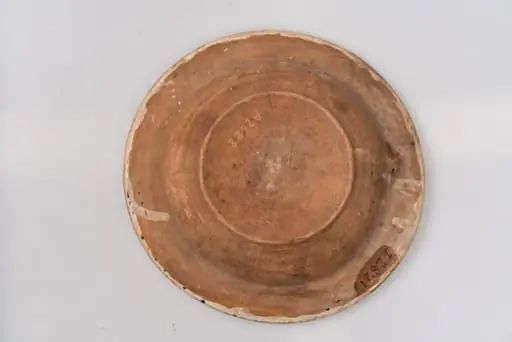 Farfurie adâncă cu buză evazată; este acoperită pe suprafața interioară cu un strat de angobă albă peste care este pictat cu cornul și cu pensula decorul monocromatic format din motive florale și vegetale stilizate: registrul central de pe fundul farfuriei conține un buchet format dintr-o floare de crin și două flori rotunde cu petale formate din linii drepte și patru grupuri de puncte sugerând niște flori mici. De o parte și de alta a florii de crin apare înscris anul fabricării piesei, 1794. Registrul decorativ de pe buza farfuriei, încadrat între două linii circulare, se compune dintr-un șir continuu format din opt flori mici de lalea cu tije în formă de S și frunze, sugerate prin linii paralele și puncte. Muchia buzei este decorată cu mici linii paralele. Suprafața ornamentată a farfuriei este acoperită cu un strat de smalț transparent. Cromatica: alb, albastru.
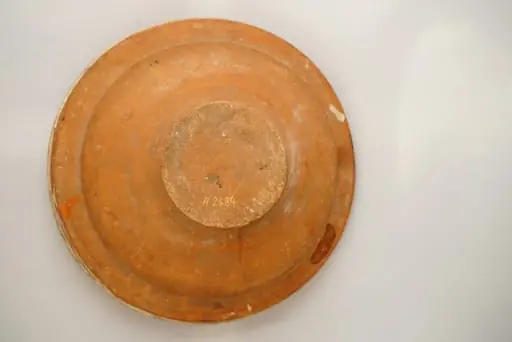 Farfurie mare, adâncă, de tip castron, cu corp tronconic, buza evazată și muchia buzei verticală; suprafața interioară a piesei este acoperită cu un strat de angobă albă, peste care este pictat cu cornul decorul monocromatic format din motive geometrice, florale și vegetale stilizate: centrul farfuriei este decorat cu un cerc format din mai multe linii subțiri maro, cerc ce conține în interior o tulpină cu o floare albastră rotundă și mai multe frunze realizate din linii subțiri; acestui decor floral i se adaugă patru grupuri de linii paralele crescătoare și descrescătoare ca mărime, dispuse sub formă de triunghi. Peretele farfuriei este decorat cu două tipuri de motive florale, cîte două din fiecare motiv și dispuse diametral opus: o tulpină cu două flori de lalea și frunze, și o tulpină cu două flori rotunde și centrul format din linii hașurate intersectat. Buza farfuriei este decorată cu un șir de motive vegetale formate din două linii sub formă de zigzag, dispuse circular, care se intersectează rezultând niște romburi, intersecția acestor linii fiind marcată cu două linii mici în formă de cruciuliță. Muchia buzei este decorată cu linii mici ondulate. Suprafața ornamentată a farfuriei este acoperită cu un strat de smalț transparent. Cromatica: alb, albastru.
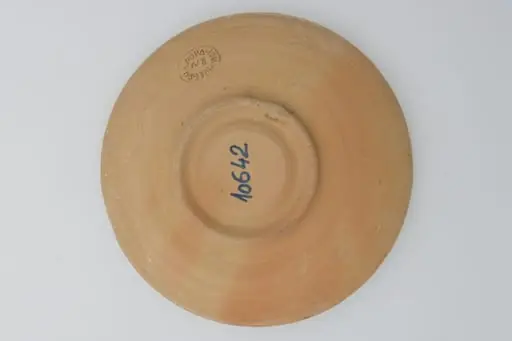 Recipient din lut de uz casnic, nesmălțuit, de formă circulară, cu profil tronconic și buza rotunjită. Acesta este decorat pe toată suprafața cu motive geometrice și florale, realizate cu gaița și cornul. În partea centrală este redată o floare cu petale multiple. Pereții se termină cu o linie ondulată. Cromatică: fond: alb; motive: gri, maro închis, maro deschis.