Artwork
Farfurie de formă semi-adâncă, cu baza largă și cu buza lată, răsfrântă, cu muchia buzei ușor concavă spre exterior. Decorul, dispus pe un fond alb, prin pictare, este format dintr-un motiv zoomorf (căprioară) și vegetal stilizat, plasat central, pe fundul farfuriei. Muchia buzei este marcată de o linie sub formă de cerc. Cromatica decorului: alb, verde, brun, galben, albastru.
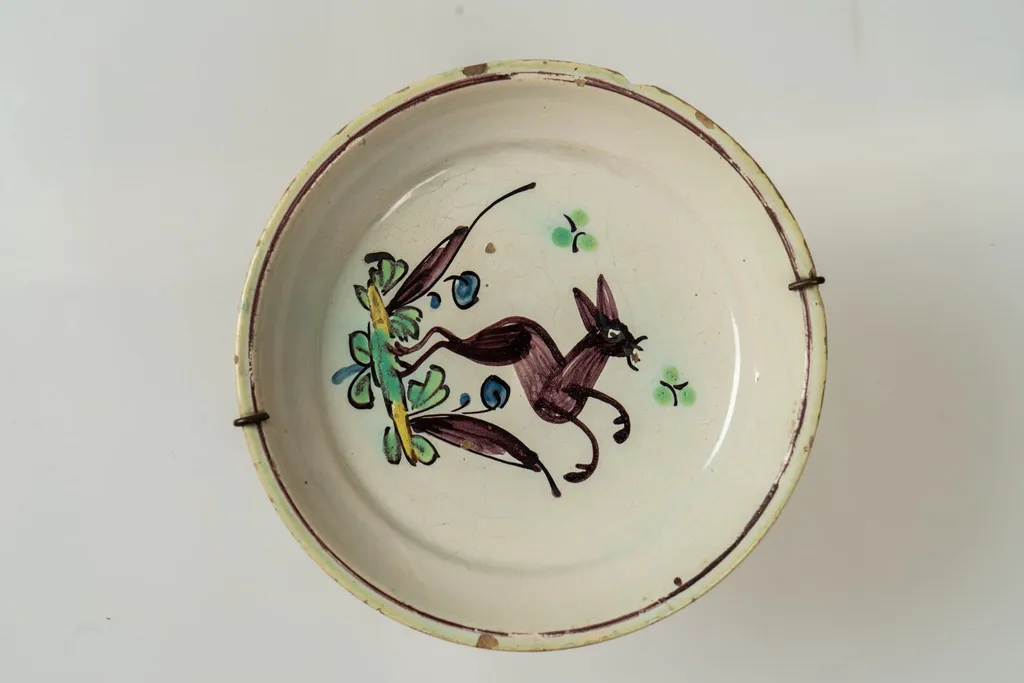
Farfurie de formă semi-adâncă, cu baza largă și cu buza lată, răsfrântă, cu muchia buzei ușor concavă spre exterior. Decorul, dispus pe un fond alb, prin pictare, este format dintr-un motiv zoomorf (căprioară) și vegetal stilizat, plasat central, pe fundul farfuriei. Muchia buzei este marcată de o linie sub formă de cerc. Cromatica decorului: alb, verde, brun, galben, albastru. is a print by Unknown. It dates from 1850 and is held in the collection of the Ethnographical Museum of Transylvania. This shallow ceramic dish features a broad, outward-flaring rim with a gently concave edge, defined by a single dark circular line.
About this work
Overview
This shallow ceramic dish features a broad, outward-flaring rim with a gently concave edge, defined by a single dark circular line. Its white ground serves as a neutral backdrop for hand-painted decoration. The form suggests utilitarian use, possibly for serving, with proportions favoring stability and surface area for ornamentation.
Subject & Meaning
At the center, a stylized deer is depicted mid-stride, surrounded by simplified plant elements—leaves and berries. The animal’s posture is dynamic yet minimal, rendered with fluid, sketch-like lines. The motif likely reflects natural observation, possibly tied to local beliefs or seasonal cycles, though no explicit ritual context is documented.
Technique & Style
Decoration was applied in pigment directly onto the unfired clay, using a palette of green, brown, blue, and yellow. Forms are reduced to essential contours, avoiding detail in favor of rhythmic abstraction. The brushwork is confident and economical, suggesting skilled, possibly communal production rather than individual artistry.
History & Provenance
The piece originates from a tradition of regional ceramic production, likely from the Carpathian Basin or adjacent areas. Comparable examples appear in museum collections from the late Neolithic to early Bronze Age, indicating a sustained local practice. Its exact find location and excavation history remain unrecorded in available sources.
Context
This dish belongs to a broader cultural milieu where pottery served both domestic and symbolic roles. Similar zoomorphic motifs appear on contemporaneous vessels across Eastern Europe, suggesting shared visual languages among farming communities. The use of natural pigments and organic forms aligns with prehistoric aesthetic priorities rooted in the immediate environment.
Legacy
Though not widely known outside regional archaeological circles, the piece exemplifies early European ceramic decoration that prioritized symbolic economy over realism. Its preservation allows study of how early societies encoded natural observation into everyday objects, influencing later folk traditions in the region.
Artist & collection
Museum
Ethnographical Museum of Transylvania
Continue through works from the same source collection.
 Domestic Scene
 Giacomo and Cardinal Marco, investing Andrea, Abbot of San Zeno, with his Benefice
 The Nymph of Fontainebleau
 Portrait of a Woman
 Madonna and Child with Saints in the Enclosed Garden
 Venus and Minerva
 Family Group of Four on Sofa
 Wall painting from Room H of the Villa of P. Fannius Synistor at Boscoreale
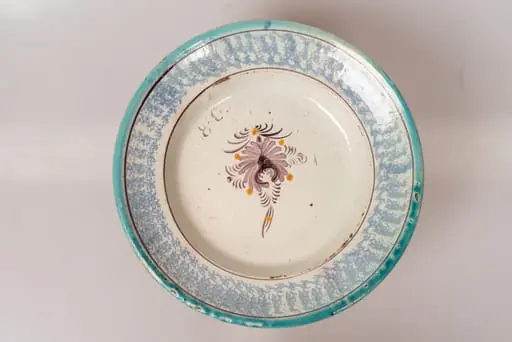 Farfurie de formă aplatizată, cu buza lată, răsfrântă. Decorul este dispus în centrul farfuriei, pe un fond alb-lăptos, și prezintă un motiv vegetal stilizat, pictat cu pensula cu linii fine (o floare cu frunze de culoare maro brun și puncte galbene) iar buza farfuriei este colorată neregulat cu o nuanță deschisă de albastru. Două linii subțiri, în culoarea brun, dispuse sub formă de cercuri concentrice marchează bordura interioară a farfuriei și marginea acesteia. Muchia buzei este marchată de o dungă de culoarea albastru turcoaz. Cromatica: alb, maro-brun, galben-ocru, albastru-turcoaz, albastru deschis.
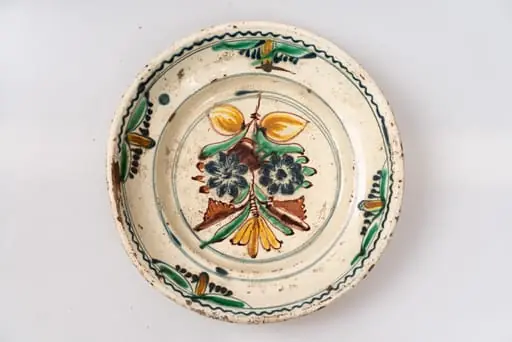 Farfurie semi-adâncă, cu buza evazată și muchia buzei rotunjită; este acoperită pe suprafața interioară cu un strat de angobă albă, peste care este pictat cu cornul și cu pensula decorul format din motive florale și geometrice, realizate cu contur din linii fine maro: central pe fundul farfuriei, încadrat într-un cerc albastru format dintr-o linie spiralată subțire, este pictat un buchet format din două flori albstre, o floare galbenă cu petale lungi, doi boboci galbeni și frunze verzi. Registrul decorativ marginal, încadrat între două cercuri albastre, conține patru motive vegetale stilizate, aproximativ identice, dispuse în cruce (două frunze verzi și una centrală galbenă, decorate cu puncte alungite de culoare albastru-închis). Muchia buzei este marcată cu o linie circulară ondulată de culoare albastră. Suprafața ornamentată a farfuriei este acoperită cu un strat de smalț transparent. Cromatica: alb, galben, verde, maro, albastru.
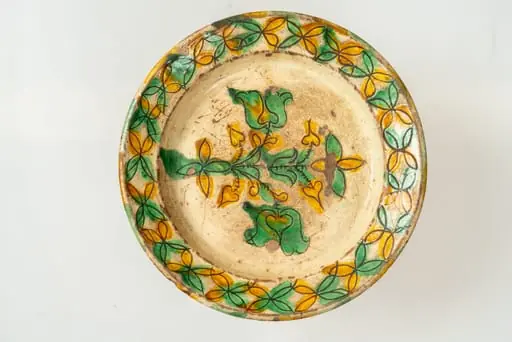 Farfurie de formă aplatizată, cu buză răsfrântă și muchie rotunjită. Piesa este modelată la roata olarului, angobată cu humă albă. Decorul este realizat prin sgrafitare în angoba crudă, peste care se aștern cu pensula culorile de smalț: verde și galben. Motivele decorative sunt florale și vegetale stilizate, dispuse pe fundul și pe buza farfuriei. Cromatica decorului: alb, galben, verde.
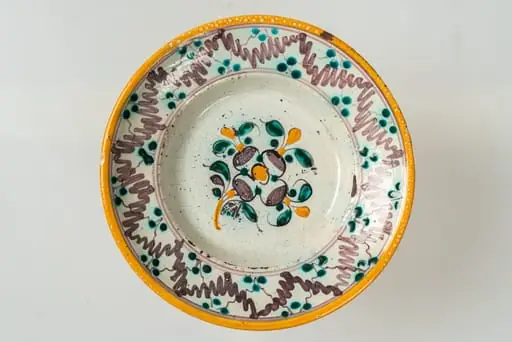 Farfurie de formă semi-adâncă, cu buza lată, răsfrântă. Decorul, dispus pe un fond alb, prin pictare, este format din motive florale fin stilizate (flori și frunze), dispuse central, pe fundul farfuriei, și motive geometrice pe buza acesteia (linii vălurite, puncte, cercuri concentrice). Cromatica decorului: alb, verde-turcoaz, brun, galben-ocru.
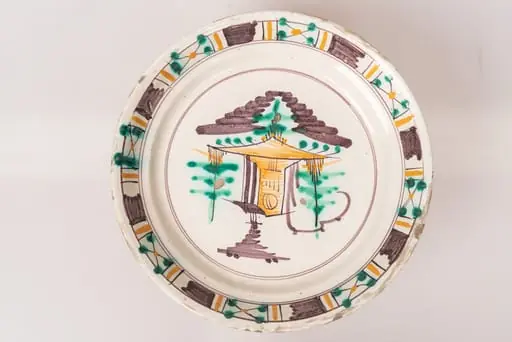 Farfurie semi-adâncă, cu buza răsfrântă. Decorul, dispus prin pictare pe un fond alb lăptos, este format dintr-un motiv arhitectural și motive vegetale stilizate, dispuse central, pe fundul farfuriei, și motive geometrice (linii galbene și dungi maro paralele, grupuri de linii intersectate sub formă de X, decorate cu puncte verzi și galbene), dispuse pe buza farfuriei, într-un registru continuu. Cele două registre ornamentale, cel central de pe fundul farfuriei și cel marginal, de pe buza acesteia, sunt încadrate în cercuri formate din linii fine de culoare maro-brun. Cromatica: alb, verde, maro-brun, galben ocru.
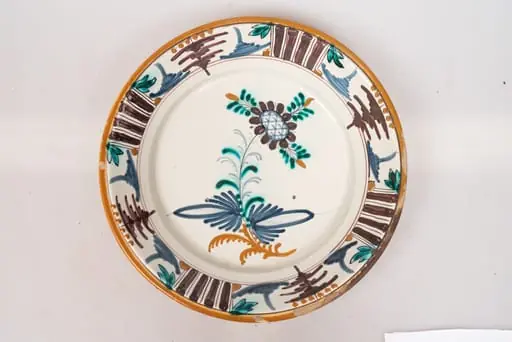 Farfurie de formă aplatizată, cu buza răsfrântă. Decorul, dispus pe un fond alb lăptos, prin pictare, este format dintr-un motiv floral stilizat, dispus central, pe fundul farfuriei, și motive geometrice (puncte galbene, grupuri de dungi paralele de culoare maro-brun, linii subțiri, paralele, linii sub formă de cerc, motivul bradului), dispuse într-un registru continuu pe buza farfuriei. Muchia buzei este marcată cu o dungă de culoare galbenă. Cromatica: alb, verde, brun, albastru, galben-ocru.
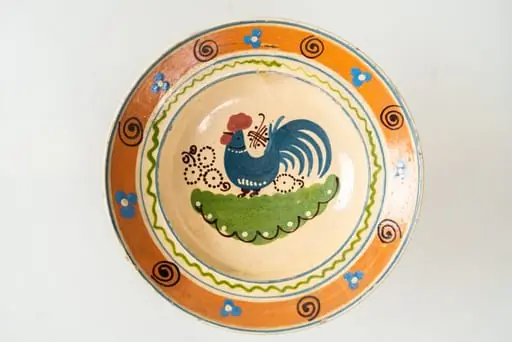 Formă adâncă, cu buză lată, răsfrântă. Piesa este modelată la roată, angobată cu humă albă. Decorul este realizat prin pictare cu pensula și cu cornul. Decorul, dispus pe întreaga suprafață a farfuriei, este format dintr-un motiv avimorf (cocoș, în zona centrală a farfuriei), motive florale și vegetale stilizate (central și pe buză) și motive geometrice (puncte, linii sub formă de cerc, linie vălurită, linie spiralată). Fața interioară a farfuriei este smălțuită cu un smalț transparent, lucios. Cromatica: alb, verde, albastru, brun, maro, siena naturală.
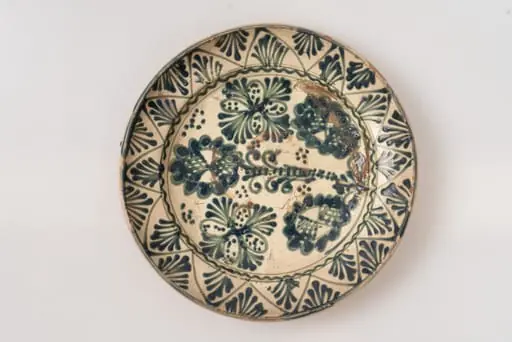 Farfurie de formă semi-adâncă, cu buză lată, răsfrântă; este angobată pe fața interioară cu un strat de humă albă, peste care este pictat cu cornul decorul monocromatic, format din motive florale și fitomorfe foarte stilizate (tulpină cu cinci flori și frunze, reprezentate pe centrul farfuriei) și geometrice (o linie în formă de zig-zag, pe toată lungimea buzei, completată cu motive formate din linii verticale, dispuse în formă de triunghi; linii circulare simple și linie circulară ondulată ce marchează bordura interioară a farfuriei; puncte, linii hașurate). Buza farfuriei este marcată cu o dungă de culoare albastră. Cromatica: alb, albastru. Farfuria este acoperită pe fața decorată cu un strat de smalț transparent.
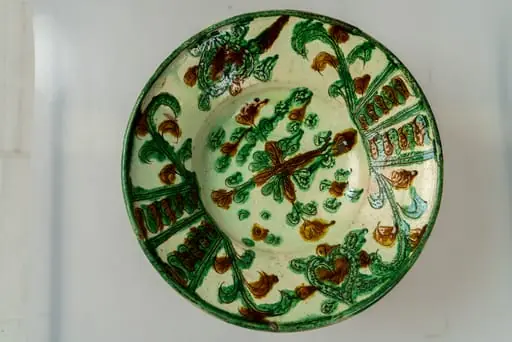 Farfurie mare, de formă semi-adâncă, cu buză răsfrântă, foarte lată, cu muchie rotunjită. Piesa este modelată la roata olarului, angobată cu humă albă. Decorul este realizat prin sgrafitare în angoba crudă, peste care se aștern cu pensula culorile de smalț: verde și galben-ocru închis. Motivele decorative sunt florale și vegetale stilizate, dispuse pe toată suprafața farfuriei. Cromatica decorului: alb, galben-ocru închis, verde.
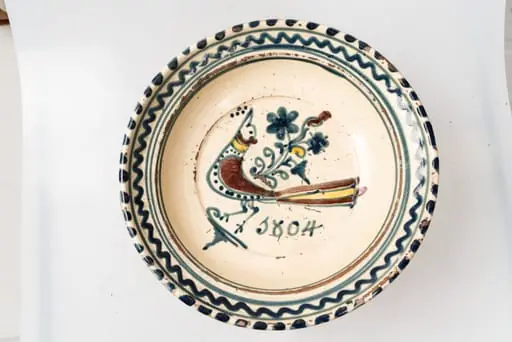 Farfurie mare, de formă semi-adâncă, cu buza răsfrântă, ușor concavă spre interior și muchia rotunjită. Piesa este modelată la roata olarului și angobată cu humă albă pe fața interioară. Decorul este realizat prin pictare cu cornul și cu pensula și se compune din motive vegetale, avimorfe și geometrice, dispuse astfel: registrul decorativ central de pe fundul farfuriei conține o pasăre cu aripi maro, ce ține în cioc o mică crenguță, așezată sub o tulpină cu trei flori albastre și frunze; sub coada păsării este înscris anul fabricării piesei, 1804. Buza farfuriei este decorată cu linii sub formă de cercuri concentrice, linie ondulată sub formă de cerc; muchia buzei este decorată cu un șir continuu de linii mici, groase, paralele de culoare albastru-închis. Fața ornamentată a piesei este acoperită cu un strat de smalț transparent. Cromatica: alb, maro, albastru, galben.
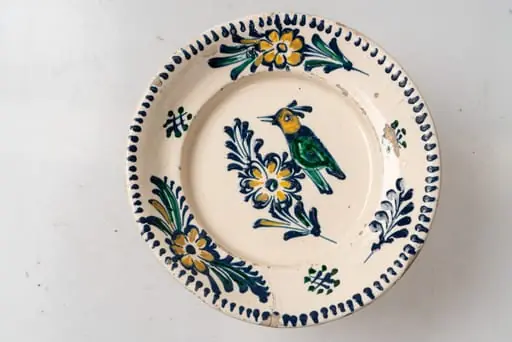 Farfurie de formă aplatizată, cu buza răsfrântă și foarte ușor concavă spre interior. Piesa este modelată din lut la roata olarului și angobată cu humă albă pe fața interioară. Decorul este realizat prin pictare cu pensula și cu cornul și se compune din motive avimorfe (o pasăre stând pe o crenguță cu frunze și cu o floare, pictate în registrul central de pe fundul farfuriei), trei motive vegetale (frunze și frunze cu flori, pe buza farfuriei) și motive geometrice (linii hașurate, puncte, pe buza farfuriei). Muchia buzei este decorată cu un șir de linii mici paralele, de culoare albastră. Cromatica: alb, albastru, verde, galben. Fața ornamentată a farfuriei este acoperită cu un strat de smalț transparent.
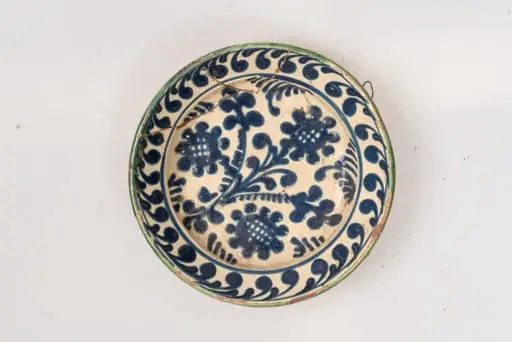 Farfurie de formă semi-adâncă, cu fund larg și buză evazată. Farfuria este angobată pe fața interioară cu un strat de humă albă, peste care este pictat cu cornul și cu pensula decorul format din motive florale și fitomorfe stilizate: o tulpină cu trei flori rotunde, cu mijlocul umplut cu linii hașurate intersectat, și frunze, reprezentate central pe fundul farfuriei. Buza farfuriei este decorată cu un șir continuu format din două tipuri de linii sub formă de virgulă. Bordura interioară a farfuriei este marcată cu o dungă de culoare albastră iar muchia buzei cu o dungă verde. Cromatica: alb, albastru, verde. Farfuria este acoperită pe fața ornamentată cu un strat de smalț transparent.