Artwork
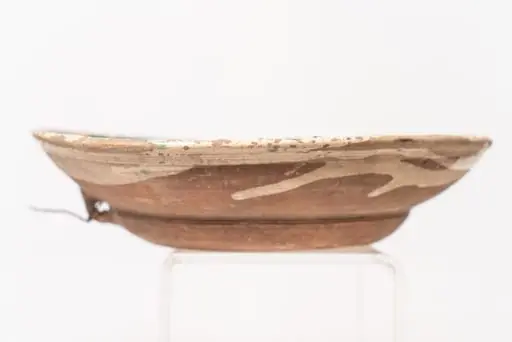
Farfurie de tip platou, cu muchia buzei concavă spre interior, aplatizată și ondulată. Este acoperită pe suprafața interioară cu un strat de pigment verde pe bază de smalț, peste care este pictat cu pensula decorul format din motive florale și vegetale: patru flori dispuse în formă de cruce (două flori albe, una de culoare galben-ocru și una roșie-cărămiziu), intercalate cu câte un grup de frunze de culoare galben-ocru și linii curbe paralele de culoare maro-închis. În centru este înscris anul fabricării piesei. Suprafața ornamentată a farfuriei este acoperită cu un strat de smalț transparent. Cromatica: alb, verde, maro-închis, roșu-cărămiziu, galben-ocru.
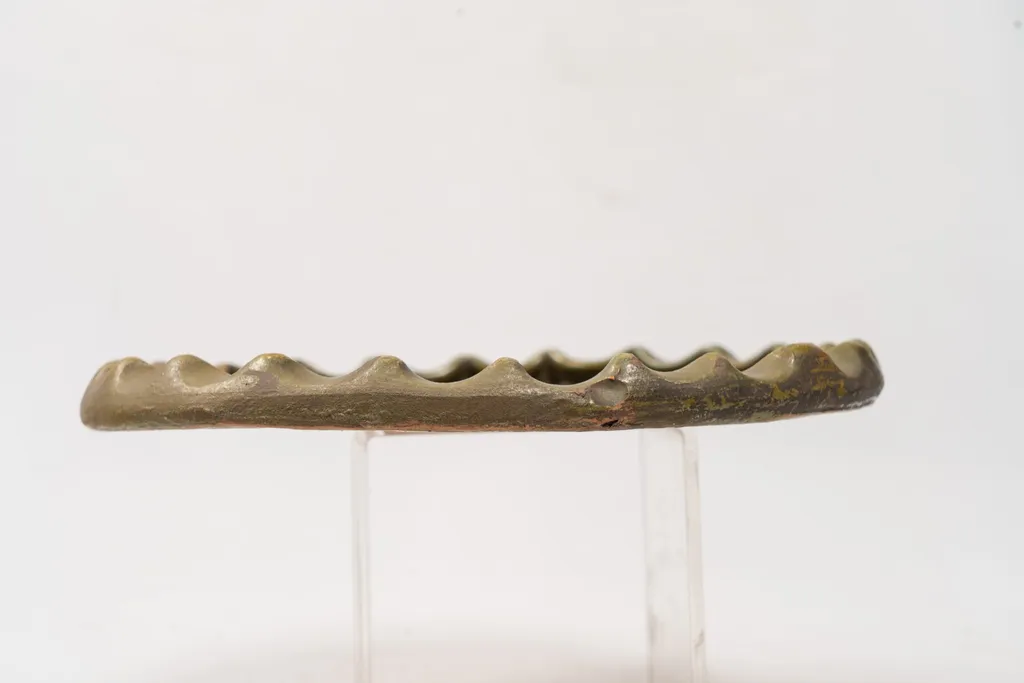
Farfurie de tip platou, cu muchia buzei concavă spre interior, aplatizată și ondulată. Este acoperită pe suprafața interioară cu un strat de pigment verde pe bază de smalț, peste care este pictat cu pensula decorul format din motive florale și vegetale: patru flori dispuse în formă de cruce (două flori albe, una de culoare galben-ocru și una roșie-cărămiziu), intercalate cu câte un grup de frunze de culoare galben-ocru și linii curbe paralele de culoare maro-închis. În centru este înscris anul fabricării piesei. Suprafața ornamentată a farfuriei este acoperită cu un strat de smalț transparent. Cromatica: alb, verde, maro-închis, roșu-cărămiziu, galben-ocru. is a photography by Unknown. It dates from 1850 and is held in the collection of the Ethnographical Museum of Transylvania. The object is a shallow, circular plate whose rim curves inward, creating a concave, flattened, and undulating edge.
About this work
Overview
The object is a shallow, circular plate whose rim curves inward, creating a concave, flattened, and undulating edge.
The object is a shallow, circular plate whose rim curves inward, creating a concave, flattened, and undulating edge. Its interior is coated with a green glaze, over which a painted decorative scheme appears. The design consists of four flowers arranged in a cross, two white, one ochre‑yellow and one brick‑red, interspersed with ochre leaf clusters and dark brown curving lines. The year of manufacture is inscribed at the centre, and the entire surface is sealed with a clear glaze.
Subject & Meaning
The central motif combines floral and vegetal elements in a symmetrical cross, a composition often associated with balance and harmony in decorative arts. The contrasting hues—white, yellow‑ochre, brick‑red, and dark brown—highlight each botanical form, while the green background unifies the scheme, suggesting a stylized garden or natural tableau rendered in a decorative rather than narrative mode.
Technique & Style
The plate was first glazed with a green, lead‑based enamel, then hand‑painted using fine brushes to apply the flower and leaf motifs. After the pigments dried, a transparent glaze was applied to protect the painted surface and enhance its depth. The use of vivid, flat colors and stylized forms reflects a folk‑art aesthetic common in regional ceramic traditions.
History & Provenance
An inscription of the production year appears centrally, indicating that the piece was dated by its maker. No further provenance details are provided, but the combination of glaze and painted decoration aligns with ceramic practices documented in Eastern European workshops during the late 19th to early 20th centuries.
Context
Such plates were typically used for both functional and decorative purposes, often displayed as part of a household collection or in ceremonial settings. The cross‑shaped floral arrangement mirrors patterns found in contemporary textiles and woodwork, suggesting an integrated visual language across applied arts of the period.
Artist & collection
Museum
Ethnographical Museum of Transylvania
Continue through works from the same source collection.
 Domestic Scene
 Giacomo and Cardinal Marco, investing Andrea, Abbot of San Zeno, with his Benefice
 The Nymph of Fontainebleau
 Portrait of a Woman
 Madonna and Child with Saints in the Enclosed Garden
 Venus and Minerva
 Family Group of Four on Sofa
 Wall painting from Room H of the Villa of P. Fannius Synistor at Boscoreale
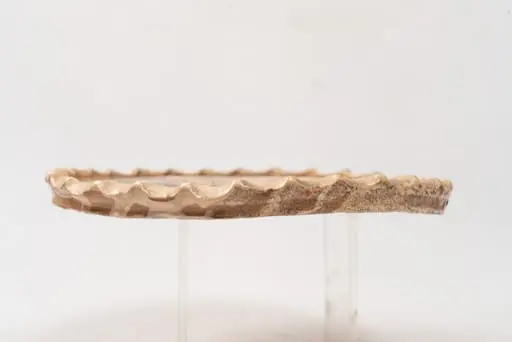 Farfurie de tip platou, cu muchia buzei ridicată și ondulată. Este acoperită pe suprafața interioară cu un strat de angobă albă, peste care este pictat cu pensula decorul format din motive vegetale și geometrice: cinci flori albastre dispuse în formă de stea, intercalate cu frunze de culoare verde și grupuri de linii curbe paralele de culoare maro-închis, de asemenea dispuse în formă de stea. În centru este pictată o floare cu petale de culoare galben-ocru. Decorul este completat cu puncte de culoare galben-ocru. Suprafața ornamentată a farfuriei este acoperită cu un strat de smalț transparent. Cromatica: alb, verde, maro-închis, albastru, galben-ocru.
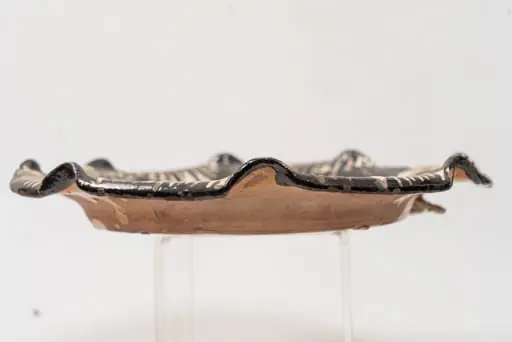 Farfurie de formă aplatizată, cu muchia buzei larg ondulată; este acoperită pe suprafața interioară cu un strat de angobă maro, peste care este pictat cu pensula și cu cornul decorul format din motive vegetale și geometrice, dispuse astfel: întreg fundul farfuriei este acoperit cu un decor vegetal, format din trei tulpini cu flori și frunze, în cromatica verde, galben și albastru, iar buza farfuriei este decorată cu șapte grupuri de motive formate din linii albe paralele, crescătoare și descrescătoare ca mărime, dispuse sub formă de triunghiuri orientate cu vârful spre centrul farfuriei și separate de câte un motiv format din puncte, sugerând mici flori. Suprafața ornamentată a farfuriei este acoperită cu un strat de smalț transparent. Cromatica: maro, alb, albastru, verde, galben.
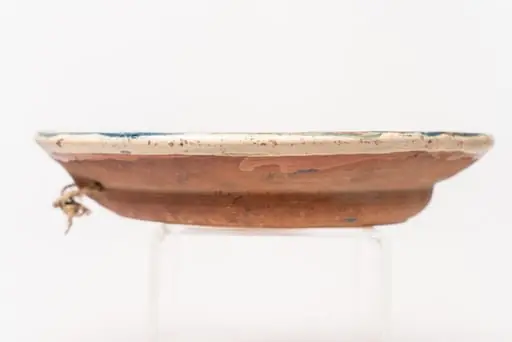 Farfurie semi-adâncă, cu răsfrântă; piesa este modelată la roata olarului și angobată cu humă albă pe fața interioară a acesteia. Decorul este realizat prin pictare cu cornul și cu pensula și constă în motive decorative florale și vegetale stilizate (flori de culoare galbenă cu contur albastru și frunze, dispuse în șir continuu pe fundul farfuriei și pe toată buza acestei), un motiv zoomorf (un cerb pictat central și înscris într-un cerc albastru cu puncte) și motive geometrice (linii sub formă de cerc și linie vălurită, sub bordura interioară a farfuriei; muchia buzei este marcată cu o linie albastră). Cromatica: alb, albastru, galben. Farfuria este smălțuită pe interior, cu smalț transparent.
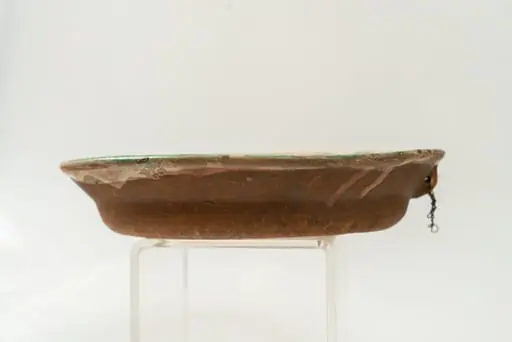 Farfurie adâncă, cu buza răsfrântă, modelată la roata olarului, angobată cu humă albă pe fața interioară. Decorul, bogat, este realizat prin pictare cu pensula și cu cornul și se compune din motive decorative florale stilizate și geometrice, acoperind întreaga suprafață a farfuriei. Cromatica: alb, verde, galben ocru, maro.
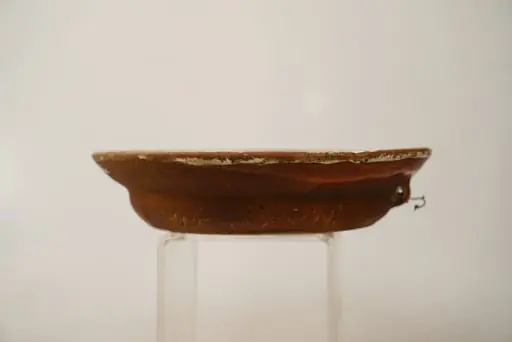 Farfurie semi-adâncă, cu buza evazată și ușor concavă spre interior și cu muchia buzei rotunjită; este acoperită pe suprafața interioară cu un strat de angobă albă peste care este pictat cu cornul și cu pensula decorul format din motive vegetale și florale stilizate (registrul decorativ de pe fundul farfuriei conține o tulpină cu o floare centrală cu petale rotunde, în culorile galben-ocru, maro și verde; două flori laterale de lalea, de culoare maro, și frunze de culoare galben-ocru și verde) și motive decorative geometrice (patru grupuri, inegale ca lungime, formate din linii paralele drepte, de culoare maro, intercalate cu patru grupuri de câte 3 linii maro sub formă de semicercuri, umplute cu culorile galben și verde), dispuse pe buza farfuriei și încadrate de linii paralele sub formă de cerc, de culoare maro. Patru linii mici spiralate, de culoare maro, completează decorul central de pe fundul farfuriei. Piesa este acoperită pe suprafața ornamentată cu un strat de smalț transparent. Cromatica: alb, verde, maro, galben-ocru.
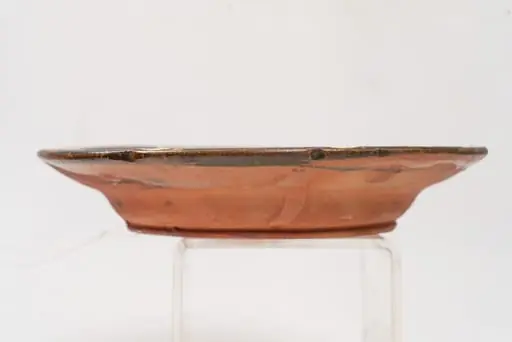 Farfurie semi-adâncă, acoperită pe suprafața interioară cu un strat de angobă de culoare verde închis, peste care este pictat cu pensula și cu cornul decorul format din motive florale stilizate și motive geometrice: registrul decorativ central, încadrat într-un cerc de culoare maro-închis, conține o tulpină și elemente vegetale formate din linii punctate, două frunze de culoare albă și trei flori, cele două laterale de culoare roșu-cărămiziu, iar cea centrală de culoare albă cu mijlocul roșu. Buza farfuriei este decorată cu un șir de semicercuri cu contur maro, lipite de muchia buzei, umplute cu culorile alb și roșu-cărămiziu și având pe exterior linii mici de culoare maro-închis. Bordura interioară a farfuriei este marcată cu o linie circulară subțire iar muchia buzei cu o dungă de culoare maro-închis. Suprafața ornamentată a farfuriei este acoperită cu un strat de smalț transparent. Cromatica: verde închis, alb, roșu-cărămiziu, maro-închis.
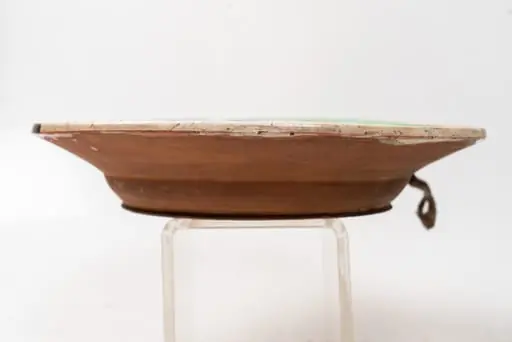 Farfurie mare, semi-adâncă, cu buza răsfrântă; piesa este modelată la roata olarului și angobată cu humă albă pe fața interioară. Decorul este realizat prin sgrafitare în pasta albă de angobă și prin pictare cu pensula și cu cornul și se compune din motive decorative vegetale (o floare foarte stilizată, cu patru petale, dispusă în registrul central de pe fundul farfuriei) și geometrice (linii circulare, de culoare verde și siena arsă, pe buza farfuriei). Cromatica: alb, verde, siena arsă, maro. Fața ornamentată a farfuriei este acoperită cu un strat de smalț transparent.
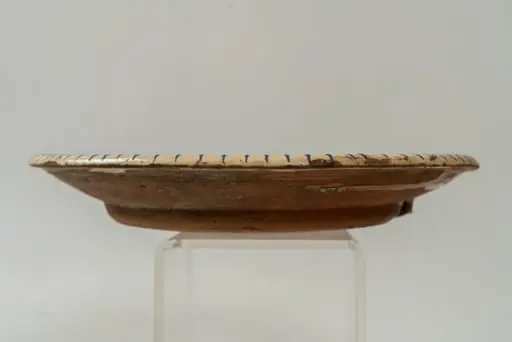 Farfurie de formă aplatizată, modelată la roata olarului, angobată cu humă albă pe fața interioară a acesteia. Decorul este realizat prin pictare cu pensula și cu cornul și constă în motive decorative vegetale stilizate (floare cu frunze - dispuse central, pe fundul farfuriei) și motive geometrice (grupuri de linii paralele, descrescătoare ca mărime - motivul brăduțului - și un șir de linii paralele pe toată lungimea muchiei buzei). Cromatica decorului: alb, albastru. Farfuria este smălțuită pe interior, cu smalț transparent.
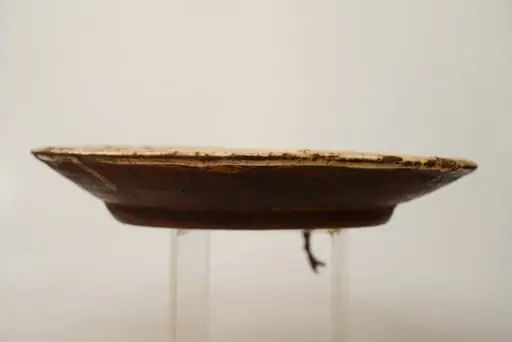 Farfurie semi-adâncă, cu buza dreaptă evazată; suprafața interioară este acoperită cu un strat de angobă albă, peste care este pictat cu cornul și cu pensula decorul format din motive florale și geometrice, dispuse astfel: registrul decorativ de pe fundul farfuriei conține, încadrat într-un cerc format dintr-o linie albastră dublă, un buchet desenat cu contur subțire maro, format dintr-o floare centrală de culoare maro, doi boboci galbeni la bază, o floare cu petale alungite, în partea superioară a buchetului și din frunze verzi. Registrul decorativ marginal de pe buza farfuriei, marcat de două linii circulare albastre, conține trei flori de lalea de culoare galbenă cu două frunze verzi, separate de câte un motiv format din șase linii maro subțiri, hașurate intersectat. Suprafața ornamentată a farfuriei este acoperită cu un strat de smalț transparent. Cromatica: alb, galben, verde, maro.
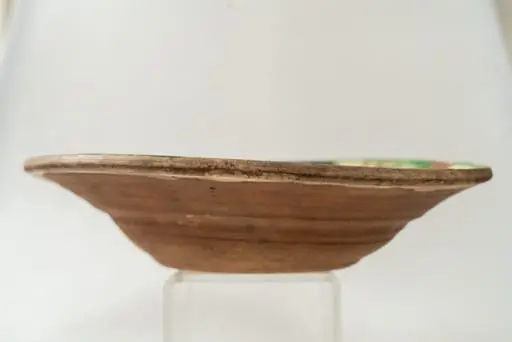 Farfurie mare, de formă adâncă, cu buză răsfrântă. Piesa este modelată la roată, angobată cu humă albă pe fața interioară. Decorul este realizat prin pictare cu pensula, cu smalțuri colorate (verde și maro) și prin sgrafitare. Motivele decorative sunt florale și vegetale stilizate (flori cu frunze) dispuse pe fundul farfuriei (o floare) și patru flori intercalate de patru elemente decorative vegetale (frunze) sugerând motivul inimii, dispuse pe buza farfuriei. Bordura interioară a farfuriei este marcată de o linie groasă sub formă de cerc, de culoare verde. Pe fața interioară a farfuriei este aplicat un strat de smalț transparent.
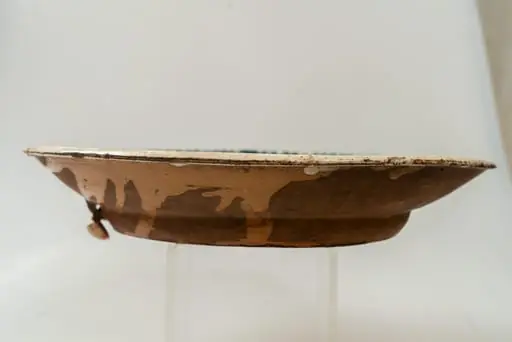 Farfurie mare, lată, cu buză răsfrântă. Este modelată la roata olarului și angobată cu humă albă pe fața interioară. Decorul este realizat prin pictare cu cornul și cu pensula și se compune din motive decorative florale stilizate (buchet central, pe fundul farfuriei) și motive geometrice variate, dispuse pe buza farfuriei. Cromatica: alb, brun, verde, galben, albastru. Fața interioară a farfuriei este acoperită de un strat de smalț transparent.
 Farfurie adâncă, cu buza răsfrântă; piesa este modelată la roata olarului și angobată pe fața interioară cu humă albă. Decorul este realizat prin pictare cu pensula și cu cornul și se compune din motive florale și vegetale foarte stilizate (registrul central este format dintr-o floare sub formă de rozetă, cu patru petale verzi și patru albastre; buza farfuriei este decorată cu patru flori stilizate, posibil lalele, dispuse diametral opus iar între ele sunt pictate motive formate din linii groase verzi, sub formă de V, decorate pe exterior cu linii mici albastre și linii hașurate în interior). Cromatica: alb, verde, albastru. Fața ornamentată a farfuriei este acoperită cu un strat de smalț transparent.