Artwork
Farfurie de tip platou, cu muchia buzei ridicată și ondulată. Este acoperită pe suprafața interioară cu un strat de angobă albă, peste care este pictat cu pensula decorul format din motive vegetale și geometrice: cinci flori albastre dispuse în formă de stea, intercalate cu frunze de culoare verde și grupuri de linii curbe paralele de culoare maro-închis, de asemenea dispuse în formă de stea. În centru este pictată o floare cu petale de culoare galben-ocru. Decorul este completat cu puncte de culoare galben-ocru. Suprafața ornamentată a farfuriei este acoperită cu un strat de smalț transparent. Cromatica: alb, verde, maro-închis, albastru, galben-ocru.
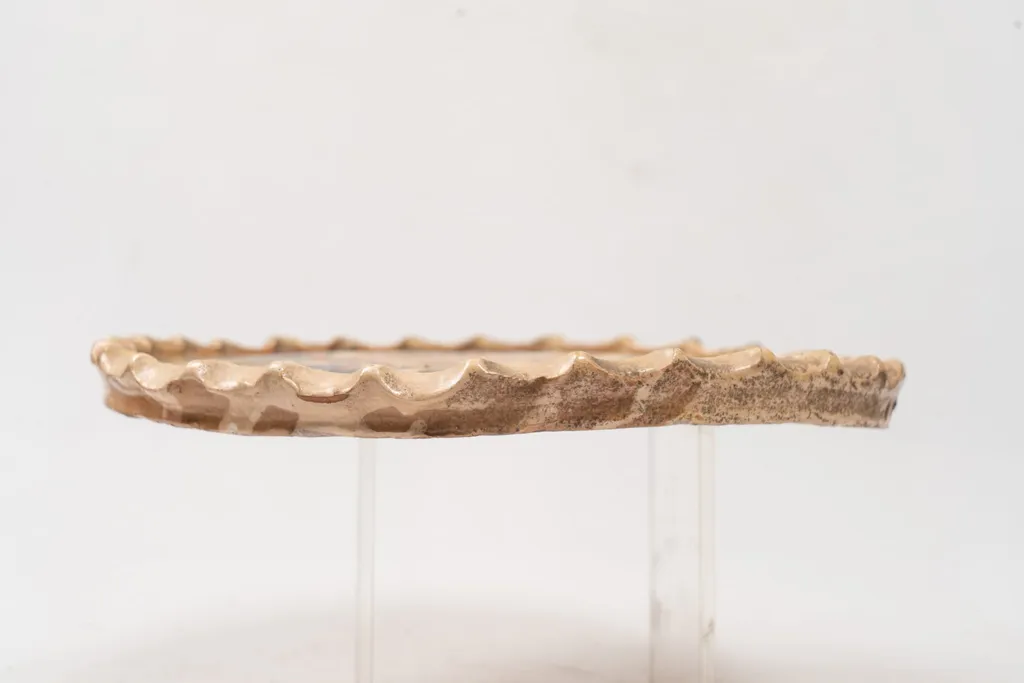
Farfurie de tip platou, cu muchia buzei ridicată și ondulată. Este acoperită pe suprafața interioară cu un strat de angobă albă, peste care este pictat cu pensula decorul format din motive vegetale și geometrice: cinci flori albastre dispuse în formă de stea, intercalate cu frunze de culoare verde și grupuri de linii curbe paralele de culoare maro-închis, de asemenea dispuse în formă de stea. În centru este pictată o floare cu petale de culoare galben-ocru. Decorul este completat cu puncte de culoare galben-ocru. Suprafața ornamentată a farfuriei este acoperită cu un strat de smalț transparent. Cromatica: alb, verde, maro-închis, albastru, galben-ocru. is a print by Unknown. It dates from 1850 and is held in the collection of the Ethnographical Museum of Transylvania. This is a shallow, circular ceramic plate with a hand-formed, undulating rim.
About this work
Overview
This is a shallow, circular ceramic plate with a hand-formed, undulating rim. Its interior surface is coated with a white slip, over which a decorative scheme is painted in mineral pigments. The design is confined to the central field, leaving the outer rim unadorned. A transparent glaze seals the painted surface, preserving the clarity of the colors and the brushwork beneath.
Subject & Meaning
The repetition of star-like groupings suggests an intentional symbolic structure, possibly reflecting natural cycles or celestial order.
The decoration centers on a yellowish-brown flower, surrounded by five blue blooms arranged in a star pattern. Interspersed are green leaf forms and dark brown curved lines, also organized radially. The repetition of star-like groupings suggests an intentional symbolic structure, possibly reflecting natural cycles or celestial order. The absence of figural elements points to a preference for abstracted botanical motifs.
Technique & Style
The design was applied with a fine brush over a white slip, using limited pigments: blue, green, dark brown, and ochre yellow. Lines are fluid but deliberate, with no shading or modeling. The use of dots in ochre adds texture without depth. The style is linear and rhythmic, emphasizing pattern over realism. The handmade rim and uneven edges indicate hand-thrown production rather than mold-based manufacturing.
History & Provenance
The plate belongs to a regional ceramic tradition from the Balkans or Eastern Europe, likely produced between the 15th and 17th centuries. Similar vessels have been found in domestic and ritual contexts, suggesting both utilitarian and ceremonial use. Its preservation indicates careful handling, possibly within a household or religious setting where such objects were valued for their aesthetic and symbolic qualities.
Context
This plate reflects a broader ceramic practice in which painted decoration replaced earlier incised or stamped designs. The preference for radial symmetry and botanical motifs aligns with regional folk traditions that avoided figural representation. Its simple palette and lack of glaze imperfections suggest local production, possibly for domestic use rather than elite trade.
Legacy
The plate exemplifies a vernacular ceramic aesthetic that persisted in rural communities long after urban centers adopted more elaborate styles. Its preservation in museum collections highlights its value as a record of everyday craftsmanship. The design’s geometric clarity and restrained palette continue to inform contemporary interpretations of traditional pottery in the region.
Artist & collection
Museum
Ethnographical Museum of Transylvania
Continue through works from the same source collection.
 Domestic Scene
 Giacomo and Cardinal Marco, investing Andrea, Abbot of San Zeno, with his Benefice
 The Nymph of Fontainebleau
 Portrait of a Woman
 Madonna and Child with Saints in the Enclosed Garden
 Venus and Minerva
 Family Group of Four on Sofa
 Wall painting from Room H of the Villa of P. Fannius Synistor at Boscoreale
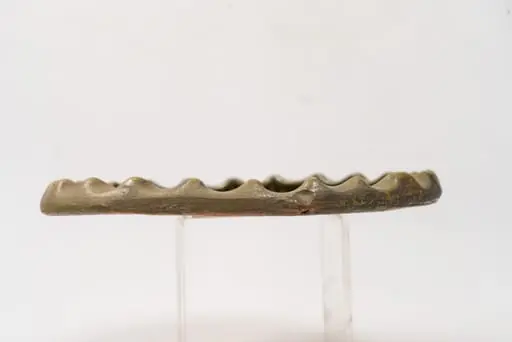 Farfurie de tip platou, cu muchia buzei concavă spre interior, aplatizată și ondulată. Este acoperită pe suprafața interioară cu un strat de pigment verde pe bază de smalț, peste care este pictat cu pensula decorul format din motive florale și vegetale: patru flori dispuse în formă de cruce (două flori albe, una de culoare galben-ocru și una roșie-cărămiziu), intercalate cu câte un grup de frunze de culoare galben-ocru și linii curbe paralele de culoare maro-închis. În centru este înscris anul fabricării piesei. Suprafața ornamentată a farfuriei este acoperită cu un strat de smalț transparent. Cromatica: alb, verde, maro-închis, roșu-cărămiziu, galben-ocru.
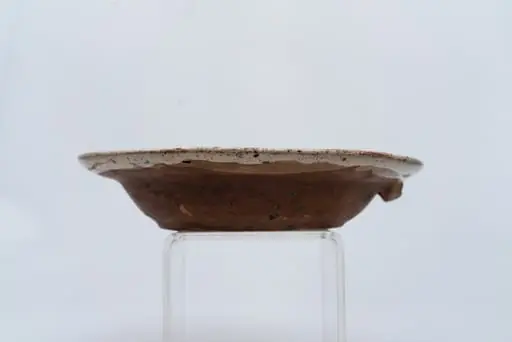 Farfurie adâncă cu buză evazată; este acoperită pe fața interioară cu un strat de angobă albă. Decorul este pictat cu cornul și se compune din motive vegetale și florale stilizate: central, pe fundul farfuriei este pictată o tulpină cu două flori cu petale albastre și frunze realizate cu contur albastru și umplute cu culorile verde și maro, încadrate între două linii circulare albastre. Peretele farfuriei și buza acesteia sunt decorate cu o ghirlandă circulară formată din motive florale (șase flori cu petale alungite) și vegetale stilizate și neglijent realizate. Suprafața ornamentată a farfuriei este acoperită cu un strat de smalț transparent. Cromatica: alb, albastru, verde.
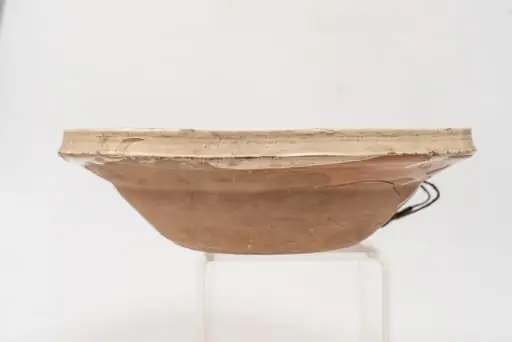 Farfurie adâncă de tip castron, cu corp tronconic, buză evazată și muchia buzei verticală. Piesa este acoperită pe fața interioară și pe exteriorul buzei cu un strat de angobă albă peste care este pictat cu pensula și cu cornul decorul format din motive florale și fitomorfe stilizate: zona centrală a farfuriei este decorată cu o floare cu petale alungite de culoare albastră, mijloc marcat printr-un punct maro, frunze verzi și elemente vegetale de culoare maro-închis. Buza este decorată cu cinci flori de culoare maro cu frunze, aproximativ identice, înscrise între două linii circulare de culoare maro. Suprafața ornamentată a farfuriei este acoperită cu un strat de smalț transparent. Cromatica: alb, maro, verde, albastru, maro-închis.
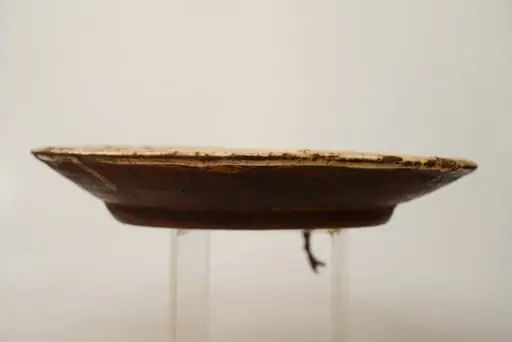 Farfurie semi-adâncă, cu buza dreaptă evazată; suprafața interioară este acoperită cu un strat de angobă albă, peste care este pictat cu cornul și cu pensula decorul format din motive florale și geometrice, dispuse astfel: registrul decorativ de pe fundul farfuriei conține, încadrat într-un cerc format dintr-o linie albastră dublă, un buchet desenat cu contur subțire maro, format dintr-o floare centrală de culoare maro, doi boboci galbeni la bază, o floare cu petale alungite, în partea superioară a buchetului și din frunze verzi. Registrul decorativ marginal de pe buza farfuriei, marcat de două linii circulare albastre, conține trei flori de lalea de culoare galbenă cu două frunze verzi, separate de câte un motiv format din șase linii maro subțiri, hașurate intersectat. Suprafața ornamentată a farfuriei este acoperită cu un strat de smalț transparent. Cromatica: alb, galben, verde, maro.
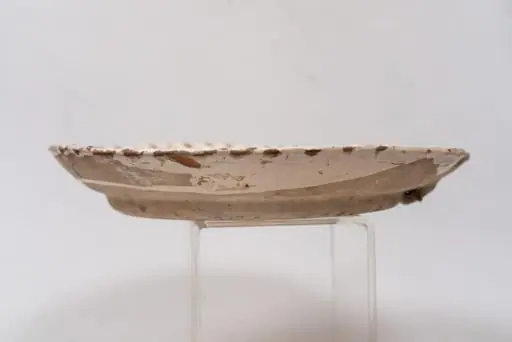 Farfurie de formă aplatizată, cu buza ușor concavă spre interior și muchia buzei ondulată; este acoperită pe ambele fețe cu un strat de angobă albă. Decorul este realizat prin pictare cu cornul și cu pensula cu motive florale și fitomorfe stilizate: central pe fundul farfuriei este pictată, cu contur subțire albastru, o tulpină cu două flori de culoare maro și frunze verzi, înscrisă în trei cercuri subțiri de culoare albastră. Buza farfuriei este decorată cu patru motive vegetale aproximativ identice (două frunze verzi ce au în mijloc un boboc de culoare maro), plasate diametral opus, în formă de cruce și separate de patru motive formate din puncte de culoare maro. Suprafața ornamentată a farfuriei este acoperită cu un strat de smalț transparent. Cromatica: alb, verde, albastru, maro.
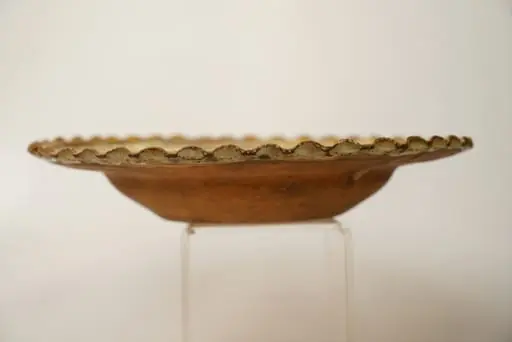 Farfurie de formă întinsă, cu muchia buzei ondulată; este acoperită pe suprafața interioară cu un strat de angobă albă peste care este pictat cu cornul și cu pensula decorul format dinn motive vegetale și geometrice dispuse astfel: centrul farfuriei conține un motiv vegetal greu de identificat (plantă de cactus?), neglijent realizat, cu contur maro și umplut cu culorile verde și galben; buza farfuriei este decorată cu o linie circulară ondulată de culoare maro, neglijent realizată, ce are între onduleuri puncte alungite de culoare galbenă și verde și puncte mici maro. Muchia buzei este marcată cu o dungă de culoare galbenă și cu un șir de linii mici paralele realizate prin incizare. Farfuria este acoperită pe suprafața ornamentată cu un strat de smalț transparent. Cromatica: alb, verde deschis, maro, galben.
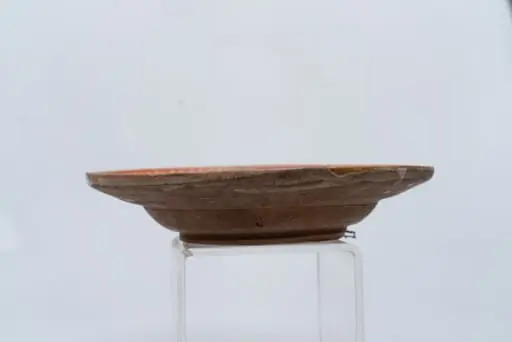 Farfurie adâncă, cu buza evazată și muchia buzei ușor ridicată. Piesa este angobată pe fața interioară cu un strat de angobă albă, peste care este pictat cu pensula și cu cornul decorul format din motive florale stilizate și geometrice: central pe fundul farfuriei sunt pictate cinci flori cu petale mici rotunde, cu contur de culoare siena arsă și mijlocul umplut cu linii hașurate intersectat, de culoare verde. Un romb central, umplut cu linii hașurate intersectat și puncte mici de culoare verde completează decorul din acest registru. Registrul decorativ marginal de pe buza farfuriei, înscris între două linii circulare de culoare siena arsă, este format dintr-o linie circulară buclată de culoare verde, în buclele căreia sunt pictate câte trei puncte maro. Marginea buzei este marcată cu o dungă de culoare siena arsă peste care este pictată o linie ondulată mărunt, albă. Suprafața ornamentată a farfuriei este acoperită cu un strat de smalț transparent. Cromatica: alb, siena arsă, verde, maro.
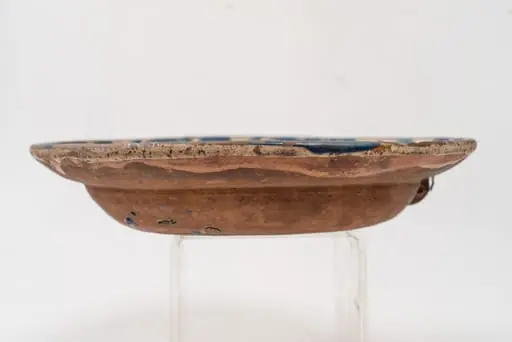 Farfurie adâncă, cu buza evazată și muchia ușor ridicată. Farfuria este angobată pe fața interioară cu un strat de humă albă, peste care este pictat cu cornul și cu pensula decorul monocromatic, format din motive florale și fitomorfe stilizate (tulpină cu cinci flori, din care patru sunt lalele, și frunze, reprezentate pe centrul farfuriei și un șir continuu format din elemente vegetale, ce decorează buza acesteia). Muchia buzei este marcată cu o dungă de culoare albastră. La baza tulpinii cu flori apare pictat cu pensula anul fabricării piesei: 1785. Cromatica: alb, albastru. Farfuria este acoperită pe fața decorată cu un strat de smalț transparent.
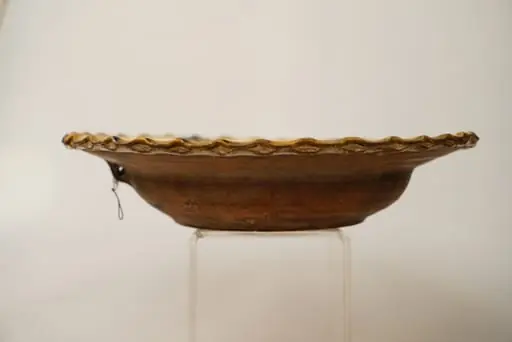 Farfurie adâncă cu buza evazată și muchia buzei ondulată; este acoperită pe suprafața interioară cu un strat de angobă albă peste care este pictat cu cornul și cu pensula decorul format din motive florale și vegetale stilizate și motive geometrice dispuse astfel: registrul decorativ de pe fundul farfuriei conține o tulpină cu cinci flori rotunde galbene cu contur albastru, cu petale mici realizate din linii drepte și mijlocul dintr-un cerc cu două linii intersectate în formă de X. Decorul din această zonă este completat cu trei flori stilizate asemănătoare celor care formează buchetul, și cu grupuri de câte patru linii hașurate intersectat, motive care se regăsesc și pe buza farfuriei, împreună cu motivul brăduțului, realizat cu linii galbene și albastre. Muchia buzei este marcată cu o dungă galbenă. Suprafața ornamentată a farfuriei este acoperită cu un strat de smalț transparent. Cromatica: alb, albastru, galben.