Artwork
Farfurie foarte mare, de formă aplatizată, buză mare, răsfrântă. Piesa este modelată la roata olarului și decorată cu cornul și cu pensula, cu humă albă și pigment maro, pe fondul neangobat al piesei. Motivele decorative sunt florale și vegetale stilizate (dispuse central, pe fundul farfuriei și înlănțuite pe buza acesteia) și geometrice (linii sub formă de cerc, linie ondulată, puncte, zig-zaguri). Piesa este acoperită pe ambele fețe cu un smalț transparent. Cromatica: alb, maro.
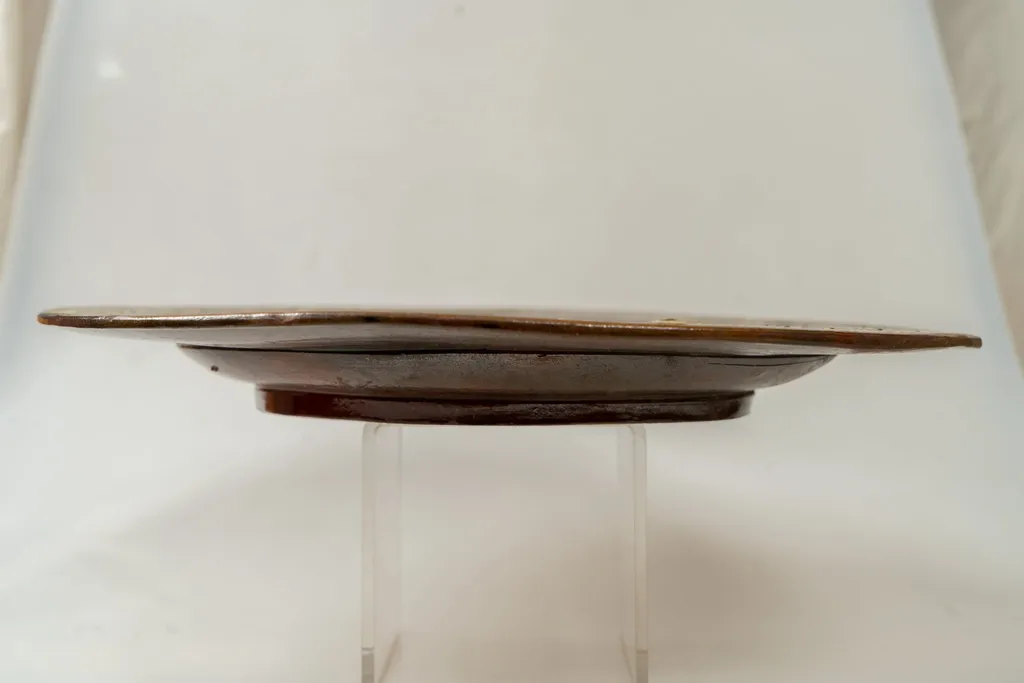
Farfurie foarte mare, de formă aplatizată, buză mare, răsfrântă. Piesa este modelată la roata olarului și decorată cu cornul și cu pensula, cu humă albă și pigment maro, pe fondul neangobat al piesei. Motivele decorative sunt florale și vegetale stilizate (dispuse central, pe fundul farfuriei și înlănțuite pe buza acesteia) și geometrice (linii sub formă de cerc, linie ondulată, puncte, zig-zaguri). Piesa este acoperită pe ambele fețe cu un smalț transparent. Cromatica: alb, maro. is a photography by Unknown. It dates from 1850 and is held in the collection of the Ethnographical Museum of Transylvania. A large, flattened plate with a broad, upturned rim, this ceramic piece was wheel-thrown and coated in transparent glaze on both surfaces.
About this work
Overview
A large, flattened plate with a broad, upturned rim, this ceramic piece was wheel-thrown and coated in transparent glaze on both surfaces. Its unglazed body serves as a natural backdrop for decorative elements applied in white and brown pigments. The form suggests utility, possibly for serving, though its intricate decoration also implies ceremonial or display use within its cultural context.
Subject & Meaning
The repetition and balance of motifs may reflect natural cycles or communal values, though specific meanings remain unrecorded.
Decorative motifs center on stylized floral and vegetal forms arranged symmetrically across the base and encircling the rim. These are interwoven with geometric patterns—circles, wavy lines, dots, and zigzags—suggesting symbolic or cosmological references common in regional traditions. The repetition and balance of motifs may reflect natural cycles or communal values, though specific meanings remain unrecorded.
Technique & Style
Pigments were applied using both a corn-derived tool and a brush, allowing for fine detail and broader strokes. The white and brown designs contrast against the raw clay body, avoiding slip or underglaze. Transparent glaze was evenly applied, enhancing durability while preserving the handcrafted texture. The combination of organic and geometric elements reflects a deliberate aesthetic balance between nature and structure.
History & Provenance
The plate is held by the Museum of Ethnography, indicating its recognition as a culturally significant object. While its exact origin and date are not specified, its form and decoration align with ceramic traditions from Eastern European rural communities, likely produced in the 19th or early 20th century. Its preservation suggests it was valued beyond daily use, possibly within domestic or ritual contexts.
Context
This plate belongs to a broader tradition of utilitarian ceramics in agrarian societies, where household items often carried symbolic decoration. The use of locally sourced materials and hand-applied techniques reflects self-sufficient craft practices. Similar vessels appear in regional collections, hinting at shared visual languages across villages, though stylistic variations mark local identities.
Legacy
As a preserved artifact, the plate contributes to understanding pre-industrial ceramic practices in Eastern Europe. Its survival in a museum collection underscores its role as a tangible link to domestic life and artisanal skill. While no direct lineage of makers is documented, its design elements continue to inform studies of folk art and regional material culture.
Artist & collection
Museum
Ethnographical Museum of Transylvania
Continue through works from the same source collection.
 Domestic Scene
 Giacomo and Cardinal Marco, investing Andrea, Abbot of San Zeno, with his Benefice
 The Nymph of Fontainebleau
 Portrait of a Woman
 Madonna and Child with Saints in the Enclosed Garden
 Venus and Minerva
 Family Group of Four on Sofa
 Wall painting from Room H of the Villa of P. Fannius Synistor at Boscoreale
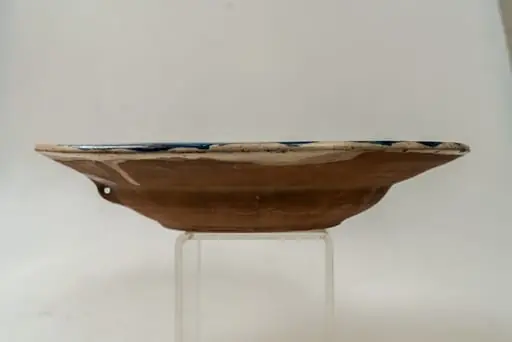 Farfurie mare, adâncă, cu corp scund și buză lată, răsfrântă. Piesa este modelată la roata olarului, angobată cu humă albă pe fața interioară a acesteia. Decorul este unul bogat, realizat prin pictare cu pensula, cu linii groase, și constă în motive decorative florale și vegetale stilizate (flori și frunze), dispuse pe toată suprafața farfuriei. Cromatica decorului: alb, albastru. Farfuria este smălțuită pe interior, cu smalț transparent.
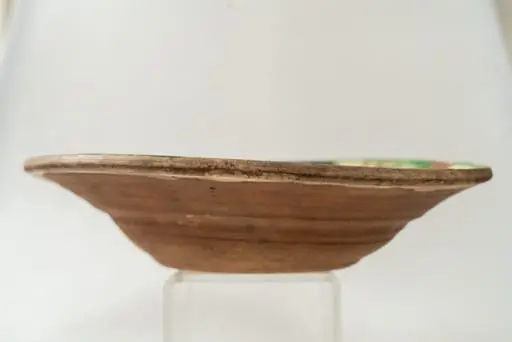 Farfurie mare, de formă adâncă, cu buză răsfrântă. Piesa este modelată la roată, angobată cu humă albă pe fața interioară. Decorul este realizat prin pictare cu pensula, cu smalțuri colorate (verde și maro) și prin sgrafitare. Motivele decorative sunt florale și vegetale stilizate (flori cu frunze) dispuse pe fundul farfuriei (o floare) și patru flori intercalate de patru elemente decorative vegetale (frunze) sugerând motivul inimii, dispuse pe buza farfuriei. Bordura interioară a farfuriei este marcată de o linie groasă sub formă de cerc, de culoare verde. Pe fața interioară a farfuriei este aplicat un strat de smalț transparent.
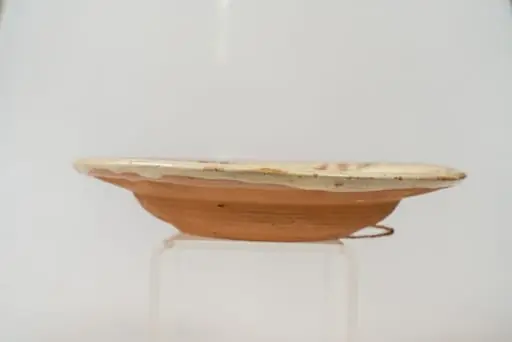 Farfurie adâncă, cu buza răsfrântă; piesa este modelată la roata olarului și angobată cu humă albă pe fața interioară. Decorul, realizat cu pigmenți, prin pictare cu cornul și cu pensula, se compune din motive decorative geometrice: linie spiralată de culoare maro, înscrisă într-un cerc format dintr-o linie groasă verde - amplasate central, pe fundul farfuriei; șase grupuri de motive decorative formate dintr-o linie ușor ondulată având de o parte și de alta cercuri realizate cu contur maro și umplute cu culorile maro și verde, sugerând niște spice de grâu - amplasate pe buza farfuriei, între două linii sub formă de cerc, de culoare maro. Cromatica: alb, maro, siena arsă, verde. Fața decorată a farfuriei este acoperită cu un strat de smalț transparent.
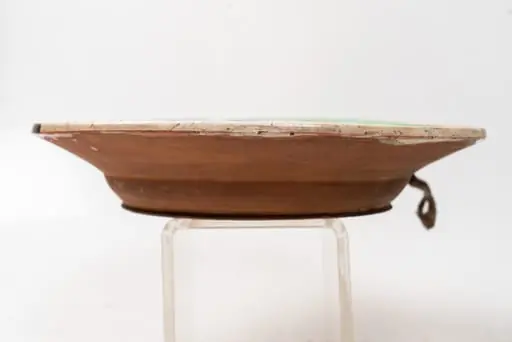 Farfurie mare, semi-adâncă, cu buza răsfrântă; piesa este modelată la roata olarului și angobată cu humă albă pe fața interioară. Decorul este realizat prin sgrafitare în pasta albă de angobă și prin pictare cu pensula și cu cornul și se compune din motive decorative vegetale (o floare foarte stilizată, cu patru petale, dispusă în registrul central de pe fundul farfuriei) și geometrice (linii circulare, de culoare verde și siena arsă, pe buza farfuriei). Cromatica: alb, verde, siena arsă, maro. Fața ornamentată a farfuriei este acoperită cu un strat de smalț transparent.
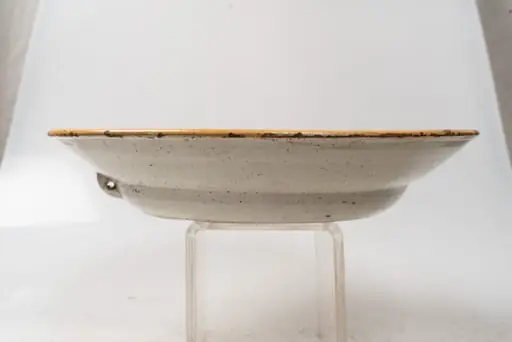 Farfurie de formă aplatizată, cu marginea lată, răsfrântă. Decorul, dispus pe un fond alb-lăptos prin pictare, este format din motive florale fin stilizate (un buchet din șase flori și frunze, dispuse central, pe fundul farfuriei) și geometrice (pe buza acesteia: linii subțiri de culoare maro-brun, sub formă de cerc, linie ondulată de culoare albastră, linii mici, paralele, linii sub formă de arc). Muchia buzei este marcată de o dungă galbenă. Cromatica: alb, albastru-turcoaz, maro-brun, galben-ocru, albastru.
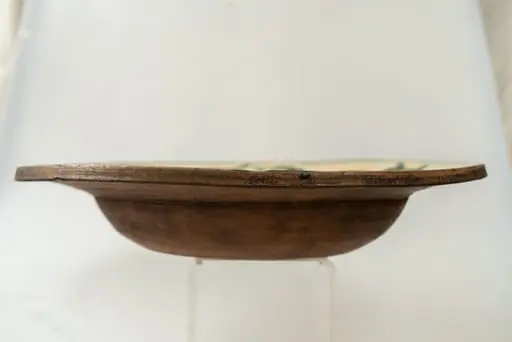 Farfurie mare, de formă adâncă, cu buză lată, răsfrântă. Piesa este modelată la roată, angobată cu humă albă pe fața interioară. Decorul este realizat prin pictare cu pensula și prin sgrafitare și este format din motive decorative florale și vegetale stilizate, dispuse pe fundul farfuriei, într-un registru central (o floare cu patru petale, înconjurată de alte patru flori cu frunze, dispuse diametral opus) și pe buza farfuriei (cinci grupuri de flori și frunze, ca cele de pe fundul farfuriei). Bordura interioară a farfuriei și muchia buzei sunt marcate de linii sub formă de cerc, de culoare verde. Pe buza farfuriei este marcat, prin sgrafitare, anul realizării piesei "1731", încadrat într-un registru decorativ sub formă de inimă. Fața interioară a farfuriei este acoperită cu un smalț transparent. Cromatica: alb, galben, verde.
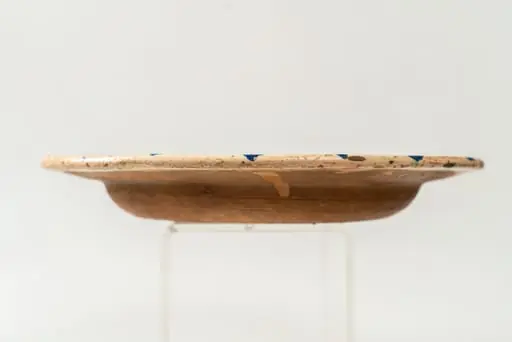 Farfurie semi-adâncă, cu buza răsfrântă; piesa este modelată la roata olarului și este angobată pe fața interioară cu humă albă. Decorul este realizat prin pictare cu pensula și se compune din motive decorative florale și vegetale stilizate, dispuse pe întreaga suprafață a piesei. La baza motivului decorativ central se află înscris anul fabricării piesei, 1782. Buza farfuriei este decorată cu un șir continuu de frunze de culoare verde și albastră. Cromatica: alb, verde, albastru. Fața decorată a farfuriei este acoperită cu un strat de smalț transparent.
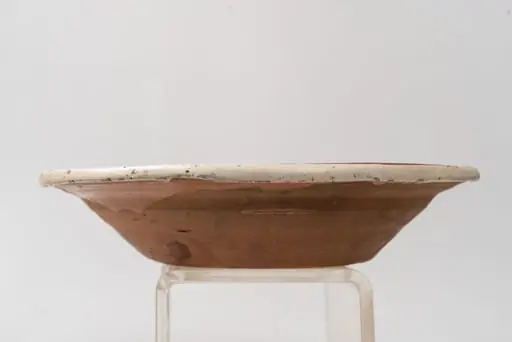 Farfurie adâncă, cu buza răsfrântă; piesa este modelată din lut la roata olarului și angobată cu humă albă pe fața interioară. Decorul este realizat prin pictare cu cornul și constă în motive geometrice (linii hașurate, puncte, linii circulare, linii dispuse sub formă de raze, linii în V). Cromatica: alb, albastru, verde, siena arsă. Fața ornamentată a farfuriei este acoperită cu un strat de smalț transparent.
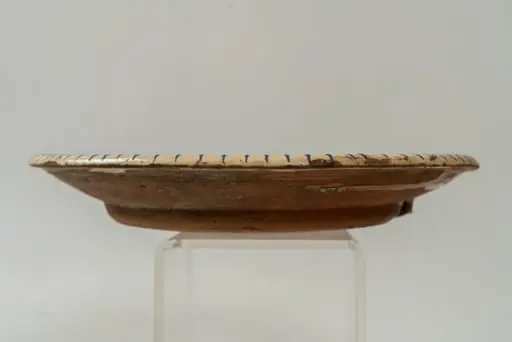 Farfurie de formă aplatizată, modelată la roata olarului, angobată cu humă albă pe fața interioară a acesteia. Decorul este realizat prin pictare cu pensula și cu cornul și constă în motive decorative vegetale stilizate (floare cu frunze - dispuse central, pe fundul farfuriei) și motive geometrice (grupuri de linii paralele, descrescătoare ca mărime - motivul brăduțului - și un șir de linii paralele pe toată lungimea muchiei buzei). Cromatica decorului: alb, albastru. Farfuria este smălțuită pe interior, cu smalț transparent.
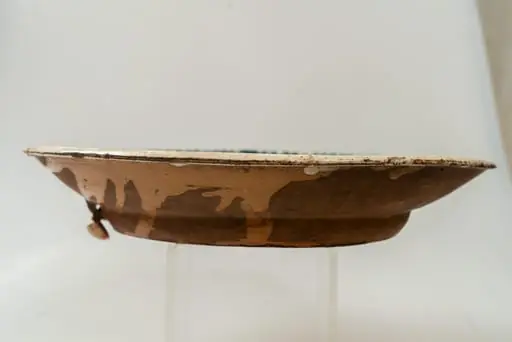 Farfurie mare, lată, cu buză răsfrântă. Este modelată la roata olarului și angobată cu humă albă pe fața interioară. Decorul este realizat prin pictare cu cornul și cu pensula și se compune din motive decorative florale stilizate (buchet central, pe fundul farfuriei) și motive geometrice variate, dispuse pe buza farfuriei. Cromatica: alb, brun, verde, galben, albastru. Fața interioară a farfuriei este acoperită de un strat de smalț transparent.
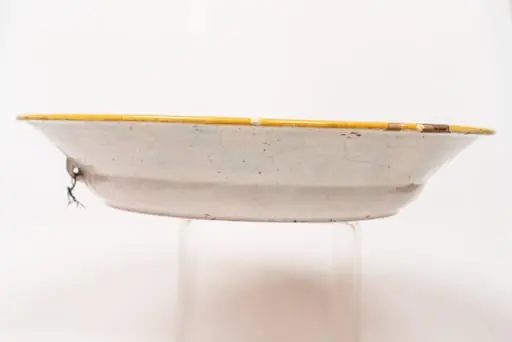 Farfurie mare, semi-adâncă, cu buza lată, răsfrântă. Decorul principal este dispus în centrul farfuriei, pe un fond alb-lăptos și prezintă un motiv vegetal stilizat (o floare cu petale galbene, frunze și alte elemente vegetale) iar buza farfuriei este decorată cu motive geometrice (două linii de culoare maro dispuse în zig-zag, alternativ, una mai groasă și vălurită, cealaltă mai subțire, dreaptă; puncte de culoare verde-turcoaz, linii subțiri dispuse sub formă de cercuri concentrice). Muchia buzei este marcată de o dungă galbenă iar bordura interioară a farfuriei cu o linie vălurită mărunt, de culoare albastră. Cromatica: alb, maro-brun, galben-ocru, verde-turcoaz, albastru.