Artwork
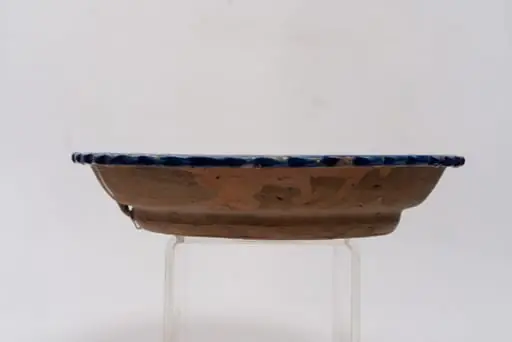
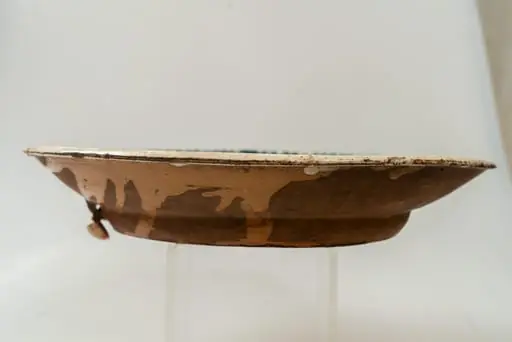
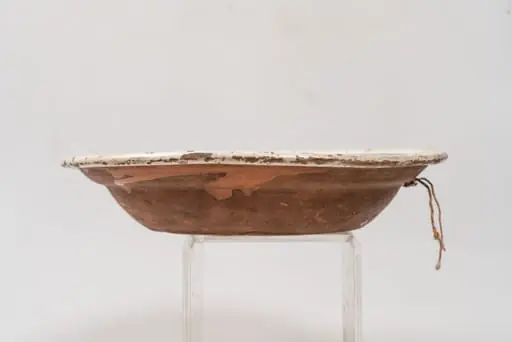
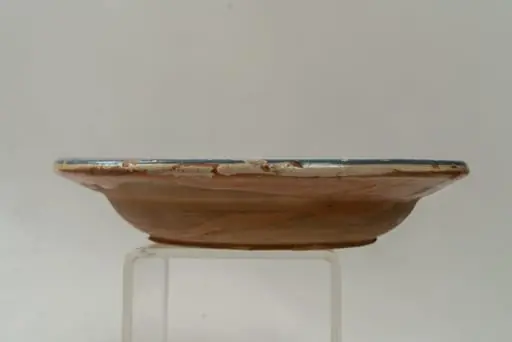
Farfurie mare, adâncă, cu buza răsfrântă și muchia buzei ușor ridicată; piesa este modelată la roata olarului și angobată cu humă albă pe fața interioară. În centrul farfuriei a fost adăugată o farfurie mai mică, cu diametrul buzei de 11 cm și înălțime de 6 cm. Decorul monocromatic este realizat prin pictare cu cornul și cu pensula și se compune din motive decorative vegetale stilizate, neglijent pictate, dispuse pe întreaga suprafață a farfuriei. Cromatica: alb, albastru. Fața ornamentată a farfuriei este acoperită cu un strat de smalț transparent.
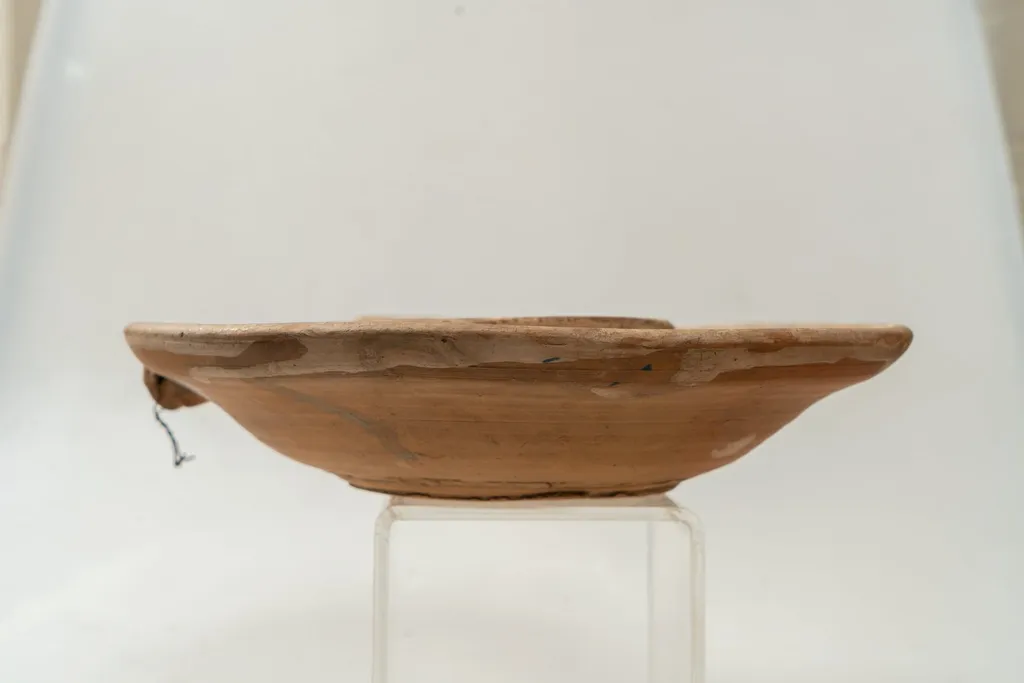
Farfurie mare, adâncă, cu buza răsfrântă și muchia buzei ușor ridicată; piesa este modelată la roata olarului și angobată cu humă albă pe fața interioară. În centrul farfuriei a fost adăugată o farfurie mai mică, cu diametrul buzei de 11 cm și înălțime de 6 cm. Decorul monocromatic este realizat prin pictare cu cornul și cu pensula și se compune din motive decorative vegetale stilizate, neglijent pictate, dispuse pe întreaga suprafață a farfuriei. Cromatica: alb, albastru. Fața ornamentată a farfuriei este acoperită cu un strat de smalț transparent. is a photography by Unknown. It dates from 1850 and is held in the collection of the Ethnographical Museum of Transylvania. The object is a wide, shallow ceramic bowl with a pronounced, outward‑flaring rim.
About this work
Overview
The object is a wide, shallow ceramic bowl with a pronounced, outward‑flaring rim. Its interior is coated with a light white slip, and a smaller dish—measuring roughly 11 cm across the rim and 6 cm high—rests within the larger vessel. The piece rests on a plain white base.
Subject & Meaning
The decorative program consists of stylized vegetal motifs applied across the entire surface. The designs are rendered in a loose, informal manner, suggesting a functional rather than ceremonial purpose, while the inclusion of a nested bowl may indicate a practical use for serving or storage.
Technique & Style
The bowl was formed on a potter’s wheel and finished with a white slip on the interior. Its exterior decoration was applied using both a horn tool and brush, employing a limited palette of white and blue. A transparent glaze seals the ornamented surface, giving it a subtle sheen.
History & Provenance
The work originates from a tradition of hand‑shaped earthenware, identifiable by its uneven rim and natural cracking of the clay body. No specific provenance is recorded, but its construction and decorative style align with regional folk pottery practices.
Context
Such shallow bowls were common in everyday domestic settings, serving as vessels for food, water, or ritual libations. The use of a simple vegetal motif and modest color scheme reflects the aesthetic preferences of rural artisans who prioritized utility over elaborate ornamentation.
Artist & collection
Museum
Ethnographical Museum of Transylvania
Continue through works from the same source collection.
 Domestic Scene
 Giacomo and Cardinal Marco, investing Andrea, Abbot of San Zeno, with his Benefice
 The Nymph of Fontainebleau
 Portrait of a Woman
 Madonna and Child with Saints in the Enclosed Garden
 Venus and Minerva
 Family Group of Four on Sofa
 Wall painting from Room H of the Villa of P. Fannius Synistor at Boscoreale
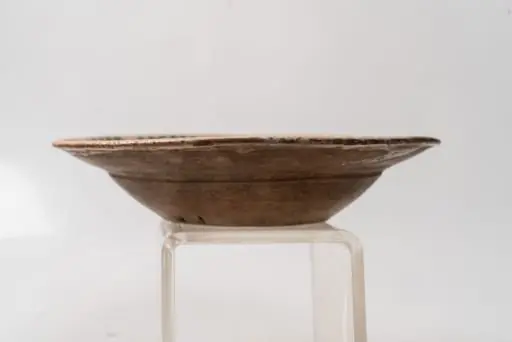 Farfurie adâncă, cu corp tronconic ușor rotunjit și buză evazată; piesa este modelată din lut la roata olarului și angobată pe interior cu humă albă. Decorul este realizat prin pictare cu cornul și se compune din motive geometrice și florale geometrizate (registrul decorativ central de pe fundul farfuriei conține o floare cu petale conturate cu câte patru linii paralele de culori diferite și cu mijlocul umplut cu linii hașurate; buza farfuriei este decorată cu grupuri de linii ondulate paralele. Cromatica: alb cu halouri maro, verde, galben-ocru, maro, gri. Fața ornamentată a farfuriei este acoperită cu un strat de smalț transparent.
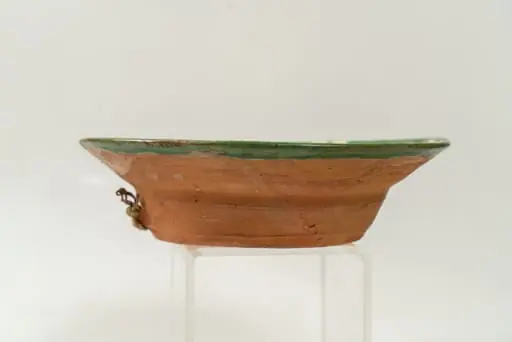 Farfurie adâncă, cu buză lată, evazată; piesa este modelată din lut la roata olarului și acoperită cu un strat de angobă verde pe fața interioară. Decorul este realizat prin pictare cu pensula și se compune din motive florale și vegetale stilizate (un buchet cu trei flori albe și frunze de culoare verde-închis, plasat în zona centrală, pe fundul farfuriei și cinci flori albe pictate pe buza acesteia, intercalate de cinci grupuri de frunze). Cromatica: verde, alb, verde-închis. Fața ornamentată a farfuriei este acoperită cu un strat de smalț transparent.
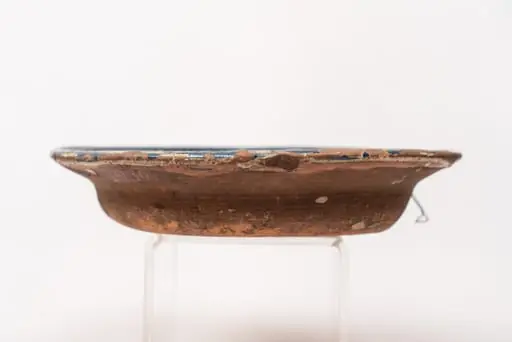 Farfurie semi-adâncă, cu buza răsfrântă; piesa este modelată la roata olarului și angobată cu humă albă pe fața interioară. Decorul monocromatic este realizat prin pictare cu cornul și cu pensula și se compune din motive florale și vegetale stilizate (o tulpină cu două flori de lalea și o floare centrală cu zece petale și frunze, pictate în zona centrală a farfuriei) și motive geometrice (grupuri de linii crescătoare și descrescătoare, șiruri de puncte, linii sub formă de spirală mică, linii hașurate). Câte o linie groasă albastră marchează muchia buzei și bordura interioară a farfuriei. Cromatica: alb, albastru. Fața ornamentată a farfuriei este acoperită cu un start de smalț transparent.
 Farfurie de formă semi-adâncă cu buza evazată, ușor concavă spre interior și cu muchia buzei răsfrântă și ondulată. Farfuria este angobată pe fața interioară cu un strat de humă albă, peste care este pictat cu cornul decorul monocromatic, format din motive geometrice: central, pe fundul farfuriei, linii dispuse în formă de V sunt pictate într-un șir continuu de-a lungul unei linii circulare; același motiv decorează și buza farfuriei. Pe fundul farfuriei este înscris cu pensula anul fabricării piesei: 1871. Muchia buzei este marcată cu o dungă de culoare albastră. Cromatica: alb, albastru. Farfuria este acoperită pe fața decorată cu un strat de smalț transparent.
 Farfurie mare, lată, cu buză răsfrântă. Este modelată la roata olarului și angobată cu humă albă pe fața interioară. Decorul este realizat prin pictare cu cornul și cu pensula și se compune din motive decorative florale stilizate (buchet central, pe fundul farfuriei) și motive geometrice variate, dispuse pe buza farfuriei. Cromatica: alb, brun, verde, galben, albastru. Fața interioară a farfuriei este acoperită de un strat de smalț transparent.
 Farfurie adâncă, cu buza răsfrântă și muchia buzei rotunjită; piesa este angobată pe fața interioară cu un strat de humă albă, peste care este pictat cu cornul decorul format din motive geometrice: central pe fundul farfuriei este reprezentată o floare geometrizată cu șase petale și puncte albastre, înscrisă într-un cerc care este, la rândul său, înscris într-un motiv sub formă de rozetă albastră. Buza farfuriei poartă un decor format din grupuri de linii hașurate intersectate, de culoare albastră și roșu cărămiziu, înscrise între două linii circulare de culoare albastră. Cromatica: alb, albastru, roșu cărămiziu. Fața ornamentată a farfuriei este acoperită cu un strat de smalț transparent.
 Farfurie adâncă, cu buză răsfrântă, modelată la roata olarului și angobată cu humă albă pe fața interioară a acesteia. Decorul, realizat prin pictare cu pensula și cu cornul, se compune din motive avimorfe (cocoș) și florale stilizate, dispuse într-un registru decorativ în zona centrală a farfuriei. Decorul este completat de câteva motive geometrice (linie ondulată, puncte, linii hașurate, linii sub formă de cercuri concentrice). Pe buza farfuriei: două cercuri concentrice, subțiri și o dungă albastră pe toată lungimea muchiei buzei. Cromatica: alb, albastru, verde, maro, siena naturală, roz pal. Peste decor, pe fața interioară a farfuriei este așezat un strat de smalț transparent.
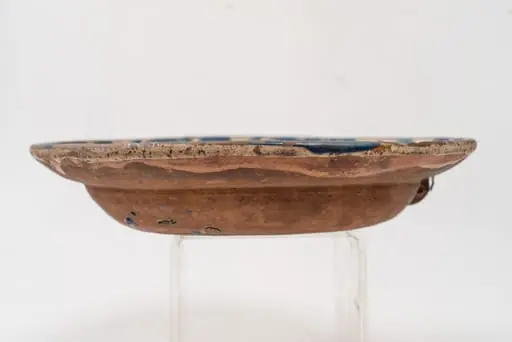 Farfurie adâncă, cu buza evazată și muchia ușor ridicată. Farfuria este angobată pe fața interioară cu un strat de humă albă, peste care este pictat cu cornul și cu pensula decorul monocromatic, format din motive florale și fitomorfe stilizate (tulpină cu cinci flori, din care patru sunt lalele, și frunze, reprezentate pe centrul farfuriei și un șir continuu format din elemente vegetale, ce decorează buza acesteia). Muchia buzei este marcată cu o dungă de culoare albastră. La baza tulpinii cu flori apare pictat cu pensula anul fabricării piesei: 1785. Cromatica: alb, albastru. Farfuria este acoperită pe fața decorată cu un strat de smalț transparent.
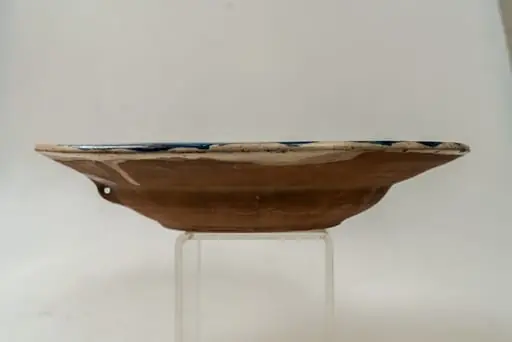 Farfurie mare, adâncă, cu corp scund și buză lată, răsfrântă. Piesa este modelată la roata olarului, angobată cu humă albă pe fața interioară a acesteia. Decorul este unul bogat, realizat prin pictare cu pensula, cu linii groase, și constă în motive decorative florale și vegetale stilizate (flori și frunze), dispuse pe toată suprafața farfuriei. Cromatica decorului: alb, albastru. Farfuria este smălțuită pe interior, cu smalț transparent.
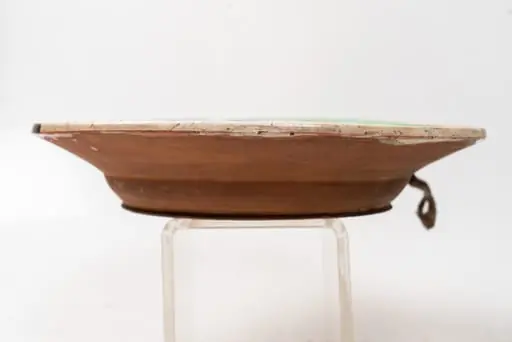 Farfurie mare, semi-adâncă, cu buza răsfrântă; piesa este modelată la roata olarului și angobată cu humă albă pe fața interioară. Decorul este realizat prin sgrafitare în pasta albă de angobă și prin pictare cu pensula și cu cornul și se compune din motive decorative vegetale (o floare foarte stilizată, cu patru petale, dispusă în registrul central de pe fundul farfuriei) și geometrice (linii circulare, de culoare verde și siena arsă, pe buza farfuriei). Cromatica: alb, verde, siena arsă, maro. Fața ornamentată a farfuriei este acoperită cu un strat de smalț transparent.