Artwork
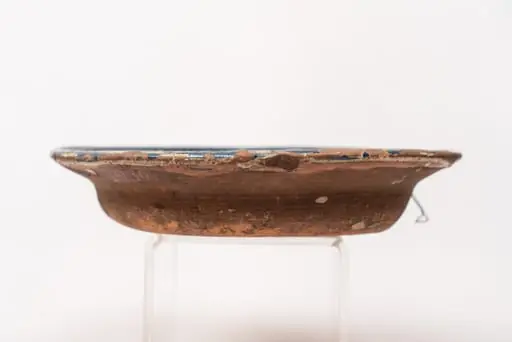
Farfurie mare, adâncă, de tip castron. Piesa este modelată la roata olarului și este angobată pe fața sa interioară. Decorul este pictat cu pensula și cu cornul și se compune din motive decorative florale (buchet de flori, în zona centrală a farfuriei) și geometrice (linii hașurate, linii sub formă de cercuri concentrice) situate pe buza farfuriei. Cromatica: alb, albastru, siena naturală, verde. Farfuria este acoperită, pe fața sa interioară, de un strat de smalț transparent.
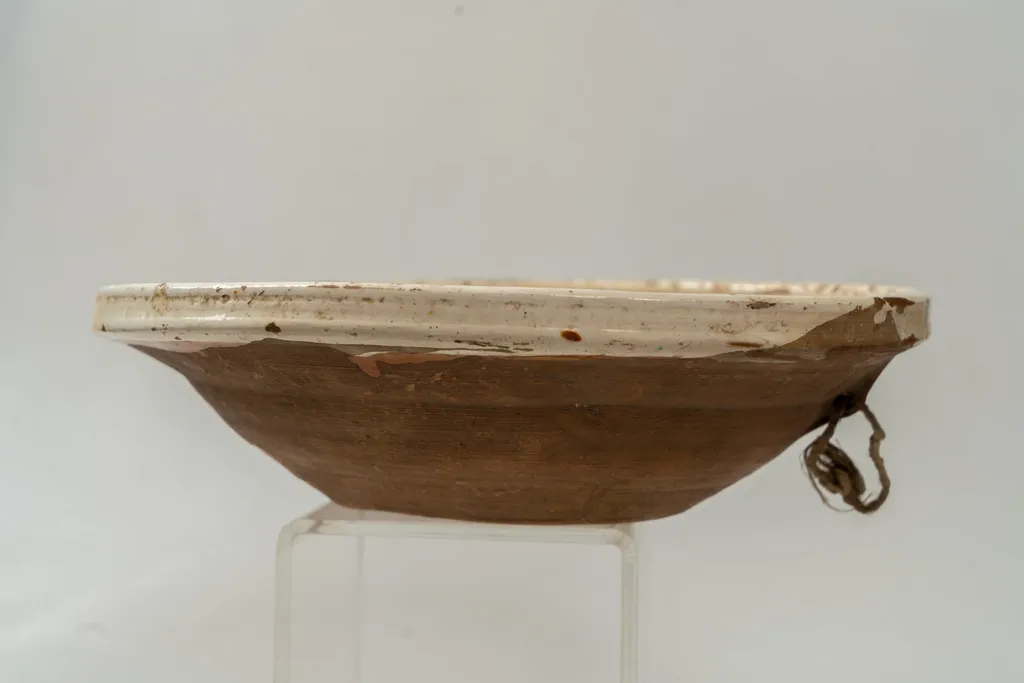
Farfurie mare, adâncă, de tip castron. Piesa este modelată la roata olarului și este angobată pe fața sa interioară. Decorul este pictat cu pensula și cu cornul și se compune din motive decorative florale (buchet de flori, în zona centrală a farfuriei) și geometrice (linii hașurate, linii sub formă de cercuri concentrice) situate pe buza farfuriei. Cromatica: alb, albastru, siena naturală, verde. Farfuria este acoperită, pe fața sa interioară, de un strat de smalț transparent. is a photography by Unknown. It dates from 1850 and is held in the collection of the Ethnographical Museum of Transylvania. A shallow, wide ceramic bowl, fashioned on a potter's wheel, features two modest handles on one side and rests on a plain white base.
About this work
Overview
A shallow, wide ceramic bowl, fashioned on a potter's wheel, features two modest handles on one side and rests on a plain white base. The interior is glazed with a clear, transparent enamel, while the exterior bears faint, weathered pigments in white, light brown, blue and green. The rim shows minor chipping, and the overall surface appears smooth from use.
Subject & Meaning
The painted decoration consists of a central floral bouquet surrounded by geometric motifs. Radiating lines, hatched patterns and concentric circles frame the floral group, suggesting a balance between natural and abstract design elements typical of domestic pottery ornamentation.
Technique & Style
The vessel was hand‑thrown on a wheel and then burnished on its inner surface. Paint was applied with both brush and a horn tool, allowing fine linear work and broader washes. The colour palette—white, natural sienna, blue, green and a base of white—was sealed beneath a transparent glaze that has since faded with age.
History & Provenance
The bowl is identified as a large, deep type known as a "caztron" in Romanian pottery terminology. Its stylistic traits and material composition align with traditional folk ceramics from the region, though no specific maker or date is recorded.
Context
Such utilitarian vessels were commonly used for serving food or liquids in rural households, where decorative painting served both aesthetic and symbolic purposes. The combination of floral and geometric motifs reflects a vernacular visual language that blends everyday function with modest artistic expression.
Artist & collection
Museum
Ethnographical Museum of Transylvania
Continue through works from the same source collection.
 Domestic Scene
 Giacomo and Cardinal Marco, investing Andrea, Abbot of San Zeno, with his Benefice
 The Nymph of Fontainebleau
 Portrait of a Woman
 Madonna and Child with Saints in the Enclosed Garden
 Venus and Minerva
 Family Group of Four on Sofa
 Wall painting from Room H of the Villa of P. Fannius Synistor at Boscoreale
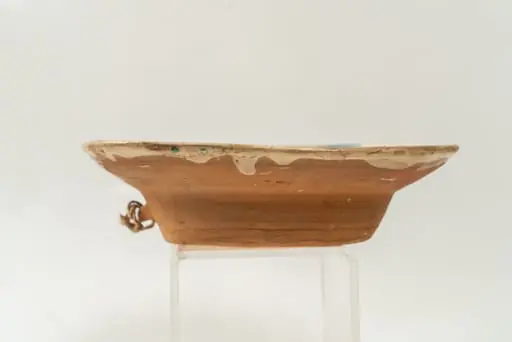 Farfurie adâncă, cu corp mic și buză lată, evazată; piesa este modelată la roata olarului și angobată cu humă albă pe fața interioară. Decorul este realizat prin pictare cu pensula și se compune din motive decorative florale și vegetale stilizate, dispuse central, pe fundul vasului (o floare albastră cu frunze verzi) și pe buza farfuriei (4 flori albastre alternate cu 4 grupuri de frunze). Fața decorată a farfuriei este acoperită cu un strat de smalț transparent. Cromatica: alb, albastru, verde.
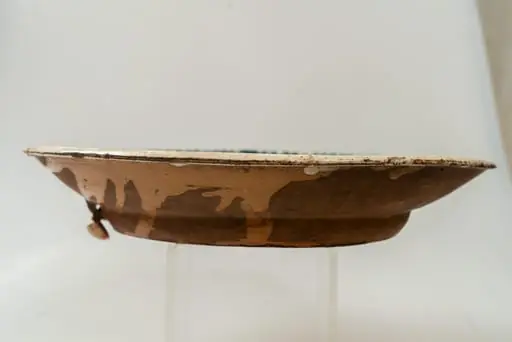 Farfurie mare, lată, cu buză răsfrântă. Este modelată la roata olarului și angobată cu humă albă pe fața interioară. Decorul este realizat prin pictare cu cornul și cu pensula și se compune din motive decorative florale stilizate (buchet central, pe fundul farfuriei) și motive geometrice variate, dispuse pe buza farfuriei. Cromatica: alb, brun, verde, galben, albastru. Fața interioară a farfuriei este acoperită de un strat de smalț transparent.
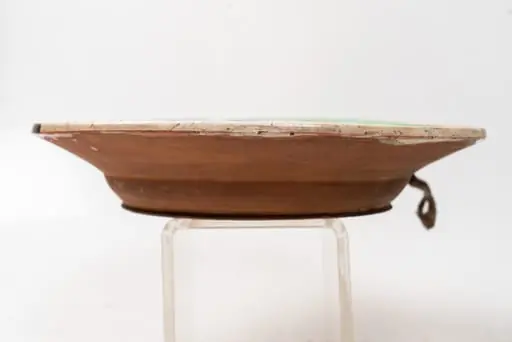 Farfurie mare, semi-adâncă, cu buza răsfrântă; piesa este modelată la roata olarului și angobată cu humă albă pe fața interioară. Decorul este realizat prin sgrafitare în pasta albă de angobă și prin pictare cu pensula și cu cornul și se compune din motive decorative vegetale (o floare foarte stilizată, cu patru petale, dispusă în registrul central de pe fundul farfuriei) și geometrice (linii circulare, de culoare verde și siena arsă, pe buza farfuriei). Cromatica: alb, verde, siena arsă, maro. Fața ornamentată a farfuriei este acoperită cu un strat de smalț transparent.
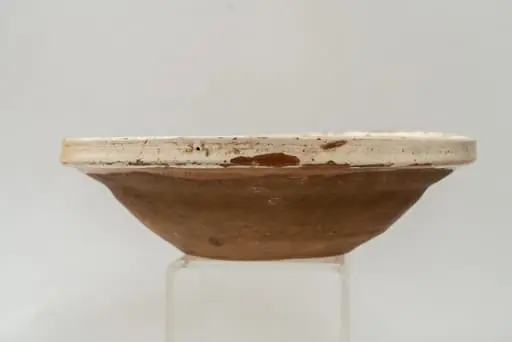 Farfurie mare, adâncă, cu muchia buzei ușor concavă spre interior. Piesa este modelată la roata olarului, angobată pe fața interioară cu humă albă. Decorul este realizat prin pictare cu pensula și constă în motive decorative avimorfe (pasăre - în zona centrală, pe fundul farfuriei), geometrice (linii sub formă de cercuri concentrice și puncte) și vegetale stilizate (flori și frunze - în zona centrală și pe buza farfuriei). Cromatica decorului: alb, verde, albastru, siena arsă.
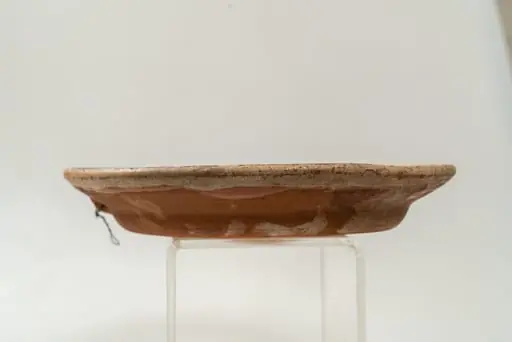 Farfurie semi-adâncă, cu buza răsfrântă, modelată la roata olarului și angobată cu humă albă pe fața interioară. Decorul este pictat cu cornul și cu pensula și se compune din motive decorative vegetale stilizate (flori cu frunze, dispuse central, pe fundul farfuriei) și motive decorative geometrice (șapte grupuri de linii paralele,verticale, intercalate cu șapte grupuri de câte 3 linii sub formă de semicercuri umplute cu culoare galbenă și verde), dispuse pe buza farfuriei și încadrate de linii paralele sub formă de cerc. Piesa este acoperită pe fața pictată cu un strat de smalț transparent. Cromatica: alb, verde, maro, galben ocru.
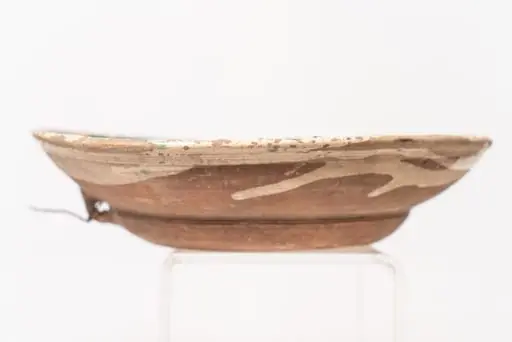 Farfurie adâncă, cu buza răsfrântă; piesa este modelată la roata olarului și angobată pe fața interioară cu humă albă. Decorul este realizat prin pictare cu pensula și cu cornul și se compune din motive florale și vegetale foarte stilizate (registrul central este format dintr-o floare sub formă de rozetă, cu patru petale verzi și patru albastre; buza farfuriei este decorată cu patru flori stilizate, posibil lalele, dispuse diametral opus iar între ele sunt pictate motive formate din linii groase verzi, sub formă de V, decorate pe exterior cu linii mici albastre și linii hașurate în interior). Cromatica: alb, verde, albastru. Fața ornamentată a farfuriei este acoperită cu un strat de smalț transparent.
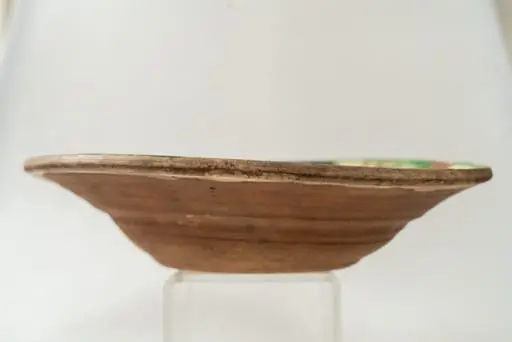 Farfurie mare, de formă adâncă, cu buză răsfrântă. Piesa este modelată la roată, angobată cu humă albă pe fața interioară. Decorul este realizat prin pictare cu pensula, cu smalțuri colorate (verde și maro) și prin sgrafitare. Motivele decorative sunt florale și vegetale stilizate (flori cu frunze) dispuse pe fundul farfuriei (o floare) și patru flori intercalate de patru elemente decorative vegetale (frunze) sugerând motivul inimii, dispuse pe buza farfuriei. Bordura interioară a farfuriei este marcată de o linie groasă sub formă de cerc, de culoare verde. Pe fața interioară a farfuriei este aplicat un strat de smalț transparent.
 Farfurie semi-adâncă, cu buza răsfrântă; piesa este modelată la roata olarului și angobată cu humă albă pe fața interioară. Decorul monocromatic este realizat prin pictare cu cornul și cu pensula și se compune din motive florale și vegetale stilizate (o tulpină cu două flori de lalea și o floare centrală cu zece petale și frunze, pictate în zona centrală a farfuriei) și motive geometrice (grupuri de linii crescătoare și descrescătoare, șiruri de puncte, linii sub formă de spirală mică, linii hașurate). Câte o linie groasă albastră marchează muchia buzei și bordura interioară a farfuriei. Cromatica: alb, albastru. Fața ornamentată a farfuriei este acoperită cu un start de smalț transparent.