Artwork
Farfurie mare, de formă semi-adâncă, cu buză răsfrântă, foarte lată, cu muchie ondulată (zimți). Piesa este modelată la roata olarului, angobată cu humă albă. Decorul este realizat prin sgrafitare în angoba crudă, peste care se aștern cu pensula culorile de smalț: verde, galben, albastru. Motivele decorative sunt florale și vegetale stilizate, dispuse pe toată suprafața farfuriei. Cromatica decorului: alb, albastru, galben, verde.
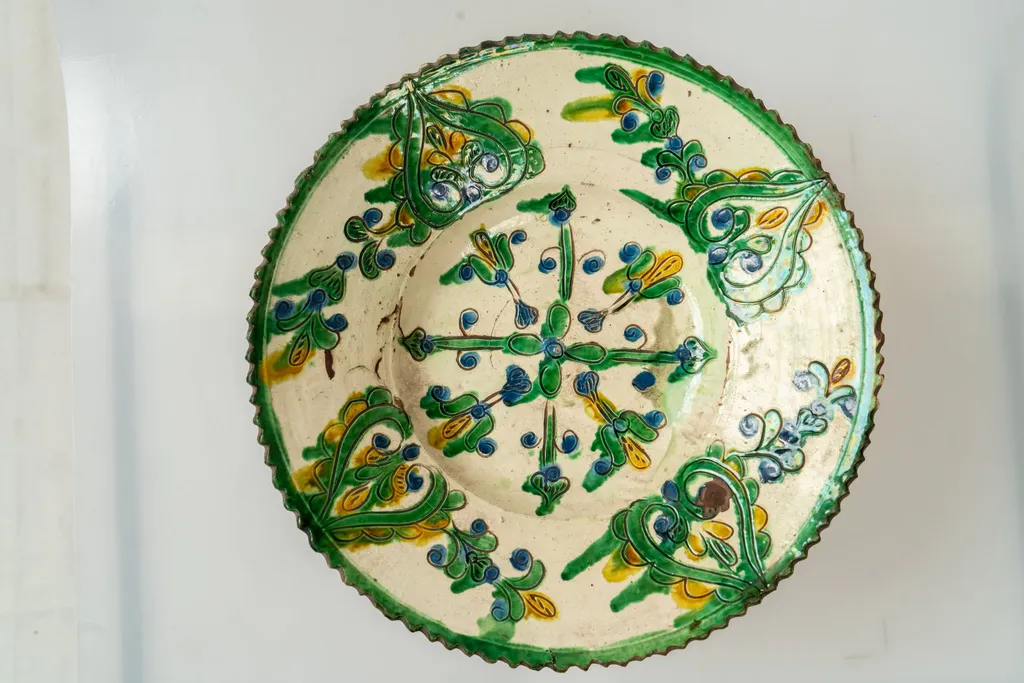
Farfurie mare, de formă semi-adâncă, cu buză răsfrântă, foarte lată, cu muchie ondulată (zimți). Piesa este modelată la roata olarului, angobată cu humă albă. Decorul este realizat prin sgrafitare în angoba crudă, peste care se aștern cu pensula culorile de smalț: verde, galben, albastru. Motivele decorative sunt florale și vegetale stilizate, dispuse pe toată suprafața farfuriei. Cromatica decorului: alb, albastru, galben, verde. is a photography by Unknown. It dates from 1850 and is held in the collection of the Ethnographical Museum of Transylvania. This large, shallow ceramic plate features a wide, wavy rim and a broad, flat surface.
About this work
Overview
Color is then brushed over the scratched areas in green, yellow, and blue, creating a layered, textured effect that enhances the floral motifs.
This large, shallow ceramic plate features a wide, wavy rim and a broad, flat surface. Crafted on a potter’s wheel, it is coated in a white slip and decorated using the sgraffito technique, where designs are scratched through the slip to reveal the darker clay beneath. Color is then brushed over the scratched areas in green, yellow, and blue, creating a layered, textured effect that enhances the floral motifs.
Subject & Meaning
The decoration consists entirely of stylized botanical forms—curving vines, leaves, and abstracted floral elements—that cover the entire surface without interruption. These motifs reflect a naturalistic tradition rooted in regional ceramic practices, where plant life symbolized fertility and continuity. The absence of figurative elements suggests a focus on organic harmony rather than narrative or symbolic storytelling.
Technique & Style
The artist employed sgraffito on a dried slip layer, incising delicate lines to outline vegetation before applying translucent glazes in green, yellow, and blue. Brushwork remains visible, indicating hand-painted application rather than stamping or molding. The colors are layered over the scratched lines, creating subtle tonal contrasts. The effect resembles sfumato in its soft transitions, though achieved through ceramic glazing rather than oil painting.
History & Provenance
This piece belongs to a regional ceramic tradition from Eastern Europe, likely produced in the 18th or early 19th century. Similar wares have been found in rural workshops where slip-decorated tableware was made for domestic use. The technical approach—white slip, sgraffito, and polychrome glaze—aligns with folk pottery practices in Moldavia and surrounding areas, though the exact origin remains undocumented.
Context
In its time, such plates were common in household settings, used for serving food or as display objects in modest homes. The use of accessible materials and handcrafted techniques reflects a vernacular aesthetic, distinct from elite porcelain traditions. The prevalence of vegetal motifs aligns with broader European folk art trends that favored nature-inspired patterns over religious or heraldic imagery.
Legacy
This plate exemplifies a regional ceramic style that persisted into the modern era, influencing later revivals of folk pottery in Eastern Europe. Its combination of sgraffito and glaze painting became a signature of local workshops, preserved in museum collections as evidence of artisanal continuity. Though not widely documented in academic literature, it remains a representative artifact of everyday material culture from pre-industrial communities.
Artist & collection
Museum
Ethnographical Museum of Transylvania
Continue through works from the same source collection.
 Domestic Scene
 Giacomo and Cardinal Marco, investing Andrea, Abbot of San Zeno, with his Benefice
 The Nymph of Fontainebleau
 Portrait of a Woman
 Madonna and Child with Saints in the Enclosed Garden
 Venus and Minerva
 Family Group of Four on Sofa
 Wall painting from Room H of the Villa of P. Fannius Synistor at Boscoreale
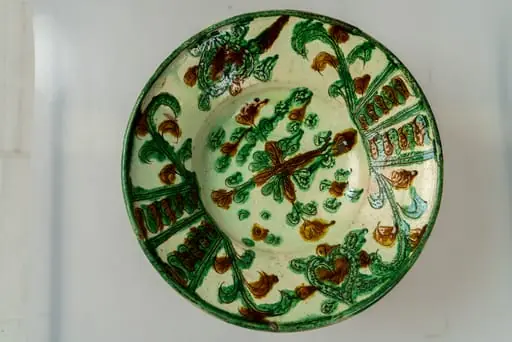 Farfurie mare, de formă semi-adâncă, cu buză răsfrântă, foarte lată, cu muchie rotunjită. Piesa este modelată la roata olarului, angobată cu humă albă. Decorul este realizat prin sgrafitare în angoba crudă, peste care se aștern cu pensula culorile de smalț: verde și galben-ocru închis. Motivele decorative sunt florale și vegetale stilizate, dispuse pe toată suprafața farfuriei. Cromatica decorului: alb, galben-ocru închis, verde.
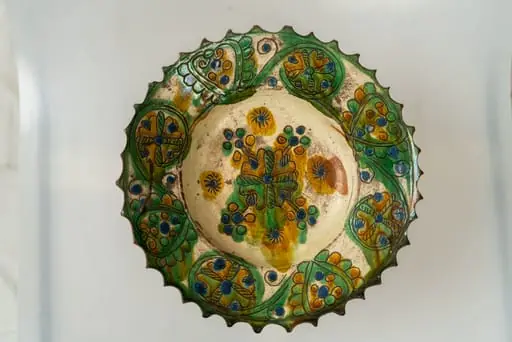 Farfurie mare, de formă semi-adâncă, cu buză răsfrântă, foarte lată, cu muchie ondulată (sub formă de colți rotunjiți). Piesa este modelată la roata olarului, angobată cu humă albă. Decorul este realizat prin sgrafitare în angoba crudă, peste care se aștern cu pensula culorile de smalț: verde, galben, albastru. Motivele decorative sunt florale și vegetale stilizate, dispuse pe toată suprafața farfuriei. Cromatica decorului: alb, galben, verde.
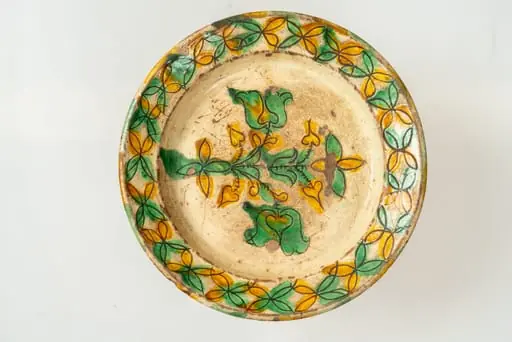 Farfurie de formă aplatizată, cu buză răsfrântă și muchie rotunjită. Piesa este modelată la roata olarului, angobată cu humă albă. Decorul este realizat prin sgrafitare în angoba crudă, peste care se aștern cu pensula culorile de smalț: verde și galben. Motivele decorative sunt florale și vegetale stilizate, dispuse pe fundul și pe buza farfuriei. Cromatica decorului: alb, galben, verde.
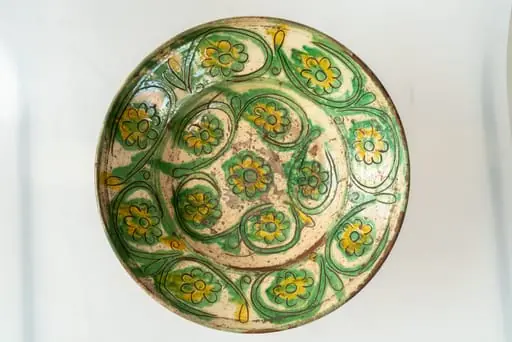 Farfurie de formă adâncă, cu buză răsfrântă. Piesa este modelată la roată, angobată cu humă albă pe fața interioară. Decorul este realizat prin pictare cu pensula, cu smalțuri colorate (verde și galben) și prin sgrafitare. Motivele decorative sunt florale și vegetale stilizate (flori cu frunze) dispuse pe întreaga suprafață a farfuriei. Bordura interioară a farfuriei este marcată cu o linie groasă sub formă de cerc, de culoare verde. Pe fața interioară a farfuriei este aplicat un strat de smalț transparent. Cromatica: alb, verde, galben.
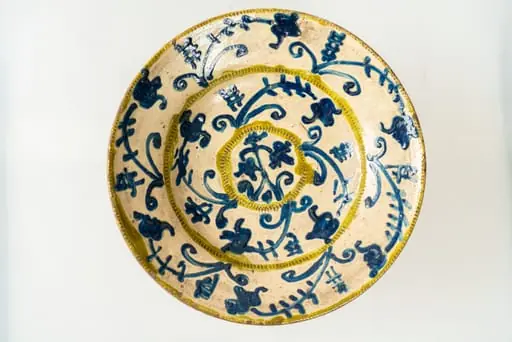 Farfurie mare, semi-adâncă, cu corp scund și buză lată, răsfrântă. Piesa este modelată la roata olarului, angobată cu humă albă pe fața interioară a acesteia. Decorul este realizat prin pictare cu pensula și cu cornul și constă în motive decorative florale și vegetale stilizate (flori și frunze), dispuse pe toată suprafața farfuriei, încadrate în trei registre separate de cercuri concentrice formate dintr-o linie verde și un șir continu de linii mici, paralele, incizate (cercuri localizate: central - pe fundul farfuriei; pe bordura interioară a buzei și pe muchia acesteia). Cromatica decorului: alb, albastru, verde. Farfuria este smălțuită pe interior, cu smalț transparent.
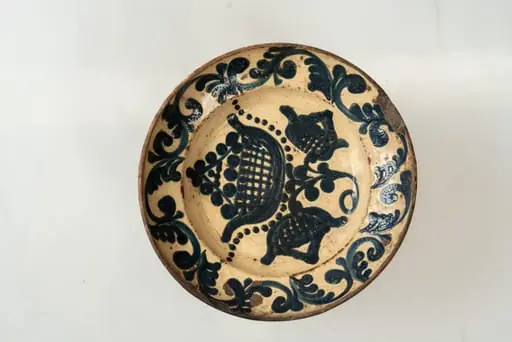 Farfurie semi-adâncă, cu corp scund și buză lată, răsfrântă și muchia buzei ușor concavă spre interior. Piesa este modelată la roata olarului, angobată cu humă albă pe fața interioară a acesteia. Decorul este realizat prin pictare cu pensula și cu cornul, cu linii groase, și constă în motive decorative florale și vegetale stilizate (flori și frunze), dispuse pe toată suprafața farfuriei. Cromatica decorului: alb, albastru. Farfuria este smălțuită pe interior, cu smalț transparent.
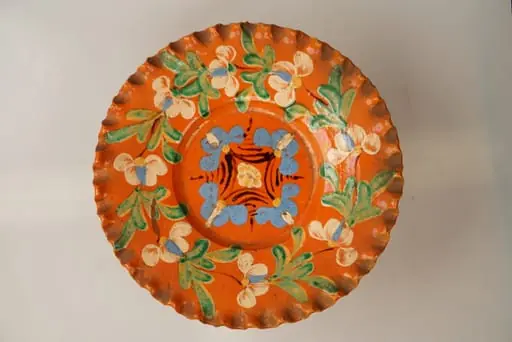 Farfurie de formă aplatizată, cu muchia buzei ondulată; suprafața interioară a farfuriei este acoperită cu un strat de angobă roșie peste care este pictat cu pensula decorul format din motive florale dispuse astfel: centrul farfuriei conține patru flori albastre cu mijlocul alb, dispuse în colțurile unui romb format din linii maro, având în centru o floare mică albă. Registrul decorativ de pe buza farfuriei este decorat cu o ghirlandă continuă dispusă circular, formată din flori cu petale albe și centru albastru, cu tulpină subțire maro și frunze verzi. Duprafața ornamentată a farfuriei este acoperită cu un strat de smalț transparent. Cromatica: roșu, alb, albastru, verde.
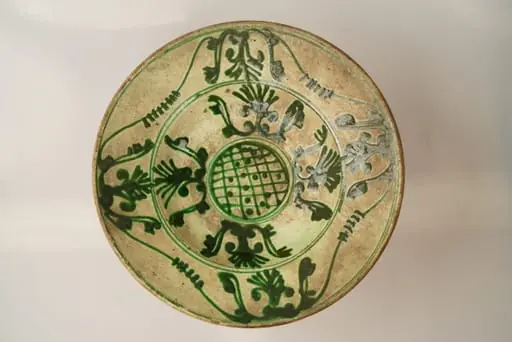 Farfurie mare, adâncă, cu buză lată dreaptă, evazată; suprafața interioară a piesei este acoperită cu un strat de angobă albă peste care este pictat cu cornul decorul monocromatic format din motive vegetale stilizate și geometrice, dispuse astfel: centrul farfuriei este decorat cu un cerc cu linii hașurate intersectat, de culoare verde, cu puncte verzi în interior; pe exteriorul acestui cerc, pe peretele farfuriei, sunt pictate patru motive vegetale aproximativ identice, formate din două frunze ce conțin în interior câte o floare formată din linii în formă de V (acest motiv poate fi interpretat și ca o floare de crin cu petalele deschise). Același motiv vegetal de pe peretele farfuriei se repetă de patru ori și pe buza acesteia, legătura între motive făcându-se cu o linie în formă de S ce are, perpendiculare pe mijloc, mici linii drepte verzi. Suprafața ornamentată a farfuriei este acoperită cu un strat de smalț transparent. Cromatica: alb, verde.
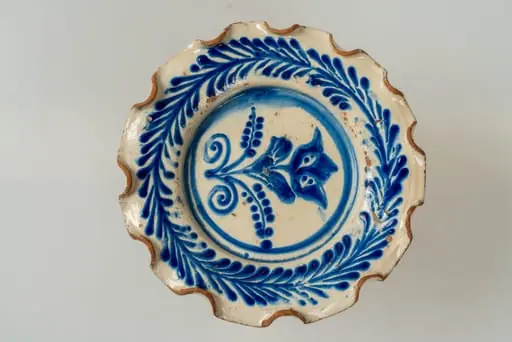 Farfurie mică, joasă, de formă plată, cu buză lată, răsfrântă, ușor concavă spre margine și cu muchie ondulată. Piesa este modelată la roata olarului, angobată cu humă albă pe fața interioară a acesteia. Decorul este realizat prin pictare cu cornul și cu pensula și constă în motive decorative florale și vegetale (flori și frunze), dispuse astfel: central, pe fundul farfuriei un motiv floral, încadrat în două cercuri concentrice, iar pe toată buza farfuriei este zugrăvit un decor vegetal sub formă de ghirlandă continuă din frunze. Cromatica: alb, albastru. Farfuria este smălțuită pe interior, cu smalț transparent.
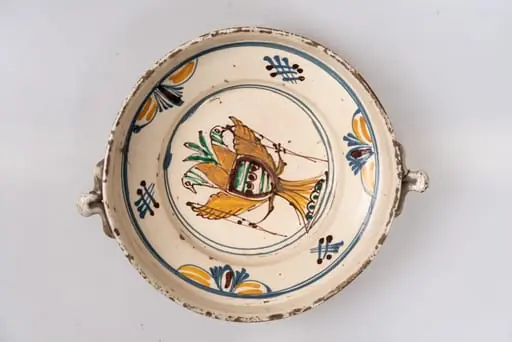 Farfurie de tip castron, cu corp tronconic și buză înaltă, verticală; este prevăzută cu două torți laterale de prindere în formă de acoladă. Piesa este angobată pe suprafața interioară cu un strat de humă albă, peste care este pictat cu cornul și cu pensula decorul compus dintr-un vultur bicefal galben, înscris în două cercuri subțiri de culoare albastră, pe fundul farfuriei. Pereții acesteia sunt decorați cu trei motive vegetale foarte stilizate, aproximativ identice (în culorile albastru, galben, maro), intercalate cu trei motive geometrice formate din linii albastre hașurate intersectate și puncte maro. Farfuria este acoperită pe suprafața ornamentată cu un strat de smalț transparent. Cromatica: alb, galben, albastru, maro, verde.
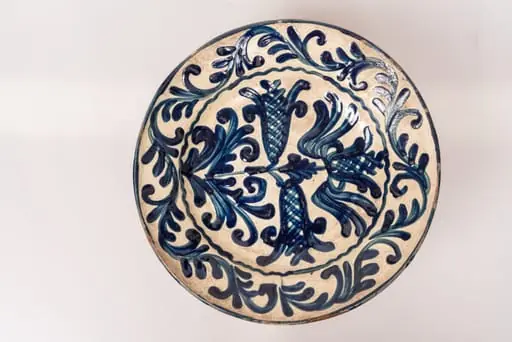 Farfurie semi-adâncă, cu buză răsfrântă; piesa este modelată la roata olarului și este angobată pe fața interioară cu humă albă. Decorul monocromatic este pictat cu pensula și se compune din motive decorative florale și vegetale stilizate (o floare de crin cu doi boboci și cu frunze, plasate central pe fundul farfuriei; buza farfuriei este acoperită cu un șir continuu de motive vegetale). Muchia buzei este marcată de o linie albastră iar bordura interioară a farfuriei de o linie vălurită. Cromatica: alb, albastru. Fața ornamentată a farfuriei este acoperită cu un strat de smalț transparent.