Artwork
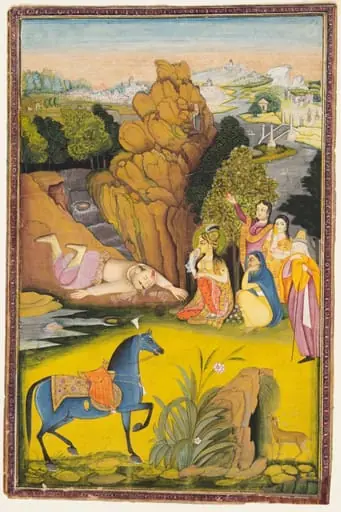
Farhad Kills Himself After Hearing the False News of Shirin’s Death
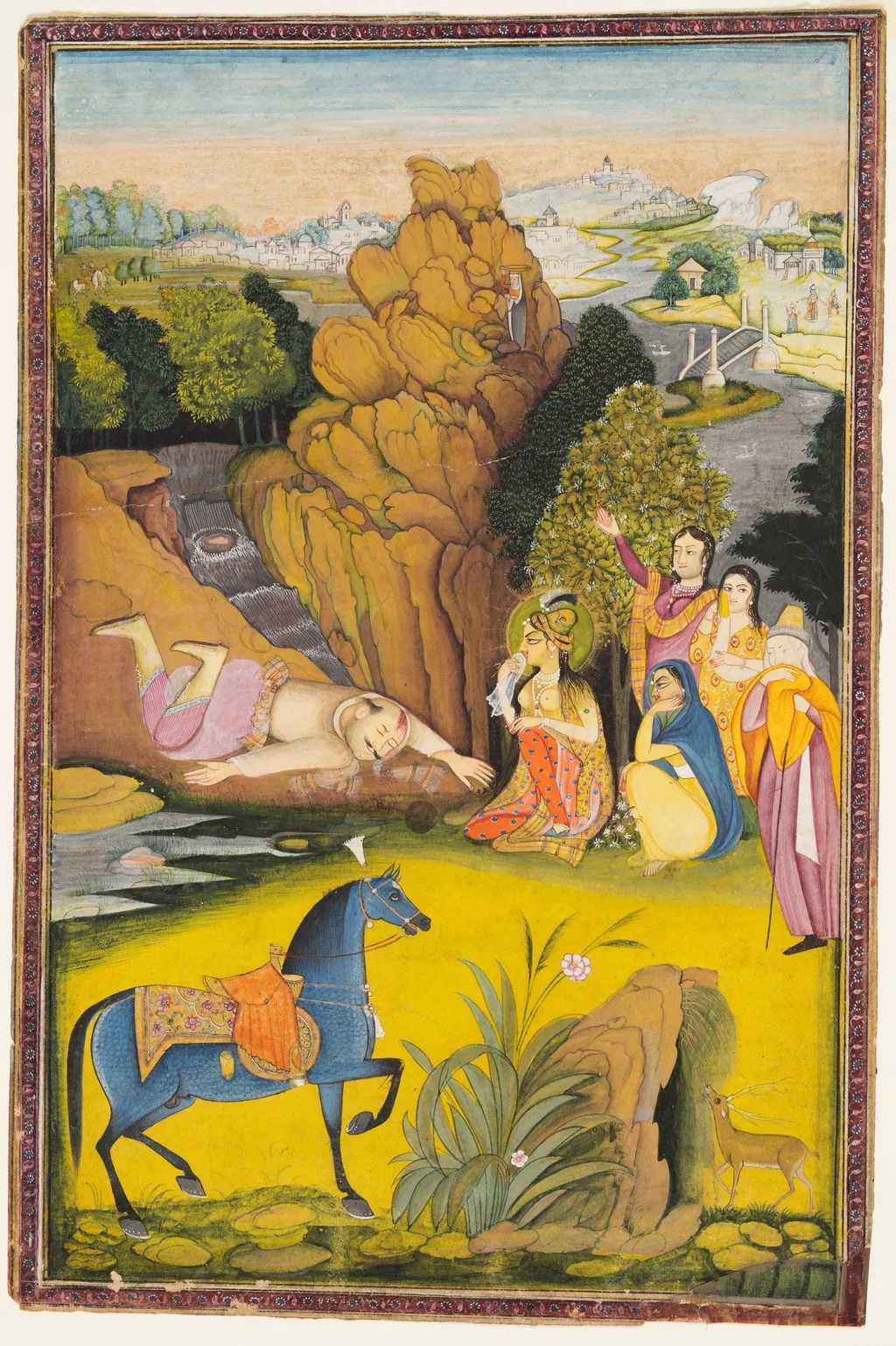
Farhad Kills Himself After Hearing the False News of Shirin’s Death is an unspecified painting by Unknown. It dates from 1810 and is held in the collection of the Cleveland Museum of Art.
About this work
Overview
The setting includes trees and a distant landscape that frame the central drama, creating a somber atmosphere through muted tones and careful composition.
The canvas presents a tragic episode in which a man, presumed to be Farhad, lies motionless beside a water’s edge, his body suggesting death. Behind him, a cluster of onlookers reacts with visible alarm, their gestures and expressions conveying shock. The setting includes trees and a distant landscape that frame the central drama, creating a somber atmosphere through muted tones and careful composition.
Subject & Meaning
The work visualizes the moment Farhad learns of Shirin’s supposed demise and, overwhelmed by grief, ends his own life. The narrative derives from a classical love story, emphasizing the intensity of devotion and the fatal consequences of misinformation. By capturing both the act and the immediate communal response, the painting explores themes of love, loss, and the ripple effects of tragedy on a surrounding community.
Technique & Style
Executed with a restrained palette, the artist employs soft, blended washes to render the water and foliage, while sharper brushwork defines the figures’ faces and gestures. The composition balances a low, horizontal plane with a vertical rise of trees, guiding the eye toward the distressed crowd. Subtle chiaroscuro enhances the sense of depth, and the overall style reflects a 19th‑century academic approach to narrative painting.
History & Provenance
The painting is part of the collection at the Cleveland Museum of Art. Its acquisition details indicate it entered the museum’s holdings through a donation in the early 20th century, though the exact donor and prior ownership remain undocumented in publicly available records.
Context
The scene draws from the Persian legend of Farhad and Shirin, a story long depicted in literature and visual arts across the Middle East and Central Asia. By the time of this painting’s creation, such literary subjects were popular among European artists seeking exotic and emotionally charged themes, aligning the work with Orientalist trends of the period.
Artist & collection

 Domestic Scene
 Giacomo and Cardinal Marco, investing Andrea, Abbot of San Zeno, with his Benefice
 The Nymph of Fontainebleau
 Portrait of a Woman
 Madonna and Child with Saints in the Enclosed Garden
 Venus and Minerva
 Family Group of Four on Sofa
 Wall painting from Room H of the Villa of P. Fannius Synistor at Boscoreale
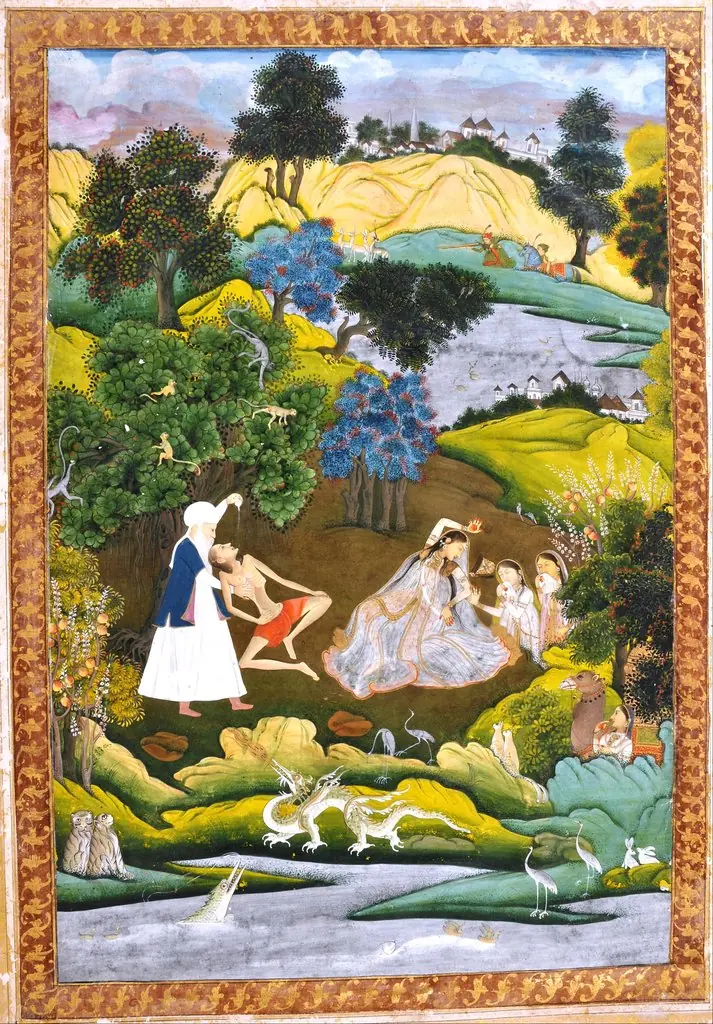 Fainted Laila and Majnun-Based on the Khamsa of Persian poet Nizami
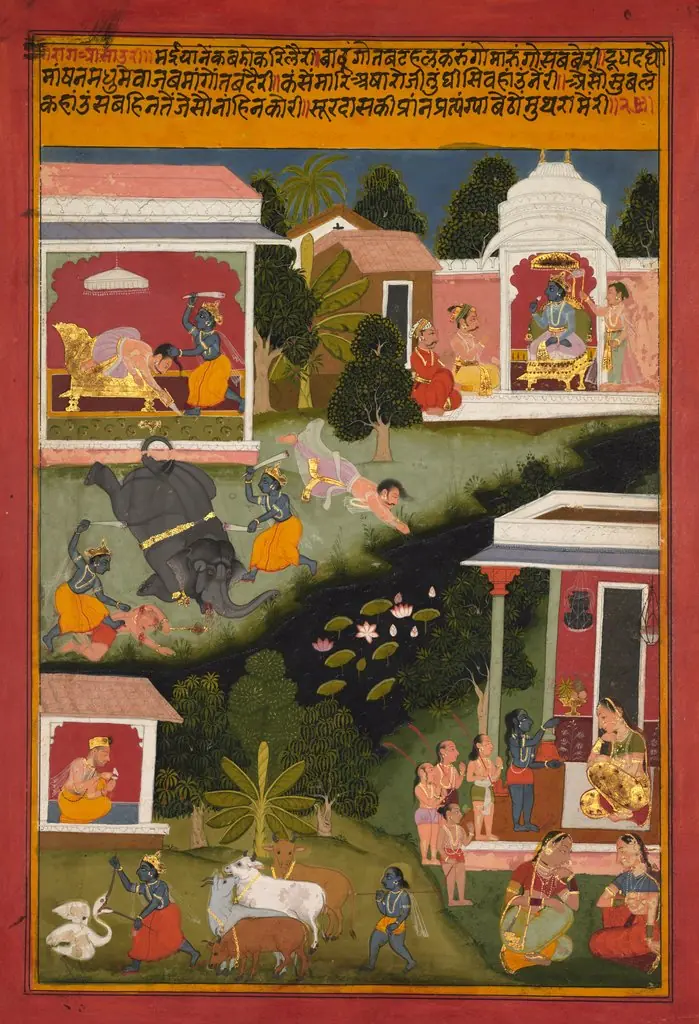 Krishna asks for sweets, from a Sursagar of Surdas (Indian, c. 1480–1580)
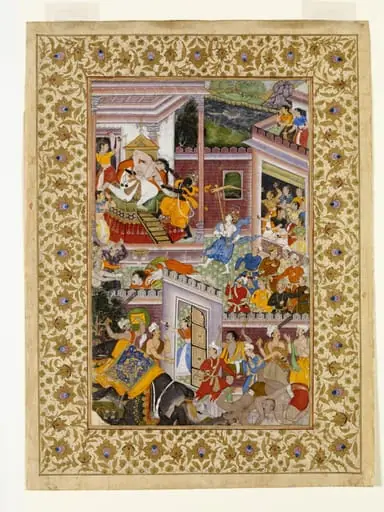 Krishna kills his uncle, the tyrant ruler Kamsa
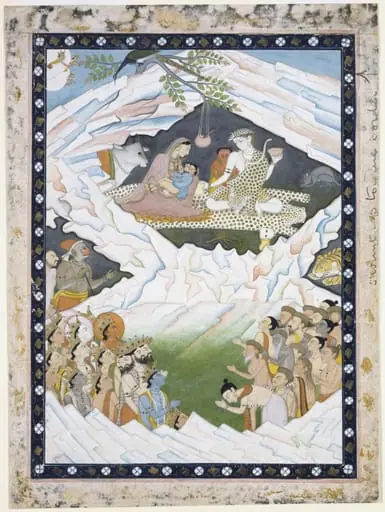 Shiva and Parvati
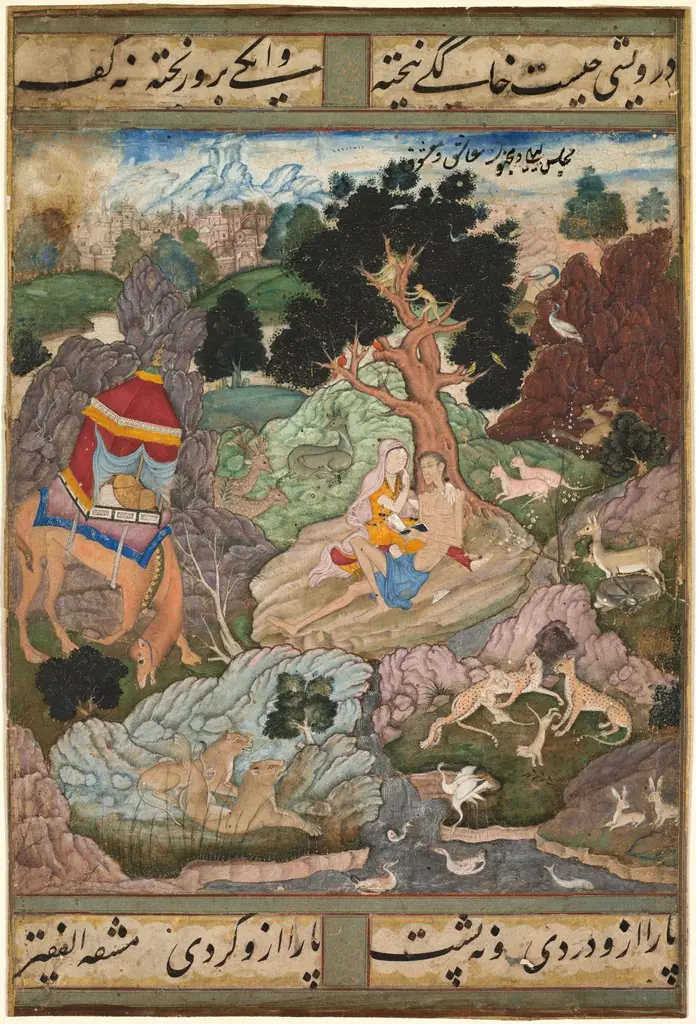 Layla and Majnun in the wilderness with animals, from a Khamsa (Quintet) of Amir Khusrau Dihlavi
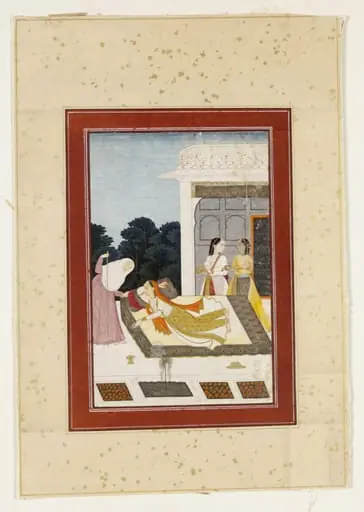 Prositapatika Nayika
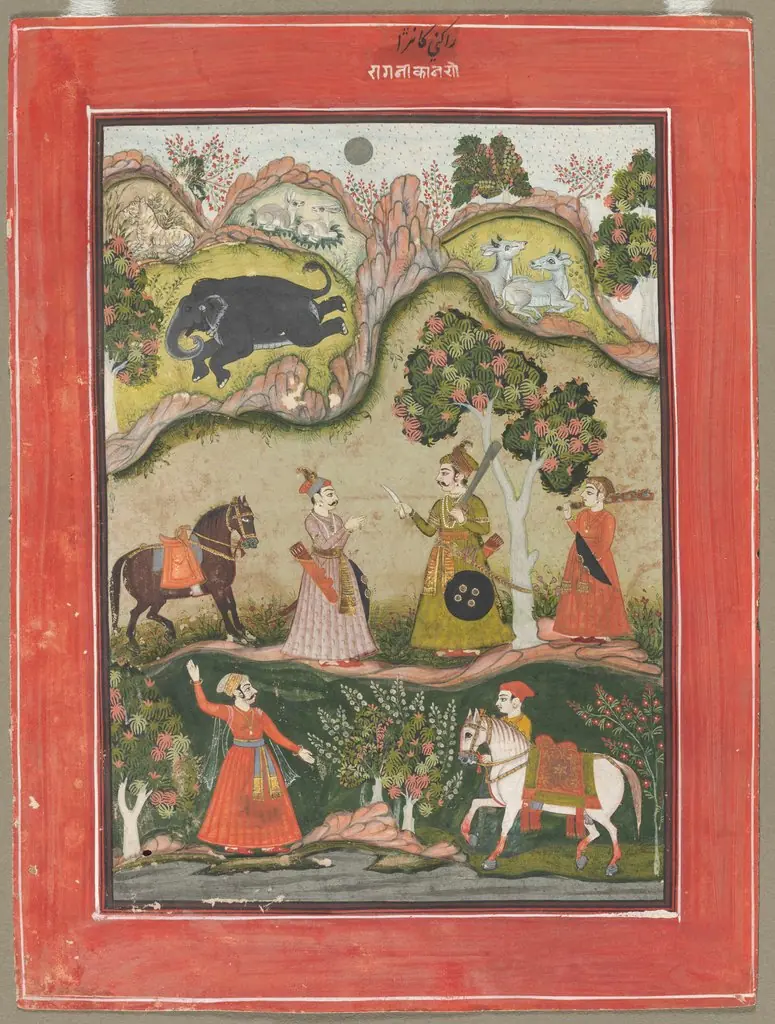 Kanhara Ragini: Song of Inspiration to Krishna for Killing the Elephant Demon, from the Ragamala Series
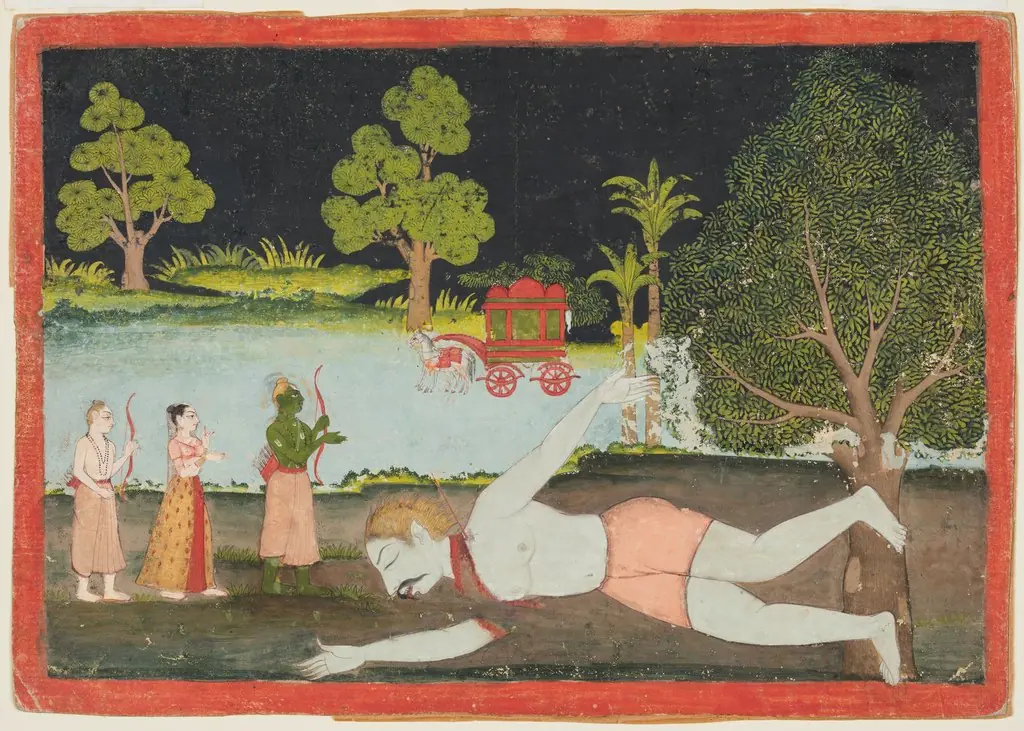 Rama and Lakshmana slay the demon giant Viradha, from Chapters 2 through 4 of the Aranya Kanda (Book of the Forest) of a Ramayana (Rama’s Journey)
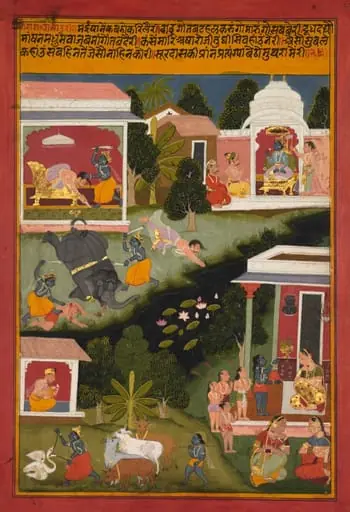 Krishna asks for sweets, from a Sursagar of Surdas (Indian, c. 1480–1580)
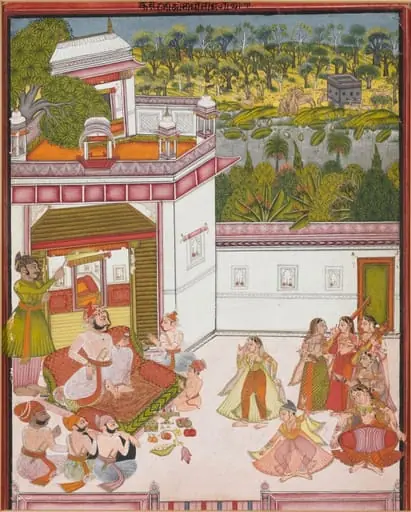 Maharaja of Kotah Listening to Music and Watching Dancers
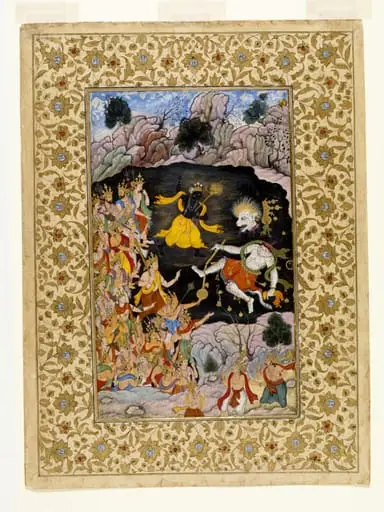 Krishna and Nikumba
 Farhad Kills Himself After Hearing the False News of Shirin’s Death