Artwork
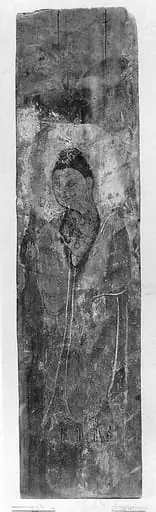
Icoana reprezintă un sfânt, (Grigorie, după cum spune inscripția.) cu mâinile aduse spre piept, veșmânt lung, arhieresc, aureolă care a avut probabil culoare. În spatele sfântului un munte stilizat. Pe spate se văd câteva încercări de figuri, la fel cu cea de pe față, schematice. .
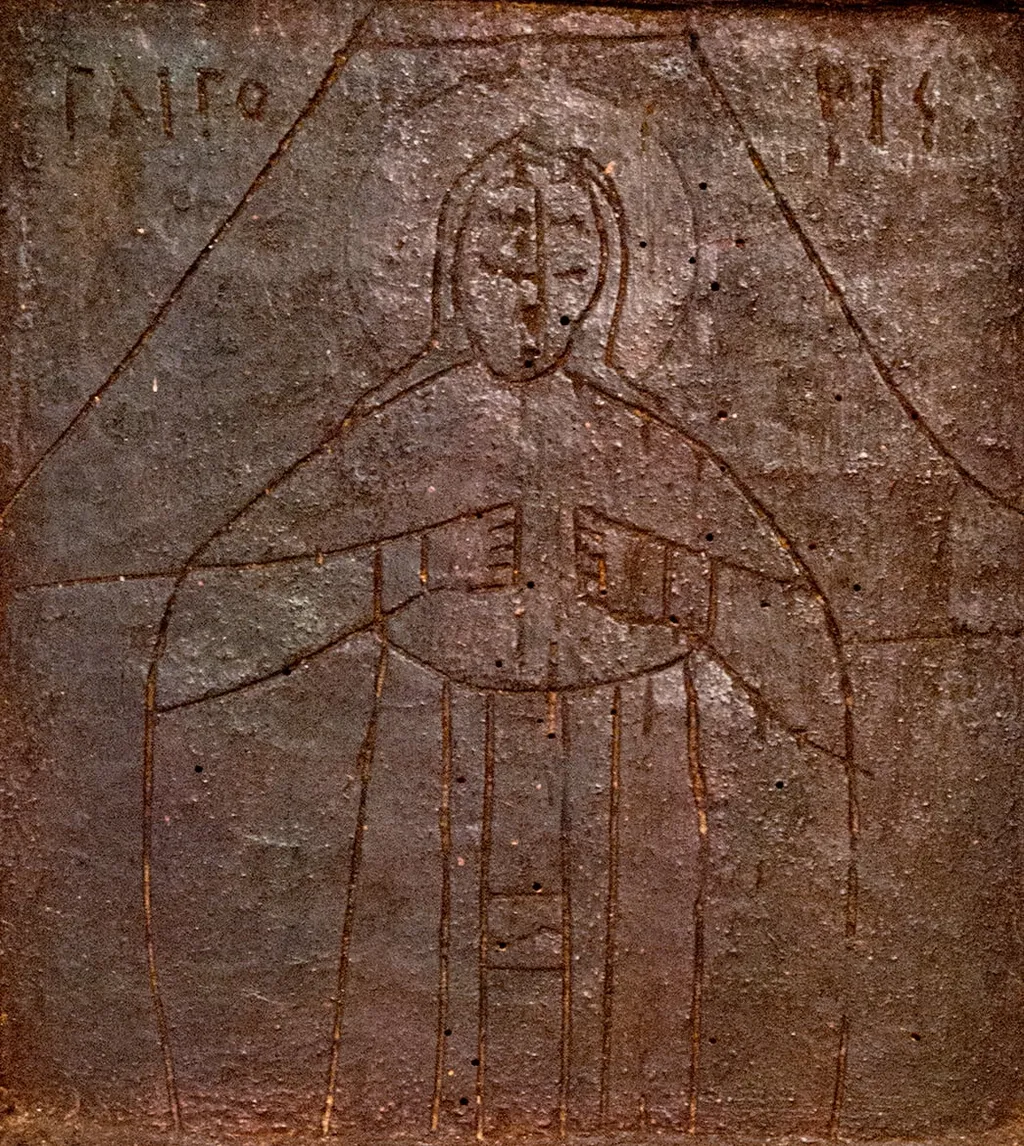
Icoana reprezintă un sfânt, (Grigorie, după cum spune inscripția.) cu mâinile aduse spre piept, veșmânt lung, arhieresc, aureolă care a avut probabil culoare. În spatele sfântului un munte stilizat. Pe spate se văd câteva încercări de figuri, la fel cu cea de pe față, schematice. . is a drawing by Unknown. It dates from 1850 and is held in the collection of the "Dimitrie Gusti" National Village Museum. A faint, hand-drawn religious image depicts a saint, identified by an inscription as Grigorie.
About this work
Overview
The figure is rendered in simple, uneven lines, with hands pressed to the chest and a long hierarchical robe.
A faint, hand-drawn religious image depicts a saint, identified by an inscription as Grigorie. The figure is rendered in simple, uneven lines, with hands pressed to the chest and a long hierarchical robe. A halo once encircled the head, likely painted, though now faded. The surface shows signs of age—smudges, wear, and partial loss—suggesting prolonged handling or exposure. The drawing’s roughness implies a devotional, rather than formal, artistic intent.
Subject & Meaning
The figure represents Saint Grigorie, a venerated religious figure, portrayed in a traditional pose of prayer or intercession. The elongated robe and halo align with Eastern Christian iconographic norms, signaling sanctity. The stylized mountain behind may symbolize spiritual ascent or a sacred landscape, common in regional hagiographic art. The image’s simplicity suggests it was made for private devotion, not public display.
Technique & Style
Executed in a rudimentary, linear style, the drawing uses minimal strokes to suggest form. The face is schematic, lacking detail, while the robe and halo are indicated by broad, uneven contours. The background mountain is barely outlined, reinforcing the work’s sketch-like character. The technique reflects a folk or amateur hand, prioritizing symbolic recognition over naturalism, typical of local religious drawings in the region.
History & Provenance
The drawing’s reverse bears faint traces of similar figures, indicating it may have been part of a reused or layered surface, possibly a discarded panel or parchment. Its worn condition and lack of frame suggest it was used in domestic or monastic settings. No documented provenance exists, but its style and materials align with 18th- to 19th-century ecclesiastical artifacts from the Romanian cultural sphere.
Context
This image belongs to a broader tradition of vernacular religious art in Eastern Europe, where lay artisans produced devotional images for personal or community use. Unlike formal icons, these works often lacked standardized techniques, relying on oral tradition and local motifs. The presence of repeated figures on the reverse hints at resourcefulness—reusing materials due to scarcity or economic constraints.
Legacy
Though not attributed to a known artist, the drawing contributes to the understanding of everyday religious practice in rural or provincial communities. Its survival, despite deterioration, underscores the persistence of devotional culture beyond institutional art. Today, it serves as a material witness to the quiet, unrecorded piety of ordinary believers in the region.
Artist & collection
Museum
"Dimitrie Gusti" National Village Museum
Continue through works from the same source collection.
 Domestic Scene
 Giacomo and Cardinal Marco, investing Andrea, Abbot of San Zeno, with his Benefice
 The Nymph of Fontainebleau
 Portrait of a Woman
 Madonna and Child with Saints in the Enclosed Garden
 Venus and Minerva
 Family Group of Four on Sofa
 Wall painting from Room H of the Villa of P. Fannius Synistor at Boscoreale
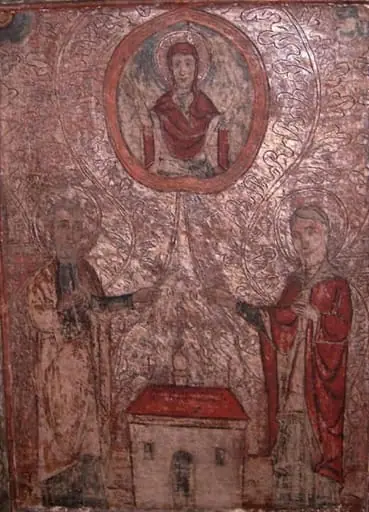
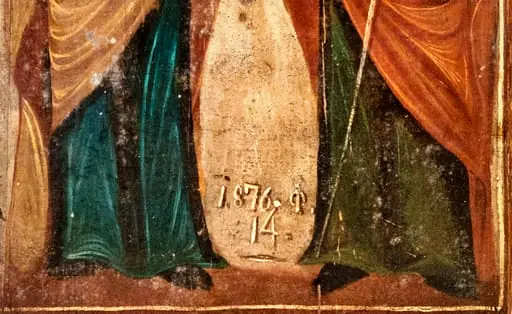 Icoana este pictată pe un suport de lemn de formă dreptunghiulară, în ax vertical. Sfinții Apostoli Petru și Pavel sunt reprezentați în picioare, simetric, susținînd, cu câte o mână Biserica. Amândoi sunt înveșmântați simplu, cu tunici albastre verzui, mantie orange(Sf. Petru), roșie (Sf. Pavel). Drapajul este fin. Apostolul Petru, conform legendei, ține în mână cheile Raiului, aici supradimensionate. Sfântul Pavel ține în stânga sabia. Biserica de zid, cu o singură turlă, centrală, înaltă, în stilul bisericilor moldovene medievale, cu ziduri albe, acoperiș roșu și două cruci mari pe coamă. Chipurile sunt expresive, grave, realizate prin tehnica iluminării treptate, cu accente naive. Sfântul Petru are barba și părul cărunte, scurte, Sf Apostol Pavel este redat mai tânăr, conform Erminiilor. Aureolele sunt radiante, raportându-se la un cerc scrijelat fin. Chenar subțire,o linie albă, la fel cu scrisul.În partea de jos între cei doi sfinți icoana este datată: "1876. F. 14" Fond bej crem, cu urme de arsură.
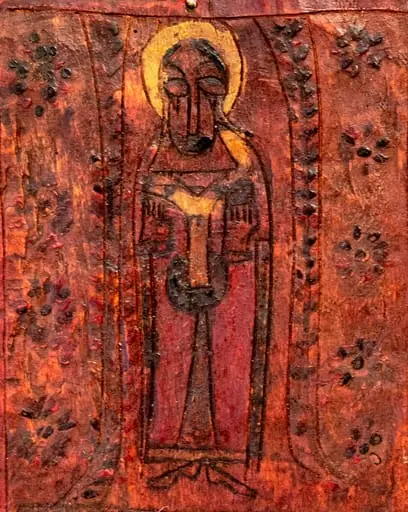 Contururi incizate: sfânt în picioare, veșminte lungi, aureolă; Trăsături redate schematic, reduse la esențial. Încadrat lateral de două coloane înguste cu motiv fitomorf delimitat de incizii verticale trasate neglijent. Chenar floral pictat pe laturile verticale și pe cea orizontală inferioară(câte 5 flori) bandă de culoare roșie în 1/3 inf pe care este incizat anul 1941; Cromatica: roșu, negru, galben, culoarea lemnului. Icoana de vatră este specifică sudului țării, a cunoscut o popularitate deosebită în sec. XVII-XVIII, dispare la sfârșitul secolului XIX;
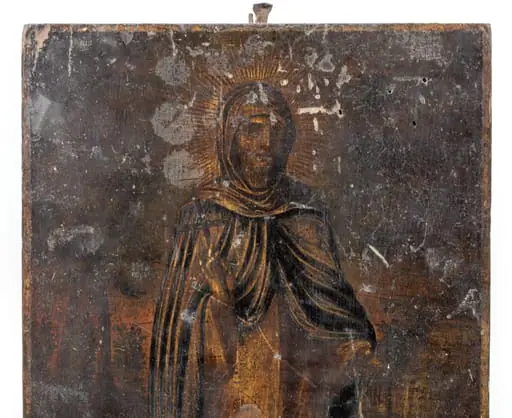 Sfânta Parascheva
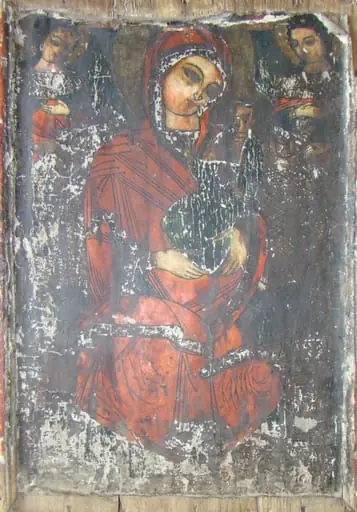 Maica Domnului cu Pruncul
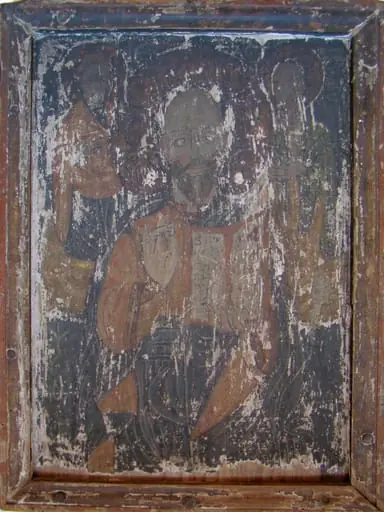 Deisis
 Zămislirea Fecioarei Maria
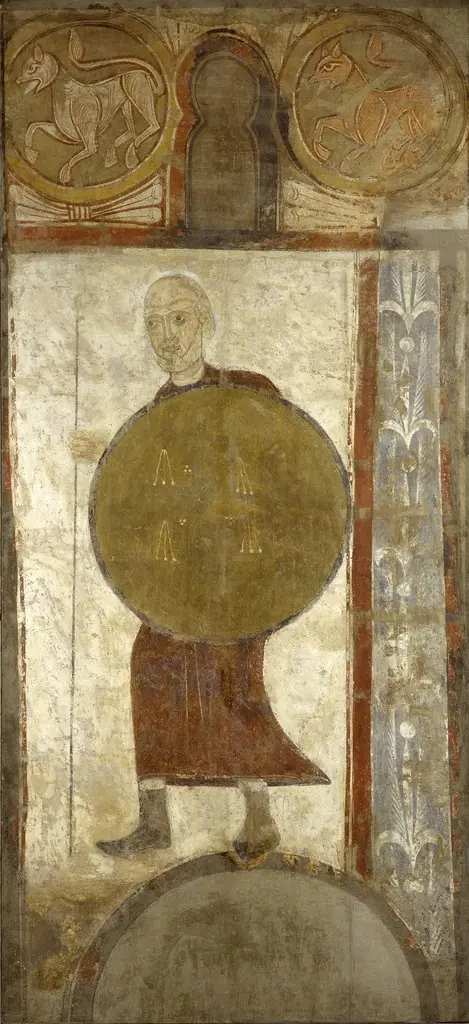 Warrior with Shield
 Saint Ursula
 Untitled
 Lamb of God and saints from Santa Maria de Taüll