Artwork
The handmaiden again pleads for the death of the prince, from a Tuti-nama (Tales of a Parrot): Eighth Night
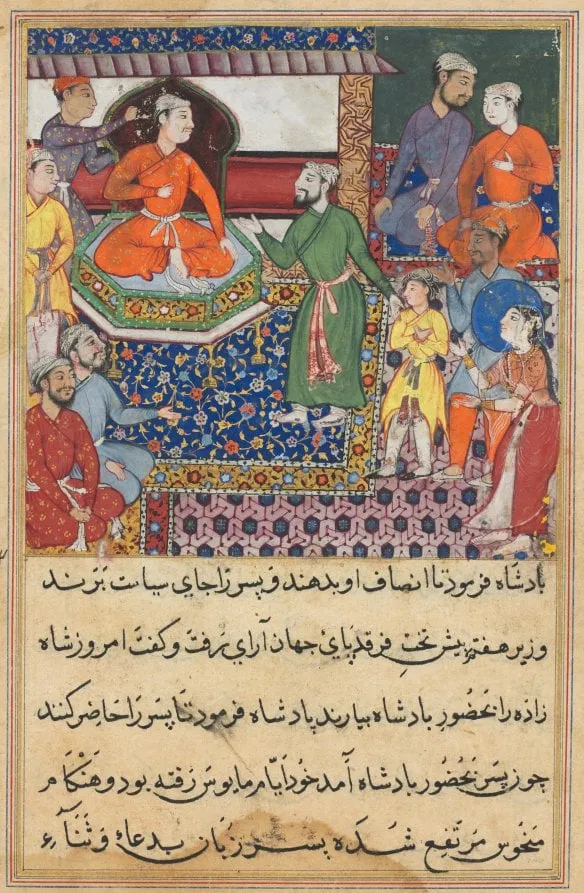
The handmaiden again pleads for the death of the prince, from a Tuti-nama (Tales of a Parrot): Eighth Night is an unspecified painting by the Mughal Painting artist Lalu. It dates from 1560 and is held in the collection of the Cleveland Museum of Art.
About this work
You see a crowded courtroom: turbaned men in robes, a bound prince with his turban half-off, and a woman kneeling at the bottom right, pointing at him.
You see a crowded courtroom: turbaned men in robes, a bound prince with his turban half-off, and a woman kneeling at the bottom right, pointing at him.
This painting is from a storybook told by a parrot to keep its owner from sneaking out at night. The woman is lying—she made up the rape charge to get the prince killed. The artist shows her dramatic moment, but the real drama is the lie itself.
To see more of these storytelling paintings, look up *mughal india, court of akbar (reigned 1556–1605)*.
Overview
This painting, titled 'The handmaiden again pleads for the death of the prince,' is an illustration from the Tuti-nama, a collection of tales told by a parrot. It depicts a dramatic scene in a crowded Mughal court.
Subject & Meaning
The scene shows a handmaiden falsely accusing a prince of rape, demanding his execution, while the prince is led into the assembly, bound and disheveled. The handmaiden's accusation is a fabrication, adding a layer of tension to the scene.
Technique & Style
The composition is crowded with figures, including turbaned men in robes, the bound prince, and the kneeling handmaiden. The artist has captured a moment of high drama, with the handmaiden's gesture drawing attention to the prince.
Context
The painting is part of a series illustrating the Tuti-nama, a storybook in which a parrot recounts tales to its owner. The Tuti-nama was created during the reign of Akbar, a Mughal emperor who ruled from 1556 to 1605.
Artist & collection

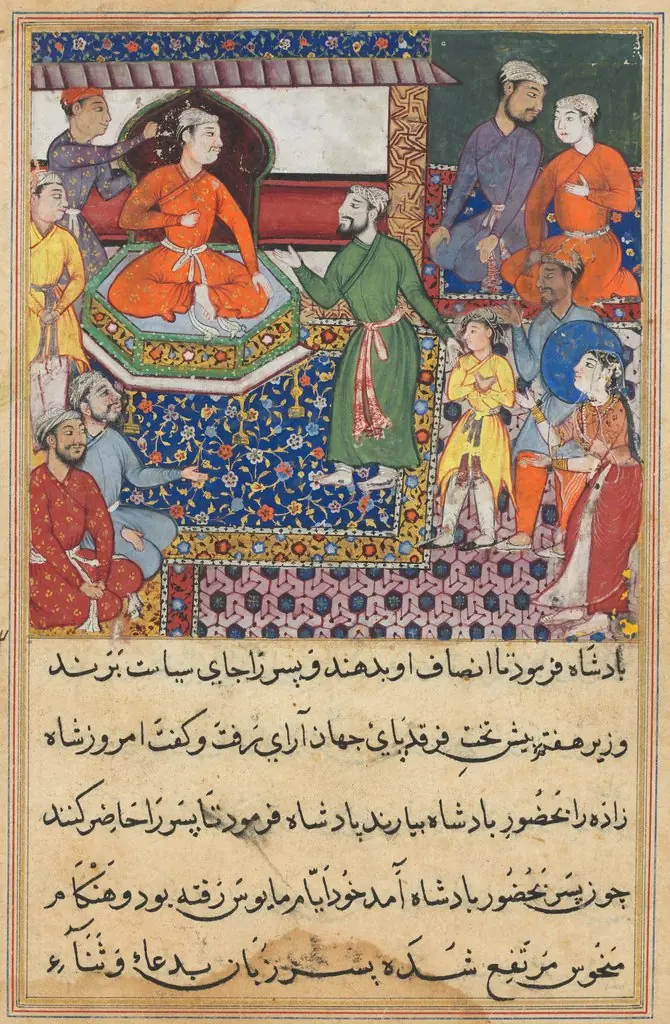 The handmaiden again pleads for the death of the prince, from a Tuti-nama (Tales of a Parrot): Eighth Night
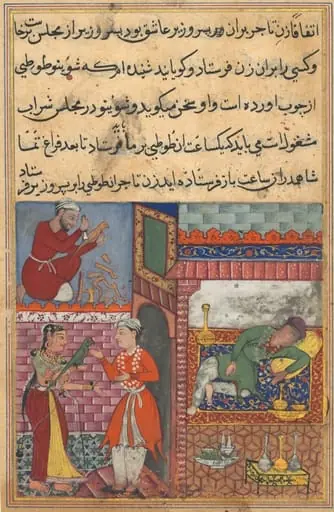 The vizier’s son receives the magic wooden parrot from the wife of the merchant, who is drunk, and has a replica made by a carpenter, from a Tuti-nama (Tales of a Parrot): Tenth Night
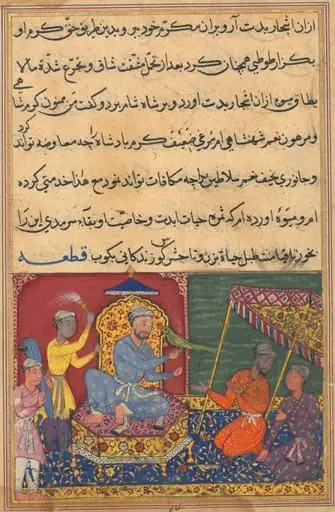 The parrot brings a fruit from the Tree of Life to the king of Syria, from a Tuti-nama (Tales of a Parrot): Ninth Night
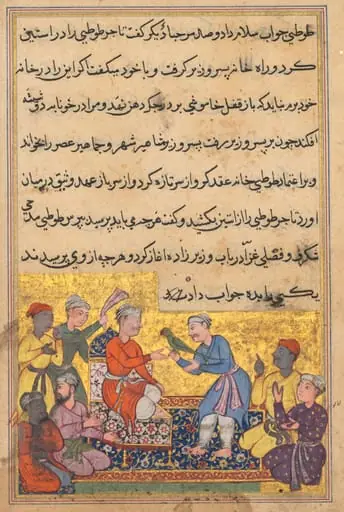 The magic parrot of the merchant talks to the vizier’s son, from a Tuti-nama (Tales of a Parrot): Tenth Night
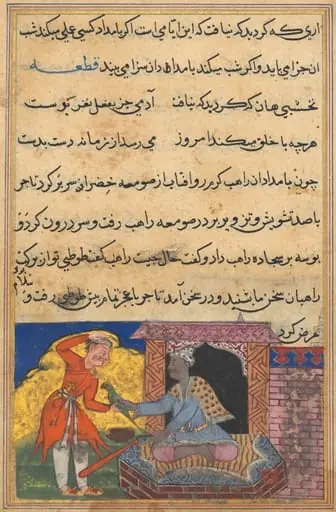 The monk returns the magic parrot to its rightful owner, the merchant, from a Tuti-nama (Tales of a Parrot): Tenth Night
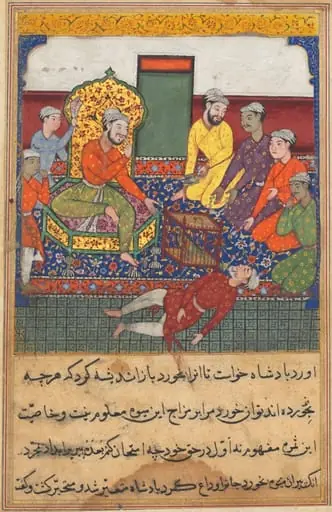 The old man eats of the fruit of the Tree of Life, but drops dead, from a Tuti-nama (Tales of a Parrot): Ninth Night
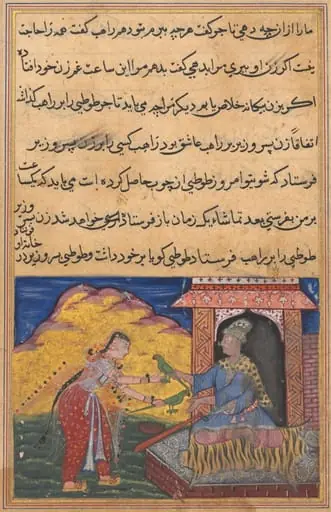 The wife of the son of the vizier brings the magic wooden parrot to her lover, the monk, who exchanges it for the replica, from a Tuti-nama (Tales of a Parrot): Tenth Night
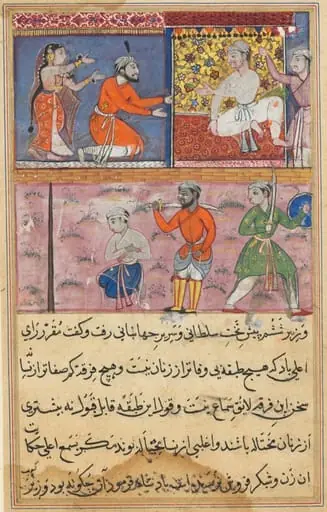 The prince sent back to the place of execution for the sixth time, from a Tuti-nama (Tales of a Parrot): Eighth Night
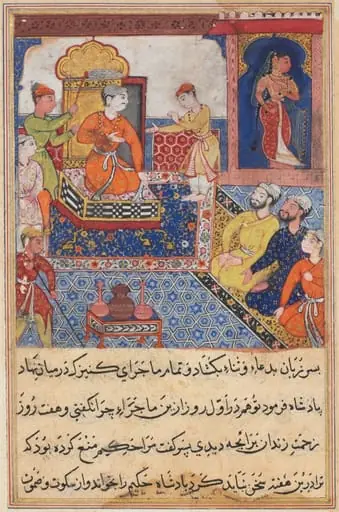 The young prince recounts his experiences to his father, the king, from a Tuti-nama (Tales of a Parrot): Eighth Night
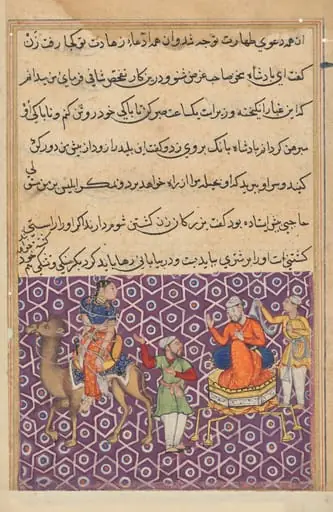 King Bahram, who has married Khassa’s daughter, has her tied to a camel to be abandoned in the desert as a result of false accusations made by Khulasa, from a Tuti-nama (Tales of a Parrot): Fifty-first Night
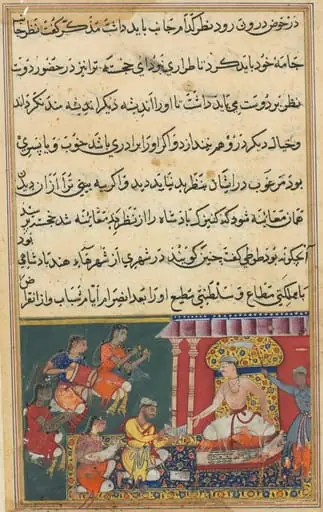 The astrologer predicts a calamity for the newly born prince in his thirteenth year, but one which he would be able to overcome, from a Tuti-nama (Tales of a Parrot): Eighth Night
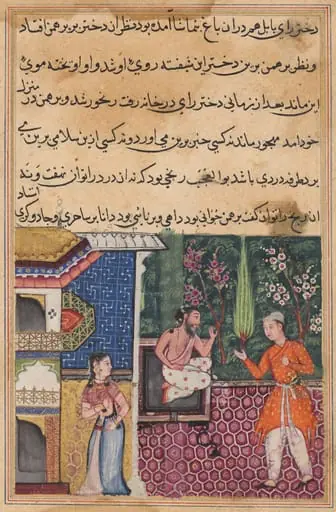 The Brahman gives an account of his falling in love with the king of Babylon’s daughter to his friend, the magician, from a Tuti-nama (Tales of a Parrot): Thirty-fifth Night