Artwork
The king’s emissary being provided with gifts for his mission to Rum in order to seek the hand of the emperor’s daughter in marriage, from a Tuti-nama (Tales of a Parrot): Fiftieth Night
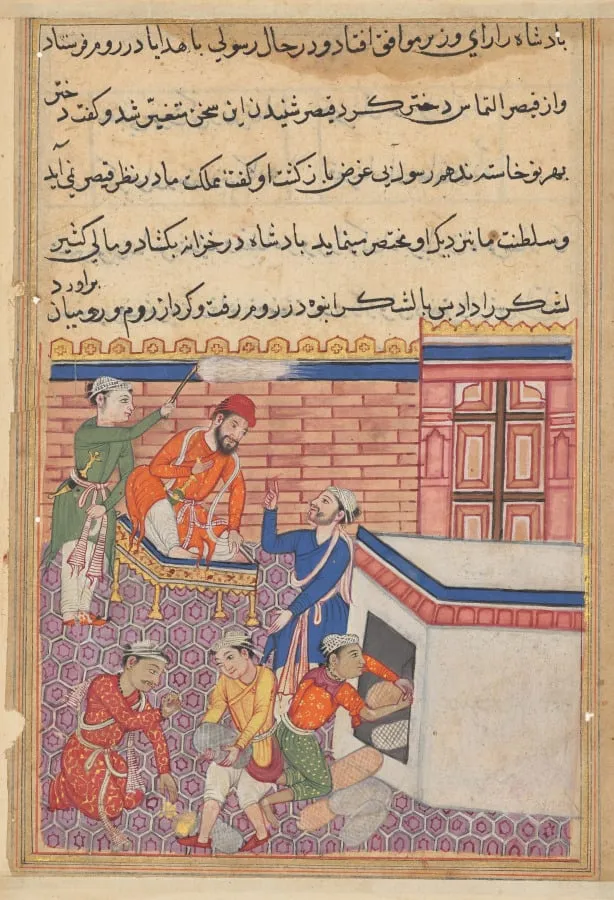
The king’s emissary being provided with gifts for his mission to Rum in order to seek the hand of the emperor’s daughter in marriage, from a Tuti-nama (Tales of a Parrot): Fiftieth Night is an unspecified painting by the Mughal Painting artist Unknown. It dates from 1560 and is held in the collection of the Cleveland Museum of Art. This painting illustrates a scene from the Tuti-nama, a collection of frame tales told by a parrot in the Mughal court.
About this work
The king’s advisor suggests sending the envoy to win a foreign princess’s hand—not for love, but to shake the king out of his laziness.
You see a king on a throne, handing gifts to an envoy while courtiers stack wrapped bundles behind them. The king looks bored, almost sleepy, as if ruling no longer interests him.
The story behind this painting comes from a book of parrot tales told in Mughal India. The king’s advisor suggests sending the envoy to win a foreign princess’s hand—not for love, but to shake the king out of his laziness. The bright colors and crowded scene make the court feel alive, even if the king doesn’t.
To see more paintings like this, look up *Mughal India, court of Akbar (reigned 1556–1605)*.
Overview
This painting illustrates a scene from the Tuti-nama, a collection of frame tales told by a parrot in the Mughal court. It depicts the moment a king dispatches an emissary to seek a bride from the court of Rum, a strategic move proposed by his vizier. The scene unfolds within the royal court, where gifts are being prepared and presented, though the king himself appears disengaged, his apathy contrasting with the bustling activity around him.
Subject & Meaning
The king’s indifference to governance has rendered him passive, prompting his vizier to devise a plan: a diplomatic marriage to the princess of Rum. The mission is not driven by romance but by the need to reawaken the king’s sense of purpose. The gifts symbolize both political leverage and a calculated distraction, turning courtly ritual into a tool for psychological intervention.
Technique & Style
Rendered in the Mughal miniature tradition, the painting employs vivid pigments, intricate patterns, and layered spatial depth. Figures are arranged in a dense, rhythmic composition, with courtiers stacking gifts behind the throne, creating a sense of movement. The king’s stillness is emphasized by his relaxed posture and downcast gaze, contrasting with the energetic gestures of his attendants.
History & Provenance
Created during the reign of Akbar (1556–1605), this illustration was part of a manuscript commissioned for the imperial library. The Tuti-nama was among the earliest illustrated texts produced under Akbar’s patronage, reflecting his interest in Persian literary traditions adapted to Indian visual culture. The painting likely originated in the imperial atelier in Fatehpur Sikri or Agra.
Context
The Tuti-nama was translated from Persian into Persianate Urdu and illustrated as part of Akbar’s broader project to synthesize diverse cultural traditions. These tales, framed by a parrot’s moral lessons, served both entertainment and political instruction. The depiction of a disengaged ruler resonated with contemporary concerns about royal responsibility and the role of advisors in maintaining imperial order.
Legacy
This painting exemplifies the Mughal court’s use of narrative art to explore governance and human psychology. Its blend of literary allegory and visual precision influenced later imperial manuscripts. Though the Tuti-nama itself was not widely copied, its stylistic innovations contributed to the development of Mughal painting as a vehicle for subtle political commentary.
Artist & collection

 Domestic Scene
 Giacomo and Cardinal Marco, investing Andrea, Abbot of San Zeno, with his Benefice
 The Nymph of Fontainebleau
 Portrait of a Woman
 Madonna and Child with Saints in the Enclosed Garden
 Venus and Minerva
 Family Group of Four on Sofa
 Wall painting from Room H of the Villa of P. Fannius Synistor at Boscoreale
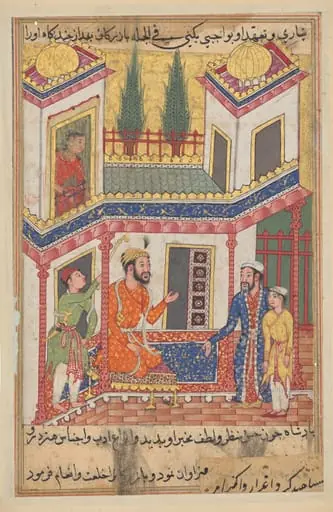 The merchant returns bringing a young slave who is really the son of the princess of Rum, now married to the king, from a Tuti-nama (Tales of a Parrot): Fiftieth Night
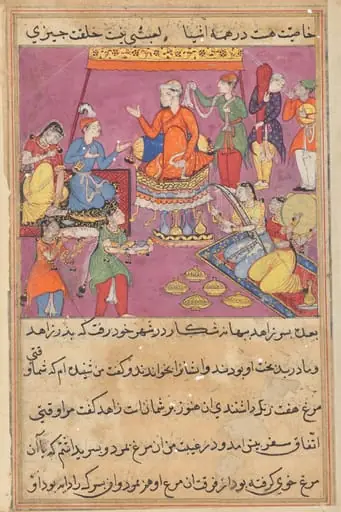 The king gives his daughter in marriage to the pious man’s son, from a Tuti-nama (Tales of a Parrot): Fifty-second Night
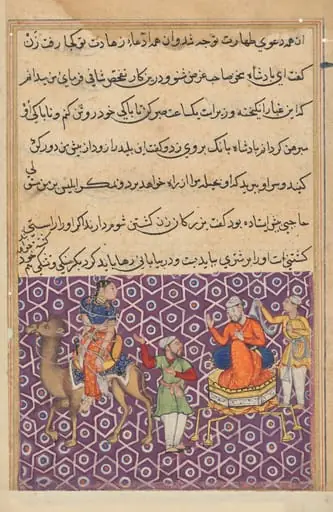 King Bahram, who has married Khassa’s daughter, has her tied to a camel to be abandoned in the desert as a result of false accusations made by Khulasa, from a Tuti-nama (Tales of a Parrot): Fifty-first Night
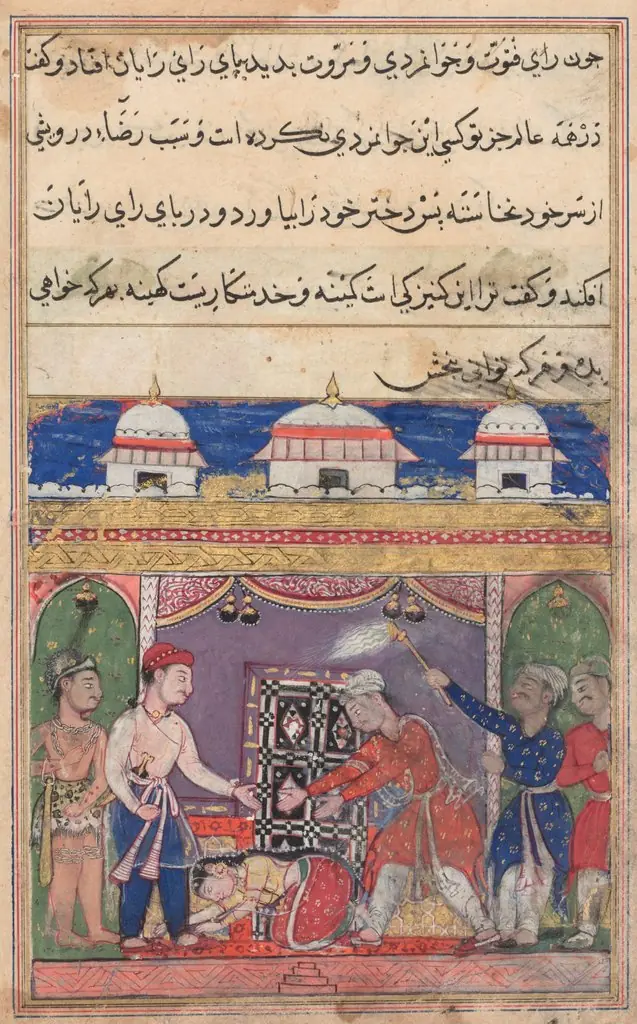 The king of Bahilistan offers his daughter to the King of Kings, from a Tuti-nama (Tales of a Parrot): Seventh Night
 The king of Bahilistan offers his daughter to the King of Kings, from a Tuti-nama (Tales of a Parrot): Seventh Night
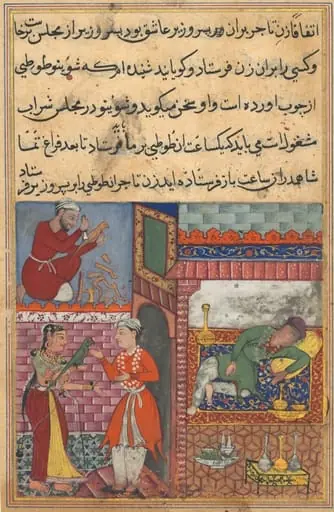 The vizier’s son receives the magic wooden parrot from the wife of the merchant, who is drunk, and has a replica made by a carpenter, from a Tuti-nama (Tales of a Parrot): Tenth Night
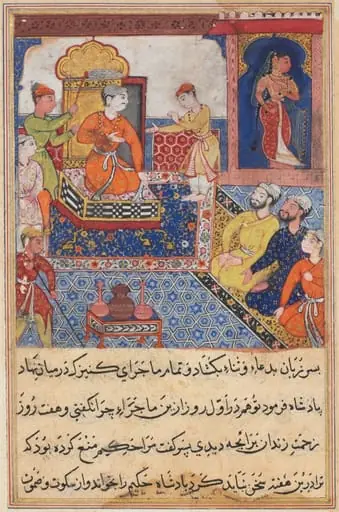 The young prince recounts his experiences to his father, the king, from a Tuti-nama (Tales of a Parrot): Eighth Night
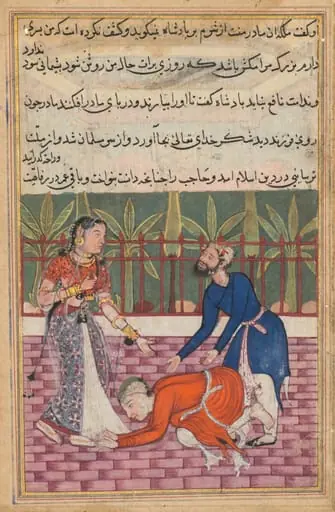 The guard restores the son who falls at his mother’s feet, from a Tuti-nama (Tales of a Parrot): Fiftieth Night