Artwork
The king of Zabul sees Mahrusa from his palace balcony, from a Tuti-nama (Tales of a Parrot): Thirty-sixth Night
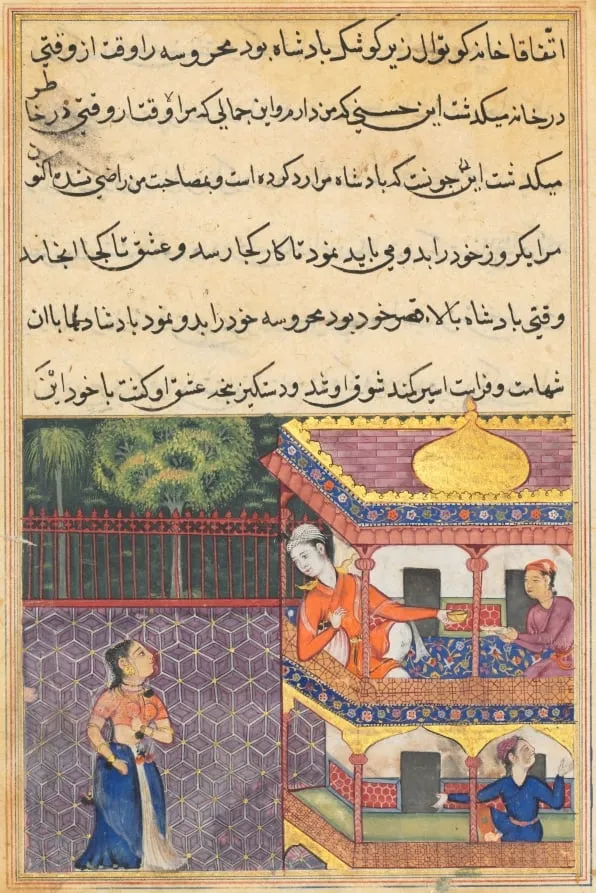
The king of Zabul sees Mahrusa from his palace balcony, from a Tuti-nama (Tales of a Parrot): Thirty-sixth Night is an unspecified painting by the Mughal Painting artist Unknown. It dates from 1560 and is held in the collection of the Cleveland Museum of Art. The miniature depicts a monarch standing on a palace balcony, his gaze fixed on a woman in a courtyard below.
About this work
The tiny details—embroidered slippers, inlaid marble—show how artists worked for royal patrons who wanted every thread and tile to feel real.
You see a king on a balcony, leaning over carved stone to watch a woman in a courtyard below. She wears a long red dress and a gold headscarf; he grips the railing, eyes locked on her.
This painting comes from a book of parrot tales made for Emperor Akbar. The tiny details—embroidered slippers, inlaid marble—show how artists worked for royal patrons who wanted every thread and tile to feel real.
Look up Mughal India, court of Akbar (reigned 1556–1605) to see more paintings from the same workshop.
Overview
The miniature depicts a monarch standing on a palace balcony, his gaze fixed on a woman in a courtyard below. She is dressed in a flowing red garment and a gold‑trimmed headscarf, while the king leans over a carved stone balustrade, his hand gripping the railing. The scene captures a moment of intense visual focus, emphasizing the emotional tension between the two figures.
Subject & Meaning
The narrative shows the king of Zabul spotting Mahrusa, a beautiful courtesan, from his elevated perch. Struck by her appearance, he becomes instantly infatuated, a passion that overwhelms him despite counsel from his vizier to remain distant. The story concludes with the ruler’s love turning fatal, illustrating the peril of unchecked desire in the moral framework of the tale.
Technique & Style
Executed in the Mughal miniature tradition, the painting employs fine brushwork to render intricate details such as embroidered slippers and inlaid marble flooring. The vibrant red of Mahrusa’s dress contrasts with the muted stone of the balcony, while gold leaf accents highlight the headscarf. The composition uses a shallow depth of field, focusing attention on the figures and their emotional exchange.
History & Provenance
This work forms part of a Tuti‑nama, a collection of parrot stories commissioned for the court of Emperor Akbar (r. 1556–1605). Produced by artists attached to the imperial workshop, the miniature was intended for a manuscript that blended literary entertainment with visual splendor for the emperor’s personal library.
Context
The painting reflects the artistic climate of Akbar’s reign, when Mughal ateliers combined Persian influences with Indian motifs to satisfy royal patrons seeking realism in texture and color. The depiction of a royal balcony scene aligns with contemporary courtly themes, while the emphasis on luxurious details underscores the patron’s desire for opulent representation of everyday objects.
Artist & collection

 Domestic Scene
 Giacomo and Cardinal Marco, investing Andrea, Abbot of San Zeno, with his Benefice
 The Nymph of Fontainebleau
 Portrait of a Woman
 Madonna and Child with Saints in the Enclosed Garden
 Venus and Minerva
 Family Group of Four on Sofa
 Wall painting from Room H of the Villa of P. Fannius Synistor at Boscoreale
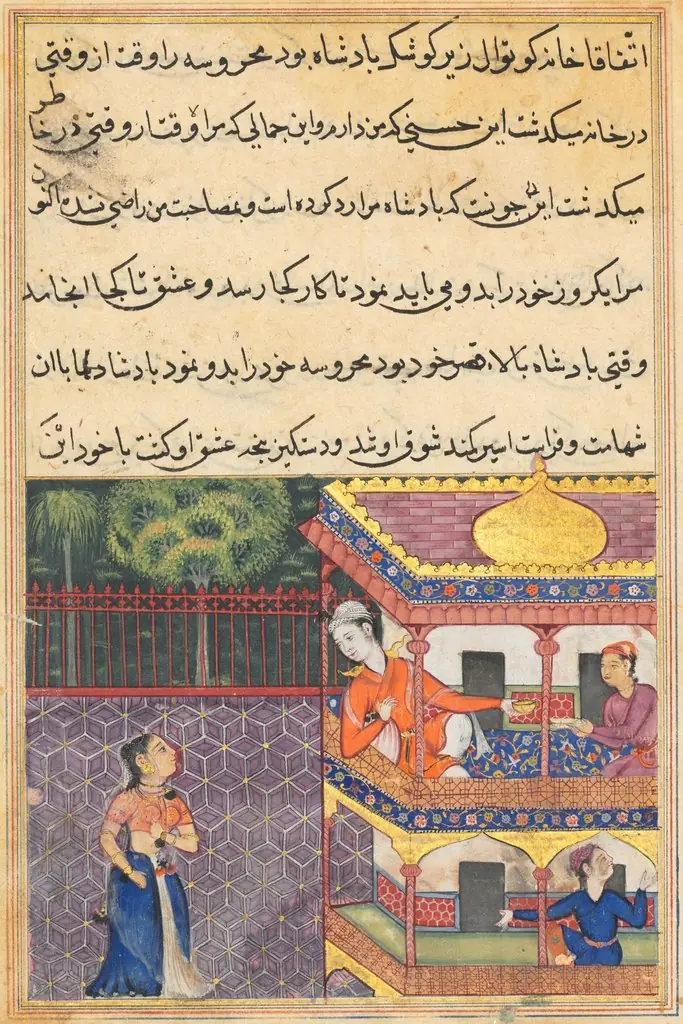 The king of Zabul sees Mahrusa from his palace balcony, from a Tuti-nama (Tales of a Parrot): Thirty-sixth Night
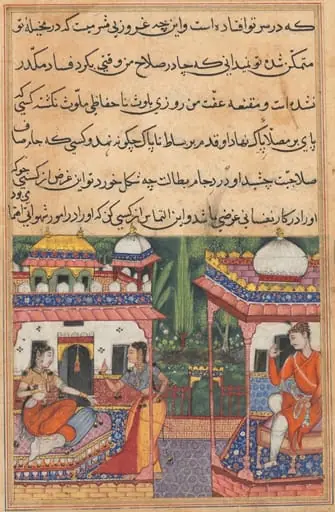 Kaiwan sends a message of love to Khurshid, wife of his brother Utarid who is away on a journey, from a Tuti-nama (Tales of a Parrot): Thirty-second Night
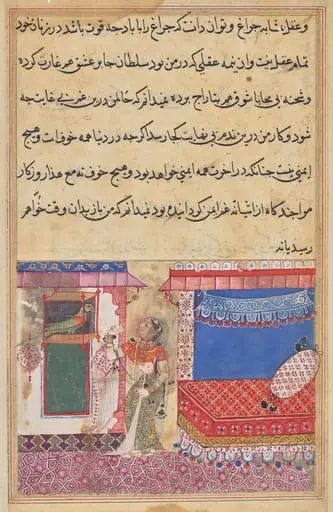 The Parrot Addresses Khujasta at the Beginning of the Eighteenth Night, from a Tuti-nama (Tales of a Parrot)
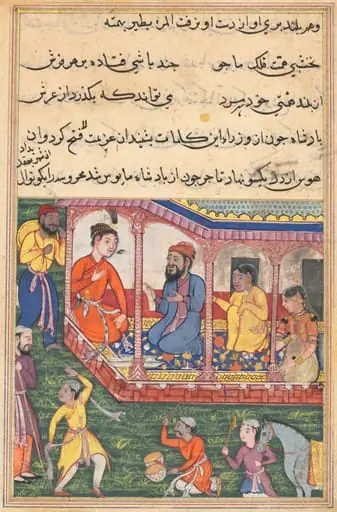 Mahrusa’s marriage to the prefect of the city, from a Tuti-nama (Tales of a Parrot): Thirty-sixth Night
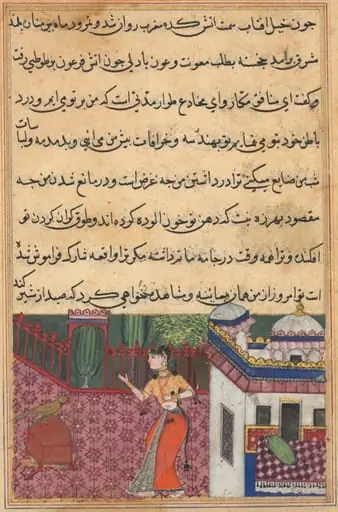 The parrot addresses Khujasta at the beginning of the thirty-third night, from a Tuti-nama (Tales of a Parrot)
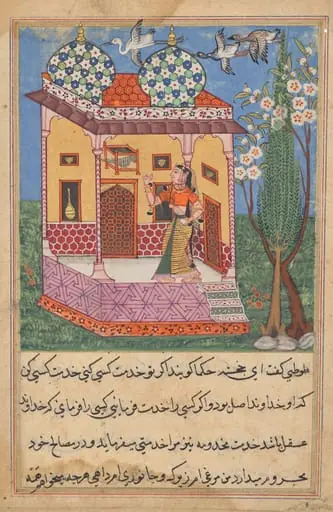 The Parrot Addresses Khujasta at the Beginning of the Twenty-sixth Night, from a Tuti-nama (Tales of a Parrot)
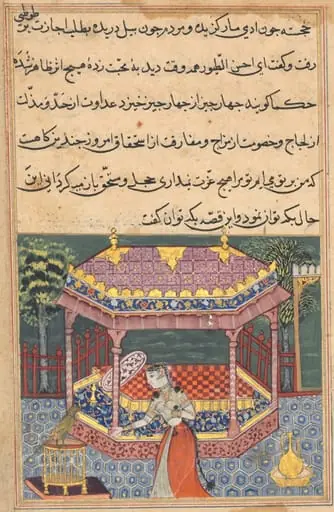 The parrot addresses Khujasta at the beginning of the thirty-seventh night, from a Tuti-nama (Tales of a Parrot)
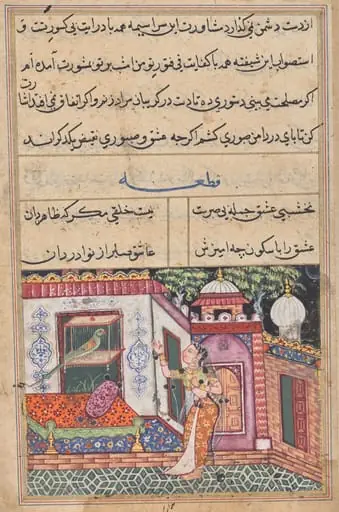 The Parrot Addresses Khujasta at the Beginning of the Eleventh Night, from a Tuti-nama (Tales of a Parrot)
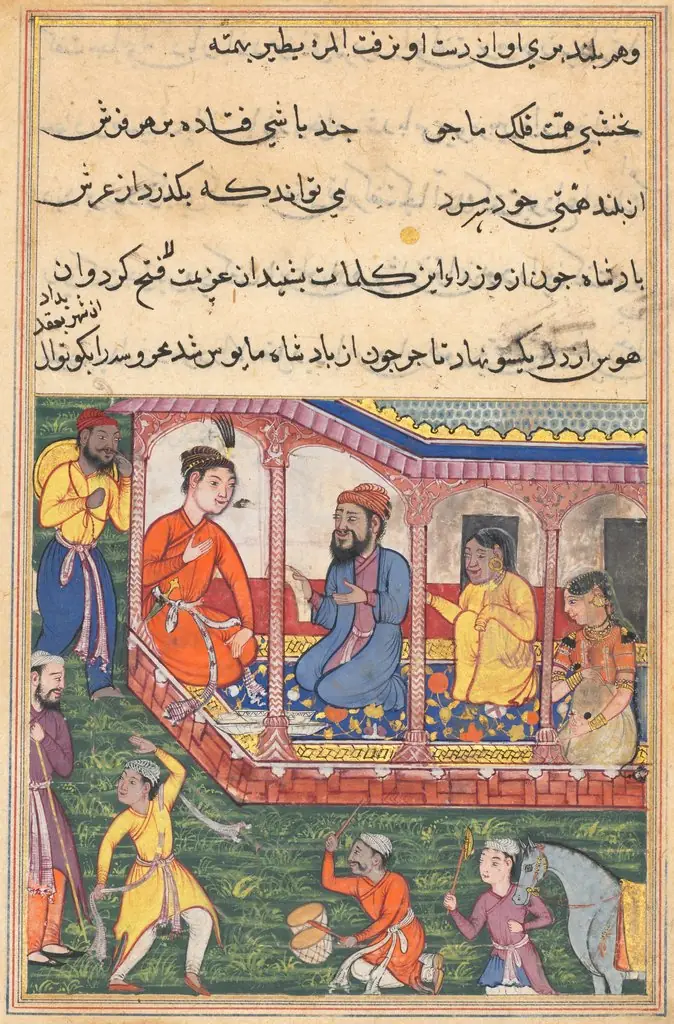 Mahrusa’s marriage to the prefect of the city, from a Tuti-nama (Tales of a Parrot): Thirty-sixth Night
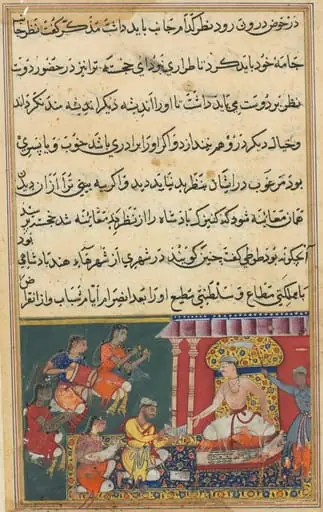 The astrologer predicts a calamity for the newly born prince in his thirteenth year, but one which he would be able to overcome, from a Tuti-nama (Tales of a Parrot): Eighth Night