Artwork
Kumbhakarna
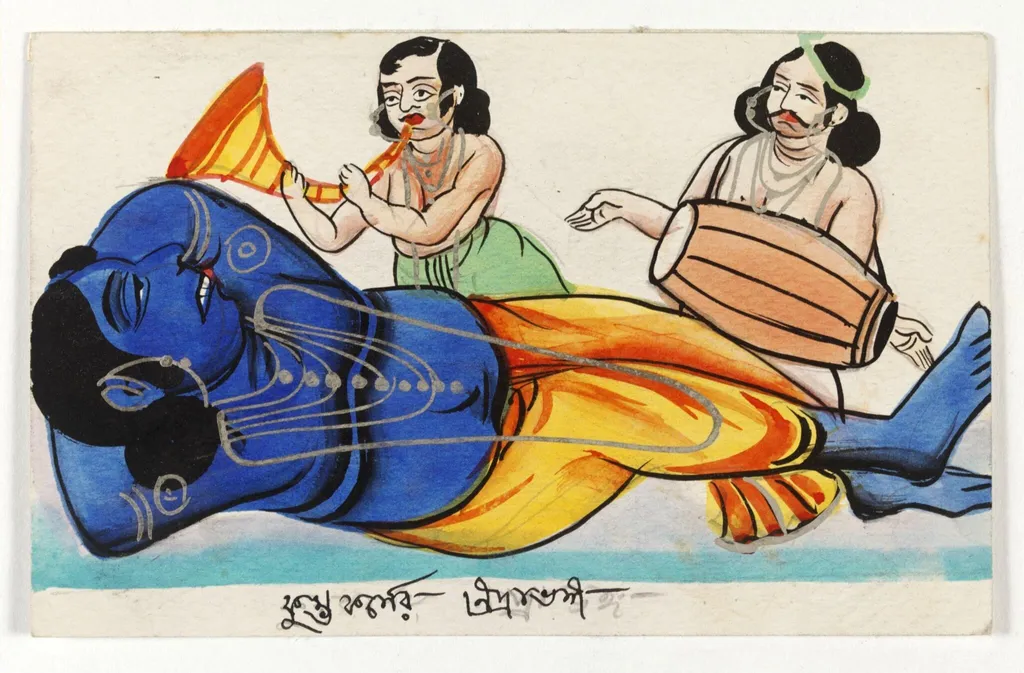
Kumbhakarna is a paint painting by the Impressionist artist Unknown. It dates from 1890 and is held in the collection of the Victoria and Albert Museum.
About this work
Overview
The work reflects a popular South Asian artistic tradition that translated religious narratives into accessible, graphic forms for public audiences.
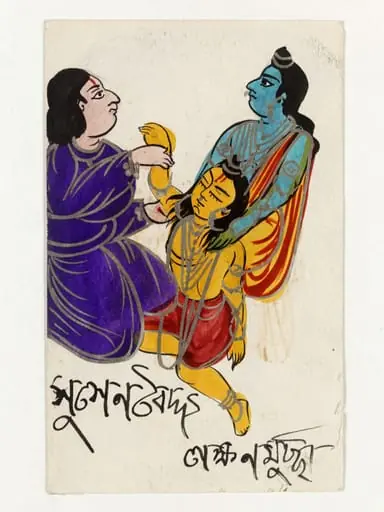
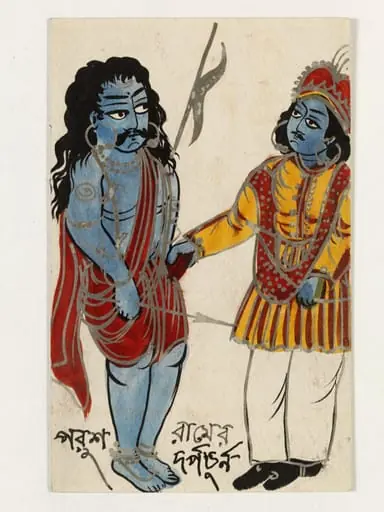
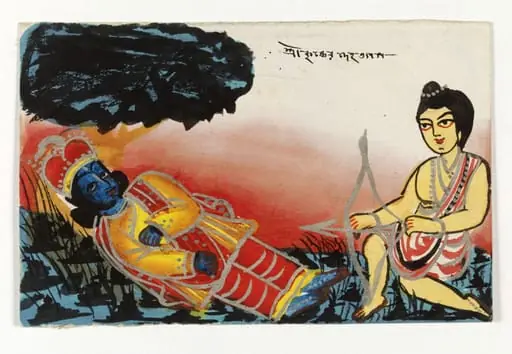
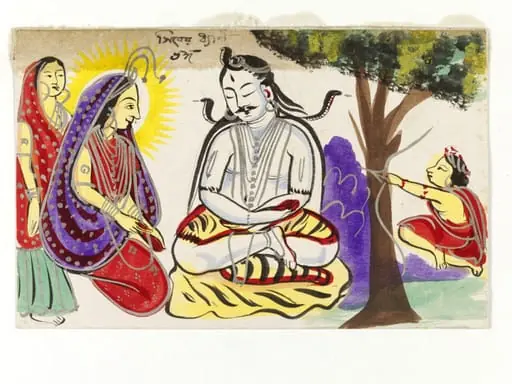
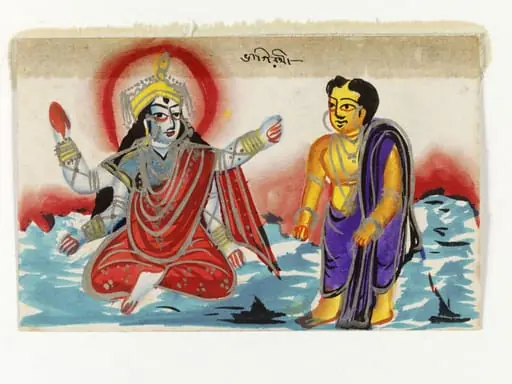
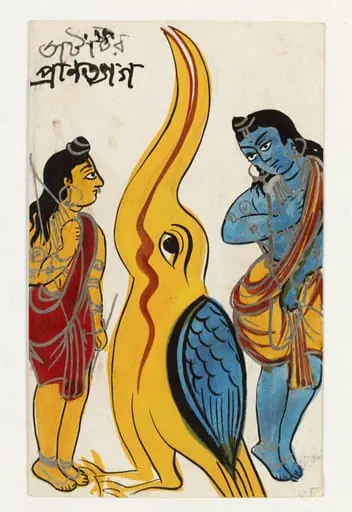
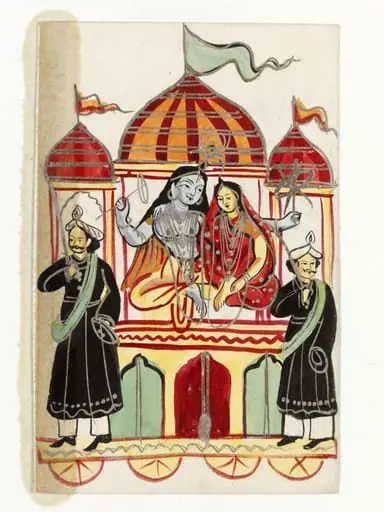
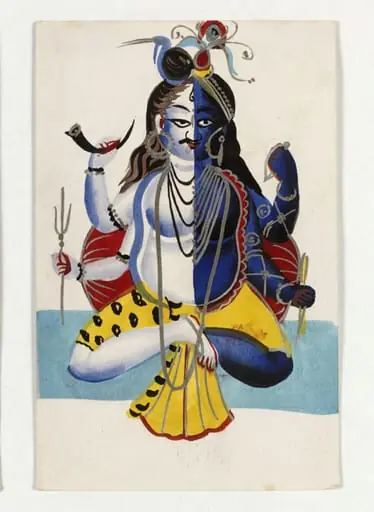
This 1890 watercolor and tin alloy painting on cardboard portrays Kumbhakarna, a mythological giant from the Hindu epic Ramayana. Created in the Kalighat style, it uses bold outlines and flat, vivid hues against a pale background. The composition centers on the colossal, blue-skinned figure reclining peacefully, surrounded by two diminutive figures attending to him. The work reflects a popular South Asian artistic tradition that translated religious narratives into accessible, graphic forms for public audiences.
Subject & Meaning
The scene captures Kumbhakarna at the moment he is roused from a prolonged slumber, induced by a misinterpreted boon granted by Brahma. Though he requested endless sleep, he was tricked into receiving eternal unconsciousness. His calm expression contrasts with the urgency of the attendants, one holding a flag and the other gesturing to awaken him. The moment underscores themes of divine deception and the consequences of flawed wishes within Hindu cosmology.
Technique & Style
The painting employs watercolor and metallic tin alloy on cardboard, combining flat areas of saturated color with minimal shading to define form. Outlines are strong and unbroken, enhancing clarity and visual impact. The stylized proportions—exaggerated size of the giant, reduced scale of the figures—emphasize narrative focus over realism. This approach aligns with Kalighat’s signature aesthetic, which prioritized legibility and rhythmic composition for devotional and popular consumption.
History & Provenance
Produced in the late 19th century near Calcutta, this work emerged from the Kalighat temple precincts, where artists catered to pilgrims with affordable religious imagery. Such paintings were often sold as souvenirs or used in storytelling. The use of cardboard and metallic pigments suggests adaptation to changing materials and market demands. The piece is now held in the Victoria and Albert Museum’s collection, part of a broader archive documenting regional artistic responses to mythological texts.
Context
Kalighat paintings flourished between the 1820s and 1900s as urbanization and colonial influence reshaped artistic production in Bengal. Artists shifted from temple murals to portable, mass-produced works, often depicting deities, satirical scenes, or moral tales. Kumbhakarna’s portrayal reflects this tradition’s focus on dramatic, easily recognizable moments from epics, designed to resonate with a broad, non-elite audience seeking spiritual and cultural connection through imagery.
Legacy
This painting exemplifies how traditional Indian visual storytelling adapted to new media and audiences in the colonial era. Its stylistic clarity influenced later folk and commercial art forms in South Asia. While Kalighat painting declined by the early 20th century, its legacy persists in the continued use of bold outlines and symbolic color in regional art. Institutions like the Victoria and Albert Museum preserve these works as vital records of indigenous visual culture during a period of social transformation.
Artist & collection

 Domestic Scene
 Giacomo and Cardinal Marco, investing Andrea, Abbot of San Zeno, with his Benefice
 The Nymph of Fontainebleau
 Portrait of a Woman
 Madonna and Child with Saints in the Enclosed Garden
 Venus and Minerva
 Family Group of Four on Sofa
 Wall painting from Room H of the Villa of P. Fannius Synistor at Boscoreale