Artwork
Kusha, Lava and Hanuman
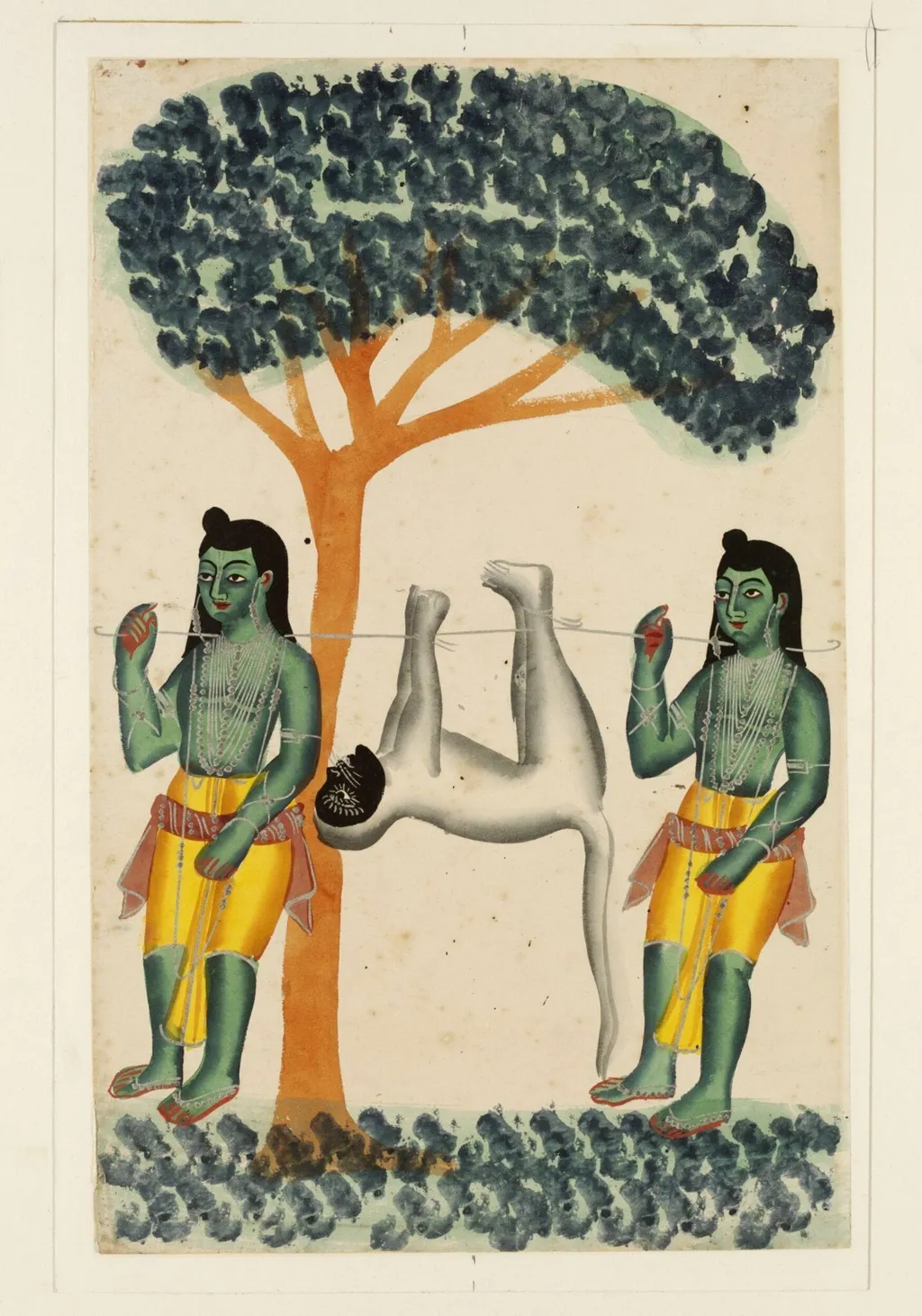
Kusha, Lava and Hanuman is a paint painting by the Romanticist artist Unknown. It dates from 1830 and is held in the collection of the Victoria and Albert Museum.
About this work
Overview
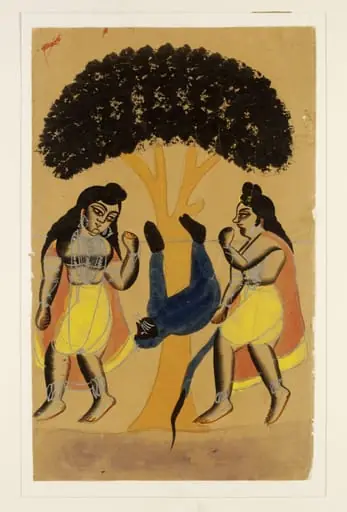
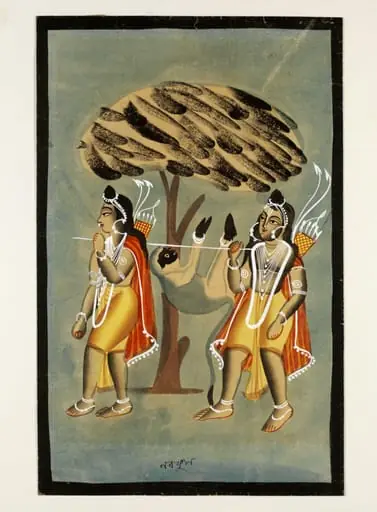
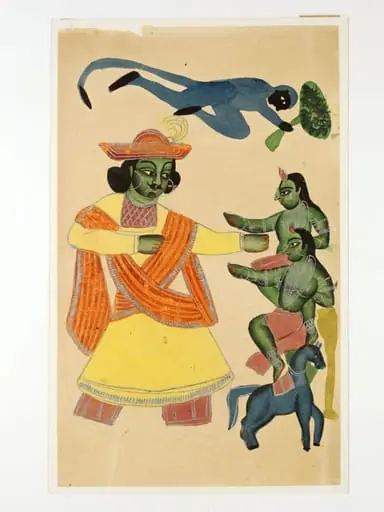
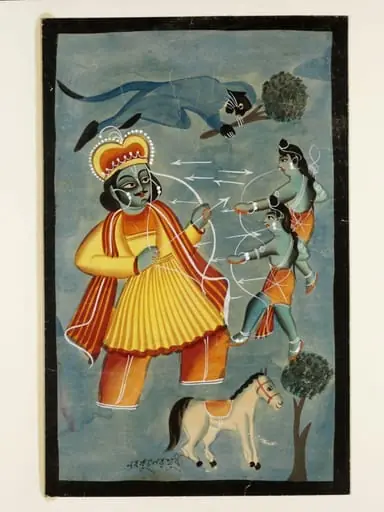
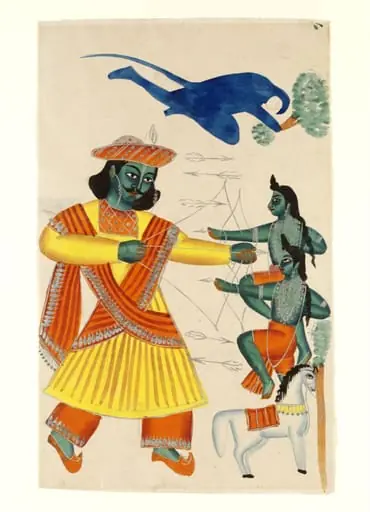
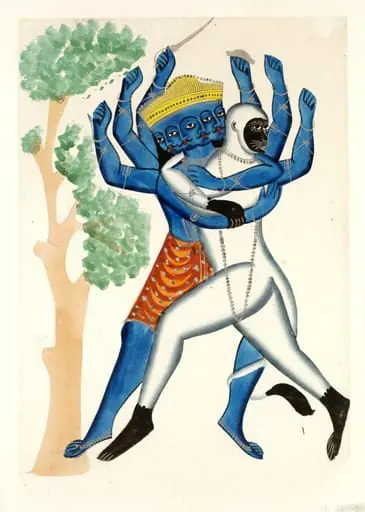
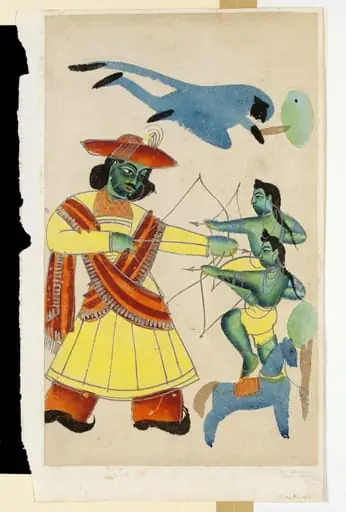
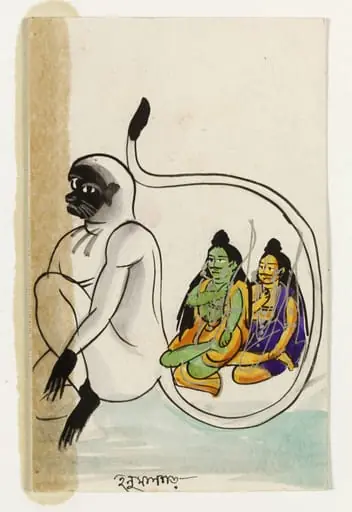
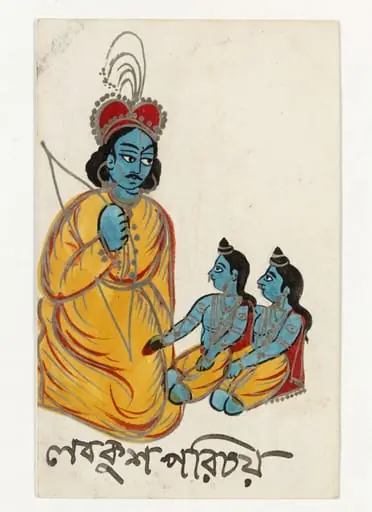
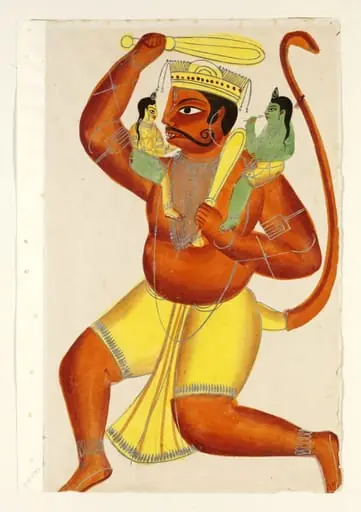
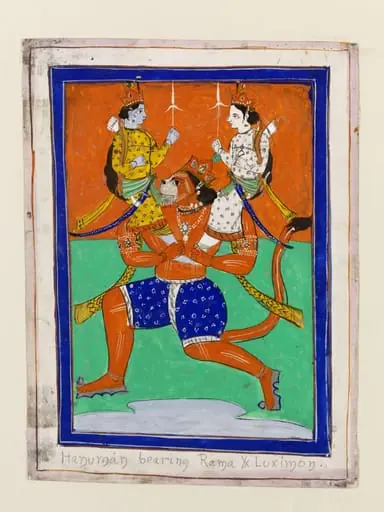
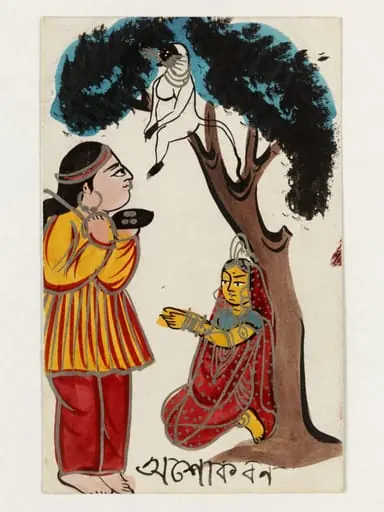
This circa 1830 opaque watercolour on paper portrays a scene from the Ramayana, showing Kusha and Lava, the twin sons of Rama, escorting the bound Hanuman. Executed in the Pahari style, the work reflects the devotional painting traditions of northern India. The figures are rendered with stylized features and vivid pigments, typical of regional court workshops during the early 19th century.
Subject & Meaning
The scene illustrates a moment when Kusha and Lava, unaware of Hanuman’s identity, capture him during a ritual test of strength. Hanuman, the devoted servant of Rama, allows himself to be bound to demonstrate humility and obedience. The narrative underscores themes of duty, divine recognition, and the eventual revelation of true identity within the epic’s moral framework.
Technique & Style
The ground is stippled with blue dots, evoking a celestial or sacred space, while the tree’s stylized branches frame the composition with rhythmic form.
The painting employs opaque watercolour with fine brushwork, characteristic of Pahari miniatures. Figures are outlined in dark ink, with flat planes of colour—green skin, golden ornaments, and bright yellow garments—creating symbolic rather than naturalistic representation. The ground is stippled with blue dots, evoking a celestial or sacred space, while the tree’s stylized branches frame the composition with rhythmic form.
History & Provenance
The work likely originated in a Pahari court studio, possibly from the Basohli or Kangra region, known for producing Ramayana-themed illustrations. It entered the Victoria and Albert Museum’s collection in the 19th century, part of a broader acquisition of Indian miniature paintings from colonial-era collections. Its preservation reflects early European interest in South Asian artistic traditions.
Context
During the early 1800s, regional courts in the Himalayan foothills continued commissioning illustrated manuscripts of Hindu epics, even as Mughal influence waned. These paintings served both devotional and didactic purposes, reinforcing cultural narratives through visual storytelling. The use of symbolic colour and flattened space aligns with longstanding Indian aesthetic principles distinct from Western naturalism.
Legacy
This painting contributes to a broader corpus of Ramayana illustrations that preserved regional artistic idioms through the colonial period. Its inclusion in major museum collections has helped sustain scholarly attention to Pahari painting, offering insight into how religious narratives were visually codified and transmitted across generations in pre-modern India.
Artist & collection

 Domestic Scene
 Giacomo and Cardinal Marco, investing Andrea, Abbot of San Zeno, with his Benefice
 The Nymph of Fontainebleau
 Portrait of a Woman
 Madonna and Child with Saints in the Enclosed Garden
 Venus and Minerva
 Family Group of Four on Sofa
 Wall painting from Room H of the Villa of P. Fannius Synistor at Boscoreale