Artwork
Mahrusa’s marriage to the prefect of the city, from a Tuti-nama (Tales of a Parrot): Thirty-sixth Night
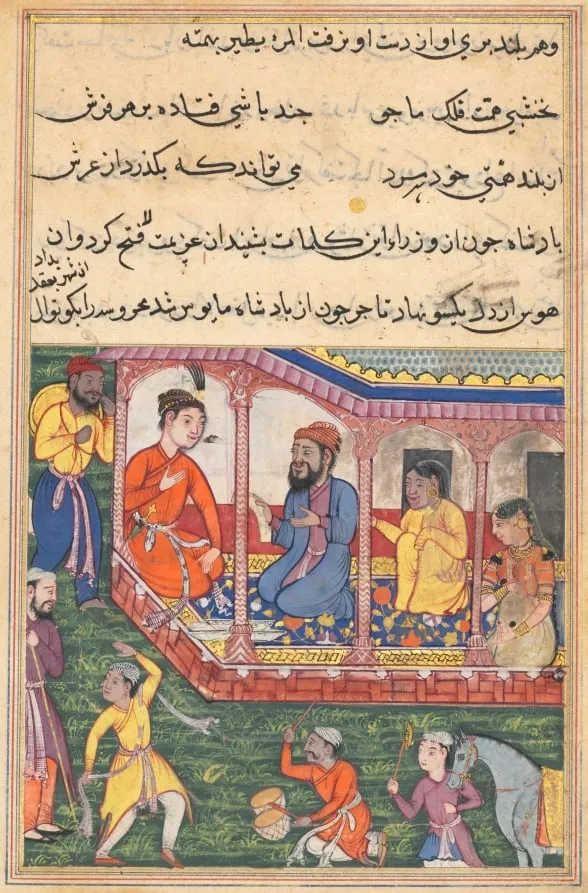
Mahrusa’s marriage to the prefect of the city, from a Tuti-nama (Tales of a Parrot): Thirty-sixth Night is an unspecified painting by the Mughal Painting artist Unknown. It dates from 1560 and is held in the collection of the Cleveland Museum of Art. The work depicts a festive wedding gathering, populated by musicians, dancers and assorted guests who revel in the celebration.
About this work
Overview
The work depicts a festive wedding gathering, populated by musicians, dancers and assorted guests who revel in the celebration. Central to the composition are the bride, Mahrusa, and the city prefect, whose marriage is the focus of the scene.
Subject & Meaning
Mahrusa, previously spurned by the king, is shown contemplating his rejection even as she participates in her own nuptial ceremony with the prefect. The juxtaposition of personal disappointment with communal joy underscores the tension between private sorrow and public festivity.
Technique & Style
The painting employs a multi‑level arrangement, placing the celebratory figures in a lower register that allows the central wedding pair to dominate the upper space. Bright orange attire identifies the prefect, while the surrounding figures are rendered with lively gestures that convey movement and sound.
History & Provenance
The scene is taken from the thirty‑sixth night of the Tuti‑nama, a collection of Persian tales narrated by a parrot. The work belongs to a tradition of manuscript illustration that visualized literary episodes for a courtly audience.
Context
Within the broader narrative, Mahrusa’s marriage to the prefect follows her rejection by the monarch, reflecting themes of political alliance and personal agency common in medieval Persian storytelling.
Artist & collection

 Domestic Scene
 Giacomo and Cardinal Marco, investing Andrea, Abbot of San Zeno, with his Benefice
 The Nymph of Fontainebleau
 Portrait of a Woman
 Madonna and Child with Saints in the Enclosed Garden
 Venus and Minerva
 Family Group of Four on Sofa
 Wall painting from Room H of the Villa of P. Fannius Synistor at Boscoreale
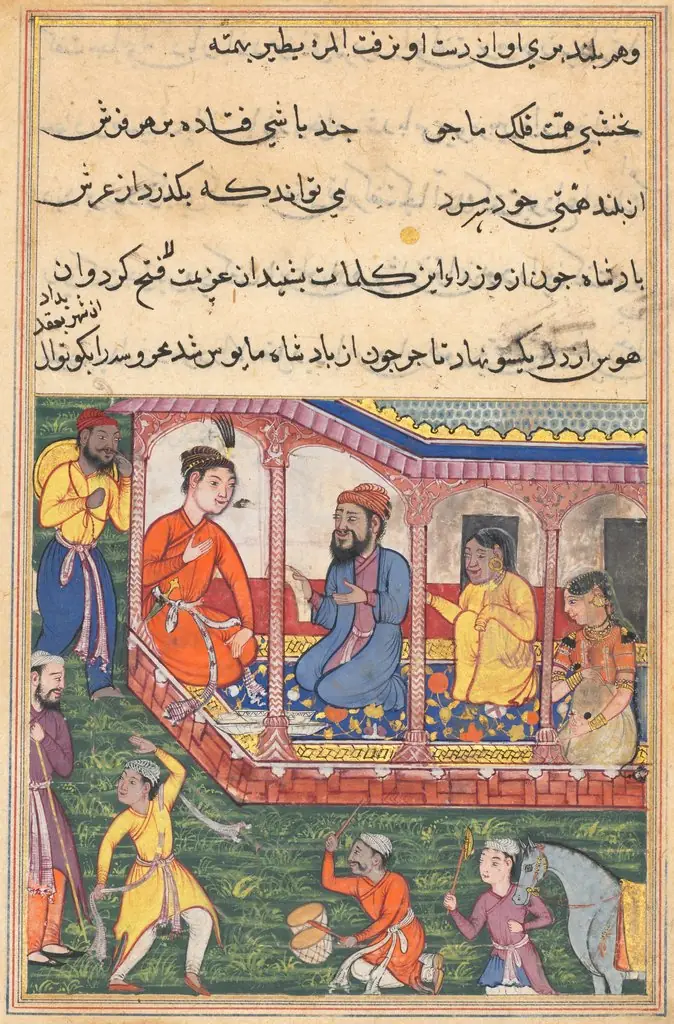 Mahrusa’s marriage to the prefect of the city, from a Tuti-nama (Tales of a Parrot): Thirty-sixth Night
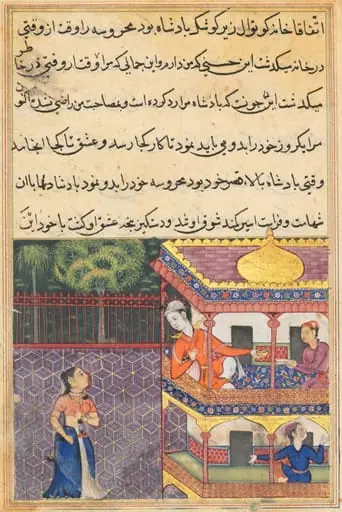 The king of Zabul sees Mahrusa from his palace balcony, from a Tuti-nama (Tales of a Parrot): Thirty-sixth Night
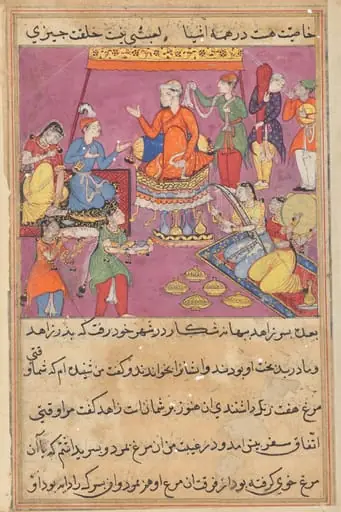 The king gives his daughter in marriage to the pious man’s son, from a Tuti-nama (Tales of a Parrot): Fifty-second Night
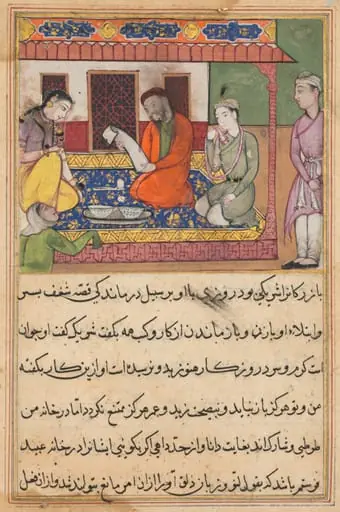 The marriage of ‘Ubaid, son of a merchant of Tirmiz, from a Tuti-nama (Tales of a Parrot): Forty-second Night
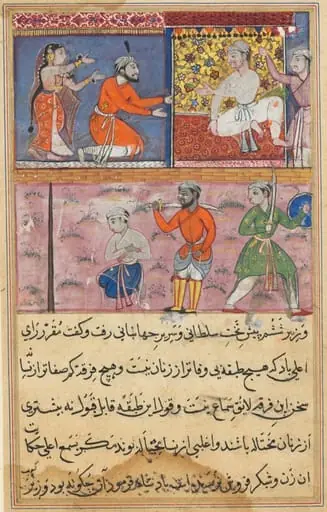 The prince sent back to the place of execution for the sixth time, from a Tuti-nama (Tales of a Parrot): Eighth Night
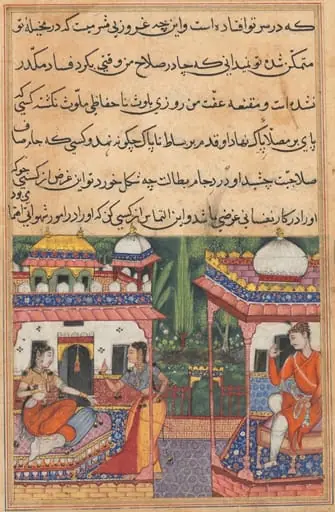 Kaiwan sends a message of love to Khurshid, wife of his brother Utarid who is away on a journey, from a Tuti-nama (Tales of a Parrot): Thirty-second Night
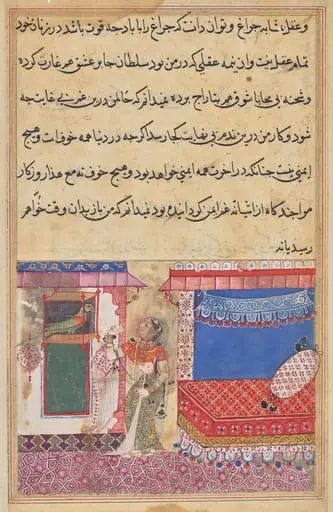 The Parrot Addresses Khujasta at the Beginning of the Eighteenth Night, from a Tuti-nama (Tales of a Parrot)