Artwork
Nikfal, the fortune of the prince in the form of a woman, offers to accompany him, from a Tuti-nama (Tales of a Parrot): Eighteenth Night
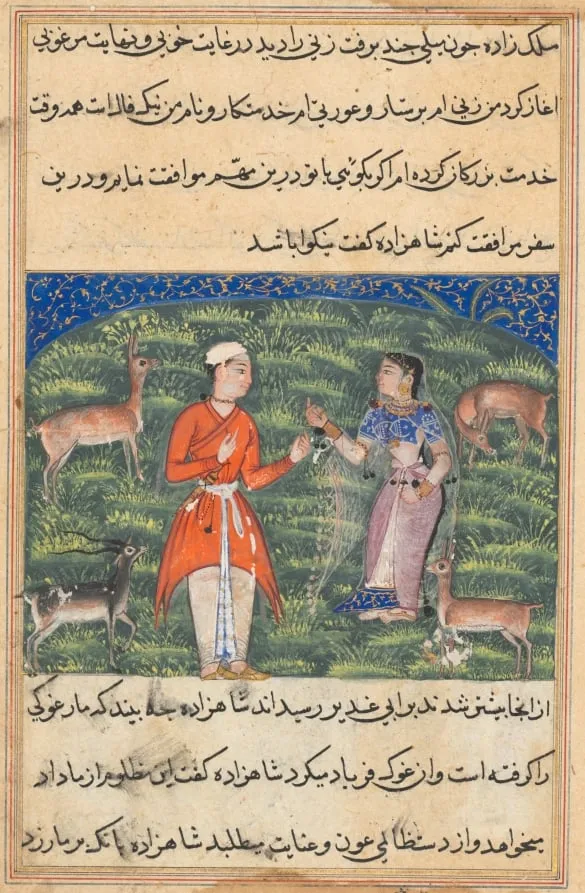
Nikfal, the fortune of the prince in the form of a woman, offers to accompany him, from a Tuti-nama (Tales of a Parrot): Eighteenth Night is an unspecified painting by the Mughal Painting artist Unknown. It dates from 1560 and is held in the collection of the Cleveland Museum of Art. This painting depicts a scene from the Tuti-nama, a collection of stories.
About this work
This scene comes from a *Tuti-nama*, or "Tales of a Parrot," a book of stories Emperor Akbar loved.
A prince and a woman sit in a bright meadow full of deer. The sky is deep blue with gold swirls. She wears flowing Indian clothes; he’s dressed in layered Central Asian robes.
This scene comes from a *Tuti-nama*, or "Tales of a Parrot," a book of stories Emperor Akbar loved. The woman is actually good luck in human form—her name, Nikfal, means just that. The painting mixes Persian and Indian styles, showing how art changed under Mughal rule.
To see more like it, look up Mughal India, court of Akbar (reigned 1556–1605).
Overview
This painting depicts a scene from the Tuti-nama, a collection of stories. It shows a prince and a woman, Nikfal, conversing in a meadow. Nikfal represents the prince's good fortune, which has taken human form.
Subject & Meaning
The story is set in Zabulistan, a region in western Afghanistan. Nikfal, meaning 'Good Fortune', has appeared to the prince, who had previously acquired her. The scene conveys a sense of amity and tranquility between the two figures.
Technique & Style
The painting blends Indian and Central Asian elements, reflecting the cultural exchange that occurred under Mughal rule. The woman wears Indian garments, while the prince is dressed in layered Central Asian robes. The lapis lazuli-blue sky with gold arabesque motifs adds to the work's rich visual texture.
Context
The Tuti-nama was a favored text of Emperor Akbar, who reigned from 1556 to 1605. This painting is part of a broader tradition of Mughal art, which emerged during Akbar's rule and was characterized by the fusion of different cultural influences.
Artist & collection

 Domestic Scene
 Giacomo and Cardinal Marco, investing Andrea, Abbot of San Zeno, with his Benefice
 The Nymph of Fontainebleau
 Portrait of a Woman
 Madonna and Child with Saints in the Enclosed Garden
 Venus and Minerva
 Family Group of Four on Sofa
 Wall painting from Room H of the Villa of P. Fannius Synistor at Boscoreale
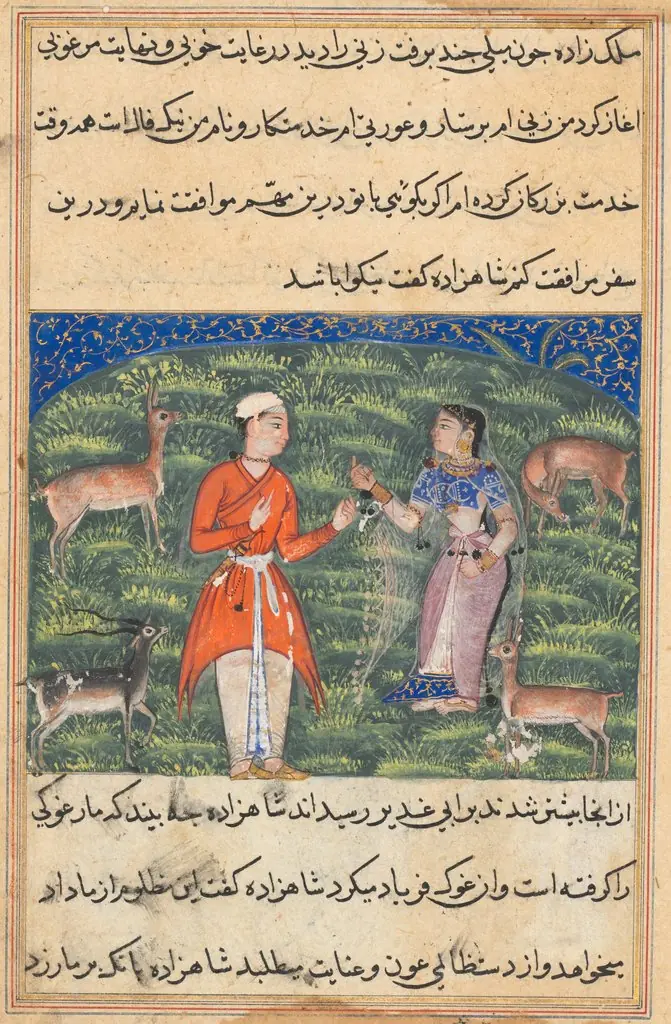 Nikfal, the fortune of the prince in the form of a woman, offers to accompany him, from a Tuti-nama (Tales of a Parrot): Eighteenth Night
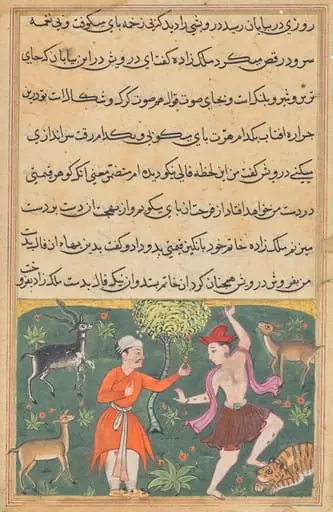 The prince meets a carefree dancing dervish whose good fortune he purchases for his ring, from a Tuti-nama (Tales of a Parrot): Eighteenth Night
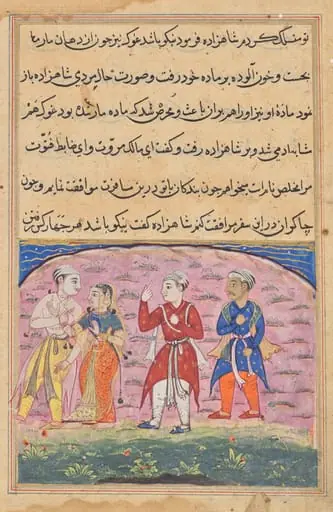 The prince and Nikfal are joined by Khalis and the Mukhlis who are the grateful snake and frog in human form, from a Tuti-nama (Tales of a Parrot): Eighteenth Night
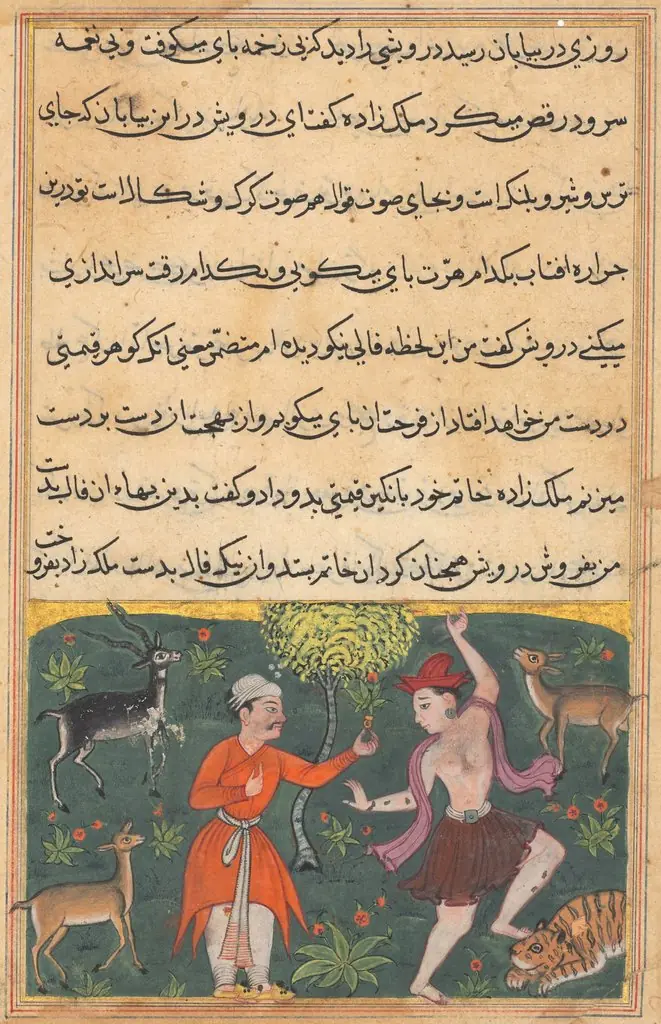 The prince meets a carefree dancing dervish whose good fortune he purchases for his ring, from a Tuti-nama (Tales of a Parrot): Eighteenth Night
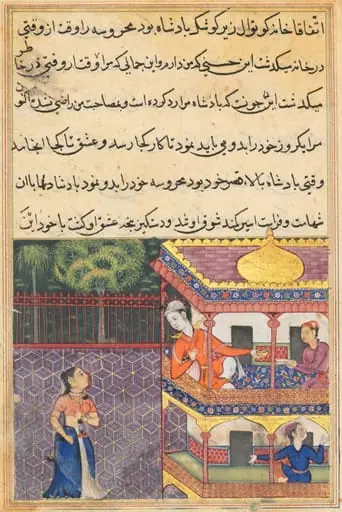 The king of Zabul sees Mahrusa from his palace balcony, from a Tuti-nama (Tales of a Parrot): Thirty-sixth Night
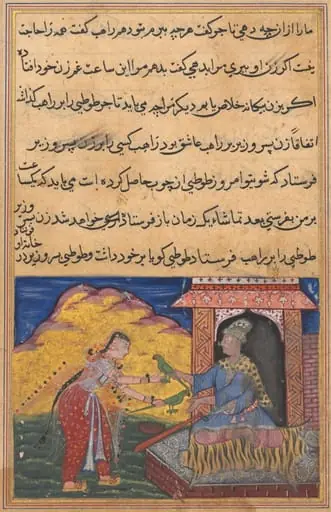 The wife of the son of the vizier brings the magic wooden parrot to her lover, the monk, who exchanges it for the replica, from a Tuti-nama (Tales of a Parrot): Tenth Night
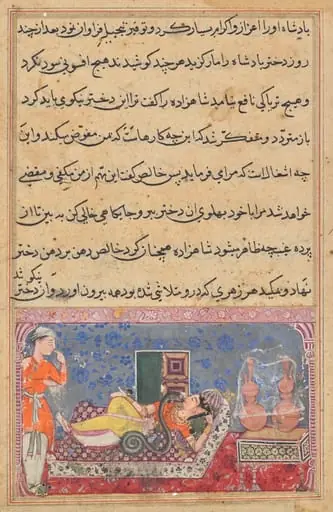 Khalis repays the prince for his kindness by changing into a snake and sucking the poison from the king’s daughter, from a Tuti-nama (Tales of a Parrot): Eighteenth Night