Artwork
The prince meets a carefree dancing dervish whose good fortune he purchases for his ring, from a Tuti-nama (Tales of a Parrot): Eighteenth Night
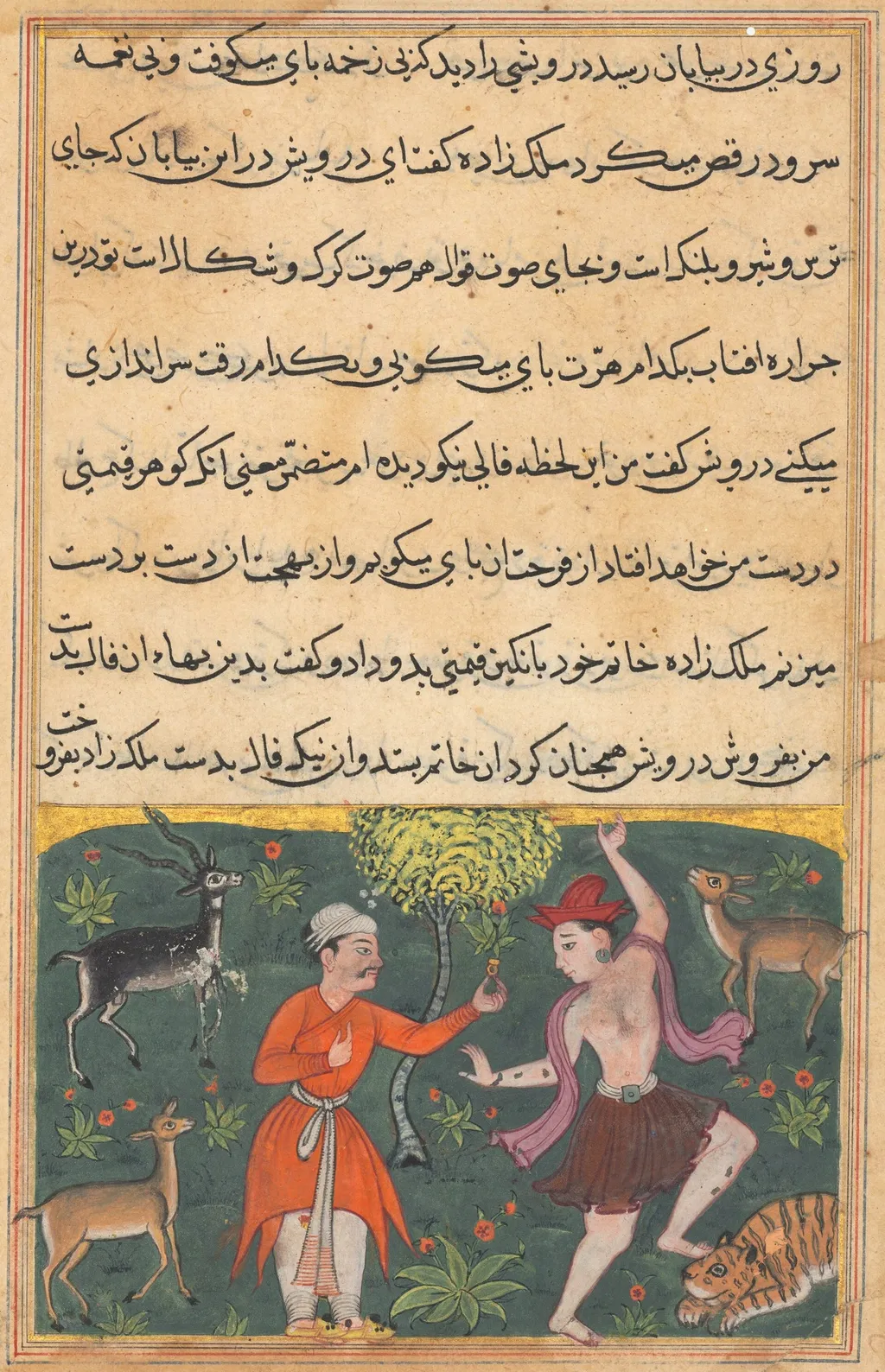
The prince meets a carefree dancing dervish whose good fortune he purchases for his ring, from a Tuti-nama (Tales of a Parrot): Eighteenth Night is an unspecified painting. It dates from 1560 and is held in the collection of the Cleveland Museum of Art.
About this work
Overview
The work depicts a forest scene in which two figures interact: a man in vivid orange robes extends a hand holding a ring, while a shirtless figure in red trousers performs an exuberant dance, his leg lifted high. Nearby, a deer and a tiger sit placidly, and birds occupy a tree branch. The setting is framed by a green backdrop dotted with flowers and a border of red circles.
Subject & Meaning
The composition draws from a narrative episode in the Persian collection known as the Tuti‑nama, or "Tales of a Parrot," specifically the episode titled "Eighteenth Night." The exchange of the ring suggests a transaction of good fortune, while the dancing figure’s open posture conveys a sense of carefree joy or spiritual liberation associated with dervish traditions.
Technique & Style
Rendered in a flat, decorative manner, the painting employs bold, saturated colors—particularly orange, red, and green—to delineate figures and foliage. The stylized animals and birds are integrated into the landscape rather than rendered naturalistically, reflecting a manuscript illustration aesthetic rather than a fully perspectival space.
History & Provenance
The piece originates from a manuscript tradition that illustrated stories from the Tuti‑nama, a collection popular in the Persianate world from the 15th to 18th centuries. The specific copy from which this image is taken has been catalogued among similar narrative panels, though precise dates and ownership prior to museum acquisition are not documented in the provided information.
Context
Within the broader visual culture of Persian storytelling, scenes of dervishes and princely figures often symbolize the meeting of worldly authority with spiritual spontaneity. The inclusion of wildlife such as deer and tiger underscores themes of harmony between human activity and the natural world, a common motif in courtly literature.
Artist & collection

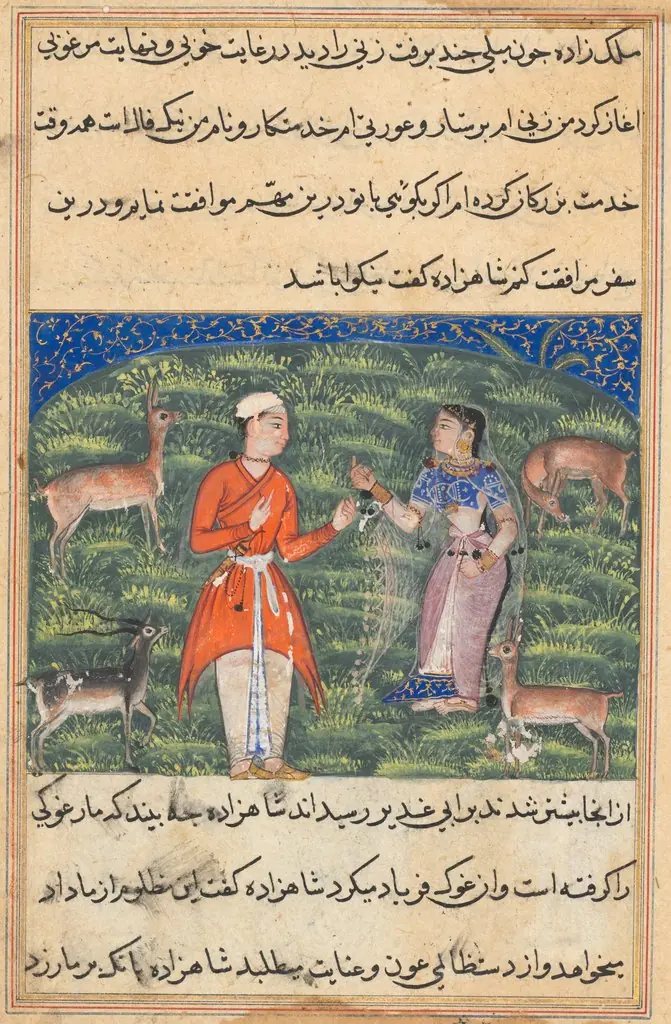 Nikfal, the fortune of the prince in the form of a woman, offers to accompany him, from a Tuti-nama (Tales of a Parrot): Eighteenth Night
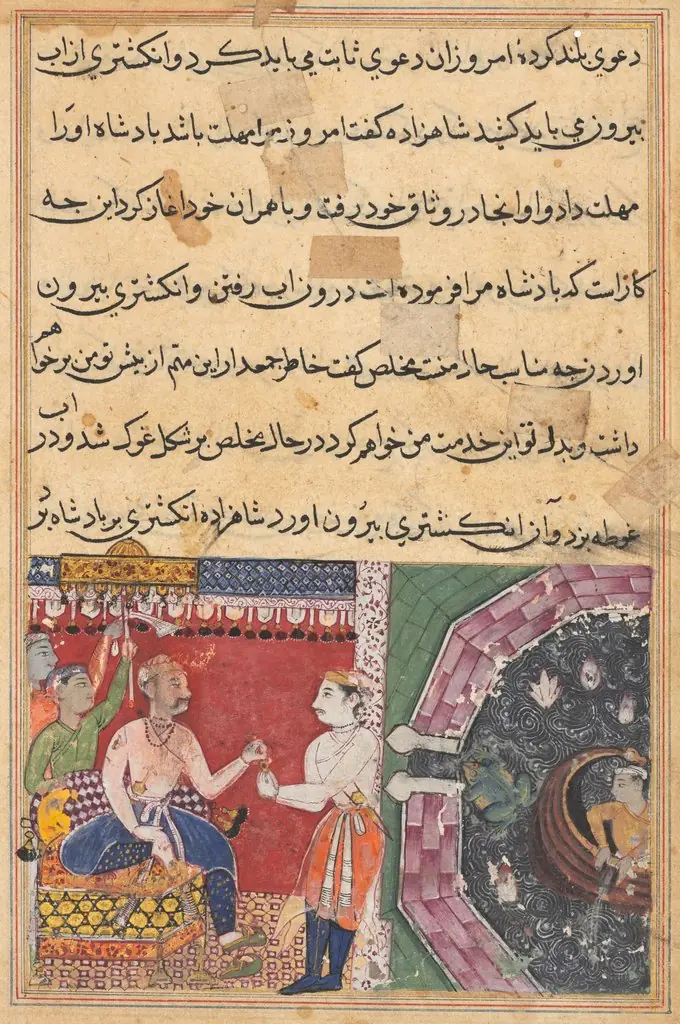 The prince, with the help of Mukhlis who changes into a frog, recovers the ring lost in the sea, and returns it to the king, from a Tuti-nama (Tales of a Parrot): Eighteenth Night
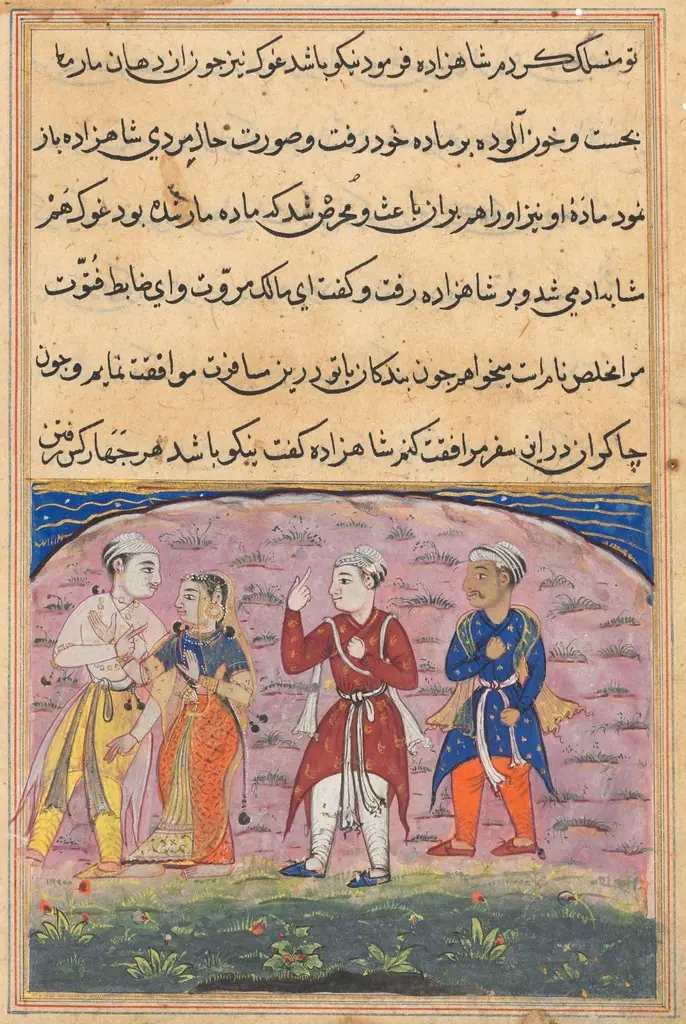 The prince and Nikfal are joined by Khalis and the Mukhlis who are the grateful snake and frog in human form, from a Tuti-nama (Tales of a Parrot): Eighteenth Night
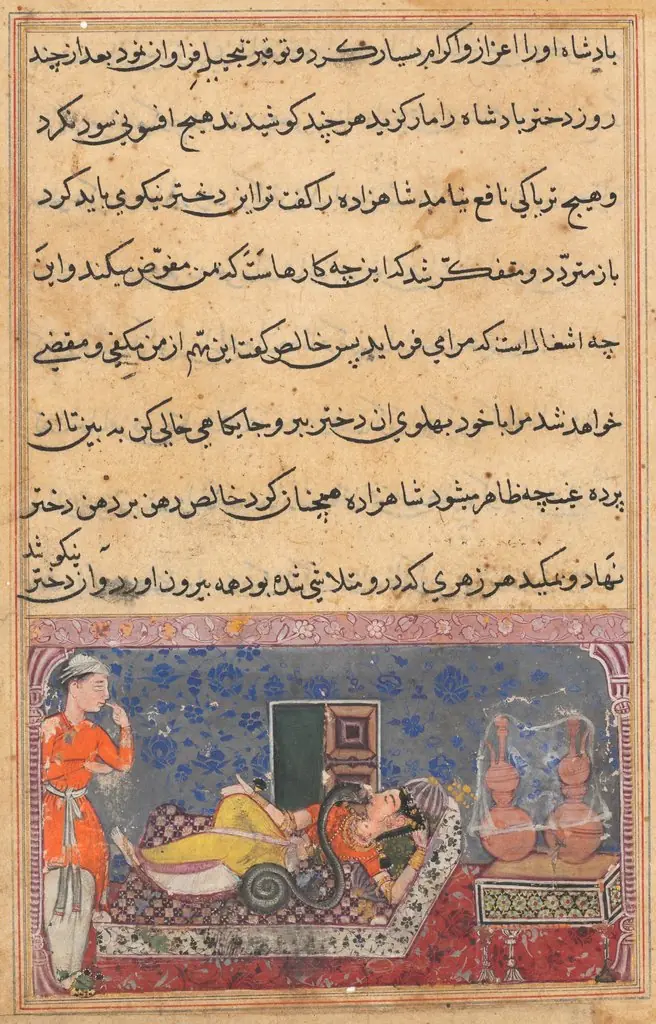 Khalis repays the prince for his kindness by changing into a snake and sucking the poison from the king’s daughter, from a Tuti-nama (Tales of a Parrot): Eighteenth Night
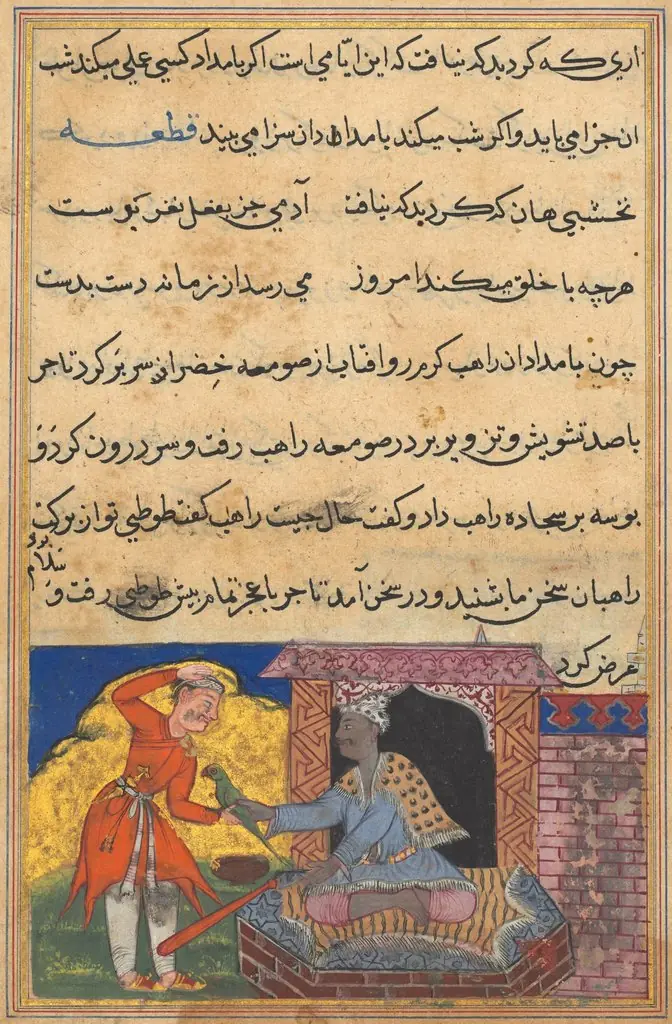 The monk returns the magic parrot to its rightful owner, the merchant, from a Tuti-nama (Tales of a Parrot): Tenth Night
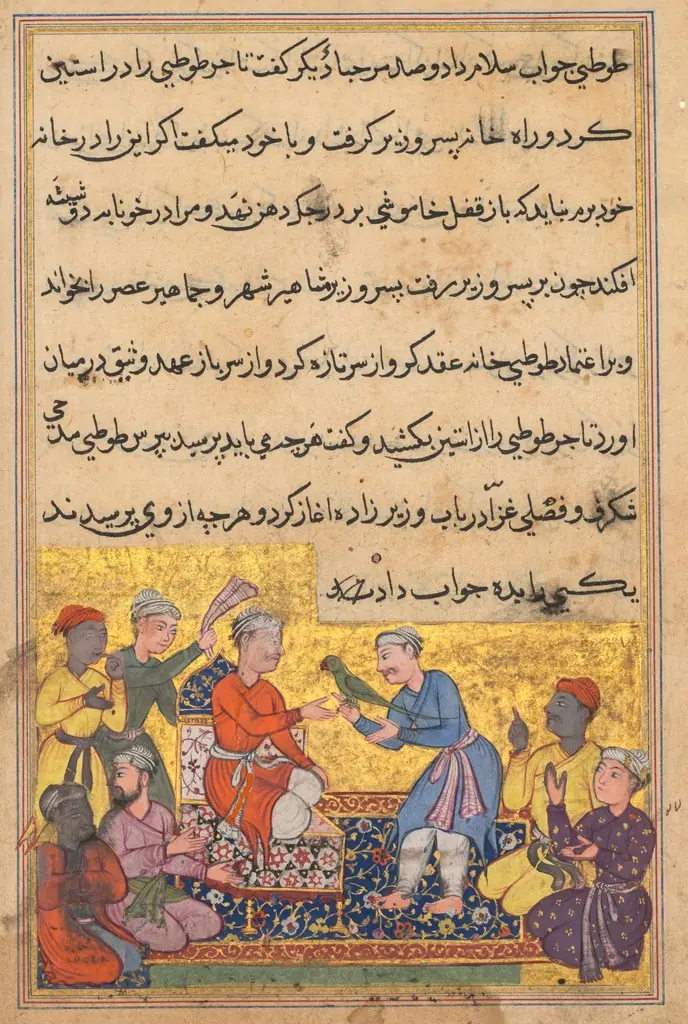 The magic parrot of the merchant talks to the vizier’s son, from a Tuti-nama (Tales of a Parrot): Tenth Night
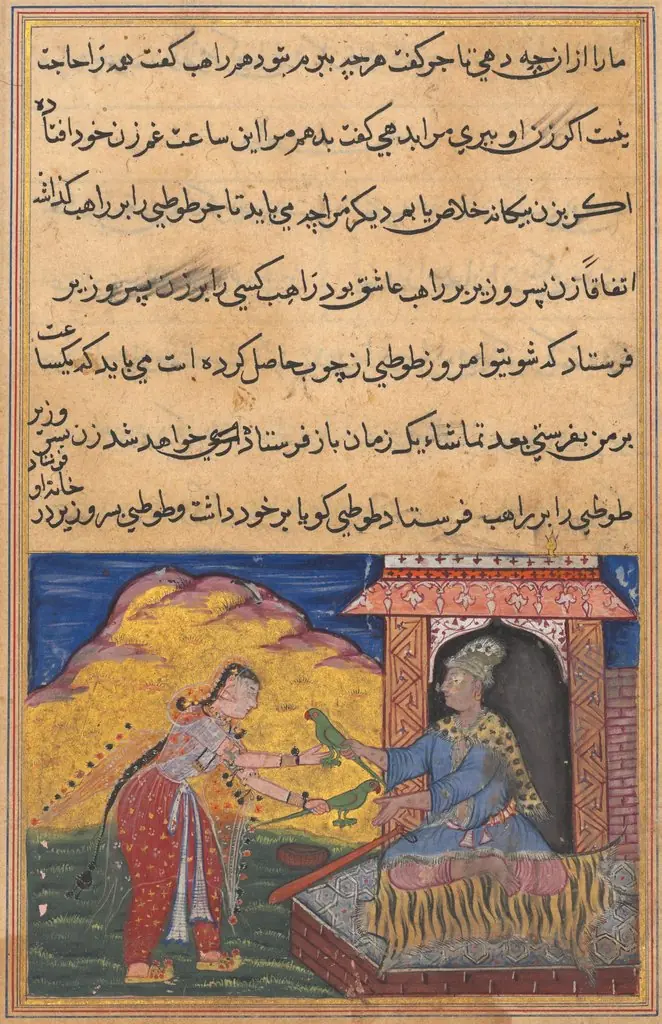 The wife of the son of the vizier brings the magic wooden parrot to her lover, the monk, who exchanges it for the replica, from a Tuti-nama (Tales of a Parrot): Tenth Night
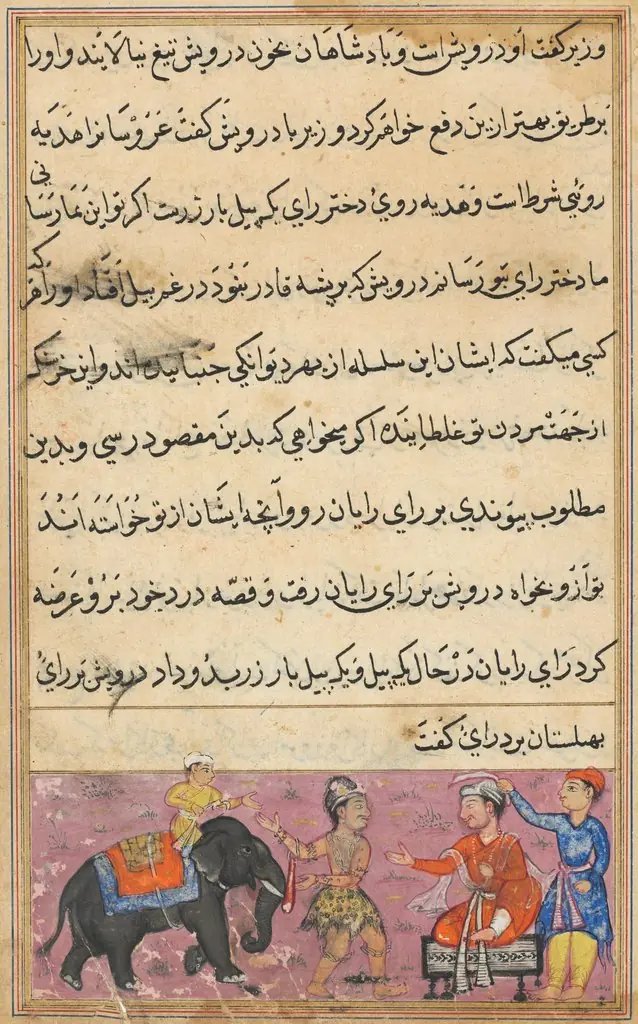 The dervish brings in as dowry an elephant laden with gold, from a Tuti-nama (Tales of a Parrot): Seventh Night