Artwork
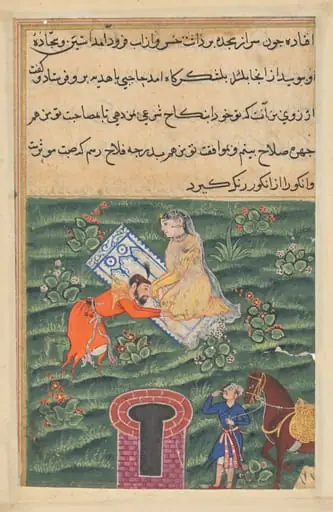
Khalis repays the prince for his kindness by changing into a snake and sucking the poison from the king’s daughter, from a Tuti-nama (Tales of a Parrot): Eighteenth Night
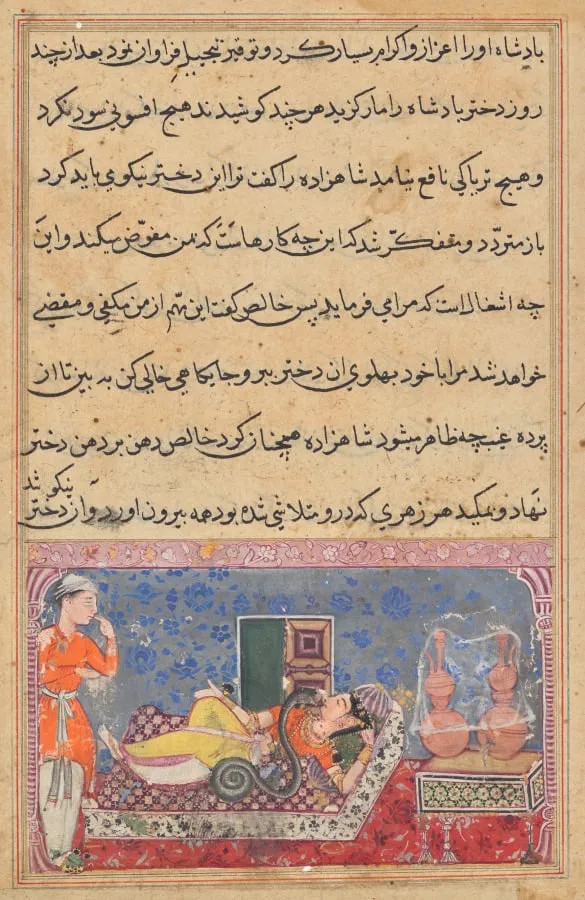
Khalis repays the prince for his kindness by changing into a snake and sucking the poison from the king’s daughter, from a Tuti-nama (Tales of a Parrot): Eighteenth Night is an unspecified painting by the Mughal Painting artist Unknown. It dates from 1560 and is held in the collection of the Cleveland Museum of Art. This painting illustrates a moment from the Tuti-nama, a collection of frame tales popular in Mughal courts.
About this work
The snake repays the prince’s kindness—earlier, the prince cut his own flesh to feed the snake and its mate.
You see a prince watching as a snake turns back into a man and sucks poison from a princess’s arm.
This painting tells a story from the *Tuti-nama*, a book of parrot tales read at the Mughal court. The snake repays the prince’s kindness—earlier, the prince cut his own flesh to feed the snake and its mate. The scene is packed with tiny details: rich fabrics, patterned carpets, and the worried faces of onlookers.
To see more paintings like this, look up Mughal India, court of Akbar (reigned 1556–1605).
Overview
This painting illustrates a moment from the Tuti-nama, a collection of frame tales popular in Mughal courts. It depicts the climax of a moral fable in which a serpent, bound by gratitude, transforms to save a princess from a venomous bite. The prince, who once sacrificed his own flesh to feed the serpent and its mate, watches as the creature fulfills its debt. The scene is rendered with meticulous detail, characteristic of imperial Mughal manuscript illustration.
Subject & Meaning
The narrative centers on reciprocity and moral obligation. The serpent’s transformation from animal to human form symbolizes the elevation of virtue through selfless action. The prince’s earlier act of bodily sacrifice—cutting his flesh to feed the serpent—establishes a sacred debt, which the serpent repays not through force, but through transformation and healing. The princess’s recovery restores order, leading to the prince’s rise in status.
Technique & Style
The composition is densely populated with figures and ornamental elements: intricate textiles, tiled floors, and expressive facial gestures convey emotional tension. Figures are rendered with fine brushwork, and colors are rich yet restrained, typical of Akbar-period workshop practices. Spatial depth is suggested through overlapping forms and architectural framing, not linear perspective, reflecting indigenous conventions of narrative illustration.
History & Provenance
Created during the reign of Emperor Akbar, this miniature likely originated in the imperial atelier in Fatehpur Sikri or Agra. The Tuti-nama was commissioned early in Akbar’s rule as part of a broader project to translate and illustrate Persian literary traditions. This scene, from the eighteenth night of the parrot’s tales, was one of many folios produced for royal consumption, later dispersed through collections and auctions.
Context
The Tuti-nama was more than entertainment; it served as a vehicle for ethical instruction within the Mughal court. Stories of loyalty, sacrifice, and karmic retribution mirrored courtly ideals of duty and reciprocity. The inclusion of animal helpers—snake, frog, and Good Fortune—reflects a syncretic blend of Persian, Indian, and Islamic storytelling traditions, adapted to appeal to a diverse imperial audience.
Legacy
This painting exemplifies the synthesis of narrative and visual art in early Mughal manuscript culture. Its detailed imagery influenced later court illustrations and preserved a literary tradition that bridged oral folklore and written literature. Though the Tuti-nama’s popularity waned after Akbar’s reign, its visual legacy endured in the stylistic precision and thematic depth of subsequent Mughal painting.
Artist & collection

 Domestic Scene
 Giacomo and Cardinal Marco, investing Andrea, Abbot of San Zeno, with his Benefice
 The Nymph of Fontainebleau
 Portrait of a Woman
 Madonna and Child with Saints in the Enclosed Garden
 Venus and Minerva
 Family Group of Four on Sofa
 Wall painting from Room H of the Villa of P. Fannius Synistor at Boscoreale
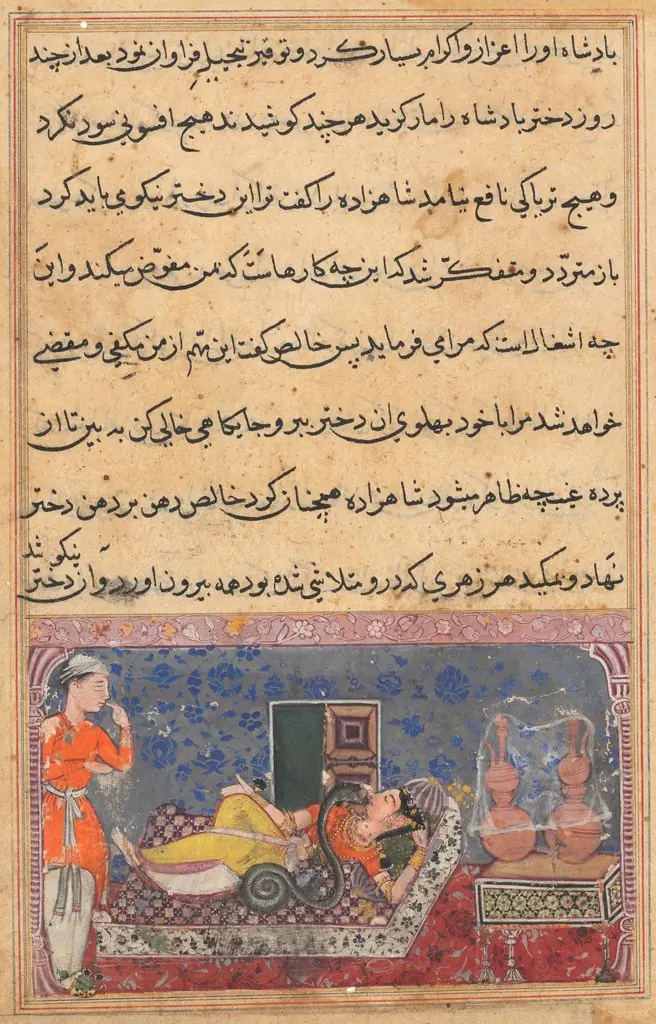 Khalis repays the prince for his kindness by changing into a snake and sucking the poison from the king’s daughter, from a Tuti-nama (Tales of a Parrot): Eighteenth Night
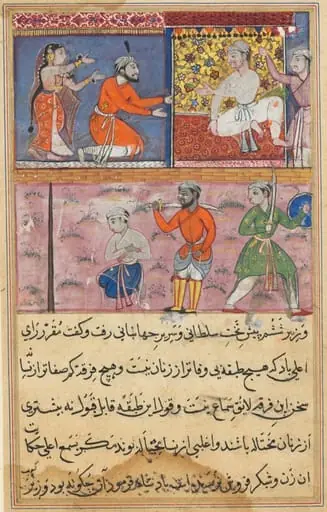 The prince sent back to the place of execution for the sixth time, from a Tuti-nama (Tales of a Parrot): Eighth Night
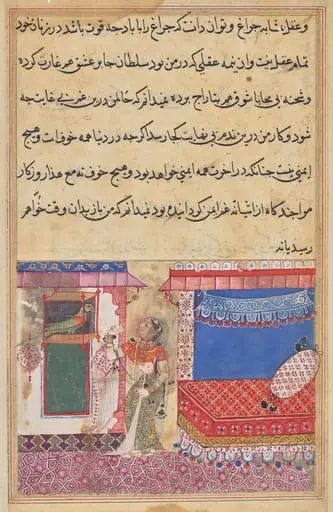 The Parrot Addresses Khujasta at the Beginning of the Eighteenth Night, from a Tuti-nama (Tales of a Parrot)
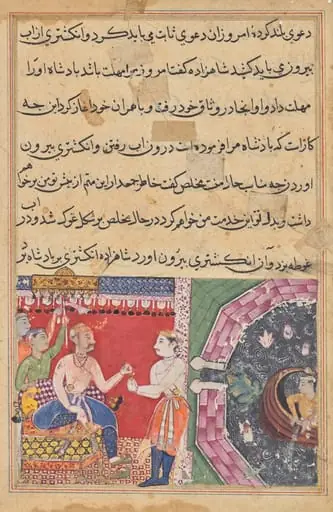 The prince, with the help of Mukhlis who changes into a frog, recovers the ring lost in the sea, and returns it to the king, from a Tuti-nama (Tales of a Parrot): Eighteenth Night
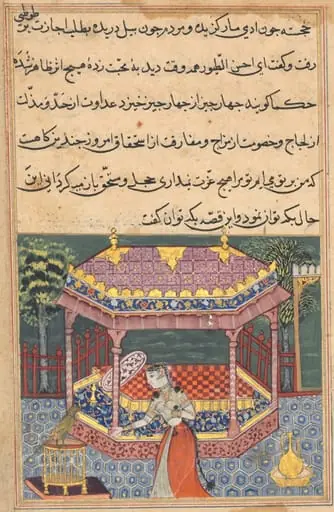 The parrot addresses Khujasta at the beginning of the thirty-seventh night, from a Tuti-nama (Tales of a Parrot)
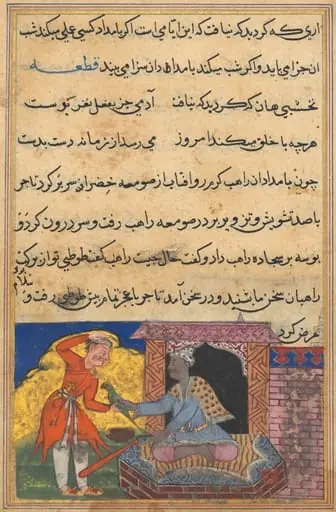 The monk returns the magic parrot to its rightful owner, the merchant, from a Tuti-nama (Tales of a Parrot): Tenth Night
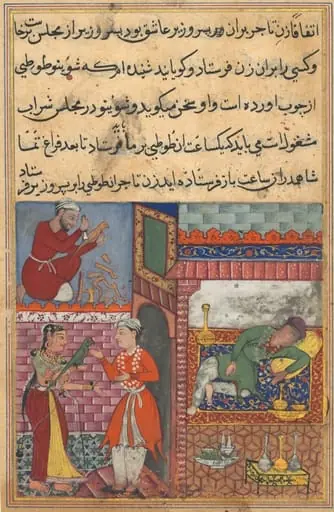 The vizier’s son receives the magic wooden parrot from the wife of the merchant, who is drunk, and has a replica made by a carpenter, from a Tuti-nama (Tales of a Parrot): Tenth Night
 Khusrau, the King of Kings, pays homage to the pious daughter of Khassa, from a Tuti-nama (Tales of a Parrot): Fifty-first Night
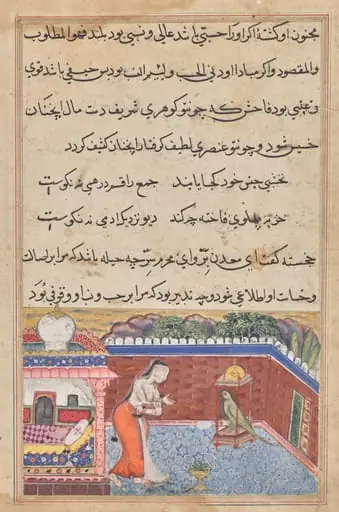 The parrot addresses Khujasta at the beginning of the thirty-first night, from a Tuti-nama (Tales of a Parrot)