Artwork
The prince meets a carefree dancing dervish whose good fortune he purchases for his ring, from a Tuti-nama (Tales of a Parrot): Eighteenth Night
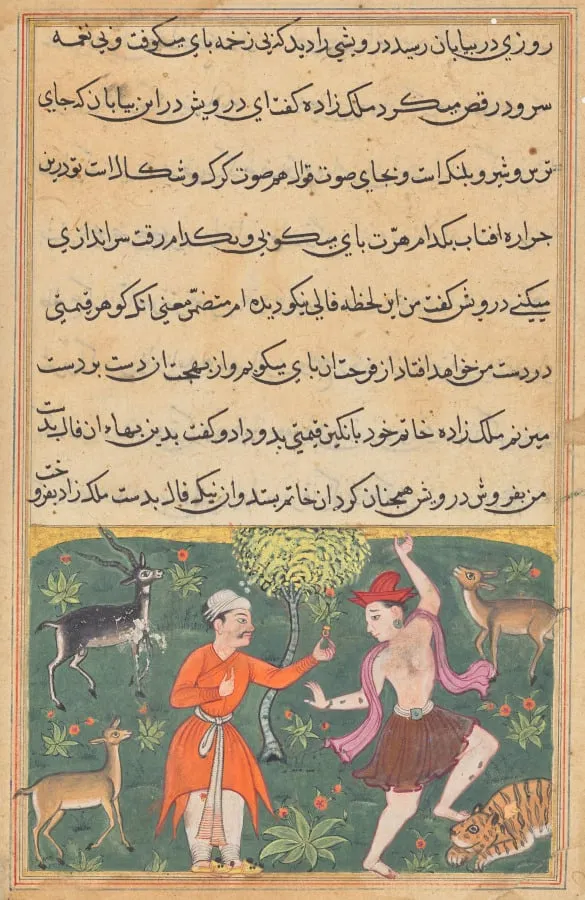
The prince meets a carefree dancing dervish whose good fortune he purchases for his ring, from a Tuti-nama (Tales of a Parrot): Eighteenth Night is an unspecified painting by the Mughal Painting artist Unknown. It dates from 1560 and is held in the collection of the Cleveland Museum of Art.
About this work
The prince trades his ring for the dervish’s good luck, not knowing the holy man just saw a sign he’d get rich.
You see a prince in orange handing a ring to a dancing man while animals—deer and a tiger—stand calmly nearby.
This scene comes from a storybook made for Emperor Akbar’s court. The prince trades his ring for the dervish’s good luck, not knowing the holy man just saw a sign he’d get rich. The animals ignore each other, making the moment feel magical.
To see more paintings like this, look up mughal india, court of akbar (reigned 1556–1605).
Overview
The painting depicts a scene from an eighteenth‑night episode of the Tuti‑nama, a collection of illustrated tales compiled for the court of Emperor Akbar. A prince dressed in an orange tunic offers his signet ring to a dancing dervish while a deer and a tiger stand together in the surrounding wilderness, each seemingly indifferent to the other.
Subject & Meaning
The narrative shows the exiled prince, displaced by his elder brother, encountering a carefree Sufi dervish whose ecstatic dance is prompted by an omen of impending wealth. Unaware of the dervish’s belief in his forthcoming fortune, the prince trades his ring for the holy man’s good luck, creating an ironic exchange that underscores themes of fate and misinterpretation.
Technique & Style
Rendered in the Mughal miniature tradition, the work combines precise line work with delicate washes of colour. The orange of the prince’s garment and the subtle shading of the animals demonstrate the court’s preference for naturalistic detail, while the composition balances narrative clarity with ornamental elegance typical of Akbar’s atelier.
History & Provenance
The scene originates from a manuscript produced for Akbar’s imperial library in the late sixteenth century. The illustrated volume circulated among the emperor’s courtiers and later entered private collections, eventually being catalogued by scholars of Mughal art as an example of narrative painting from the period.
Context
Mughal court culture blended Persian literary traditions with Indian artistic practices. Stories such as those in the Tuti‑nama were employed to entertain and instruct, often illustrating moral ambiguities. The inclusion of Sufi figures and wildlife reflects the syncretic religious and ecological sensibilities of Akbar’s reign.
Legacy
The painting remains a reference point for studies of Mughal narrative art, illustrating how courtly manuscripts visualised literary episodes. Its depiction of the prince‑dukkah exchange continues to inform interpretations of patronage, spirituality, and the role of chance in Mughal storytelling.
Artist & collection

 Domestic Scene
 Giacomo and Cardinal Marco, investing Andrea, Abbot of San Zeno, with his Benefice
 The Nymph of Fontainebleau
 Portrait of a Woman
 Madonna and Child with Saints in the Enclosed Garden
 Venus and Minerva
 Family Group of Four on Sofa
 Wall painting from Room H of the Villa of P. Fannius Synistor at Boscoreale
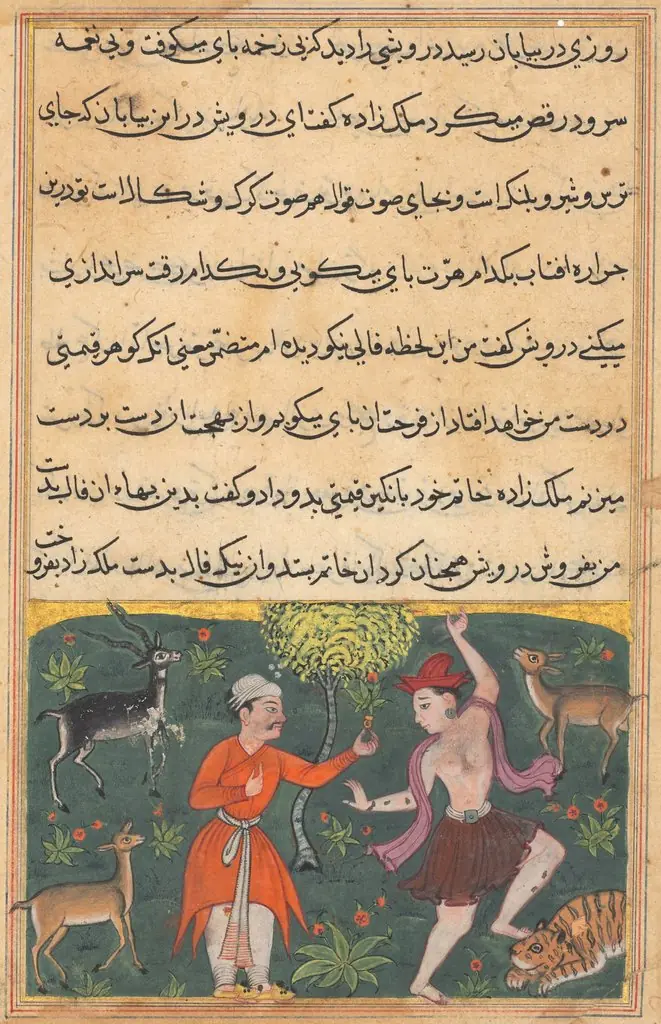 The prince meets a carefree dancing dervish whose good fortune he purchases for his ring, from a Tuti-nama (Tales of a Parrot): Eighteenth Night
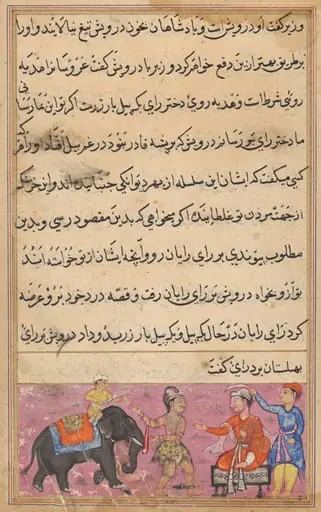 The dervish brings in as dowry an elephant laden with gold, from a Tuti-nama (Tales of a Parrot): Seventh Night
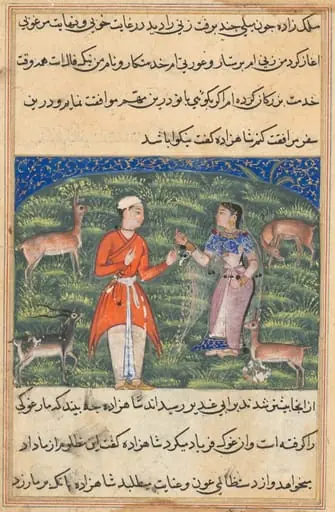 Nikfal, the fortune of the prince in the form of a woman, offers to accompany him, from a Tuti-nama (Tales of a Parrot): Eighteenth Night
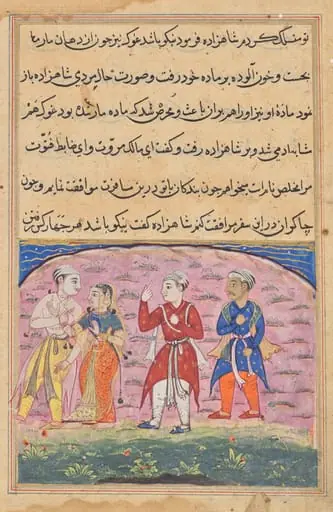 The prince and Nikfal are joined by Khalis and the Mukhlis who are the grateful snake and frog in human form, from a Tuti-nama (Tales of a Parrot): Eighteenth Night
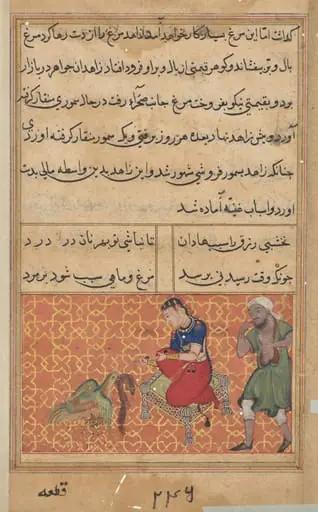 The bird of seven colors brings a sable to the pious man, from a Tuti-nama (Tales of a Parrot): Fifty-second Night
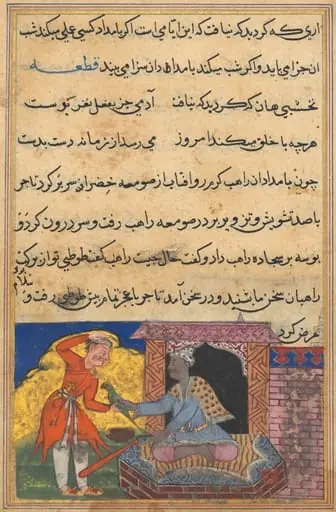 The monk returns the magic parrot to its rightful owner, the merchant, from a Tuti-nama (Tales of a Parrot): Tenth Night
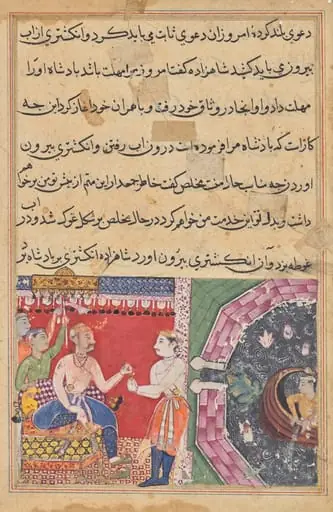 The prince, with the help of Mukhlis who changes into a frog, recovers the ring lost in the sea, and returns it to the king, from a Tuti-nama (Tales of a Parrot): Eighteenth Night
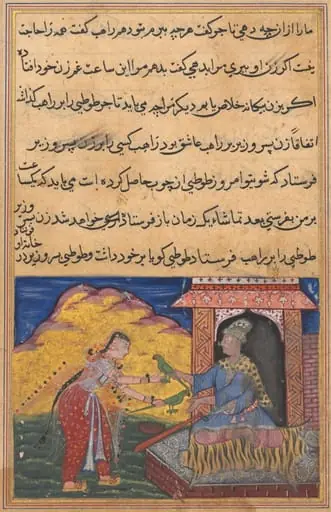 The wife of the son of the vizier brings the magic wooden parrot to her lover, the monk, who exchanges it for the replica, from a Tuti-nama (Tales of a Parrot): Tenth Night
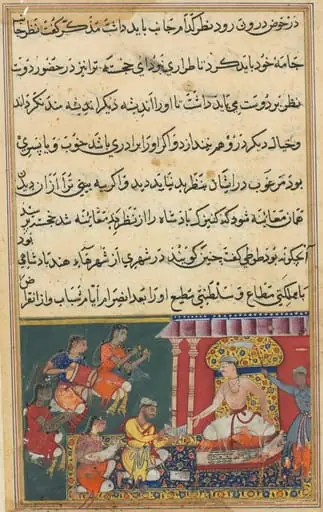 The astrologer predicts a calamity for the newly born prince in his thirteenth year, but one which he would be able to overcome, from a Tuti-nama (Tales of a Parrot): Eighth Night
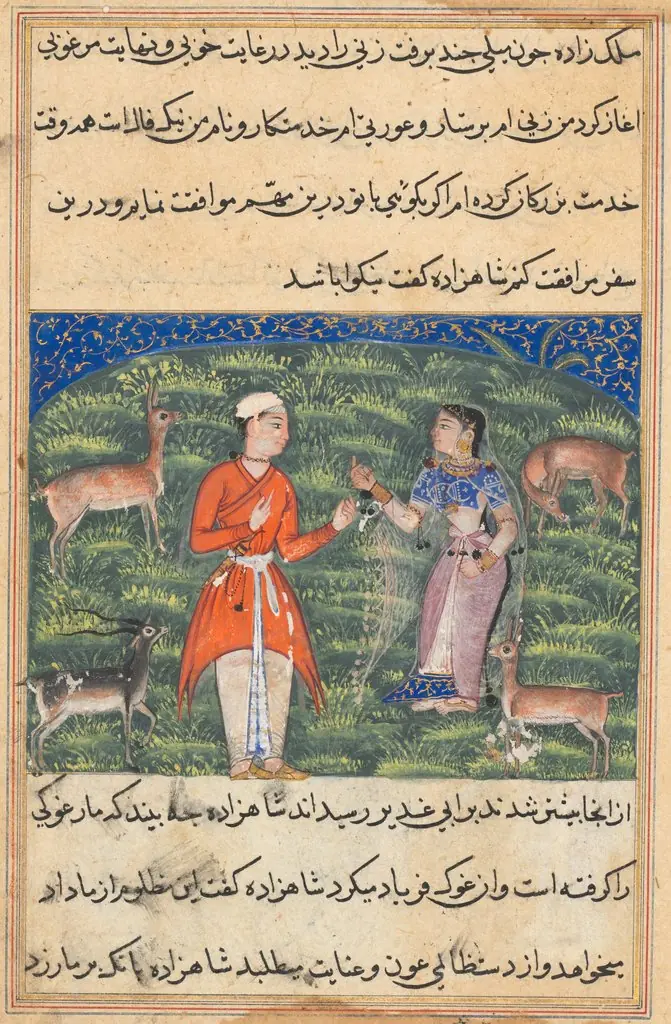 Nikfal, the fortune of the prince in the form of a woman, offers to accompany him, from a Tuti-nama (Tales of a Parrot): Eighteenth Night
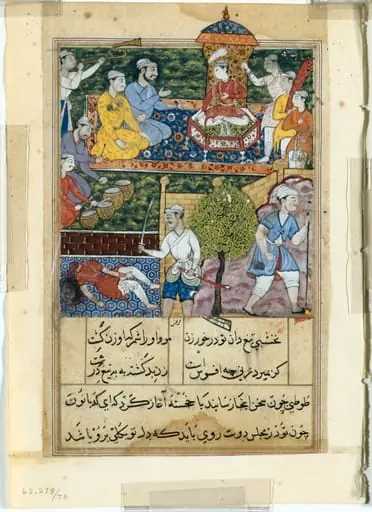 The young prince is crowned and the wicked handmaiden is executed, from a Tuti-nama (Tales of a Parrot): Eighth Night