Artwork
Obiect de uz casnic de formă tronconică. Pe fond alb se regăsește un ornament albastru: central două frunze de viță de vie. Pe margine farfuria este decorată cu frunze de viță de vie cu vrej și cu un cerc albastru. Cromatică: fond: alb; motive: albastru.
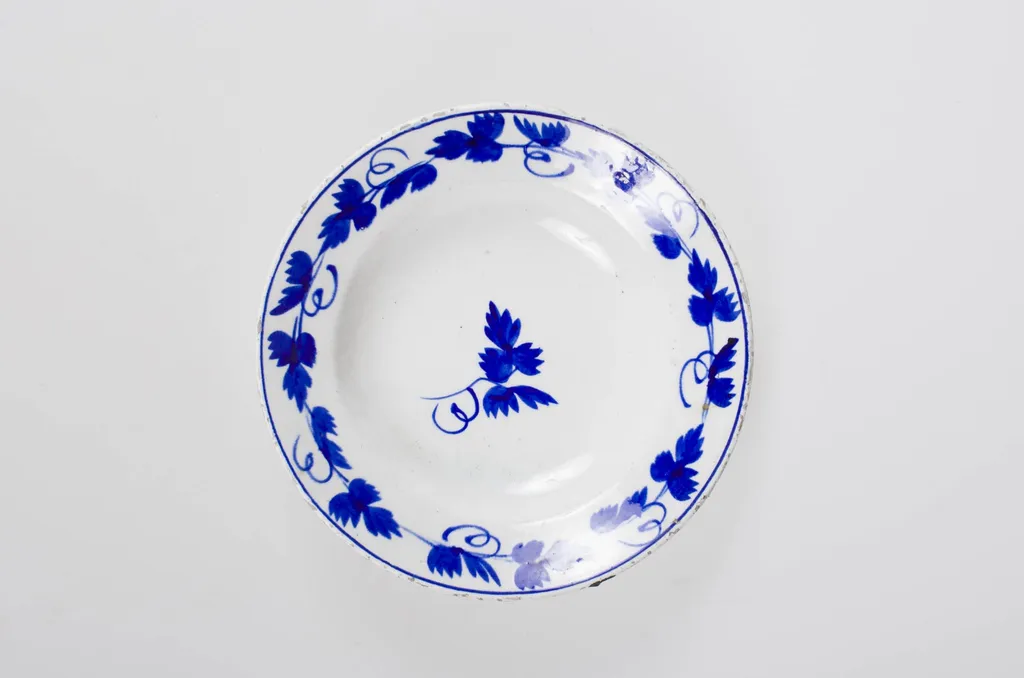
Obiect de uz casnic de formă tronconică. Pe fond alb se regăsește un ornament albastru: central două frunze de viță de vie. Pe margine farfuria este decorată cu frunze de viță de vie cu vrej și cu un cerc albastru. Cromatică: fond: alb; motive: albastru. is a print by Unknown. It dates from 1850 and is held in the collection of the ASTRA National Museum Complex. The object is a household plate of truncated cone shape, featuring a white background overlaid with a blue decorative motif.
About this work
Overview
The object is a household plate of truncated cone shape, featuring a white background overlaid with a blue decorative motif. Central to the design are two grapevine leaves linked by a vine, while the rim is bordered by additional vine leaves, a braid, and a blue circular band.
Subject & Meaning
The decorative scheme draws on viticultural imagery, employing stylized grapevine leaves and vines that evoke themes of growth and abundance. The central pairing of leaves suggests a balanced composition, typical of folk motifs that celebrate agricultural cycles.
Technique & Style
The plate’s surface is painted with a limited chromatic palette—white ground and blue pigment—creating a stark contrast that emphasizes the botanical pattern. The motifs are rendered in a simplified, linear style, characteristic of utilitarian decorative arts.
History & Provenance
Identified as a domestic utilitarian object, the plate likely originates from a tradition of handcrafted ceramics used in everyday settings. No specific maker or date is recorded, and the work is attributed to an unknown artist.
Context
Such plates are common in regional folk ceramic traditions where functional items are embellished with natural motifs. The use of grapevine imagery aligns with broader European decorative practices that incorporate agricultural symbols into household wares.
Artist & collection

 Domestic Scene
 Giacomo and Cardinal Marco, investing Andrea, Abbot of San Zeno, with his Benefice
 The Nymph of Fontainebleau
 Portrait of a Woman
 Madonna and Child with Saints in the Enclosed Garden
 Venus and Minerva
 Family Group of Four on Sofa
 Wall painting from Room H of the Villa of P. Fannius Synistor at Boscoreale
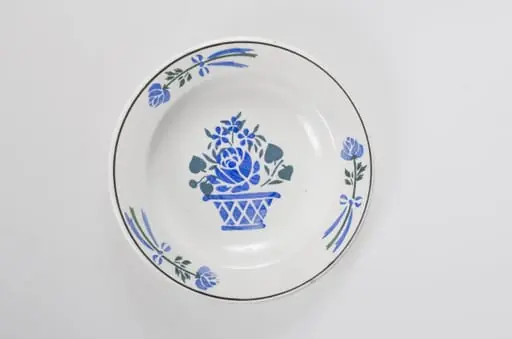 Vas tronconic și adânc realizat din porțelan. Pe fondul alb, central se află un coș albastru (realizat din motive geometrice: romuri și triunghiuri încadrate de două linii) cu un trandafir și trei floricele: pe marginimea farfuriei se observă trei secvențe cu trandafiri legate cu o fontiță. Marginea vasului este decorată cu un cerc. Cromatică: alb; motive: albastru; verde; negru.
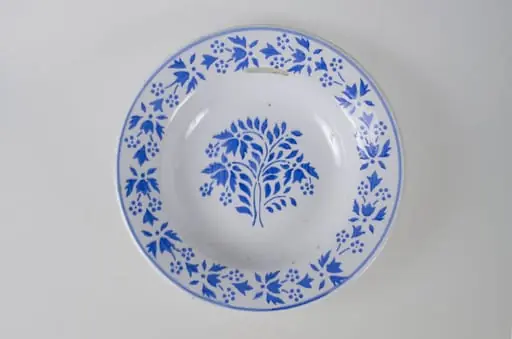 Farfuria are formă tronconică ușor adâncită. Pe buza vasului se identifică un registru decorativ floral, vegetal, continuu mărginit de o linie. Pe fund este o ștanță: o casă cu o pasăre pe acoperiș. Pe fundul vasului sunt două incizii în care este introdus șnurul folosit la agățarea vasului pe perete. Cromatică: fond: alb; motive: albastru.
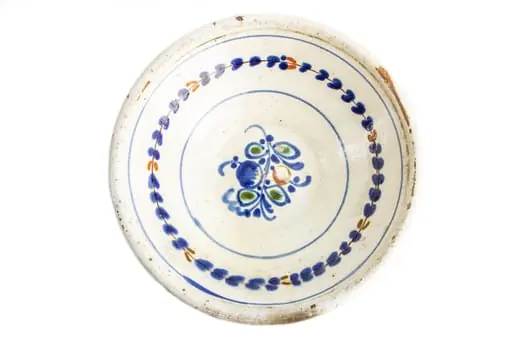 Formă tronconică; fond alb; culori: albastru, verde, cărămiziu; în centrul farfuriei este amplasat un buchet din flori albastre și una de culoare cărămizie, cu frunze verzi, înscris într-un cerc de culoare albastră. Pe perete este amplasat un vrej circular cu frunze albastre și cîteva de culoare cărămizie. Sub buză este dispus un cerc albastru.
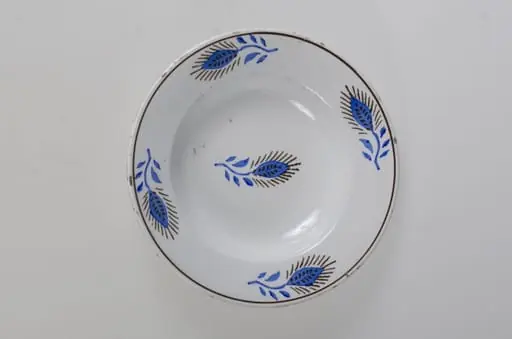 Vasul prezintă formă tronconică adâncită cu o bordură decorată cu motive florale și vegetale dispuse câte două în opoziție pe suprafața buzei (patru flori cu frunze). În centru este decorat cu o floare. Prezintă o marcă indescifrabilă pe exteriorul vasului. Cromatică: fond: alb; motive: albastru; maro.
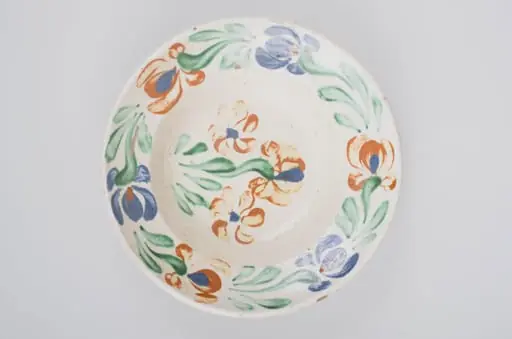 Farfurie cu fundul adâncit și buza evazată. Smălțuită numai în interior și scurgeri de smalț sub buză. Prezintă găuri pentru prinderea aței în vederea agățării. Decorată cu motive florale: central are trei flori iar pe margine un chenar floral. Cromatică: fond: alb; motive: maro; verde; albastru.
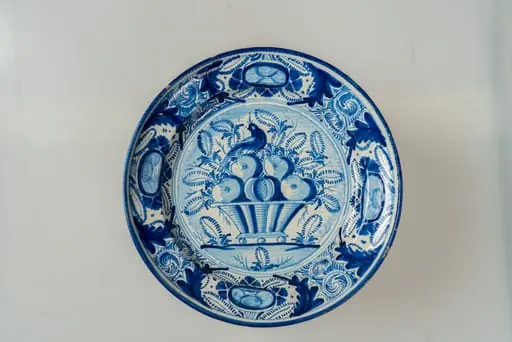 Farfurie de formă aplatizată, cu marginea lată, răsfrântă, ușor concavă spre interior. Decorul foarte bogat, dispus pe un fond alb, prin pictare, acoperă întreaga suprafață a farfuriei și este format din motive florale și vegetale fin stilizate (flori și frunze), avimorfe și un vas cu fructe (central, pe fundul farfuriei). Cromatica decorului: alb, albastru.
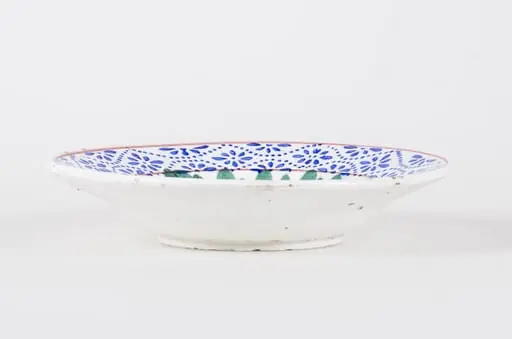 Farfurie adâncă cu marginea lată, puțin ridicată în interior. Pe un fond alb se află un buchet floral pictat în roșu și albastru cu frunze verzi desprins în jurul inscriptiei. Pe margine se observă două cercuri concentrice roșii care încadrează un ornament floral stilizat realizat din mai multe flori despărțite de linii în val realizate din puncte. Cromatică: fond: alb; motive: albastru; roșu; verde; galben; maro închis.
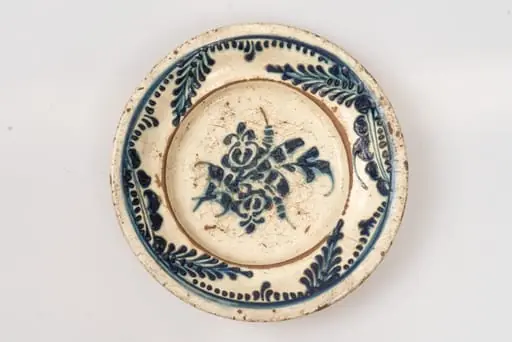 Farfurie semi-adâncă, cu fund larg și buză evazată; este acoperită pe fața interioară cu un strat de angobă albă, peste care este pictat cu cornul decorul monocromatic format din motive vegetale și florale stilizate: un buchet cu două flori și frunze, ce formează registrul decorativ central, de pe fundul farfuriei, iar buza acesteia este decorată cu patru motive vegetale (frunze) formate din linii în formă de brăduț, completate cu motive formate din puncte și șiruri de linii mici, sub formă de virgulă. Marginea buzei este marcată de o linie albastră. Cromatica: alb, albastru. Fața ornamentată a farfuriei este acoperită cu un strat de smalț transparent.
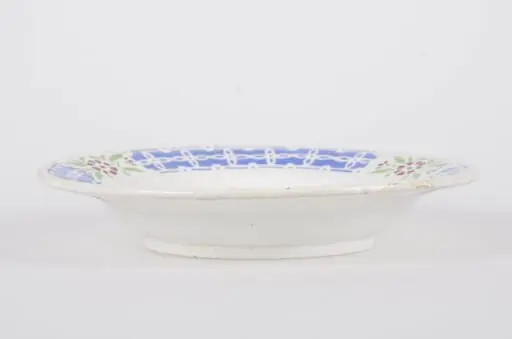 Formă circulară adâncită, decorată în centru cu motive fitomorfe și avimorfe (copaci, cocoș și trei păsărele), iar pe margine trei flori stilizate despărțite de registre cu flori stilizate albastre încadrate de două linii întrerupte cu puncte. Pe fund sunt prezente cercuri concentrice cu ștanță. Cromatică: fond alb; albastru; verde; galben; vișiniu; negru.
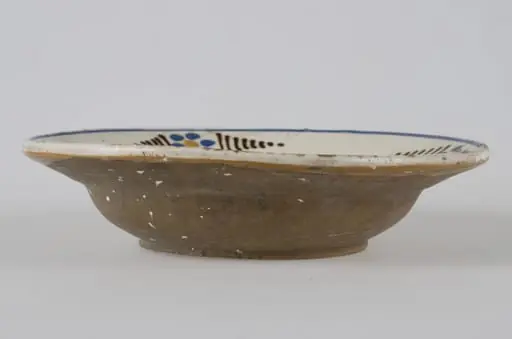 Vas adânc din lut, de formă tronconică, cu marginea evazată. Pe fundalul de culoare albă este decorat cu motive geometrice: linie circulară, linii curbe, puncte pe buza vasului; motive vegetale și florale, pe centrul vasului. Cromatică: fond: alb; motive: albastru; verde; maro; cărămiziu.
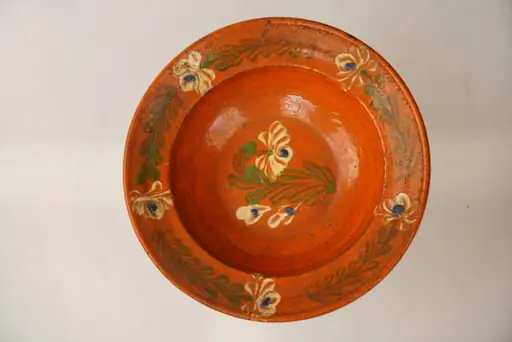 Farfurie adâncă, cu corp ușor rotunjit și buza dreaptă evazată; decorul este realizat prin pictare cu pensula pe fondul neangobat al lutului și se compune din motive florale și vegetale dispuse astfel: centrul farfuriei conține o tulpină cu o floare de culoare albă, cu petale alungite și mijloc albastru, cu doi boboci albi și frunze verzi. Buza farfuriei este decorată cu cinci flori cu petale albe și mijlocul marcat printr-un punct albastru, între care se găsesc cinci grupuri de frunze verzi. Suprafața ornamentată a farfuriei este acoperită cu un strat de smalț transparent. Cromatica: alb, verde, albastru, pe fondul roșu al lutului ars.