Artwork
Simulacrum Scenographicum Celeberrimi Horti Itzsteinensis
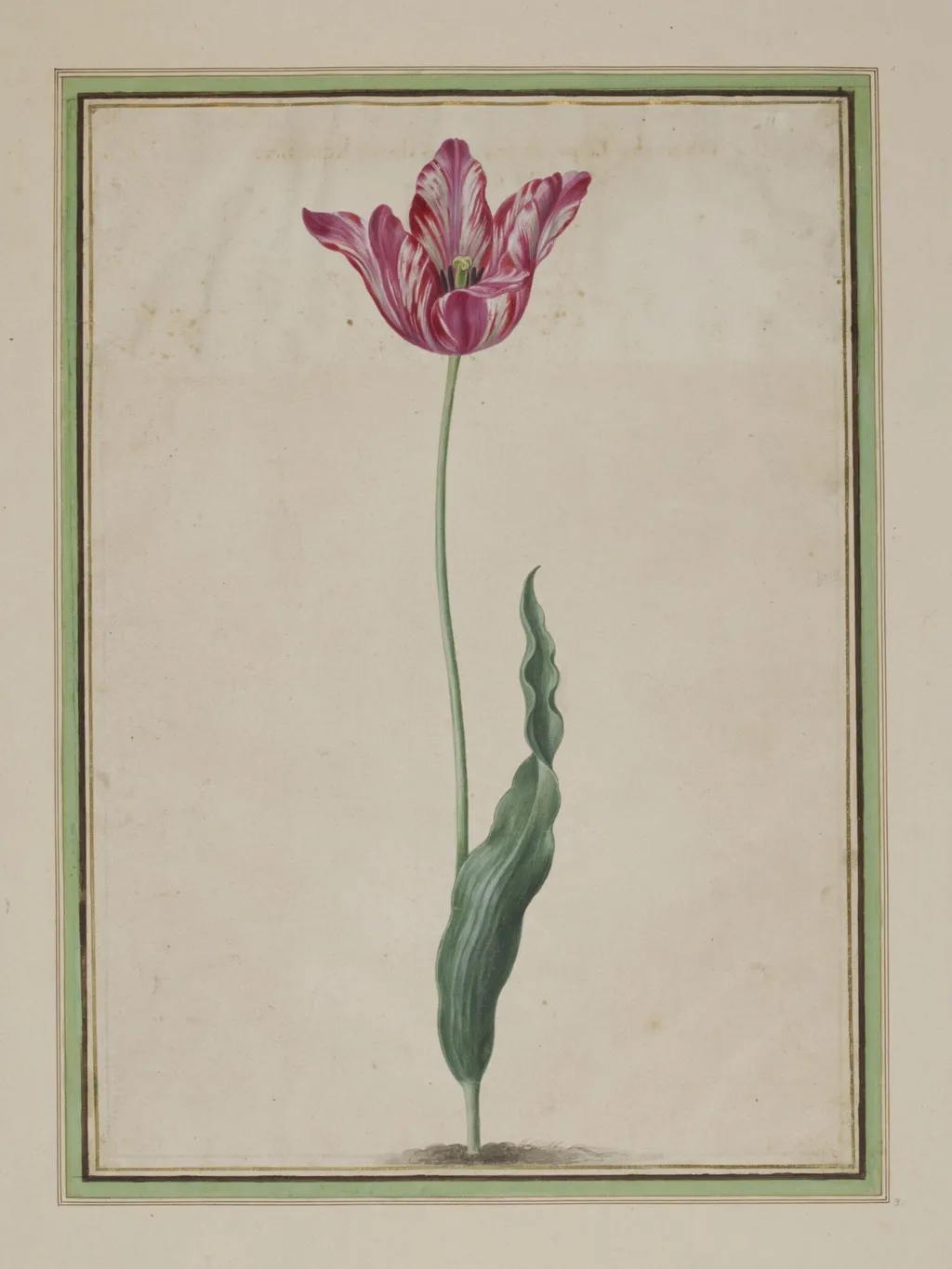
Simulacrum Scenographicum Celeberrimi Horti Itzsteinensis is a watercolor work on paper by the Barbizon school artist Johann Jakob Walther. It dates from 1663 and is held in the collection of the Victoria and Albert Museum.
About this work
Overview
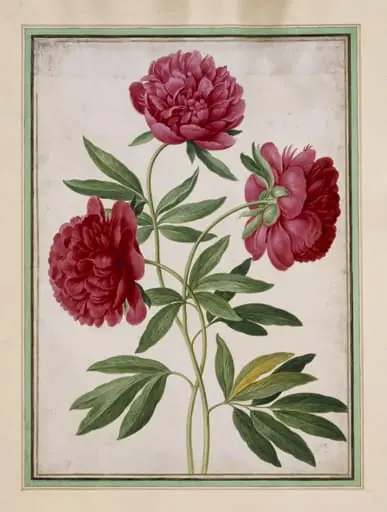
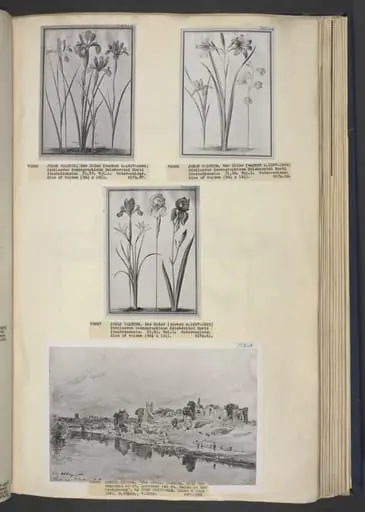
The watercolour is a page from a 17th‑century florilegium compiled for Count Johann of Nassau‑Idstein, documenting the plantings of his castle garden in Idstein, Germany. Produced in the 1650s, the illustration records both cultivated flowers and the surrounding landscape, and the two volumes containing these images are now held by the Victoria and Albert Museum.
Subject & Meaning
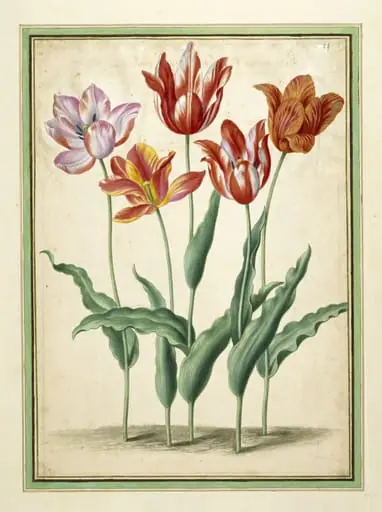
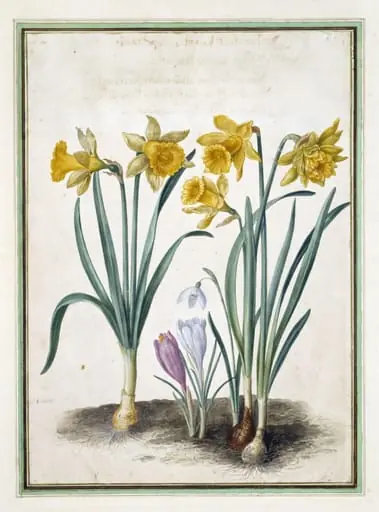
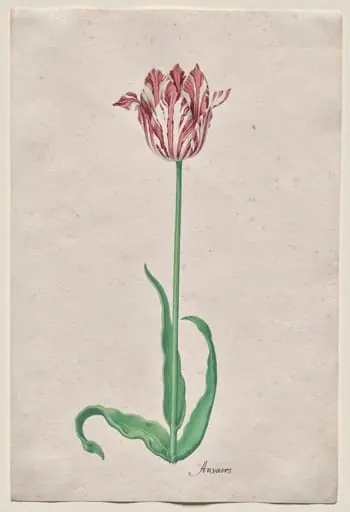
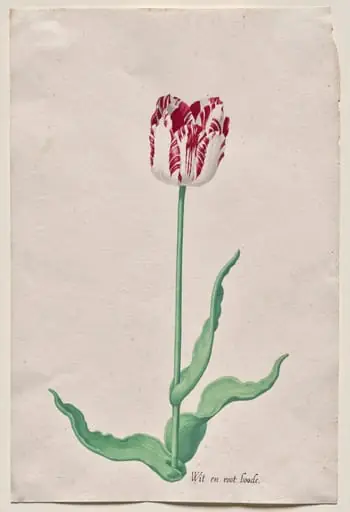
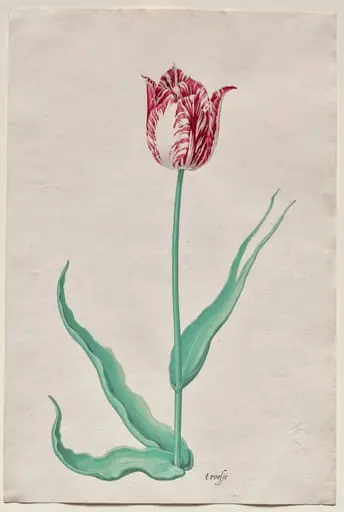
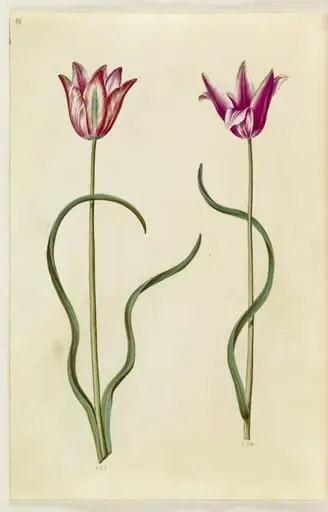
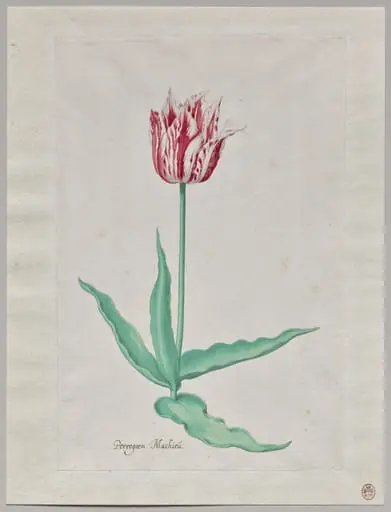
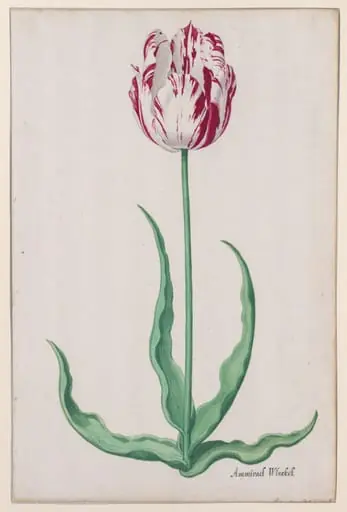
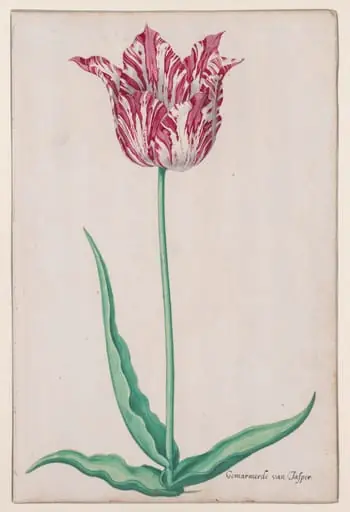
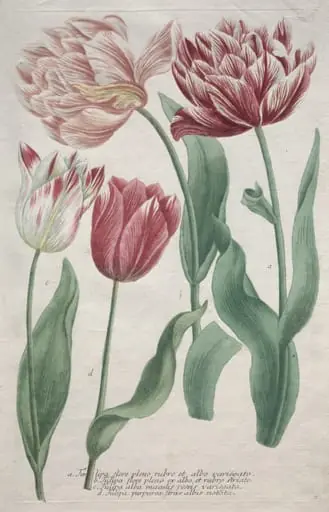
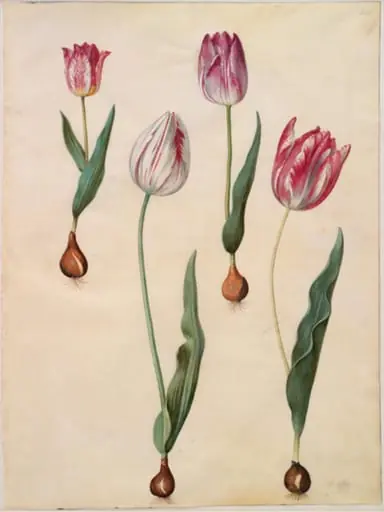
The image depicts a selection of tulips alongside other garden species, reflecting the Count’s interest in both traditional European blooms and newly introduced exotic plants. By juxtaposing floral studies with architectural and garden views, the work serves as a visual inventory of the estate’s horticultural diversity.
Technique & Style
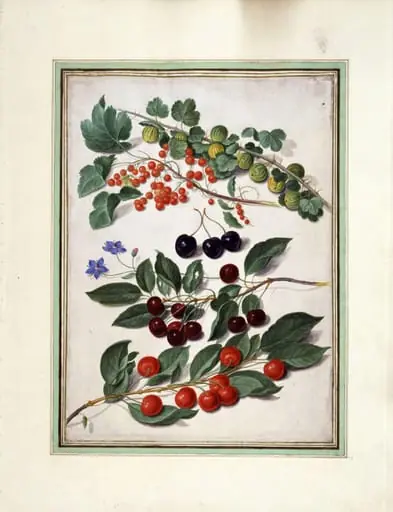
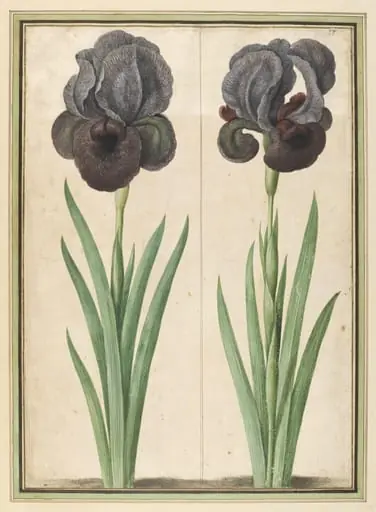
Executed in watercolour, the illustration combines precise botanical detail with a broader compositional sense of space. The artist employed fine brushwork to render petal textures and foliage, while maintaining a clear, observational approach typical of scientific illustration of the period.
History & Provenance
Johann Jakob Walther, a German painter, visited the Idstein gardens on at least eight occasions between 1651 and 1672 to create the plates. After completion, the individual sheets were bound into two volumes, which eventually entered the collection of the Victoria and Albert Museum, where they remain accessible to researchers.
Context
The florilegium reflects the mid‑17th‑century European fascination with plant collection, especially the influx of New World species such as the ‘Marvel of Peru.’ Count Johann’s garden combined established favorites like pinks and columbines with these recent introductions, illustrating contemporary trends in aristocratic horticulture.
Own this work as a print
Artist & collection
Artist
Working in the 1600s, Johann Jakob Walther painted delicate watercolours of flowers and fruit, often naming each kind in Latin.