Artwork
Portraits of Two Lineage Masters of the Kagyu Order: Phagmo Drupa (1110–1170) and Tashipel (1142–1210)
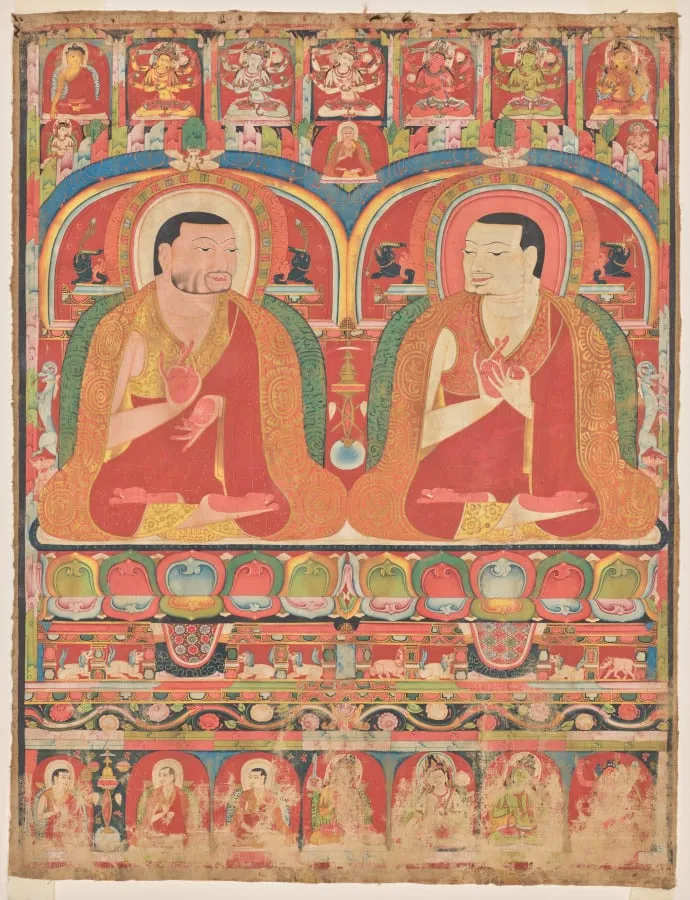
Portraits of Two Lineage Masters of the Kagyu Order: Phagmo Drupa (1110–1170) and Tashipel (1142–1210) is an unspecified painting by Unknown. It dates from 1273 and is held in the collection of the Cleveland Museum of Art.
About this work
Overview
This Tibetan thangka painting depicts two prominent lineage masters of the Kagyu Order: Phagmo Drupa (1110–1170) and Tashipel (1142–1210), alongside their revered teacher Gampopa (1079–1153) in a smaller, elevated form.
Subject & Meaning
The primary subjects are Phagmo Drupa and Tashipel, shown in discourse, symbolizing the transmission of spiritual lineage. Gampopa's presence above emphasizes his foundational role in their tradition. The depiction reflects the institutional and spiritual lineage of the Kagyu Order.
Technique & Style
Executed as a devotional cloth scroll (thangka), the work features characteristic Central Tibetan stylistic elements, including vibrant colors, stylized mountain ranges, and symbolic motifs (halos, lotus pedestal, thrones with elephant-trunked crocodiles and rearing griffins).
History & Provenance
Tashipel, on the right, is noted for founding Taklung Monastery in Lhasa, a pivotal Kagyu institution. The painting's specific provenance is not detailed here, but its creation aligns with the tradition of portraying high-ranking lamas in early Tibetan thangkas.
Context
Created in the context of early Central Tibetan Buddhist art, this thangka serves both as a devotional object and a lineage record, highlighting the importance of monastic leaders and spiritual heritage in the Kagyu tradition.
Artist & collection

 Domestic Scene
 Giacomo and Cardinal Marco, investing Andrea, Abbot of San Zeno, with his Benefice
 The Nymph of Fontainebleau
 Portrait of a Woman
 Madonna and Child with Saints in the Enclosed Garden
 Venus and Minerva
 Family Group of Four on Sofa
 Wall painting from Room H of the Villa of P. Fannius Synistor at Boscoreale
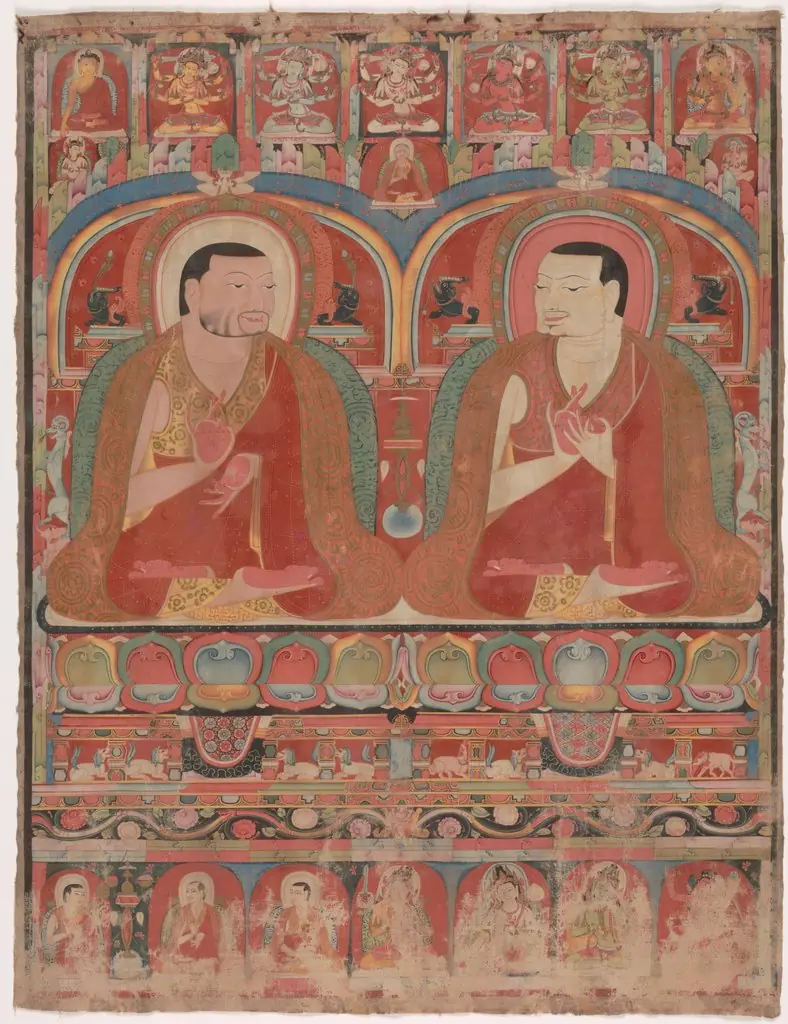 Portraits of Two Lineage Masters of the Kagyu Order: Phagmo Drupa (1110–1170) and Tashipel (1142–1210)
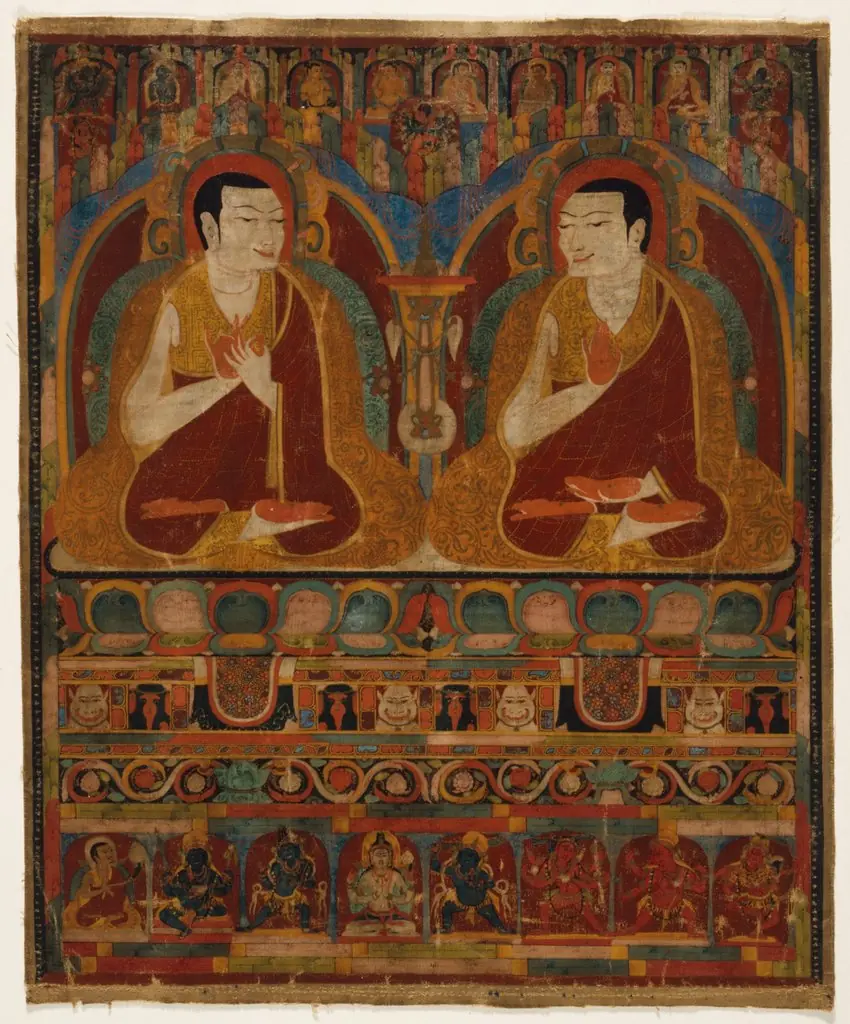 Portrait of Two Taklung Lamas
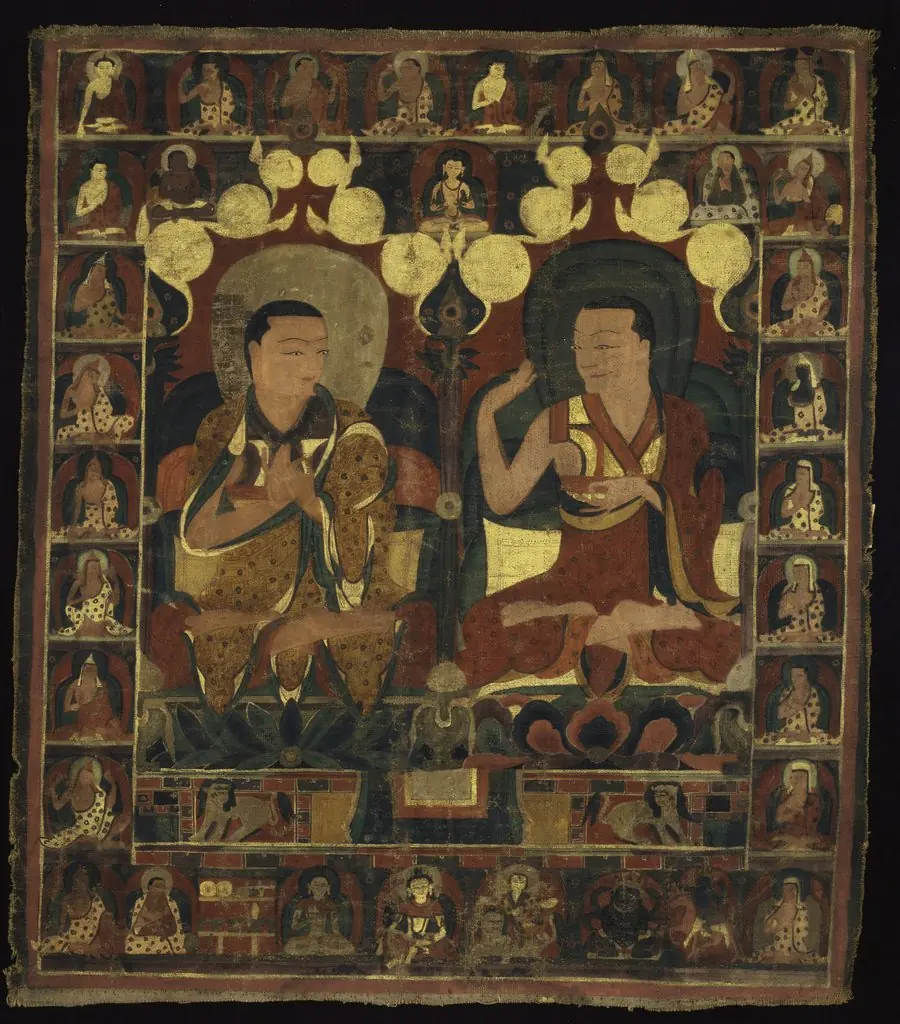 Painted Banner (Thangka) of Lineage Painting of Two Lamas in Debate
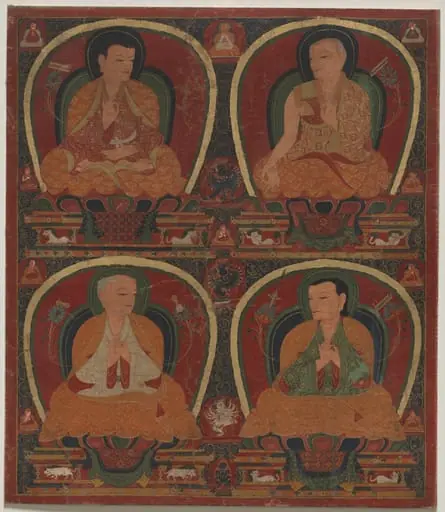 Four seated Masters
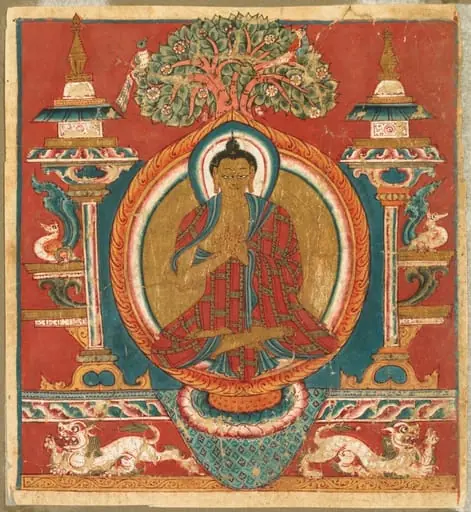 Votive initiation card (tsakali) with preaching Buddha Shakyamuni
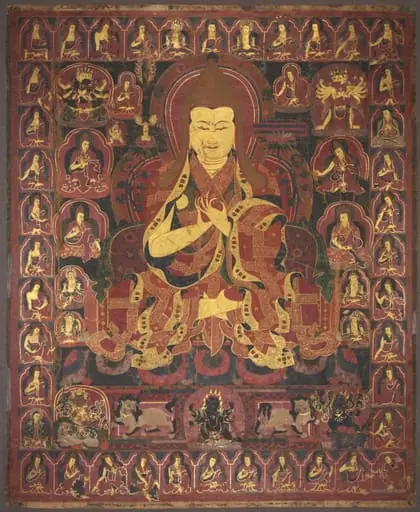 Tsong Khapa, Founder of the Geluk Order
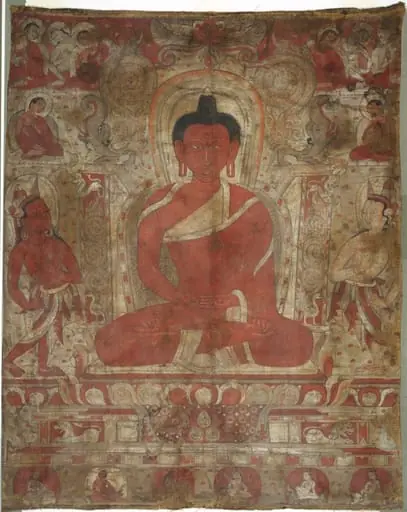 Seated Amitabha with Attendants