Artwork
Four seated Masters
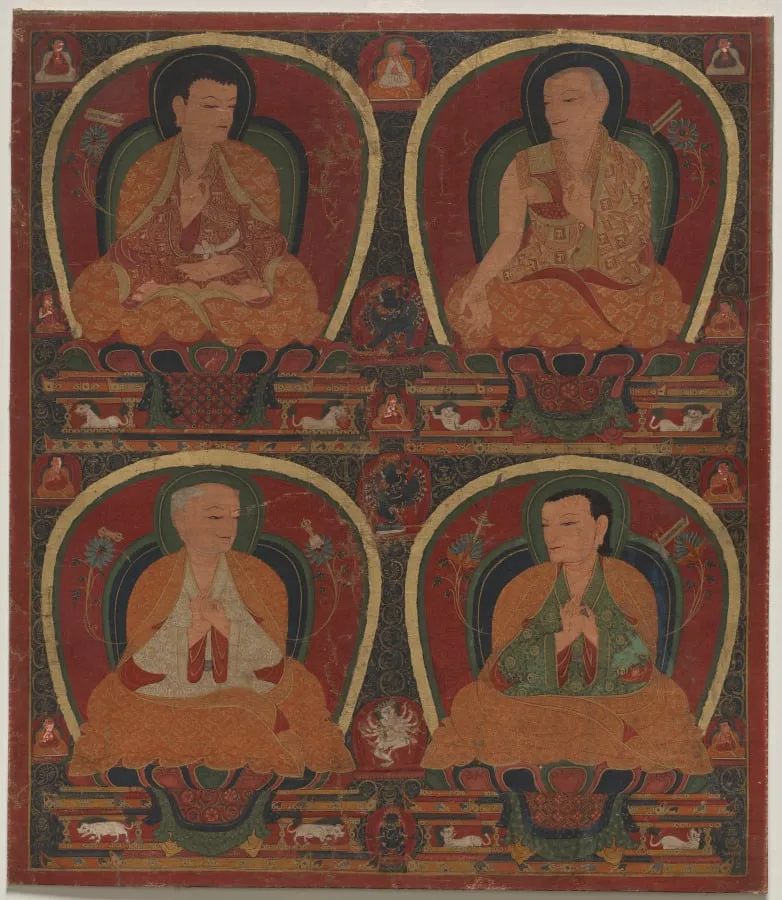
Four seated Masters is an unspecified painting by the Renaissance artist Unknown. It dates from 1450 and is held in the collection of the Cleveland Museum of Art. The painting presents four seated figures dressed in red robes, each holding a book or scroll.
About this work
You see four monks in red robes sitting on the ground, each holding a book or scroll.
This painting is part of a set made at Ngor Monastery in Tibet around 1450. It shows the teachers who passed down a special Buddhist text. The style mixes Tibetan and Nepalese art—flat shapes, bright colors, and fine, swirling lines.
To see more like it, look up central tibet, ngor monastery.
Overview
The painting presents four seated figures dressed in red robes, each holding a book or scroll. Executed on a flat panel around the mid‑15th century, it forms part of a larger series created for a principal Sakya monastery. The work records the lineage of teachers who transmitted the Hevajra Tantra, a central tantric text of the Sakya tradition.
Subject & Meaning
The four figures are the founding masters of the Sakya order, depicted as successive holders of the Hevajra teachings. By showing them together, the composition emphasizes the unbroken transmission of doctrinal authority and the continuity of the lineage, reinforcing the monastery’s claim to authentic transmission of the tantra.
Technique & Style
The artwork blends Tibetan and Nepalese visual conventions. It employs a two‑dimensional, decorative surface treatment, with bright pigments and a delicate, ornamental quality. Characteristic features include the exaggerated curvature of the upper eyelids, linear scrollwork that fills every background space, and a finely rendered, swirling pattern that reflects Nepalese courtly aesthetics.
History & Provenance
Created at Ngor Monastery in central Tibet circa 1450, the piece belongs to a series produced during a period of close artistic exchange with Nepal. The monastery’s strong ties to Nepalese workshops facilitated the incorporation of foreign stylistic elements, resulting in a hybrid visual language that was disseminated throughout Sakya institutions.
Artist & collection

 Domestic Scene
 Giacomo and Cardinal Marco, investing Andrea, Abbot of San Zeno, with his Benefice
 The Nymph of Fontainebleau
 Portrait of a Woman
 Madonna and Child with Saints in the Enclosed Garden
 Venus and Minerva
 Family Group of Four on Sofa
 Wall painting from Room H of the Villa of P. Fannius Synistor at Boscoreale
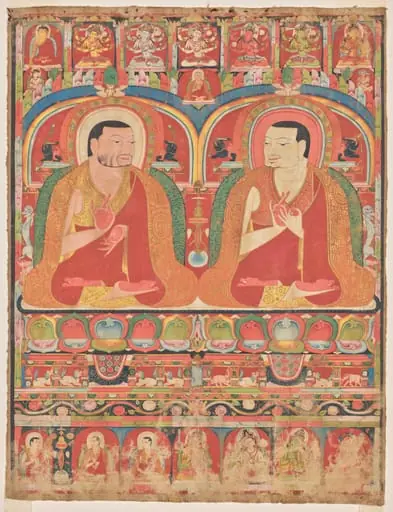 Portraits of Two Lineage Masters of the Kagyu Order: Phagmo Drupa (1110–1170) and Tashipel (1142–1210)
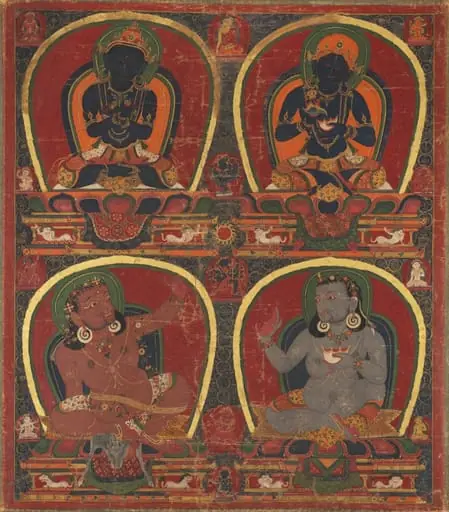 Vajradhara, Nairatmya, and mahasiddhas Virupa and Kanha
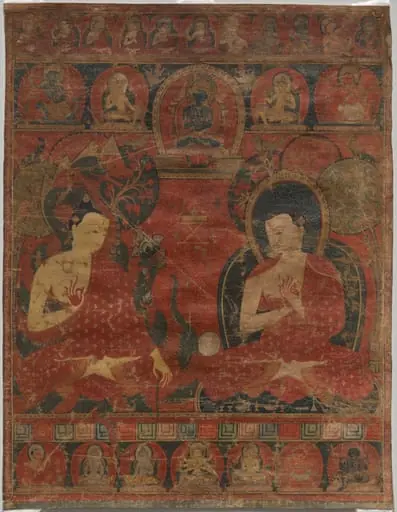 Nagarjuna (c. 150–250 CE) with a Buddhist Master
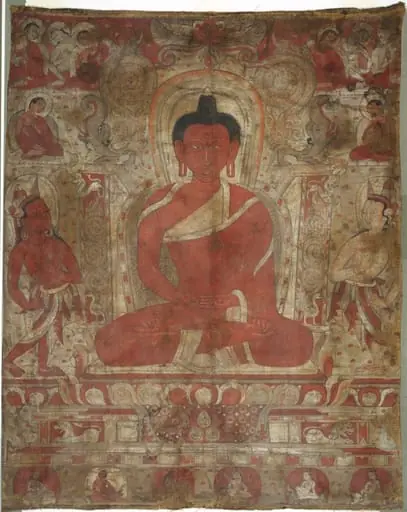 Seated Amitabha with Attendants
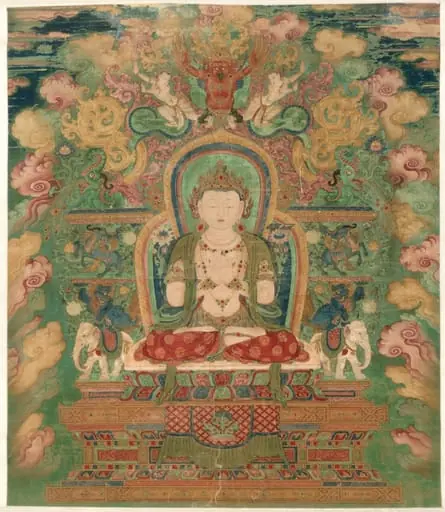 Manjushri
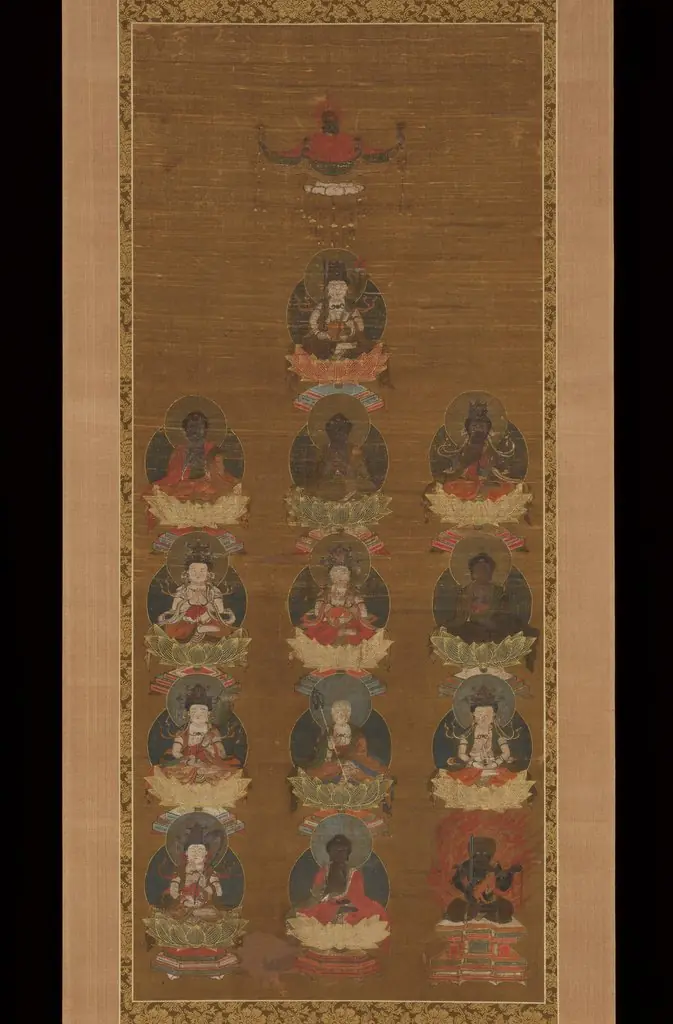 Mandala of the Thirteen Buddhas (Jūsan butsu mandara)
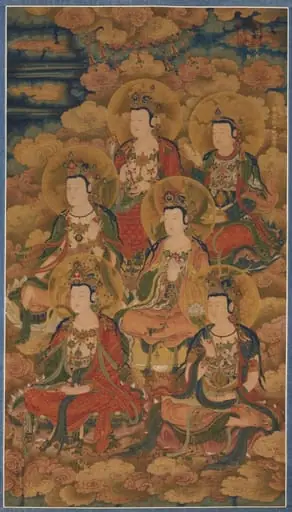 The Bodhisattvas of the Ten Stages in Attaining the Most Perfect Knowledge
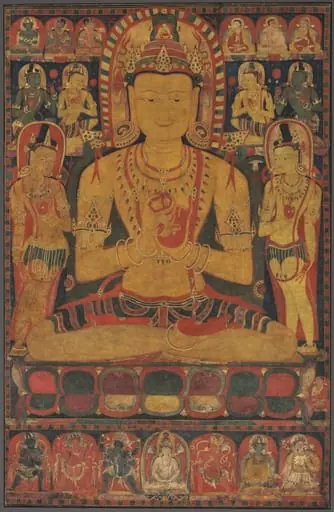 Tantric Buddha Vairochana as Vajrasattva
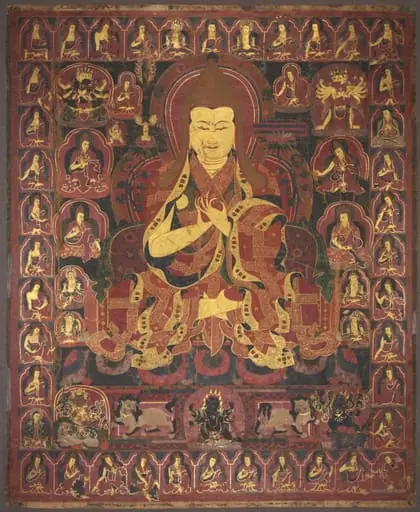 Tsong Khapa, Founder of the Geluk Order