Artwork
The Raja’s son vows to sever his head and offer it to the image if he is united with the princess he has seen in the temple, from a Tuti-nama (Tales of a Parrot): Thirty-fourth Night
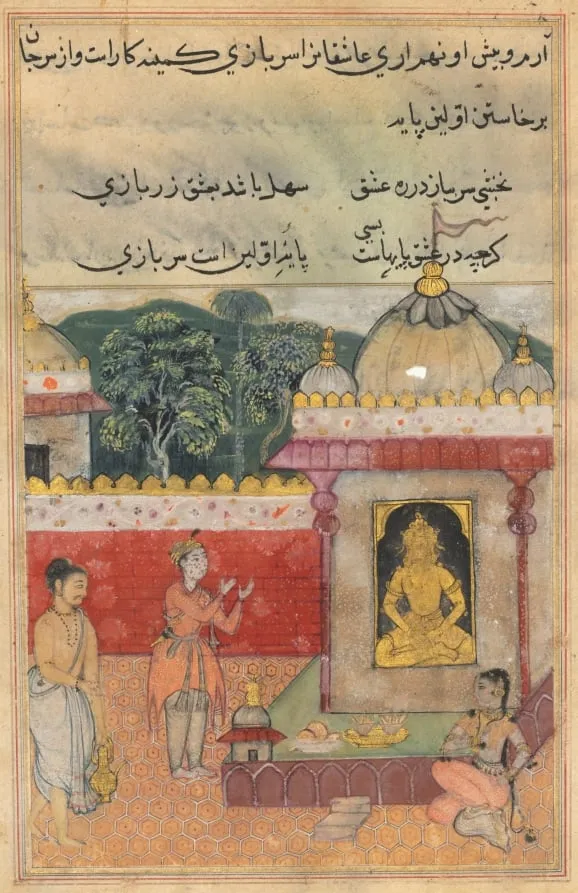
The Raja’s son vows to sever his head and offer it to the image if he is united with the princess he has seen in the temple, from a Tuti-nama (Tales of a Parrot): Thirty-fourth Night is an unspecified painting by the Mughal Painting artist Unknown. It dates from 1560 and is held in the collection of the Cleveland Museum of Art.
About this work
His vow is written in the title: if he wins the princess he just saw in the temple, he’ll cut off his own head as an offering.
A prince in bright orange kneels before a golden statue, hands pressed together in prayer. His vow is written in the title: if he wins the princess he just saw in the temple, he’ll cut off his own head as an offering.
The story comes from a book of parrot tales told over fifty-two nights. This scene is the thirty-fourth night. The prince’s father arranged the marriage, but the painting freezes the moment before the promise is kept—or broken.
Look up more paintings from Mughal India, court of Akbar (reigned 1556–1605) to see how royal artists told these old stories.
Overview
This painting illustrates a moment from the thirty-fourth night of the Tuti-nama, a collection of moral tales framed by a parrot’s storytelling. It depicts a prince in vibrant orange before a gilded deity, his hands clasped in fervent prayer. The scene captures the instant he pledges to sacrifice his life if granted union with a princess he glimpsed in the temple. The narrative tension lies in the unfulfilled vow, suspended between devotion and consequence.
Subject & Meaning
The prince’s vow reflects a traditional motif of extreme devotion in Indian courtly literature, where love and spiritual commitment intertwine. His gesture before the divine image signals both desperation and faith, framing his romantic longing as a sacred trial. The unfulfilled nature of the promise introduces moral ambiguity: is this an act of piety or hubris? The painting invites contemplation on the cost of desire and the limits of ritual obligation.
Technique & Style
Executed in the Mughal court style under Akbar, the composition balances naturalism with symbolic clarity. The prince’s vivid orange robe contrasts sharply with the gold of the deity and the muted tones of the temple interior, drawing focus to his supplication. Delicate brushwork defines facial expression and fabric folds, while spatial depth is suggested through layered architecture, characteristic of imperial atelier practices of the late 16th century.
History & Provenance
Created during the reign of Emperor Akbar (1556–1605), this work belongs to a deluxe manuscript commissioned to illustrate the Tuti-nama, a Persian adaptation of Indian fables. Likely painted by artists in the imperial atelier, it was part of a larger cycle of fifty-two scenes, each corresponding to a night’s tale. The manuscript’s survival reflects Akbar’s patronage of illustrated literature as a tool of cultural synthesis and royal prestige.
Context
The Tuti-nama was part of Akbar’s broader project to synthesize Persian, Islamic, and Indian traditions through art and literature. These illustrated tales served both entertainment and moral instruction, often blending Hindu and Muslim motifs. The prince’s vow, rooted in indigenous storytelling, was rendered with Persianate elegance, reflecting the syncretic ethos of the Mughal court and its interest in diverse cultural narratives.
Legacy
This painting exemplifies how Mughal artists transformed oral and literary traditions into visual narratives with psychological nuance. Its preservation in royal collections ensured its influence on later Indian painting styles. Though the full manuscript is dispersed, surviving folios like this one remain key to understanding how imperial workshops negotiated religious devotion, romantic longing, and artistic expression in early modern South Asia.
Artist & collection

 Domestic Scene
 Giacomo and Cardinal Marco, investing Andrea, Abbot of San Zeno, with his Benefice
 The Nymph of Fontainebleau
 Portrait of a Woman
 Madonna and Child with Saints in the Enclosed Garden
 Venus and Minerva
 Family Group of Four on Sofa
 Wall painting from Room H of the Villa of P. Fannius Synistor at Boscoreale
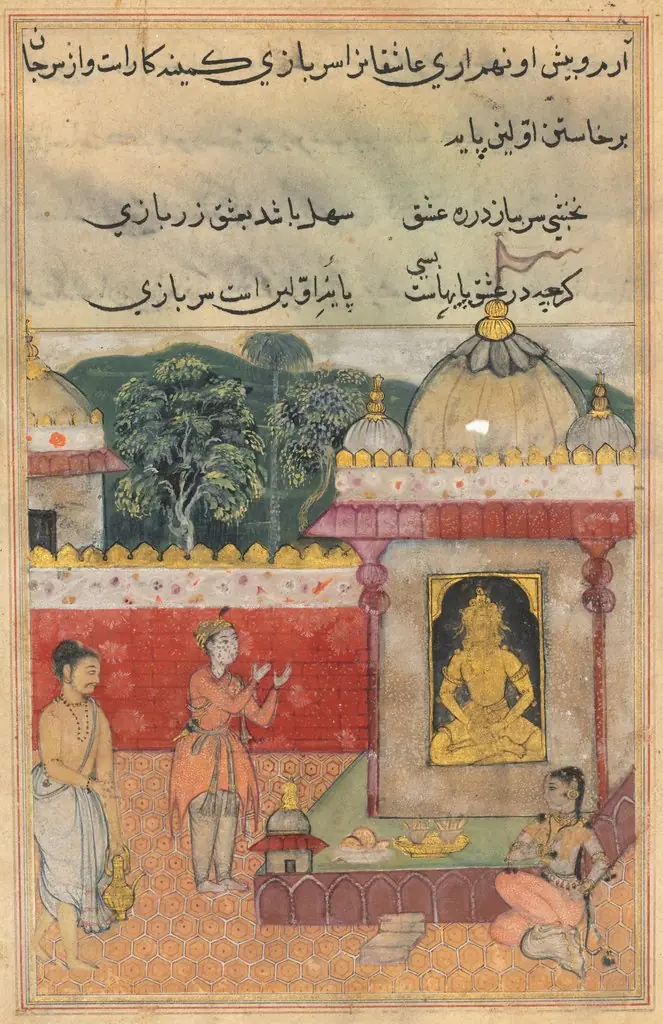 The Raja’s son vows to sever his head and offer it to the image if he is united with the princess he has seen in the temple, from a Tuti-nama (Tales of a Parrot): Thirty-fourth Night
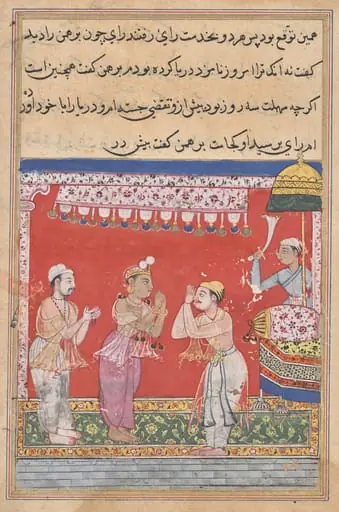 The king of the Ocean, having assumed human form, arrives at the court of the Raja, from a Tuti-nama (Tales of a Parrot): Eleventh Night
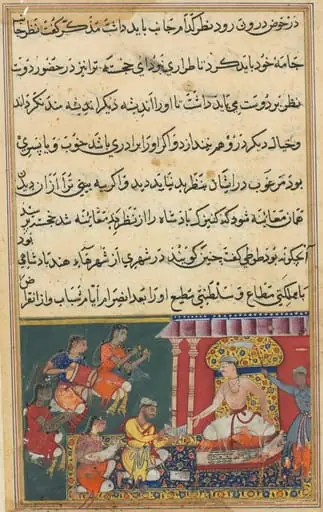 The astrologer predicts a calamity for the newly born prince in his thirteenth year, but one which he would be able to overcome, from a Tuti-nama (Tales of a Parrot): Eighth Night
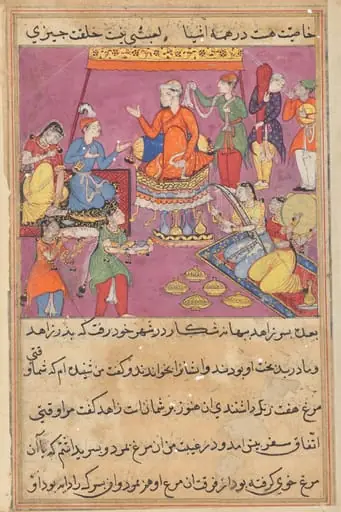 The king gives his daughter in marriage to the pious man’s son, from a Tuti-nama (Tales of a Parrot): Fifty-second Night
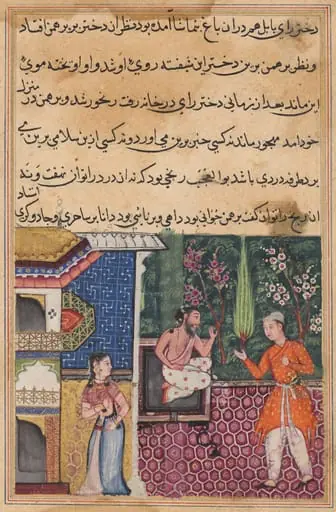 The Brahman gives an account of his falling in love with the king of Babylon’s daughter to his friend, the magician, from a Tuti-nama (Tales of a Parrot): Thirty-fifth Night
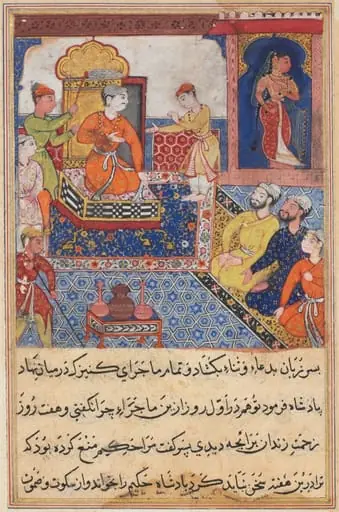 The young prince recounts his experiences to his father, the king, from a Tuti-nama (Tales of a Parrot): Eighth Night
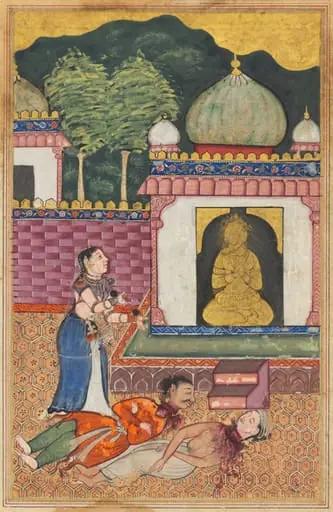 The princess discovers the dead bodies, with heads severed, of her husband and his Brahman friend, from a Tuti-nama (Tales of a Parrot): Thirty-fourth Night
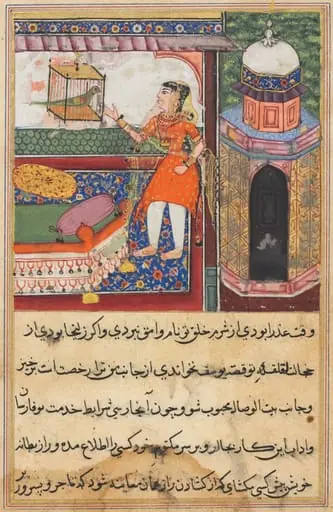 The Parrot Addresses Khujasta at the Beginning of the Tenth Night, from a Tuti-nama (Tales of a Parrot)
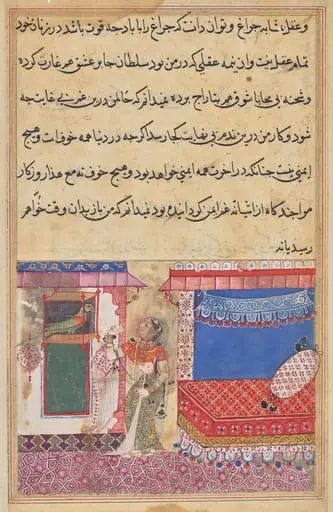 The Parrot Addresses Khujasta at the Beginning of the Eighteenth Night, from a Tuti-nama (Tales of a Parrot)
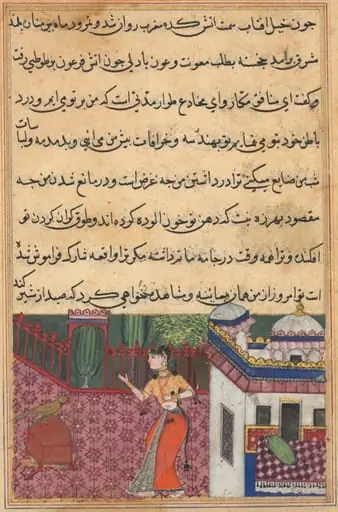 The parrot addresses Khujasta at the beginning of the thirty-third night, from a Tuti-nama (Tales of a Parrot)