Artwork
compianto
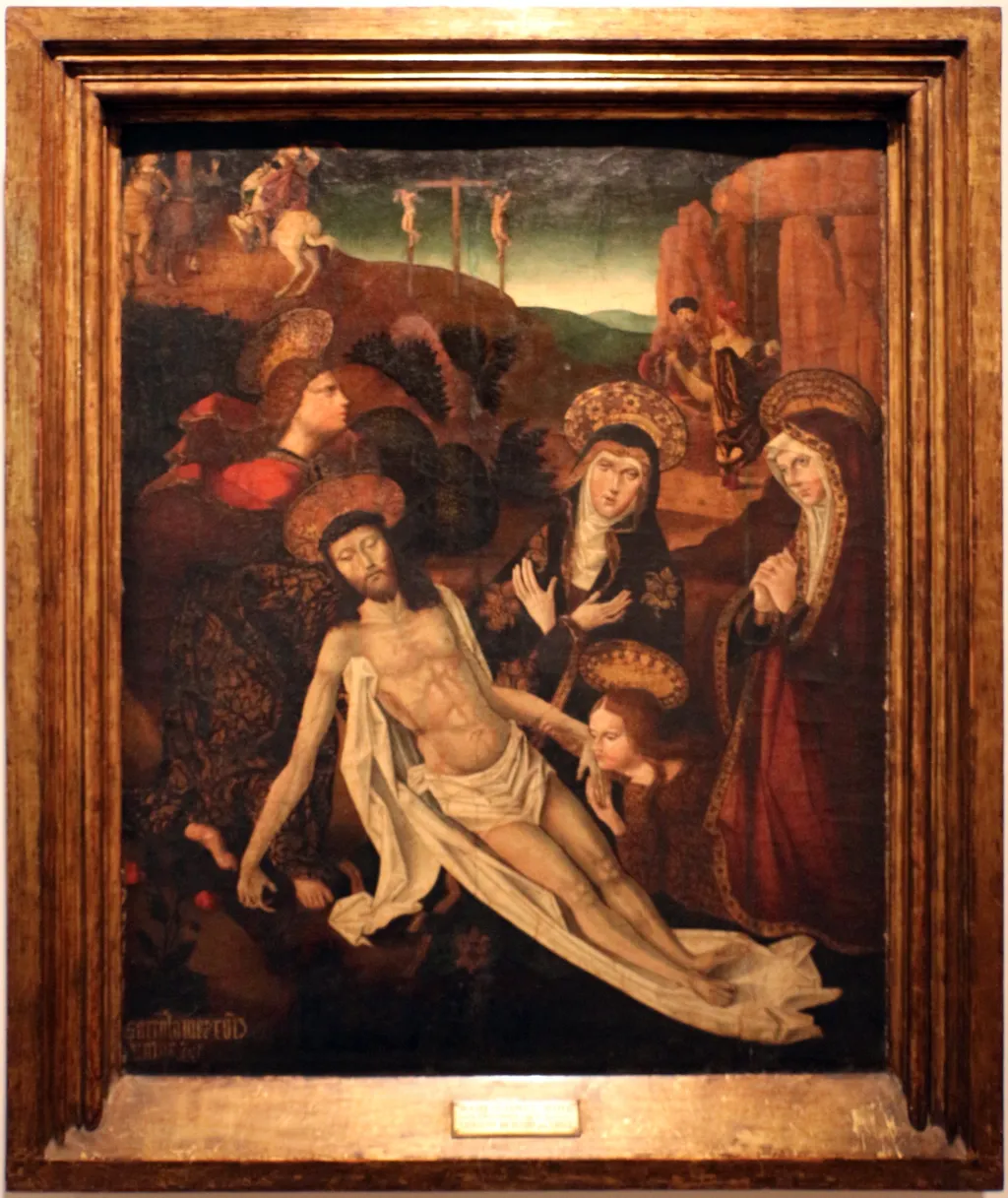
compianto is an unspecified painting by the Northern Renaissance artist Unknown. It dates from 1500 and is held in the collection of the National Museum of Ancient Art.
About this work
Overview
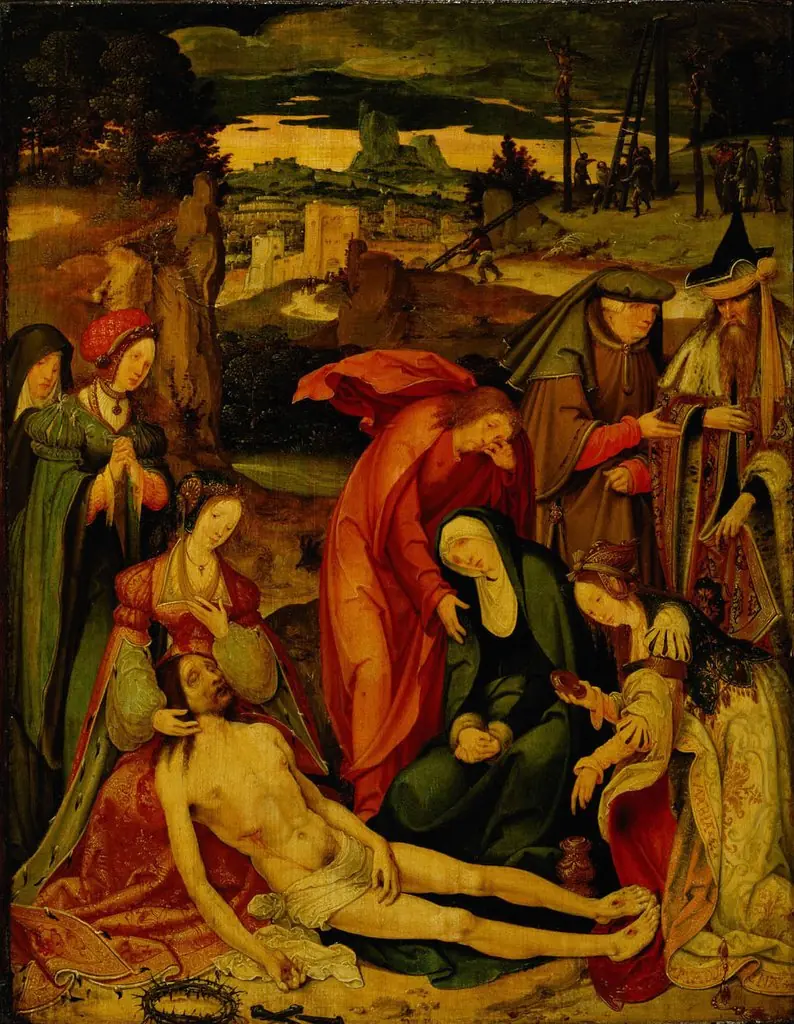
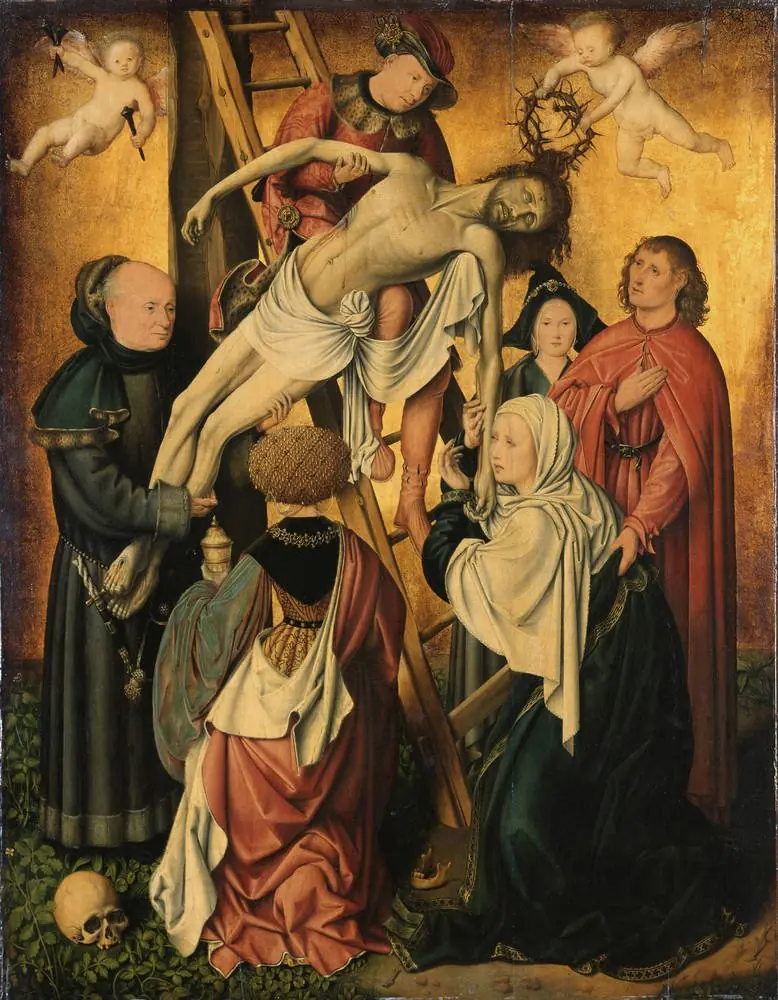
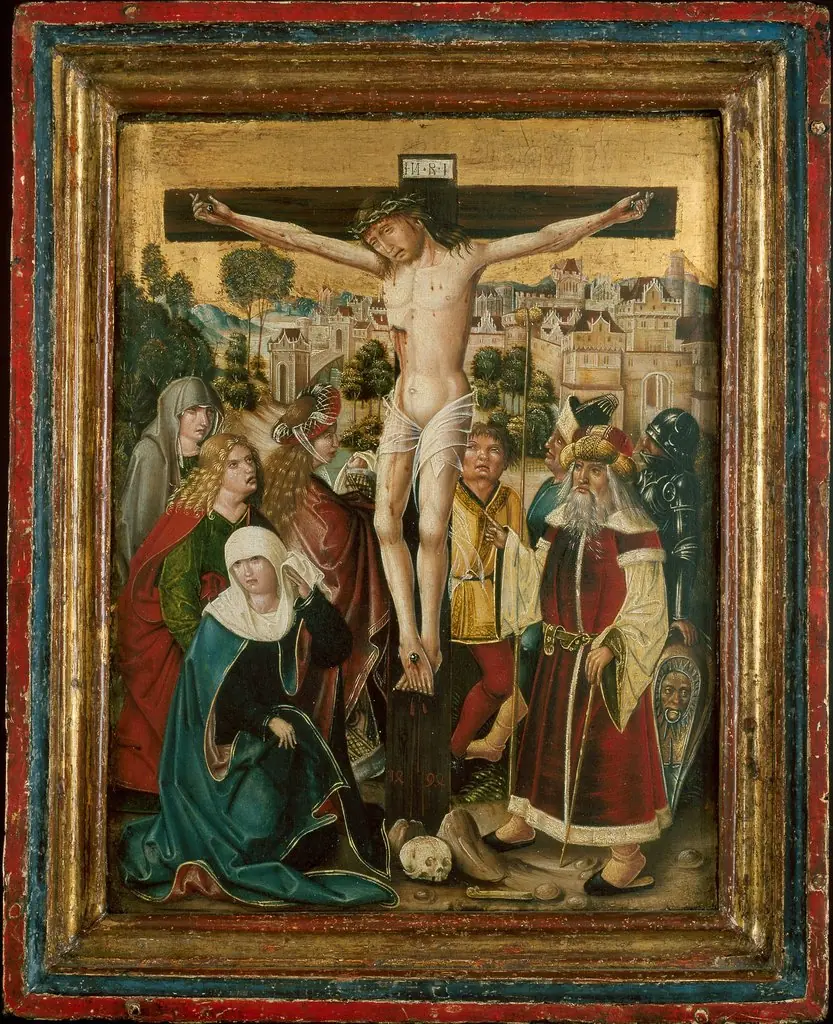
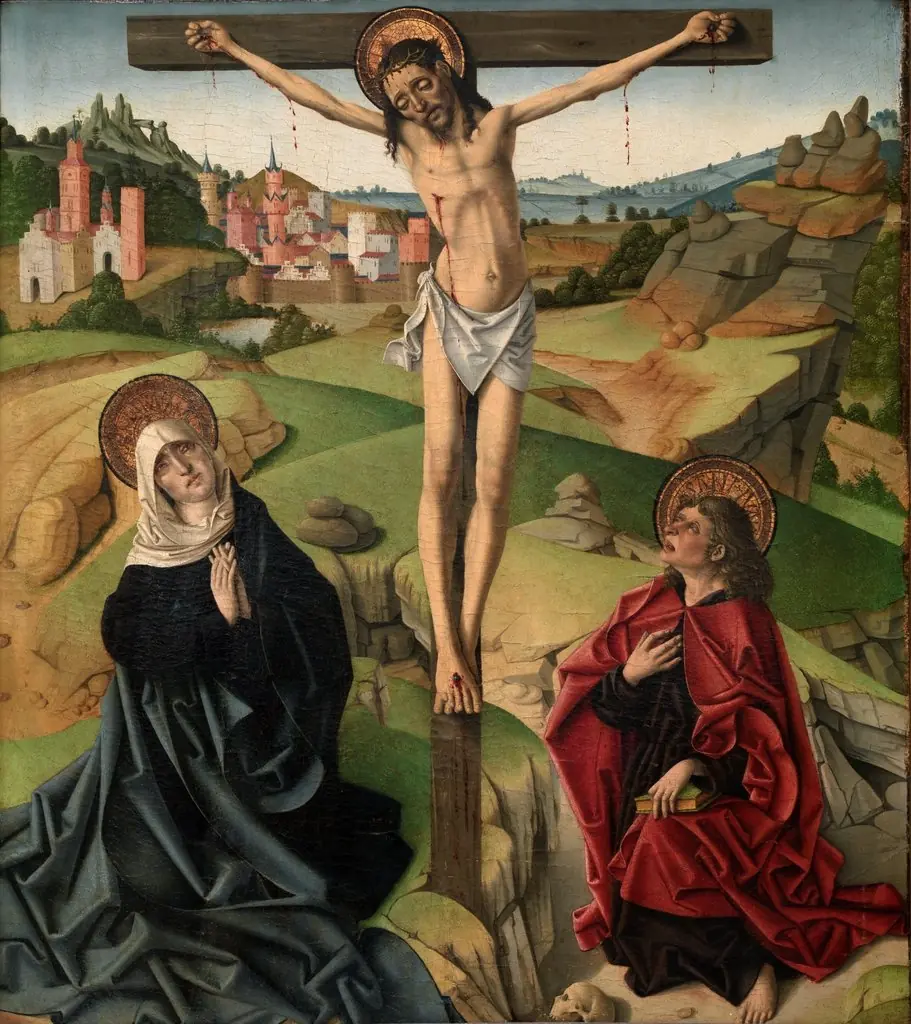
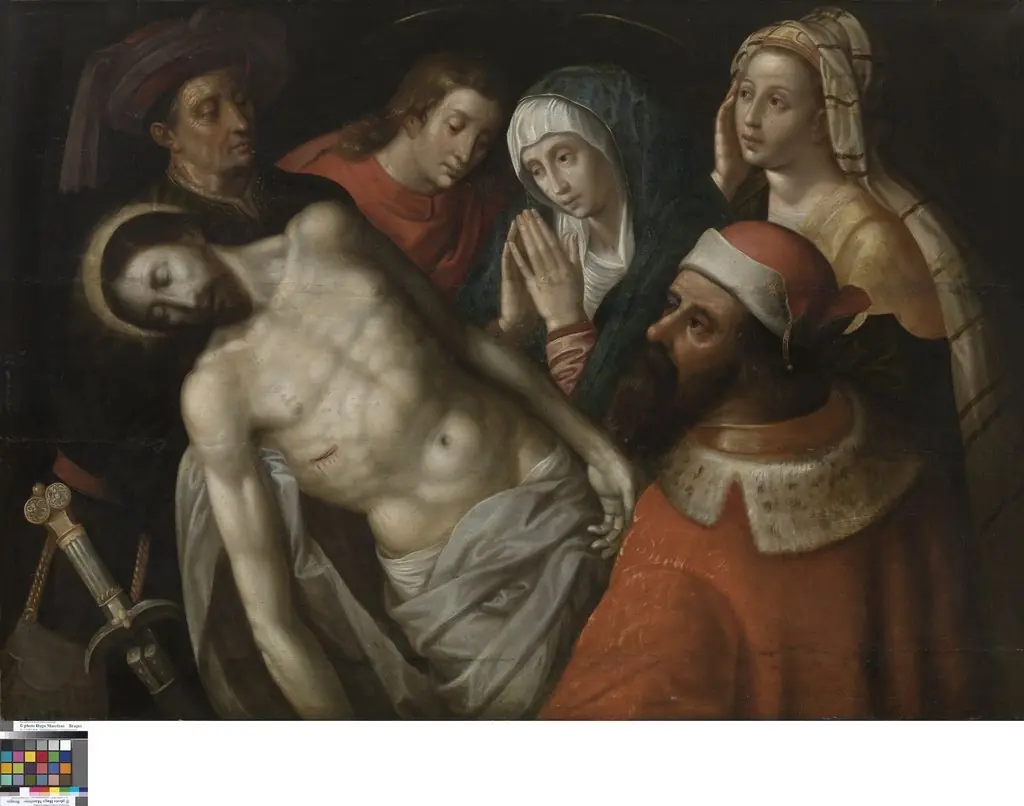
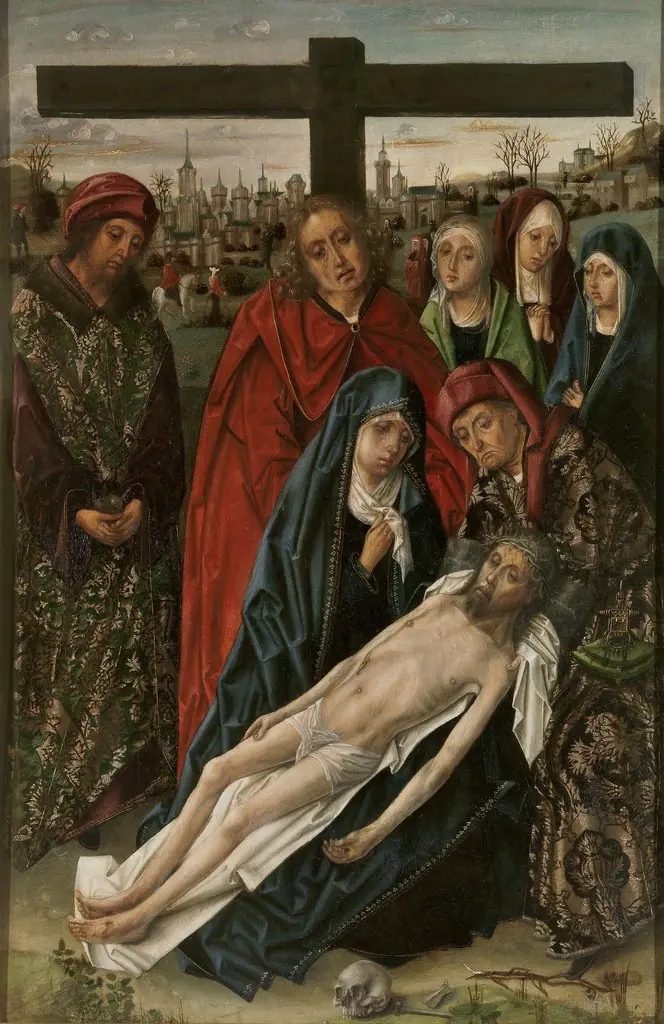
The work, titled *Compianto*, depicts a somber gathering around a lifeless figure. The central man lies on the ground, unclothed except for a white cloth tied at his waist, and is crowned with a halo. Surrounding him are mourners in richly colored garments, set against a rocky landscape that includes distant riders.
Subject & Meaning
The scene corresponds to the traditional Lamentation of Christ, a moment when followers and family members mourn the crucified Jesus after his removal from the cross. The presence of a halo emphasizes the figure’s sanctity, while the gestures of the women—one kneeling with outstretched hands, another standing and gazing downward—convey grief and reverence.
Technique & Style
Rendered with meticulous detail, the painting employs a vivid palette that distinguishes each figure’s attire: a black dress with a gold‑patterned veil, a red dress with an elaborate head covering, and period clothing on the background riders. The artist balances fine brushwork in the foreground with broader strokes for the rocky terrain, creating depth and a solemn atmosphere.
History & Provenance
*Compianto* is known from 19th‑century inventories of Italian religious art, where it was catalogued among works illustrating Passion narratives. Its provenance traces through several private collections before entering a public museum in the early 20th century, where it has been displayed as part of thematic exhibitions on crucifixion iconography.
Context
The painting reflects the Counter‑Reformation emphasis on emotionally engaging depictions of Christ’s suffering, intended to inspire devotion. The inclusion of contemporary dress on peripheral figures situates the biblical event within the viewer’s own time, a common strategy to make the sacred narrative more immediate.
Legacy
As an example of the Lamentation motif, the work has informed later interpretations of mourning scenes in both religious and secular art. Scholars note its influence on subsequent Italian painters who adopted similar compositional arrangements and color contrasts to convey pathos.
Artist & collection

 Domestic Scene
 Giacomo and Cardinal Marco, investing Andrea, Abbot of San Zeno, with his Benefice
 The Nymph of Fontainebleau
 Portrait of a Woman
 Madonna and Child with Saints in the Enclosed Garden
 Venus and Minerva
 Family Group of Four on Sofa
 Wall painting from Room H of the Villa of P. Fannius Synistor at Boscoreale