Artwork
Raja Hari Sen of Mandi
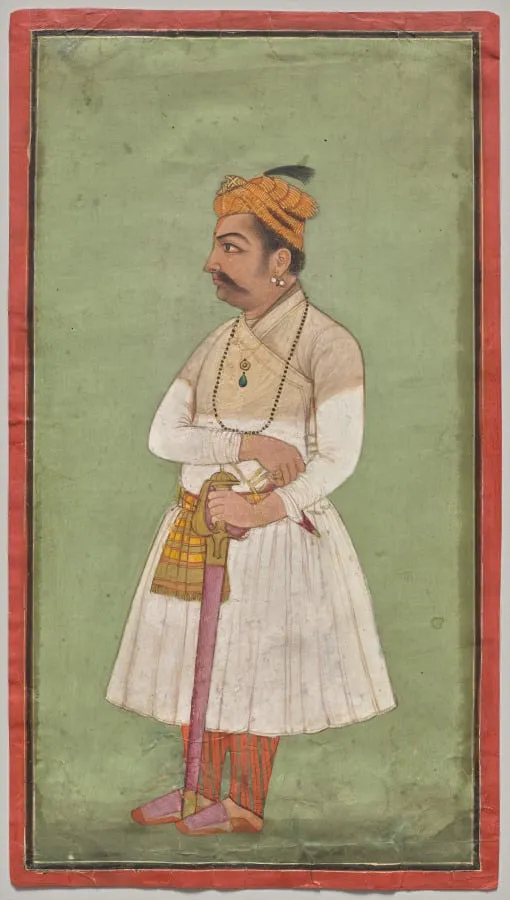
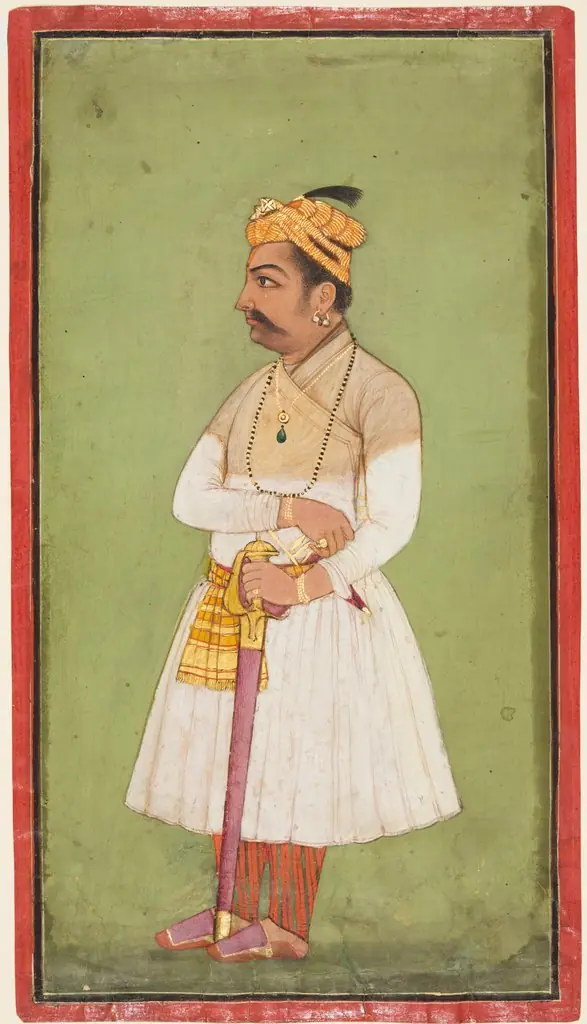
Raja Hari Sen of Mandi is an unspecified painting by the Baroque artist Unknown. It dates from 1650 and is held in the collection of the Cleveland Museum of Art.
About this work
This portrait was made around 1650, when Mughal fashion still shaped royal dress in the hills of northern India.
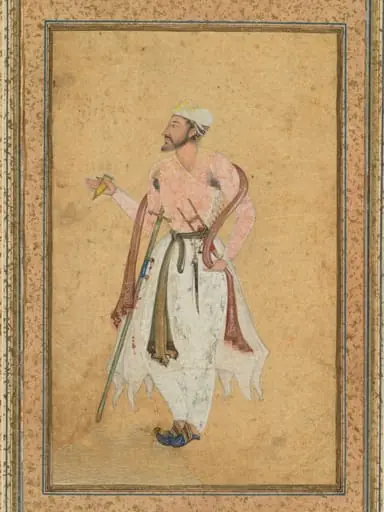
A king stands in a plain green space, one hand on his sword, the other near his dagger. His long coat flares at the waist like a bell, tied with a short sash.
This portrait was made around 1650, when Mughal fashion still shaped royal dress in the hills of northern India. The coat’s cut and the sash’s length are clues—both were popular decades earlier under Emperor Jahangir.
To see more royal portraits from the same region, look up pahari kingdoms.
Overview
This portrait depicts Raja Hari Sen of Mandi, a hill kingdom ruler in northern India, painted circa 1650. He is shown standing alone against a flat, green background, dressed in formal court attire influenced by Mughal styles. The composition emphasizes his posture and attire rather than setting or narrative, reflecting a shift toward individualized royal representation in Pahari courts during the mid-17th century.
Subject & Meaning
Raja Hari Sen is portrayed as a poised, armed ruler, his hand resting on a sword and the other near a dagger. These weapons signify authority and readiness, not aggression. The deliberate stillness and direct gaze convey composure and control, aligning with ideals of sovereign dignity. The absence of courtiers or symbols of power focuses attention on the ruler’s personal bearing and attire as markers of status.
Technique & Style
The painting employs fine brushwork to render the texture of fabric and metal, with subtle gradations in the green background creating depth without perspective. The raja’s long, flared jama and short pataka sash are rendered with precision, reflecting Mughal-derived aesthetics. The flat, unadorned setting isolates the figure, emphasizing form and detail over environmental context—a hallmark of Pahari portraiture of this period.
History & Provenance
Created around 1650, the portrait emerged during a time when Mughal court fashions continued to influence the hill states, even as local traditions took root. Mandi, like other Pahari kingdoms, maintained diplomatic and cultural ties with the Mughal center. The painting likely originated in the royal atelier of Mandi and may have been used to affirm the raja’s legitimacy among neighboring rulers or Mughal envoys.
Context
In mid-17th century northern India, regional rulers adopted Mughal dress to align themselves with imperial prestige. The gheradar jama and short pataka, once dominant under Jahangir, persisted in hill courts decades after falling out of favor in Delhi. This portrait reflects the lingering cultural influence of the Mughal court and the selective adaptation of its symbols by smaller states seeking to project authority.
Legacy
The portrait exemplifies how Pahari artists synthesized Mughal conventions with local sensibilities, laying groundwork for later developments in Kangra and Guler styles. While not widely known outside regional collections, it remains a key example of how hill rulers used portraiture to assert identity amid shifting political and aesthetic currents in early modern India.
Artist & collection

 Domestic Scene
 Giacomo and Cardinal Marco, investing Andrea, Abbot of San Zeno, with his Benefice
 The Nymph of Fontainebleau
 Portrait of a Woman
 Madonna and Child with Saints in the Enclosed Garden
 Venus and Minerva
 Family Group of Four on Sofa
 Wall painting from Room H of the Villa of P. Fannius Synistor at Boscoreale