Artwork
Raja and Courtiers Seated Beneath a Canopy
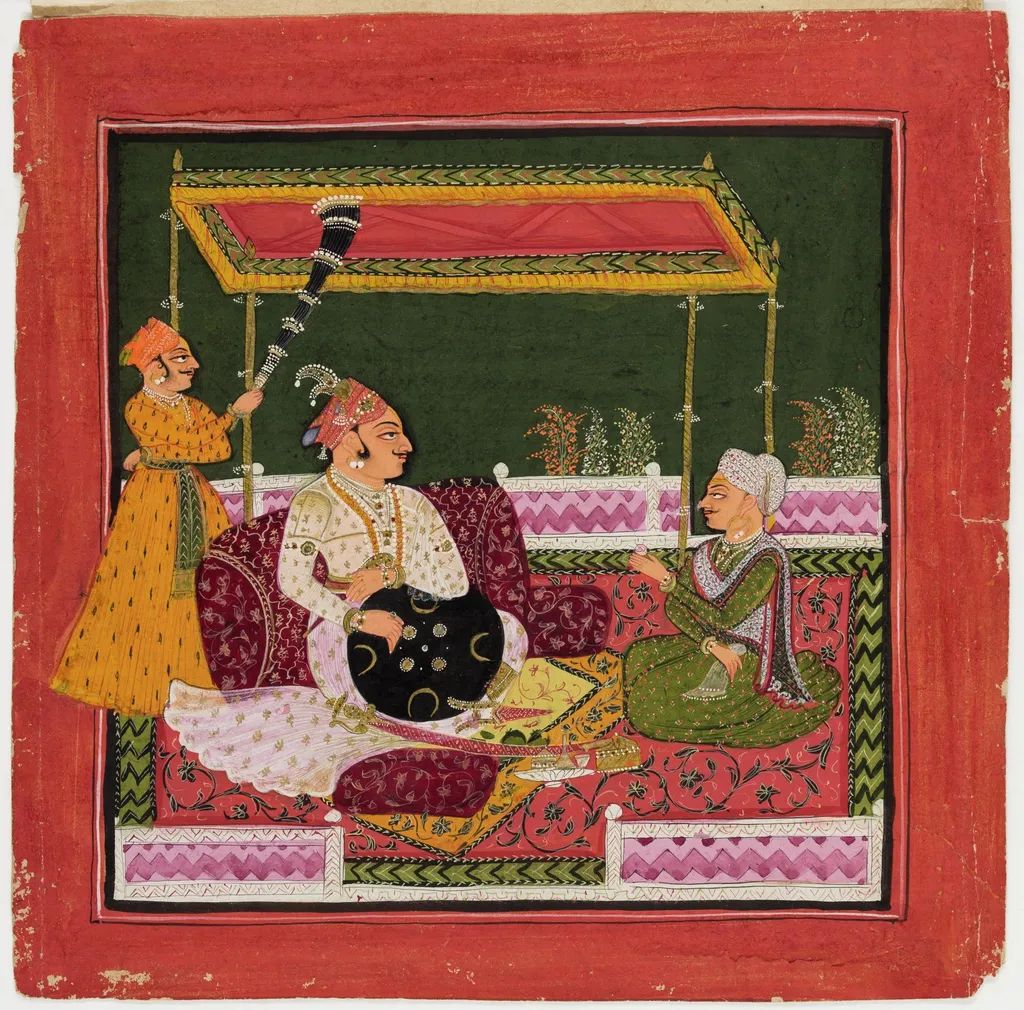
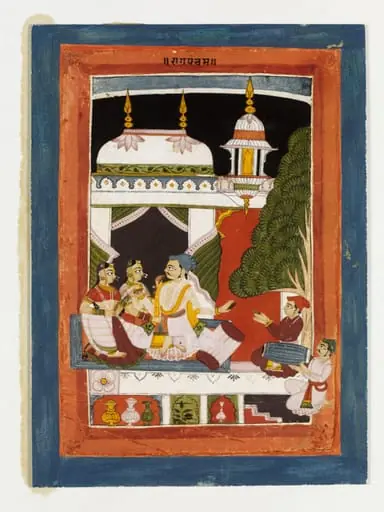
Raja and Courtiers Seated Beneath a Canopy is an unspecified painting by the Mughal Painting artist Unknown. It dates from 1700 and is held in the collection of the Detroit Institute of Arts. This painting portrays a nobleman seated with attendants beneath an ornate canopy, capturing a moment of courtly repose.
About this work
Overview
Rich textiles, vivid colors, and detailed patterning emphasize luxury and ritualized space, typical of regional courtly portraiture in early modern India.
This painting portrays a nobleman seated with attendants beneath an ornate canopy, capturing a moment of courtly repose. The composition centers on a figure of elevated status, surrounded by figures in distinct poses and attire, suggesting a hierarchical social structure. Rich textiles, vivid colors, and detailed patterning emphasize luxury and ritualized space, typical of regional courtly portraiture in early modern India.
Subject & Meaning
The central man, dressed in white with gold embroidery and a red turban, likely represents a ruler or high-ranking noble. The black object in his lap may be a ceremonial item or weapon, signaling authority. The standing attendant holds a long pole with a black tip, possibly a standard or fly-whisk, indicating service. The seated woman, in green with a head covering, may be a consort or noblewoman, reinforcing the scene’s domestic yet ceremonial character.
Technique & Style
The painting employs fine brushwork to render intricate textile patterns and metallic accents, characteristic of Pahari or Rajasthani miniature traditions. Flat, decorative backgrounds and stylized proportions prioritize symbolic presence over naturalism. The canopy’s gold and red motifs frame the figures, directing focus to their status. Color contrasts—white, green, orange, and gold—enhance visual hierarchy without depth perspective.
History & Provenance
The work likely originated in a north Indian royal court during the 17th or 18th century, possibly from the Punjab Hills or Rajasthan region. Such paintings were commissioned to document court life, reinforce lineage, or commemorate events. Its survival suggests preservation within a royal collection, later entering institutional or private hands through colonial-era acquisitions or family inheritance.
Context
This image reflects the visual culture of Indian courts where rulers were depicted in intimate yet formal settings, blending personal and political identity. Canopies symbolized sovereignty, while attendants’ roles were visually coded. Similar compositions appear in Mughal and regional traditions, where clothing, posture, and objects conveyed rank, loyalty, and ritual function within a structured social order.
Legacy
Though not widely known outside specialized collections, this painting contributes to understanding how Indian courts used visual art to encode power and hierarchy. Its stylistic features align with broader trends in pre-colonial Indian painting, offering insight into regional aesthetics and the role of portraiture in sustaining aristocratic identity beyond textual records.
Artist & collection

 Domestic Scene
 Giacomo and Cardinal Marco, investing Andrea, Abbot of San Zeno, with his Benefice
 The Nymph of Fontainebleau
 Portrait of a Woman
 Madonna and Child with Saints in the Enclosed Garden
 Venus and Minerva
 Family Group of Four on Sofa
 Wall painting from Room H of the Villa of P. Fannius Synistor at Boscoreale
 Sri Raga
 King and Queen in Zenana: Sandehi Ragini, Wife of Bhairava, from the “Second Basohli Ragamala"
 Mangala Raga
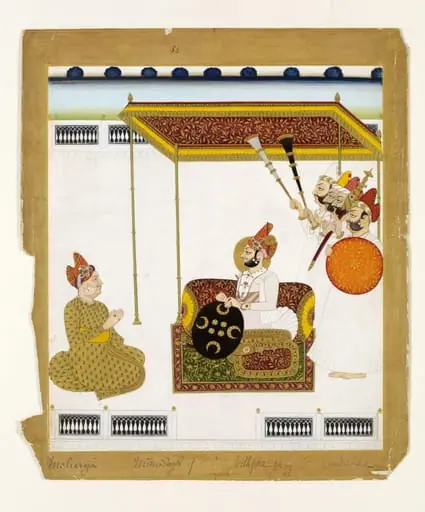 Maharaja Man Singh
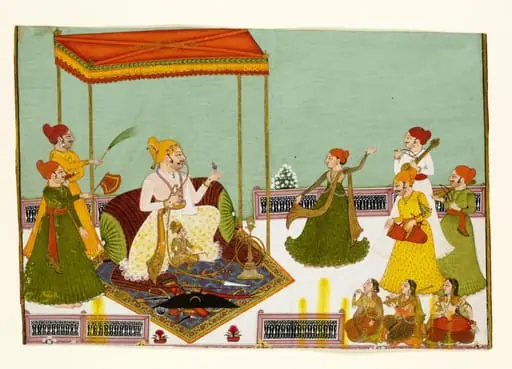 Raja Ajit Singh of Bundi
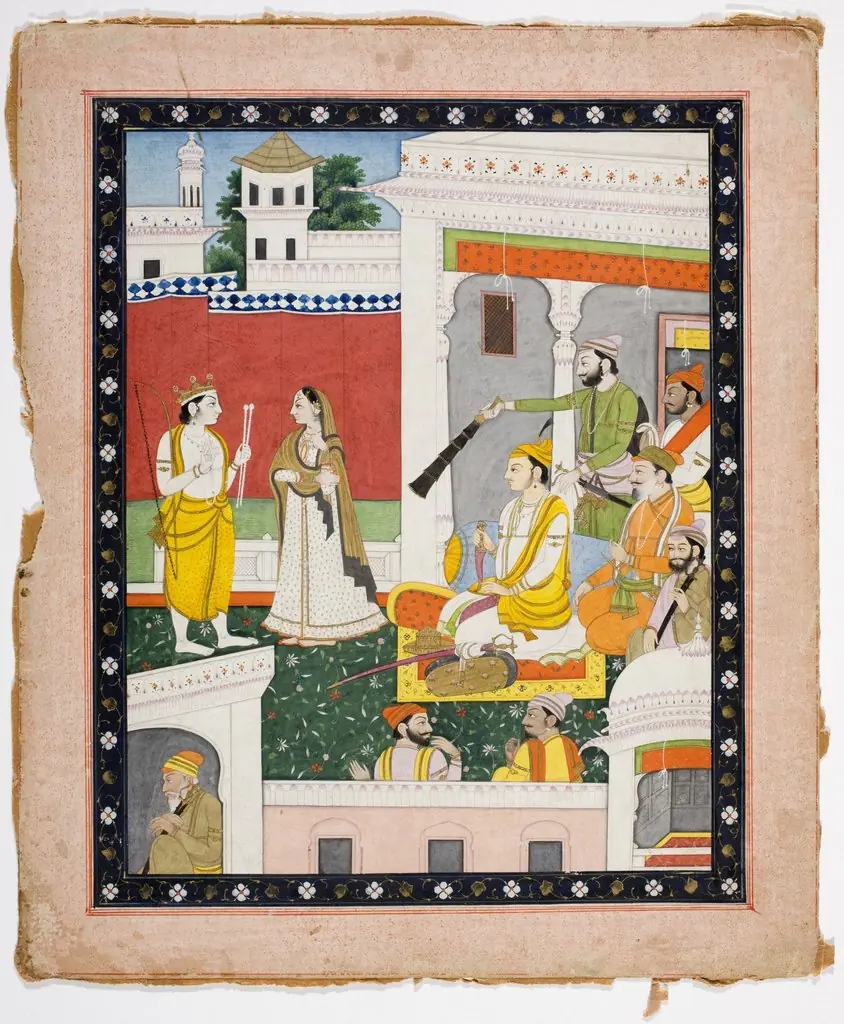 Court Scene with Various Princes and a Lady
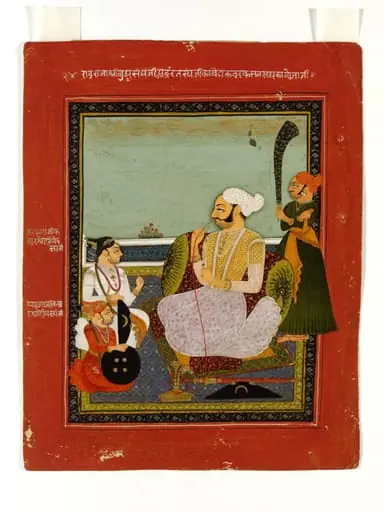 Rao Budh Singh of Bundi
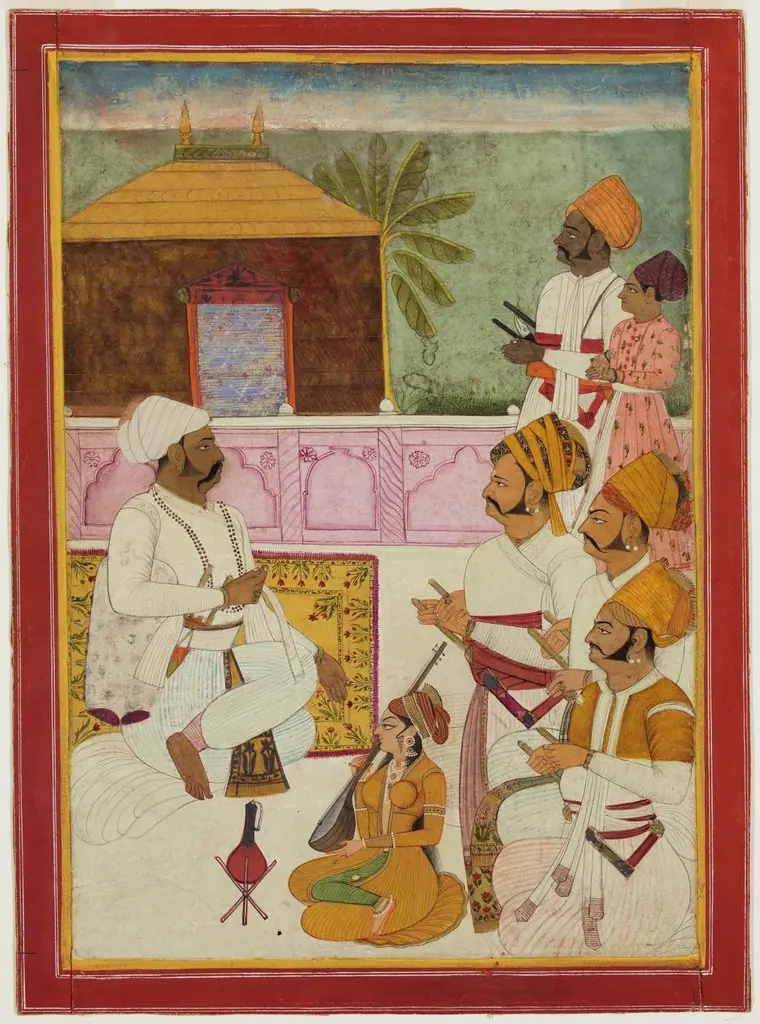 Portrait of Raja with Nobles (probably Raja Jaswant Singh)
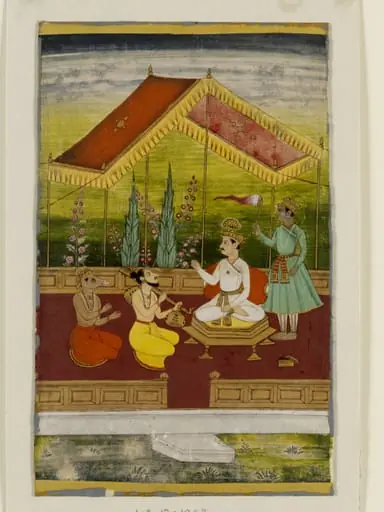 Sri Raga
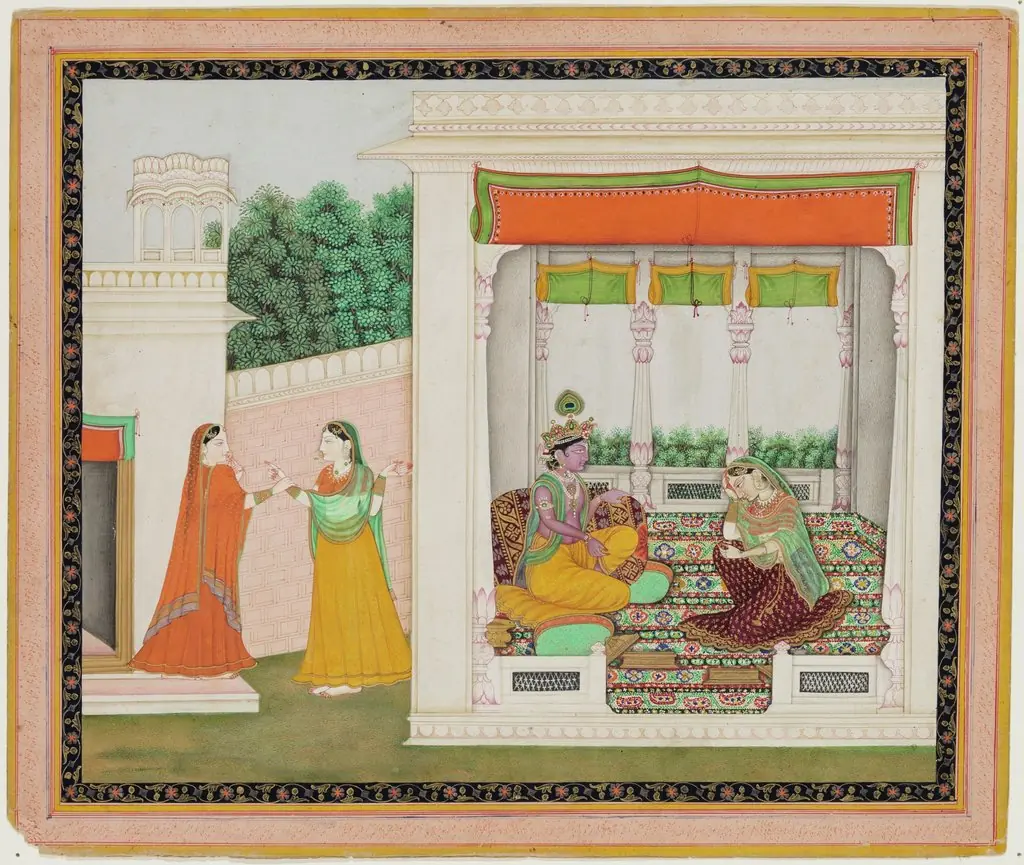 Story of Krishna and Radha
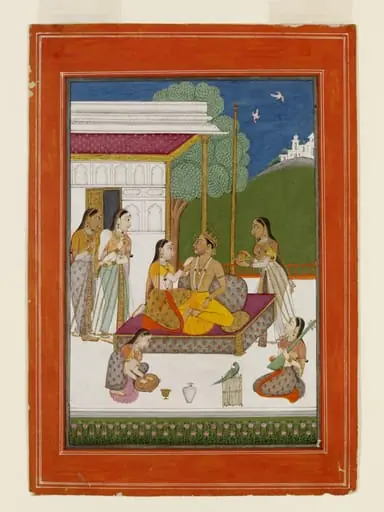 Bhairava Raga
 Pancham Raga