Artwork
Court Scene with Various Princes and a Lady
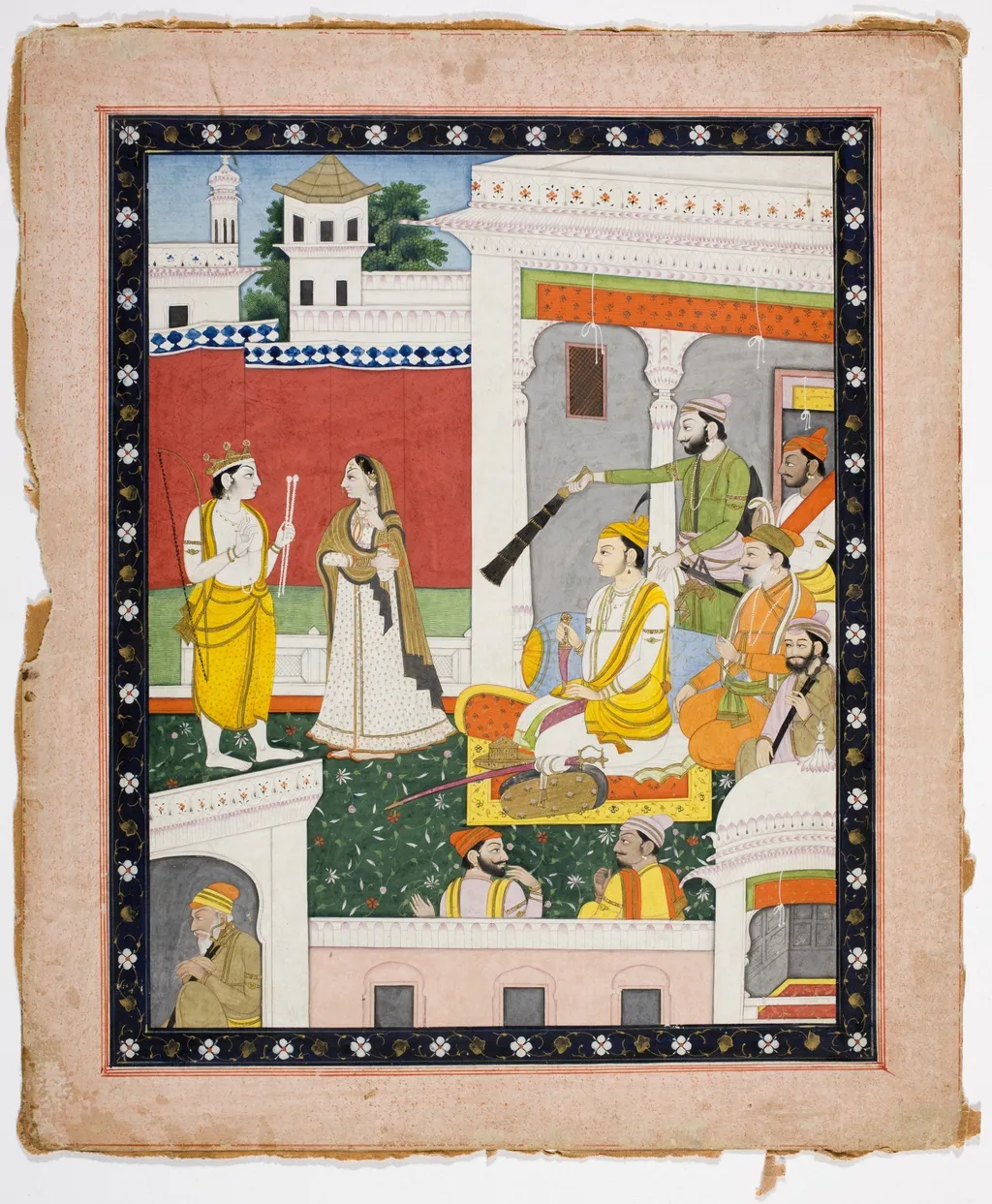
Court Scene with Various Princes and a Lady is an unspecified painting by Unknown. It dates from 1820 and is held in the collection of the Detroit Institute of Arts.
About this work
Overview
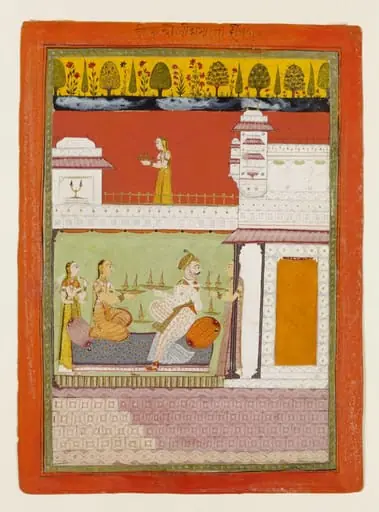
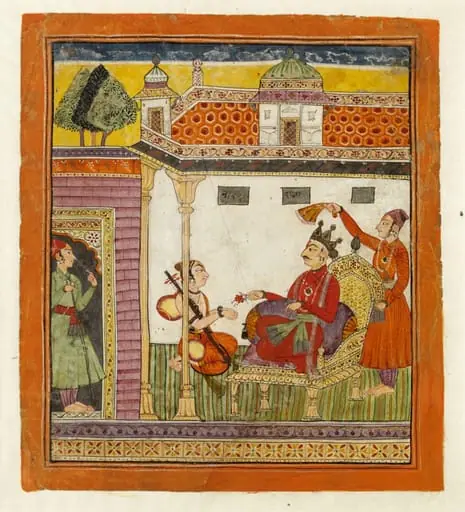
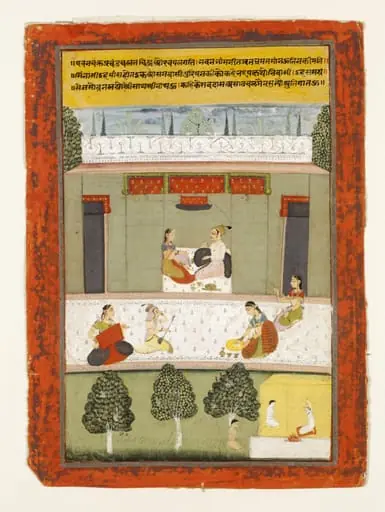
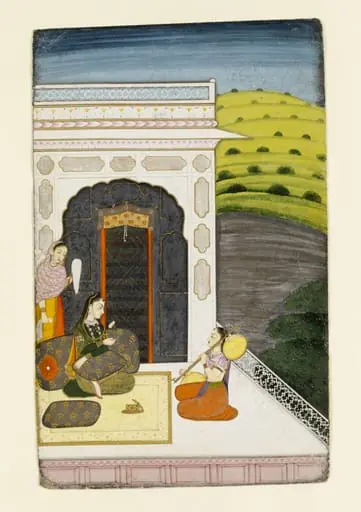
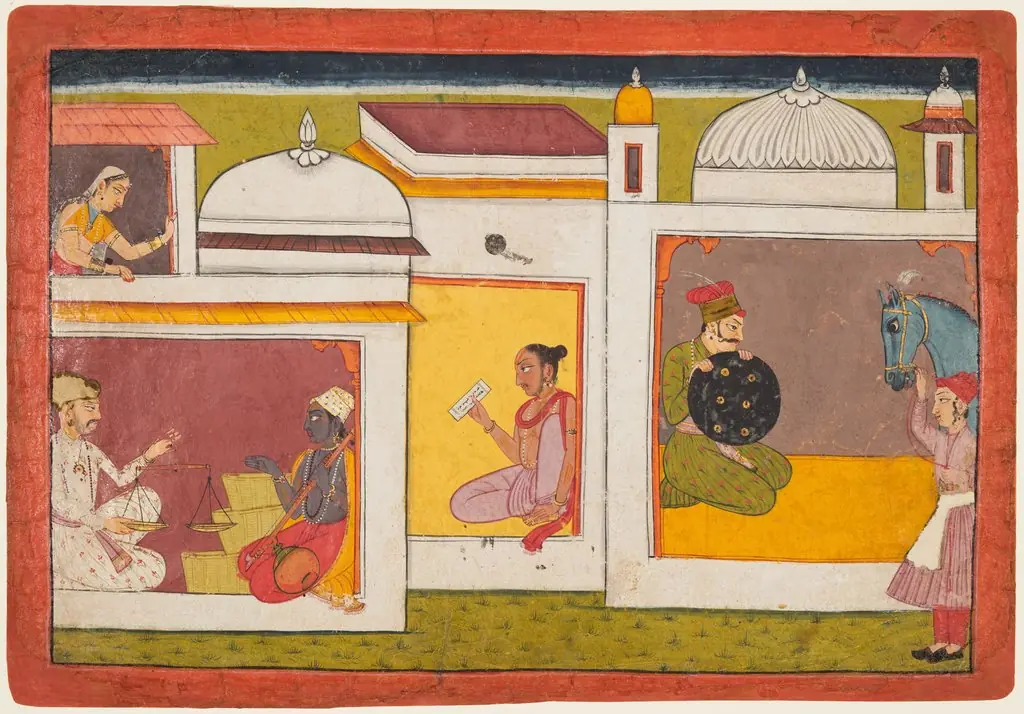
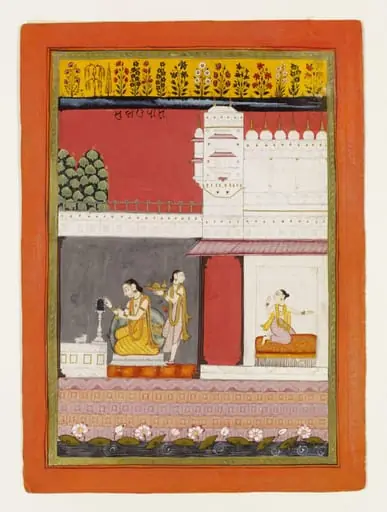
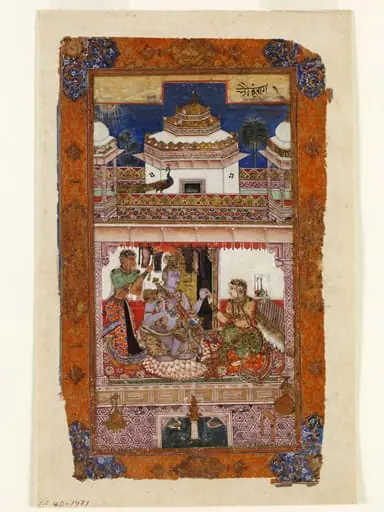
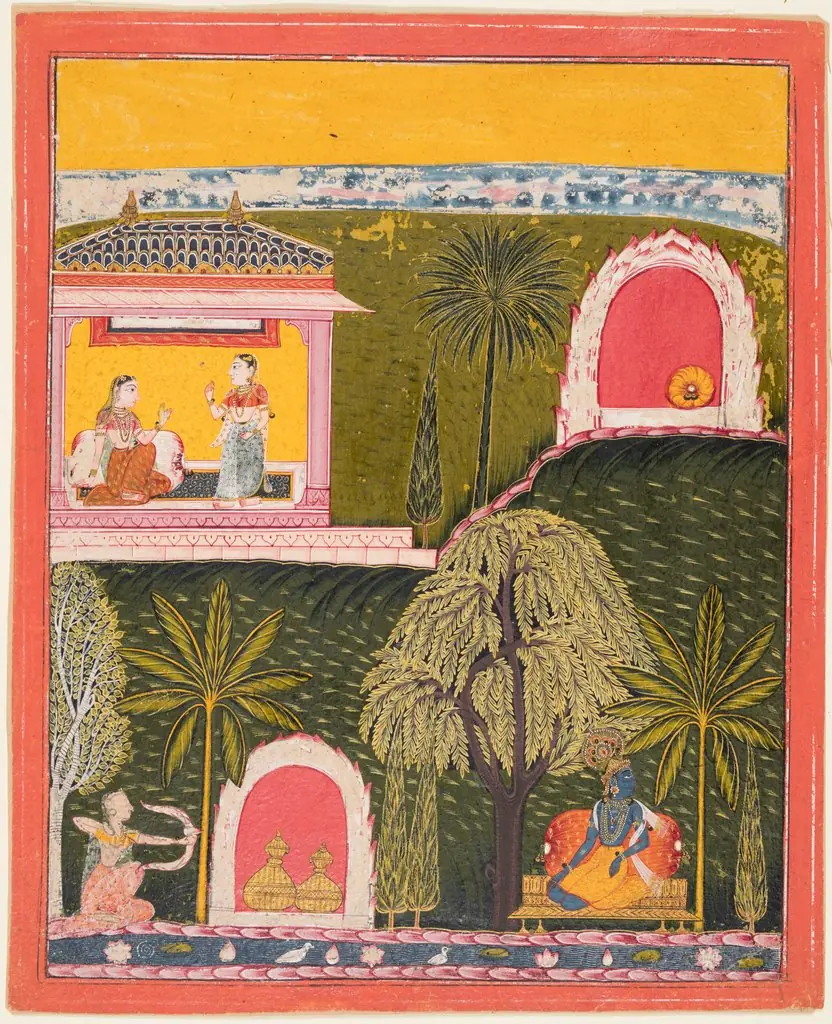
This painting captures a formal courtly gathering, likely from a North Indian princely state, rendered in the detailed tradition of miniature painting.
This painting captures a formal courtly gathering, likely from a North Indian princely state, rendered in the detailed tradition of miniature painting. Figures are arranged around a central female figure in a walled courtyard, with architectural elements suggesting a royal complex. The composition emphasizes hierarchy and ritual, with attention to costume, posture, and spatial depth despite the small scale.
Subject & Meaning
The central lady, distinguished by her white dress and brown shawl, appears to hold a position of significance, possibly a royal consort or noblewoman. Surrounding princes, dressed in ornate turbans and robes, engage in symbolic acts—holding a sword and playing a musical instrument—indicating roles in governance and culture. The scene conveys courtly order, where authority and refinement are visually balanced.
Technique & Style
Executed in the miniature painting style, the work employs fine brushwork, layered pigments, and meticulous detail in textiles and architecture. Vibrant hues—deep reds, rich blues, and gold accents—are applied with precision, typical of regional ateliers. The background’s sky and distant tower are rendered with delicate gradations, enhancing spatial illusion within a compact format.
History & Provenance
Though the specific origin and artist remain undocumented, the painting’s style aligns with 18th- to early 19th-century Rajput or Mughal-derived courts. Similar compositions appear in collections from Rajasthan and the Punjab Hills, often commissioned to record ceremonial moments. Its survival suggests it was preserved within a royal lineage or collected by colonial-era patrons.
Context
Court scenes like this were common in Indian painting as records of power, lineage, and cultural performance. Music and weaponry in the imagery reflect ideals of noble conduct—patronage of the arts and martial readiness. The enclosed courtyard setting mirrors real palace spaces where such gatherings occurred, reinforcing the painting’s function as both documentation and assertion of status.
Legacy
This work contributes to the broader corpus of Indian miniature painting that preserved courtly life beyond textual records. Its survival offers insight into gender roles, dress, and ritual in regional courts. While not widely exhibited, it remains a valuable reference for scholars studying visual culture and aristocratic representation in pre-colonial India.
Artist & collection

 Domestic Scene
 Giacomo and Cardinal Marco, investing Andrea, Abbot of San Zeno, with his Benefice
 The Nymph of Fontainebleau
 Portrait of a Woman
 Madonna and Child with Saints in the Enclosed Garden
 Venus and Minerva
 Family Group of Four on Sofa
 Wall painting from Room H of the Villa of P. Fannius Synistor at Boscoreale