Artwork
Scenes from the Passion of Christ
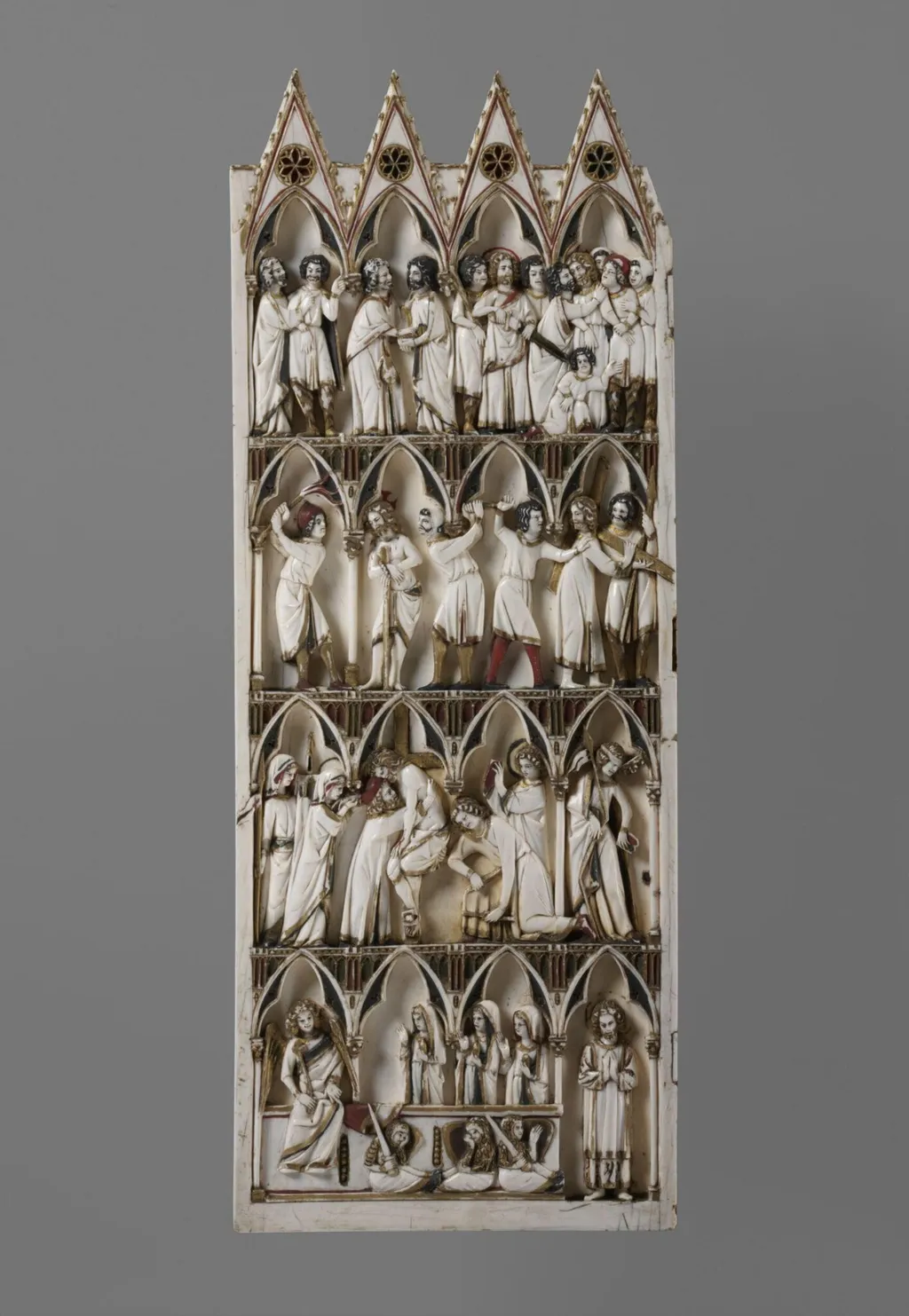
Scenes from the Passion of Christ is a work on paper by Unknown. It dates from 1250 and is held in the collection of the Victoria and Albert Museum. This ivory diptych leaf, created in northern France around 1240–1260, is part of a small devotional pair once used for private prayer.
About this work
Overview
Crafted from elephant ivory, it exemplifies the refined relief carving that flourished in Parisian workshops during the mid-thirteenth century.
This ivory diptych leaf, created in northern France around 1240–1260, is part of a small devotional pair once used for private prayer. Crafted from elephant ivory, it exemplifies the refined relief carving that flourished in Parisian workshops during the mid-thirteenth century. Its delicate detail and compact scale reflect its function as a personal object of contemplation, likely owned by someone of means who commissioned bespoke imagery.
Subject & Meaning
The panel depicts Christ on the cross, his body rendered with subtle realism, blood tracing fine lines down his limbs. Above, angels hover in silent reverence; below, a tightly packed crowd of onlookers—some grieving, others observing—fills the lower register. The composition invites the viewer into the moment of crucifixion not as spectacle but as intimate sacred event, reinforcing the devotional purpose of the object.
Technique & Style
Carved in low relief with exceptional precision, the figures are arranged in overlapping planes to suggest depth within a confined space. Gold leaf applied behind Christ creates a luminous halo, enhancing his spiritual presence against the darker ivory. The artist used fine incisions to define garments and facial expressions, achieving emotional nuance despite the tiny scale, a hallmark of high Gothic ivory work.
History & Provenance
Known as the 'Salting Leaf' after a former owner, this fragment once belonged to a larger diptych, now lost. It emerged in the 19th century among European collections and entered the Victoria and Albert Museum’s holdings in the early 20th century. Its survival is rare; most such objects were lost to time, dismantled, or destroyed, making this a significant surviving example of mid-13th-century private devotion.
Context
In the decades around 1250, Paris became the leading center for ivory carving in Europe, producing small devotional objects for wealthy patrons. These works responded to a growing demand for personal religious imagery, paralleling trends in manuscript illumination and panel painting. Ivory, prized for its smooth texture and durability, was often reserved for sacred subjects, continuing a tradition rooted in late antiquity and Byzantium.
Legacy
This diptych leaf stands as a testament to the sophistication of medieval ivory carving at its peak. Though such objects were once common, few survive intact. Its meticulous craftsmanship and emotional restraint influenced later Gothic devotional art, and it remains a key reference for understanding how private faith was visually articulated in the 13th century.
Artist & collection

 Domestic Scene
 Giacomo and Cardinal Marco, investing Andrea, Abbot of San Zeno, with his Benefice
 The Nymph of Fontainebleau
 Portrait of a Woman
 Madonna and Child with Saints in the Enclosed Garden
 Venus and Minerva
 Family Group of Four on Sofa
 Wall painting from Room H of the Villa of P. Fannius Synistor at Boscoreale
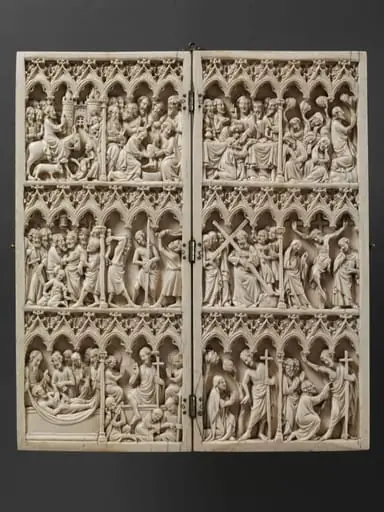 Scenes from the Passion of Christ
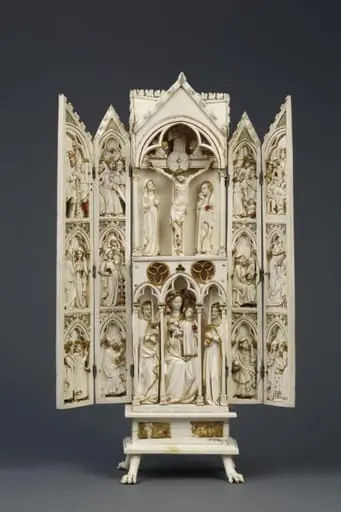 Virgin and Child, the Crucifixion and Scenes from the Life of Christ
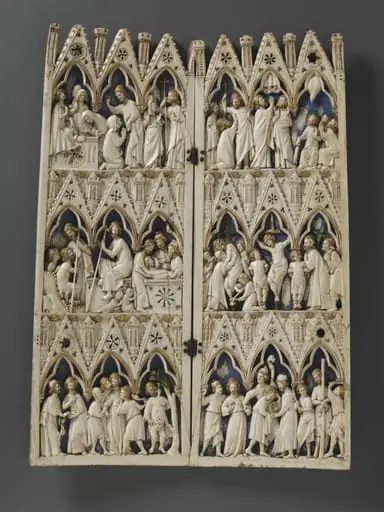 The Soissons Diptych
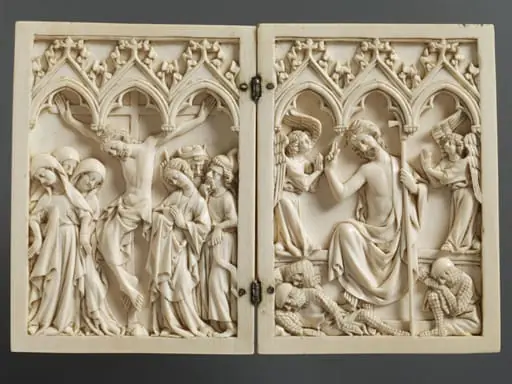 Diptych
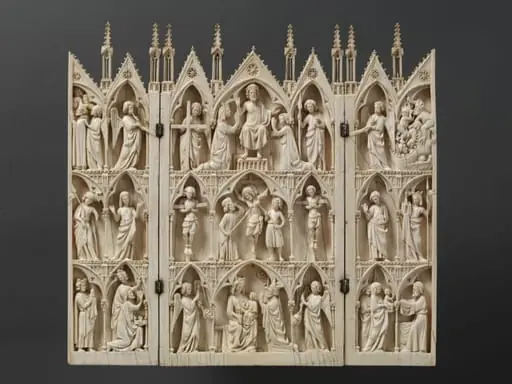 The Virgin and Child, the Crucifixion and the Last Judgement
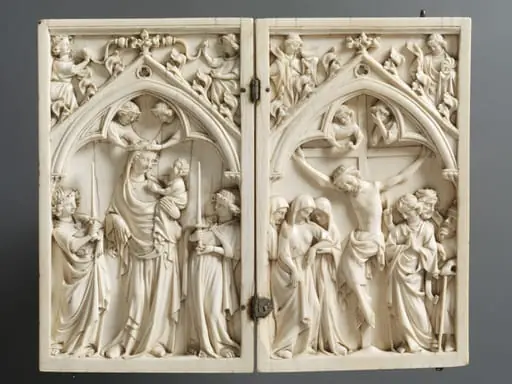 The Virgin and Child and the Crucifixion
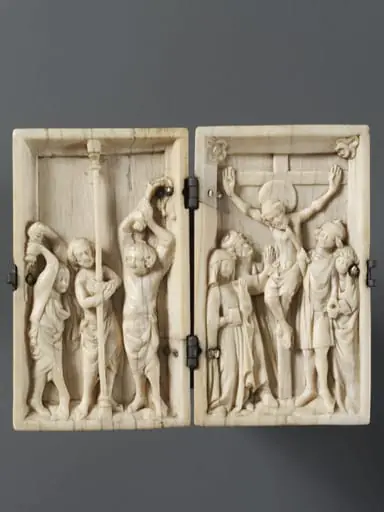 Scourging of Christ and the Crucifixion
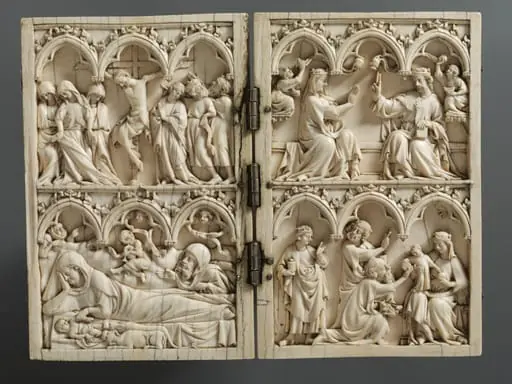 The Nativity, the Adoration of the Magi, the Crucifixion and the Coronation of the Virgin
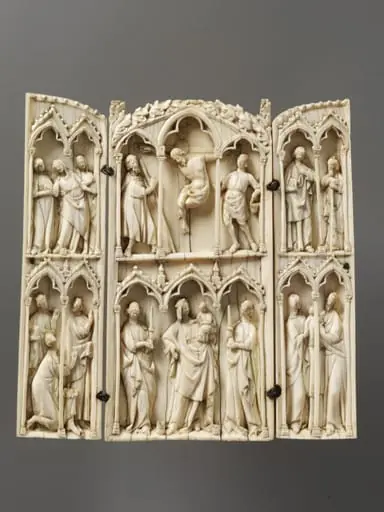 The Crucifixion, the Virgin and Child and Scenes from the Life of Christ
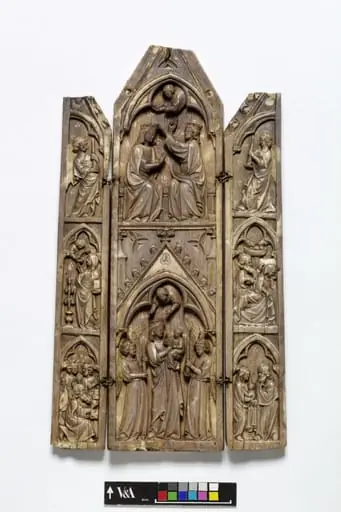 Virgin and Child, the Coronation of the Virgin and scenes from the Nativity
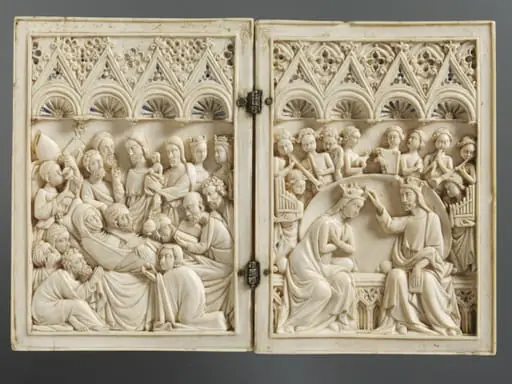 Death and the Coronation of the Virgin
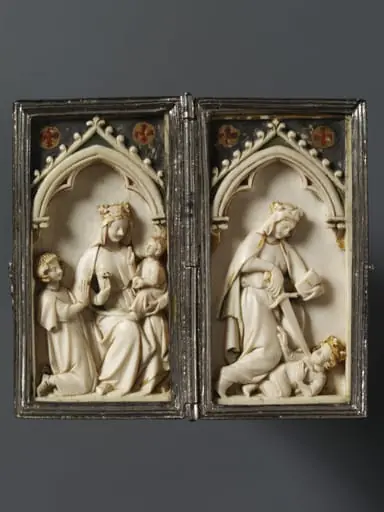 The Virgin and Child and St Catherine with the Emperor Maxentius