Artwork
Virgin and Child, the Crucifixion and Scenes from the Life of Christ
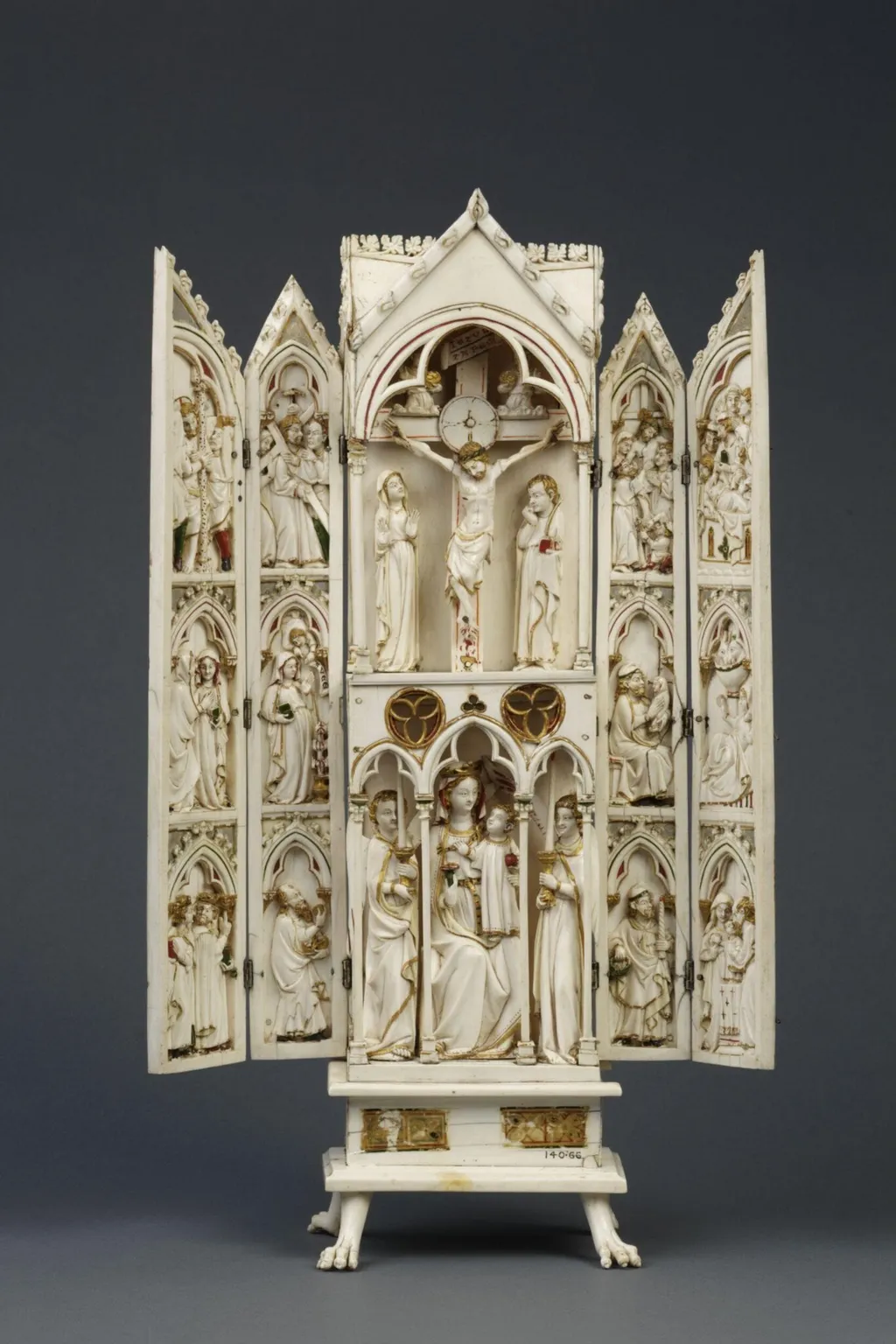
Virgin and Child, the Crucifixion and Scenes from the Life of Christ is a work on paper by Unknown. It dates from 1310 and is held in the collection of the Victoria and Albert Museum.
About this work
Overview
Its portability made it suitable for private prayer, and this piece reflects the high level of craftsmanship associated with French workshops of the period.
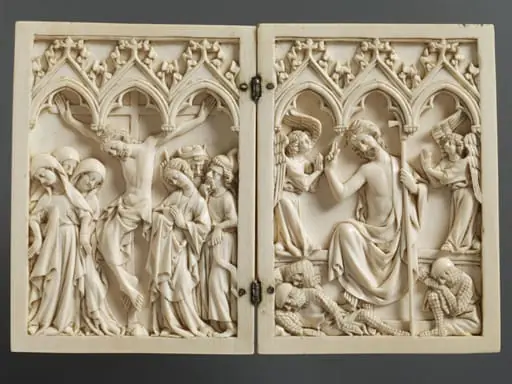
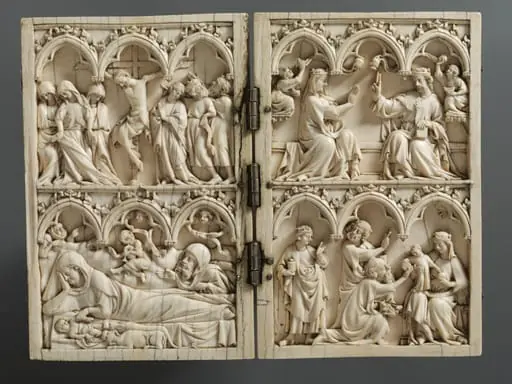
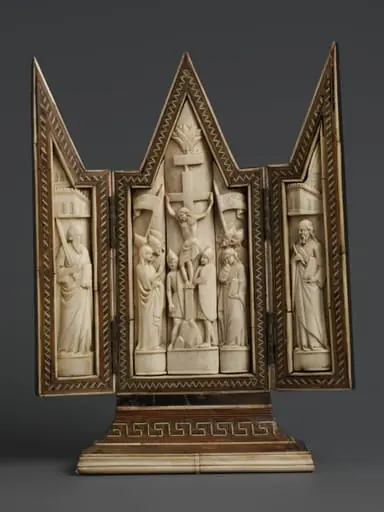
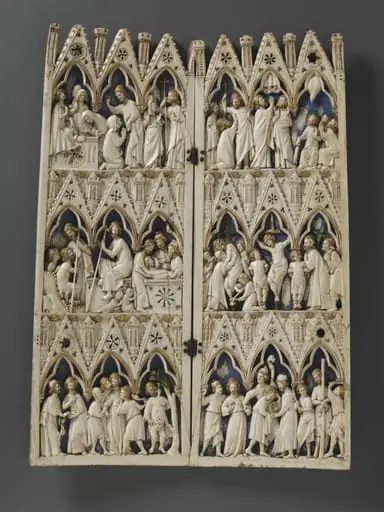
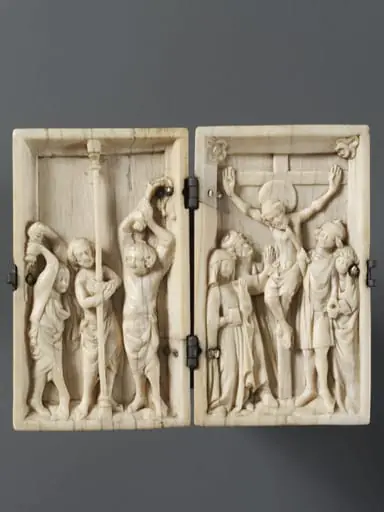
This polyptych, crafted in France between 1320 and 1330, consists of multiple carved ivory panels depicting the Virgin and Child, the Crucifixion, and episodes from Christ’s life. Ivory, prized for its fine grain and luminous surface, was a favored medium for intimate devotional objects in medieval Europe. Its portability made it suitable for private prayer, and this piece reflects the high level of craftsmanship associated with French workshops of the period.
Subject & Meaning
The panels present key moments from Christian salvation history, centered on the Virgin and Child as intercessors and the Crucifixion as the redemptive act. Scenes from Christ’s life, likely including the Nativity, Passion, and Resurrection, were arranged to guide contemplation. Such compositions served as visual prayers, reinforcing theological narratives for lay devotees who engaged with the object in personal worship rather than public liturgy.
Technique & Style
The figures are rendered in low relief with delicate incisions defining drapery and facial features, showcasing the precision possible with ivory. The composition follows French Gothic conventions, with elongated forms and rhythmic linearity, though subtle local variations suggest possible Italian influence. The material’s natural whiteness enhanced the sacred aura, while metal mounts or paint may have once added color and richness, now largely lost.
History & Provenance
Produced in a Parisian workshop during the height of ivory production in northern France, the polyptych likely traveled to Italy, where demand for French-style devotional objects remained strong. Venice, a hub for such imports, may have been its destination or later residence. Its survival is rare; most small ivory works were lost to time, reuse, or damage, making this a significant example of early 14th-century portable piety.
Context
In the 13th and 14th centuries, ivory carving flourished as urban centers grew and private devotion expanded beyond monastic circles. Paris led production, but Italian cities like Venice adapted French models to local tastes. This polyptych reflects a transnational artistic exchange, where craftsmen trained in one region carried stylistic conventions across borders, blending them with regional sensibilities to meet the spiritual needs of a mobile elite.
Legacy
Though ivory carving declined after the 14th century due to changing tastes and material scarcity, this polyptych exemplifies the technical and devotional ideals of its time. Surviving examples like it inform modern understanding of medieval private worship and the role of material culture in shaping religious experience. Its preservation offers insight into how sacred narratives were made tangible through minute, hand-carved detail.
Artist & collection

 Domestic Scene
 Giacomo and Cardinal Marco, investing Andrea, Abbot of San Zeno, with his Benefice
 The Nymph of Fontainebleau
 Portrait of a Woman
 Madonna and Child with Saints in the Enclosed Garden
 Venus and Minerva
 Family Group of Four on Sofa
 Wall painting from Room H of the Villa of P. Fannius Synistor at Boscoreale
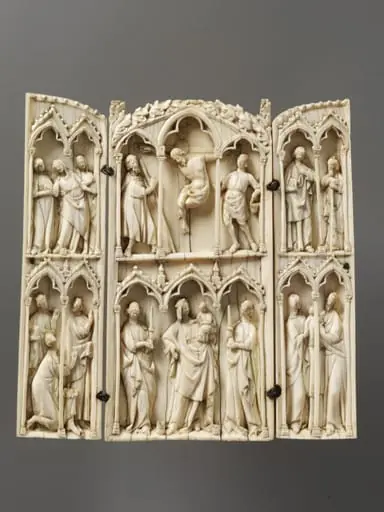 The Crucifixion, the Virgin and Child and Scenes from the Life of Christ
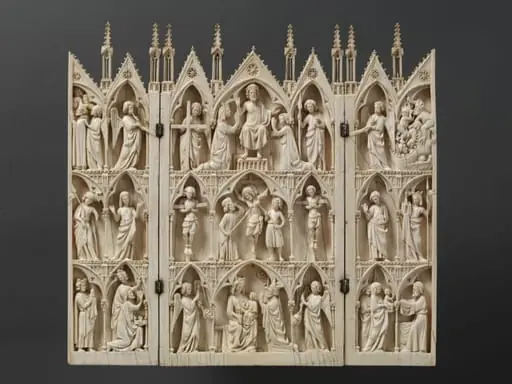 The Virgin and Child, the Crucifixion and the Last Judgement
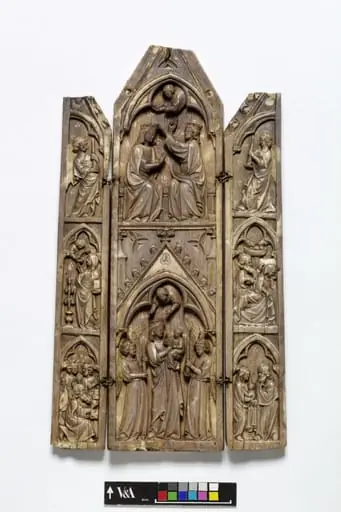 Virgin and Child, the Coronation of the Virgin and scenes from the Nativity
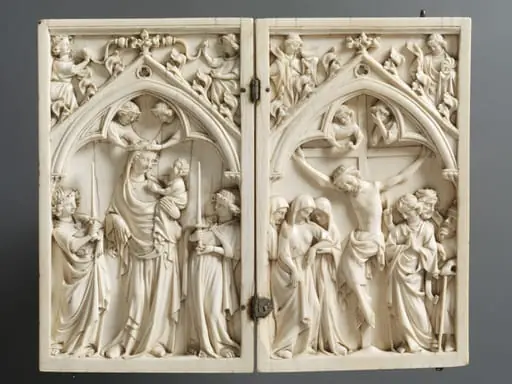 The Virgin and Child and the Crucifixion
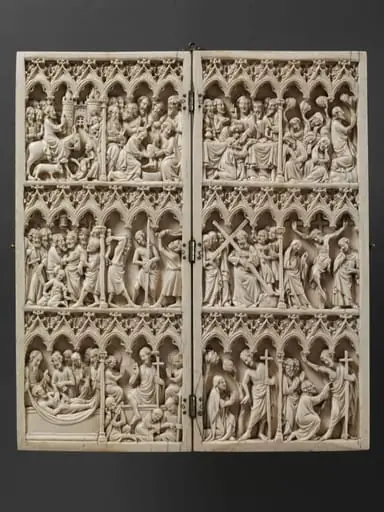 Scenes from the Passion of Christ
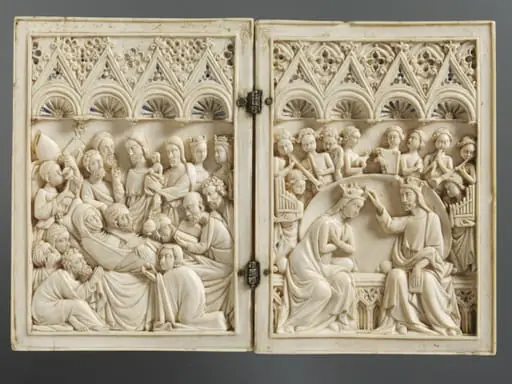 Death and the Coronation of the Virgin
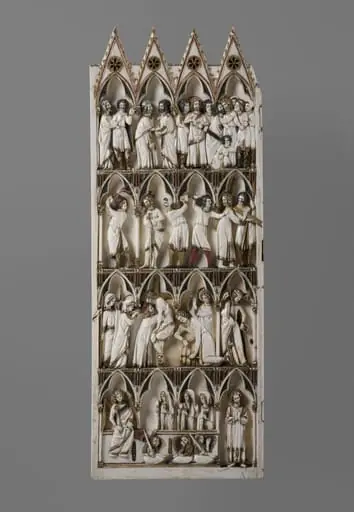 Scenes from the Passion of Christ
 Diptych
 The Nativity, the Adoration of the Magi, the Crucifixion and the Coronation of the Virgin
 The Crucifixion
 The Soissons Diptych
 Scourging of Christ and the Crucifixion