Artwork
Shah Alam II
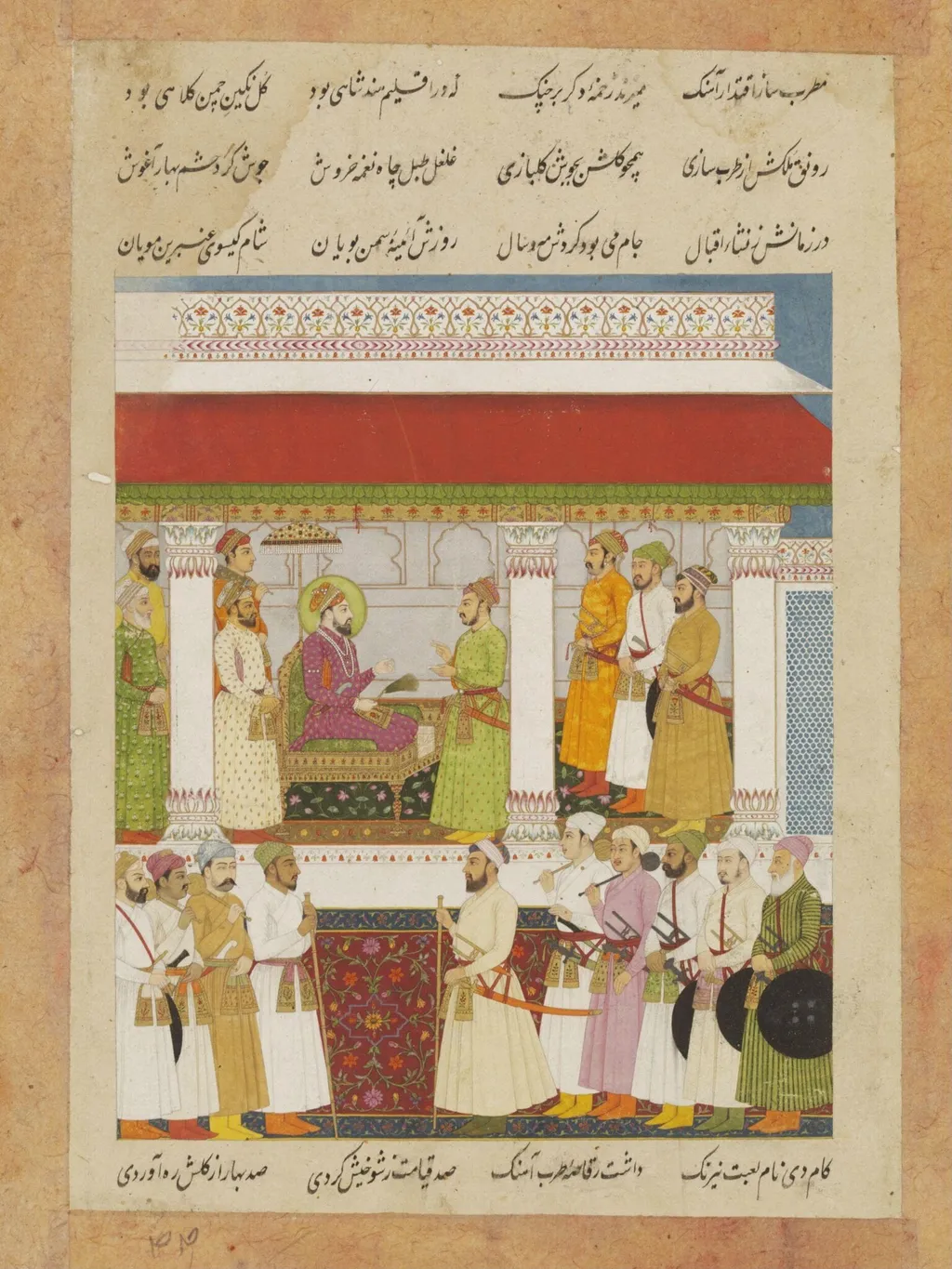
Shah Alam II is a paint painting by the Mughal Painting artist Unknown. It dates from 1770 and is held in the collection of the Victoria and Albert Museum.
About this work
Overview
The work depicts the Mughal ruler Shah Alam II, who reigned from 1759 to 1806, seated upon an opulent golden throne. A small parasol hovers above his head, and a faint halo encircles his crown, both conventional signs of sovereign authority. Around him stand ministers, courtiers, and three princes, while figures lower in the composition appear outside the pavilion, suggesting a subordinate rank.
Subject & Meaning
The arrangement of figures conveys the rigid hierarchy of the Mughal court: the emperor occupies the central, elevated position; his closest advisors and royal offspring are placed nearby; and lesser visitors are positioned at a lower level, visually reinforcing their reduced status within the imperial order.
Technique & Style
Executed in a painted medium, the composition employs rich detailing of architectural elements, including marble inlay and elaborate carpet patterns that cover the floor. The use of light and shadow creates a subtle chiaroscuro effect, modelling the forms and emphasizing the three‑dimensionality of the throne and surrounding figures.
Context
The painting reflects late‑Mughal visual conventions that emphasized regal symbolism—such as the parasol, halo, and sumptuous surroundings—to legitimize imperial power during a period of political decline. Such courtly depictions were common in official art intended for diplomatic or ceremonial purposes.
Artist & collection

 Domestic Scene
 Giacomo and Cardinal Marco, investing Andrea, Abbot of San Zeno, with his Benefice
 The Nymph of Fontainebleau
 Portrait of a Woman
 Madonna and Child with Saints in the Enclosed Garden
 Venus and Minerva
 Family Group of Four on Sofa
 Wall painting from Room H of the Villa of P. Fannius Synistor at Boscoreale
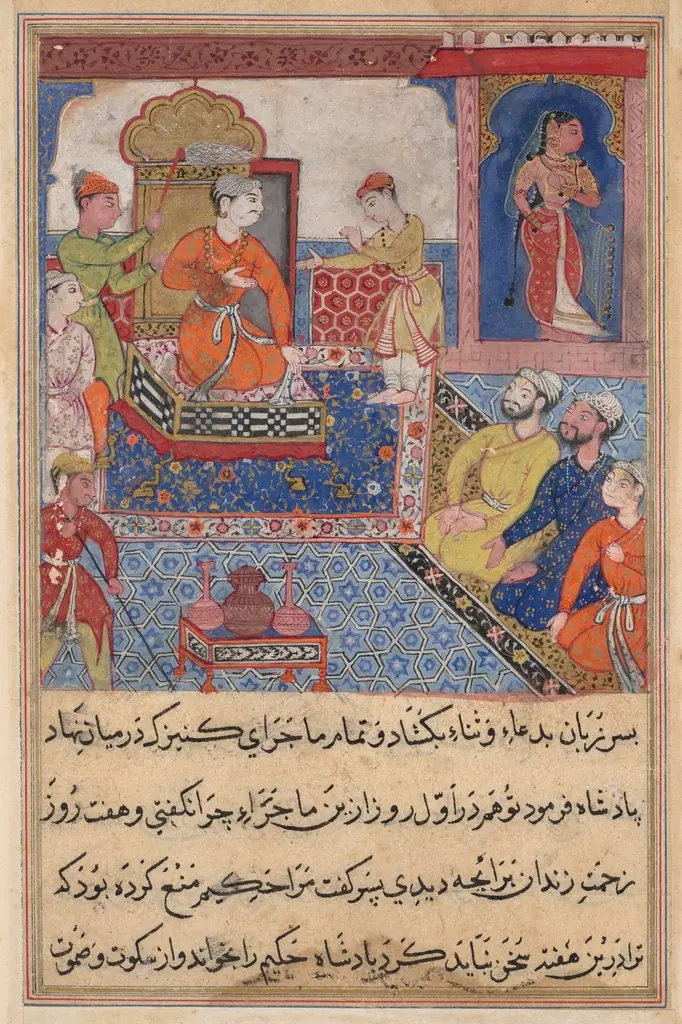 Page from Tales of a Parrot (Tuti-nama): text page
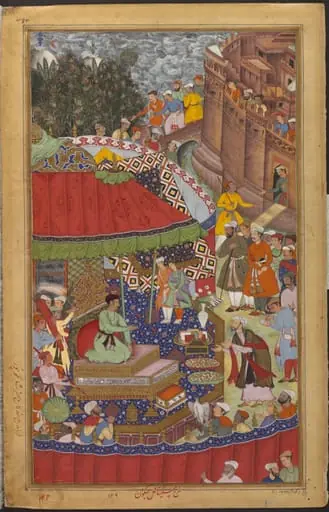 Akbar and Asaf Khan
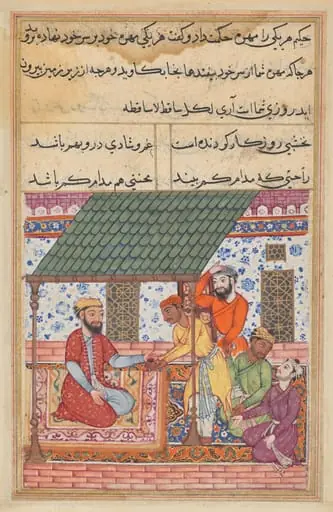 The four destitute friends go to a wise man who gives each one of them a magic shell to be placed on top of the turban, from a Tuti-nama (Tales of a Parrot): Forty-seventh Night
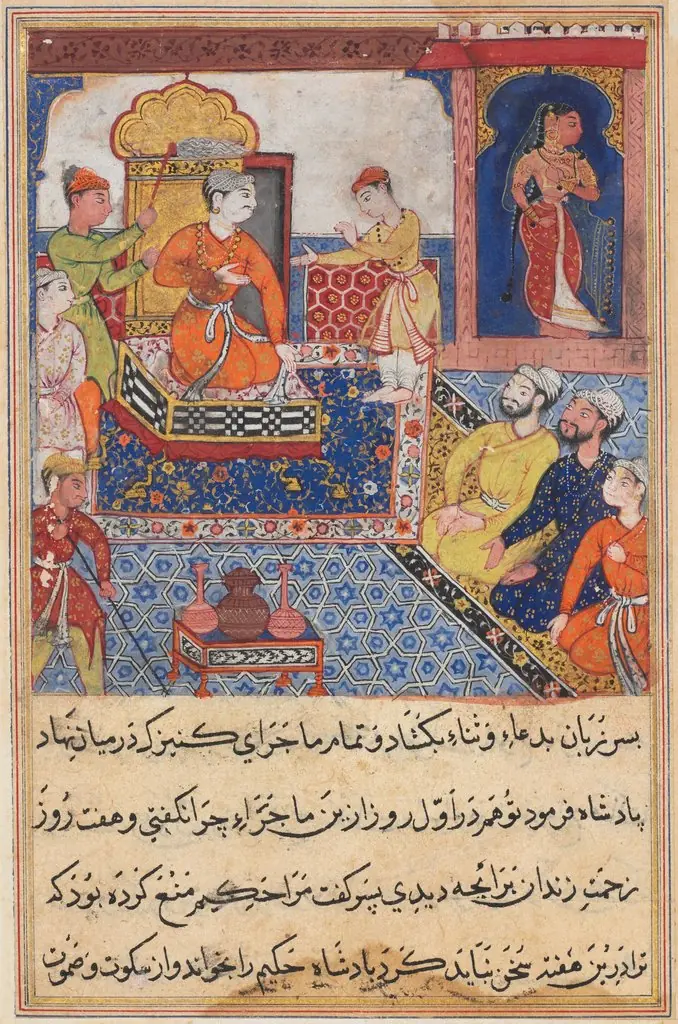 The young prince recounts his experiences to his father, the king, from a Tuti-nama (Tales of a Parrot): Eighth Night
 The young prince recounts his experiences to his father, the king, from a Tuti-nama (Tales of a Parrot): Eighth Night
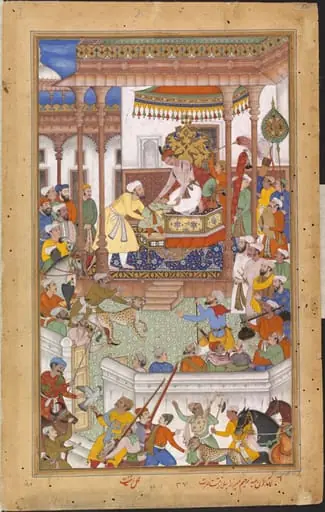 Akbar and Abdu'r Rahim
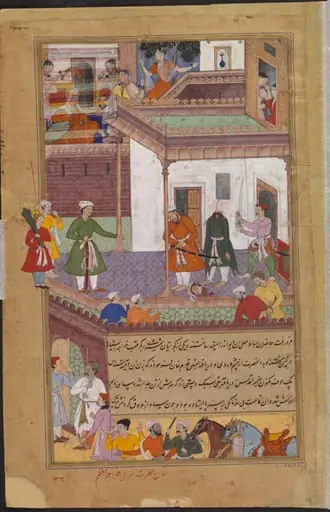 Qadam Khan