Artwork
The four destitute friends go to a wise man who gives each one of them a magic shell to be placed on top of the turban, from a Tuti-nama (Tales of a Parrot): Forty-seventh Night
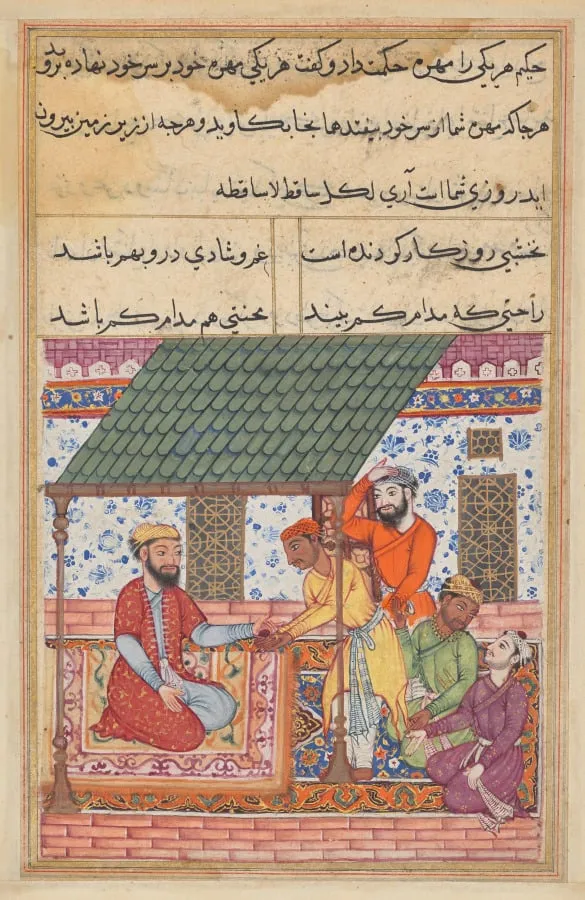
The four destitute friends go to a wise man who gives each one of them a magic shell to be placed on top of the turban, from a Tuti-nama (Tales of a Parrot): Forty-seventh Night is an unspecified painting by the Mughal Painting artist Unknown. It dates from 1560 and is held in the collection of the Cleveland Museum of Art. The painting illustrates a scene from the Tuti‑nama, a collection of parrot‑told tales.
About this work
This painting comes from a book of stories told by a parrot to keep a queen from leaving her palace at night.
Four men in tattered clothes kneel before a wise man under a tree. The wise man hands each a small red shell. A servant waits behind him.
This painting comes from a book of stories told by a parrot to keep a queen from leaving her palace at night. The shells are magic—where they fall, treasure waits. The artist shows every wrinkle in the men’s robes and every leaf on the tree, even though the scene is tiny.
To see more paintings like this, look up Mughal India, court of Akbar (reigned 1556–1605).
Overview
The painting illustrates a scene from the Tuti‑nama, a collection of parrot‑told tales. A seated sage beneath a tree distributes small red shells to four impoverished men kneeling before him, while a servant stands nearby. The narrative promises that wherever a shell lands, a hidden sustenance will be uncovered.
Subject & Meaning
The work visualises a moral episode in which the wise figure offers each destitute companion a magical shell, instructing them to wander until the shells fall. The story suggests that perseverance and faith will lead to material reward, reflecting themes of charity, destiny, and the hidden value in humble journeys.
Technique & Style
Rendered in the meticulous Mughal miniature tradition, the artist attends to minute detail: the texture of the men's ragged garments, the individual veins of each leaf, and the delicate folds of the sage’s turban. The composition employs a compact scale yet achieves a rich visual density through fine brushwork and precise coloration.
Context
The scene belongs to the courtly culture of Akbar’s Mughal empire (1556–1605), where illustrated manuscripts served both entertainment and moral instruction. The Tuti‑nama itself functioned as a night‑time diversion for a queen, embedding ethical lessons within fantastical narratives.
Legacy
As an example of Mughal narrative painting, the work demonstrates the period’s synthesis of Persian artistic conventions with Indian storytelling. Its attention to realism within a miniature format influences later South Asian manuscript illustration and offers insight into the visual strategies used to convey literary allegories.
Artist & collection

 Domestic Scene
 Giacomo and Cardinal Marco, investing Andrea, Abbot of San Zeno, with his Benefice
 The Nymph of Fontainebleau
 Portrait of a Woman
 Madonna and Child with Saints in the Enclosed Garden
 Venus and Minerva
 Family Group of Four on Sofa
 Wall painting from Room H of the Villa of P. Fannius Synistor at Boscoreale
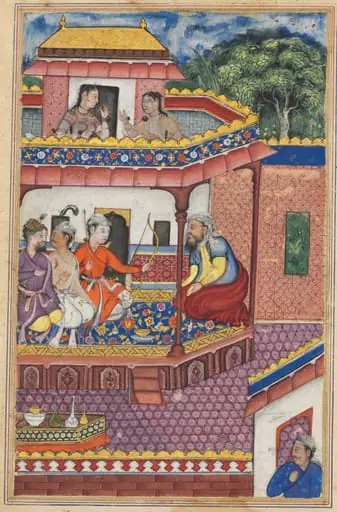 The three young men present themselves as suitors for the hand of Zuhra, the daughter of the merchant of Kabul, from a Tuti-nama (Tales of a Parrot): Thirty-fourth Night
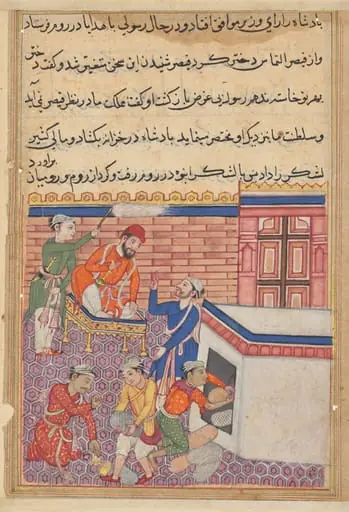 The king’s emissary being provided with gifts for his mission to Rum in order to seek the hand of the emperor’s daughter in marriage, from a Tuti-nama (Tales of a Parrot): Fiftieth Night
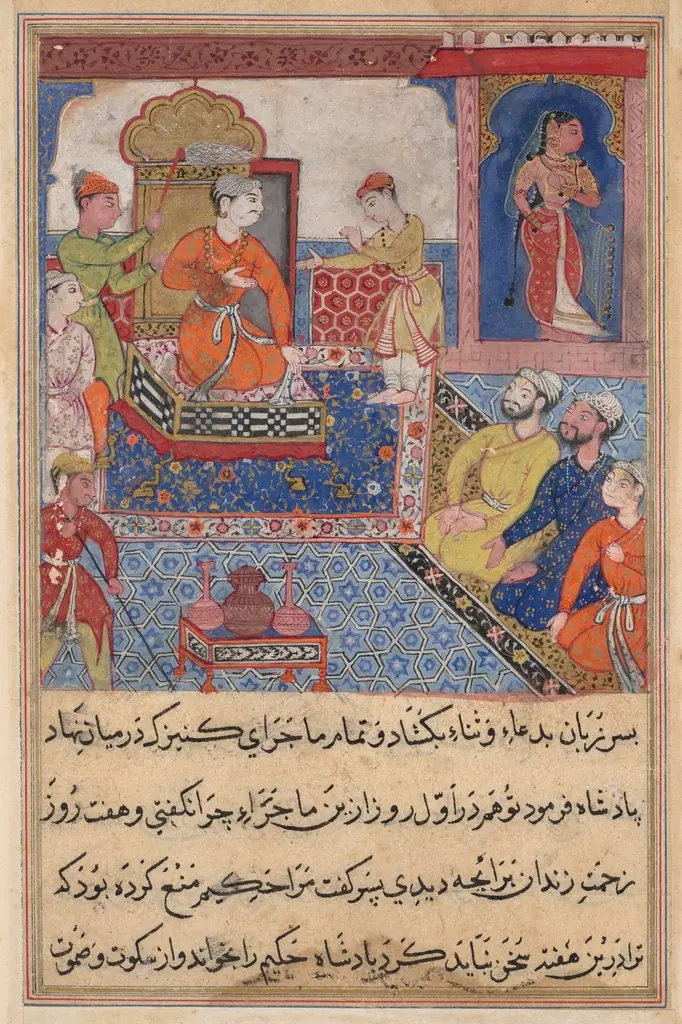 Page from Tales of a Parrot (Tuti-nama): text page
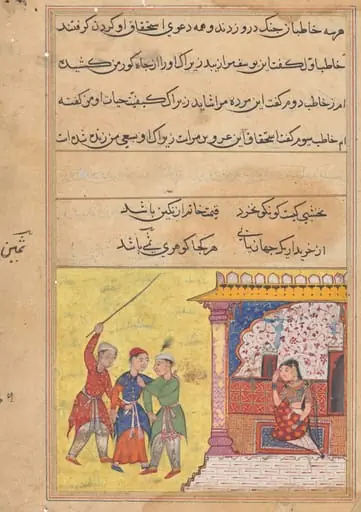 The three suitors again begin to quarrel among themselves for the hand of the devotee’s daughter, from a Tuti-nama (Tales of a Parrot): Twentieth Night
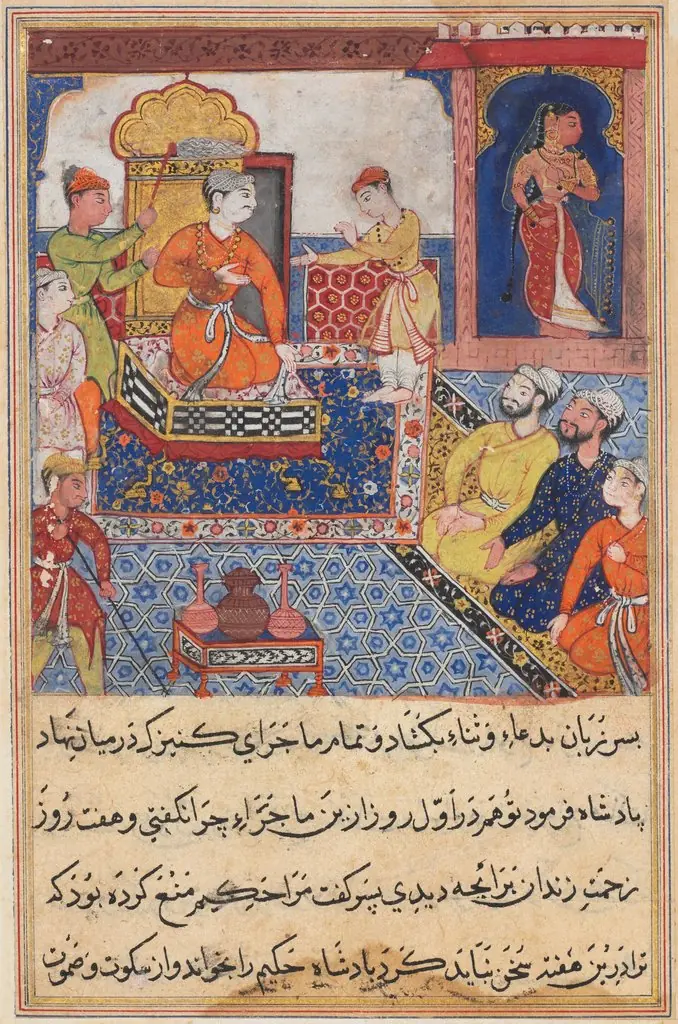 The young prince recounts his experiences to his father, the king, from a Tuti-nama (Tales of a Parrot): Eighth Night
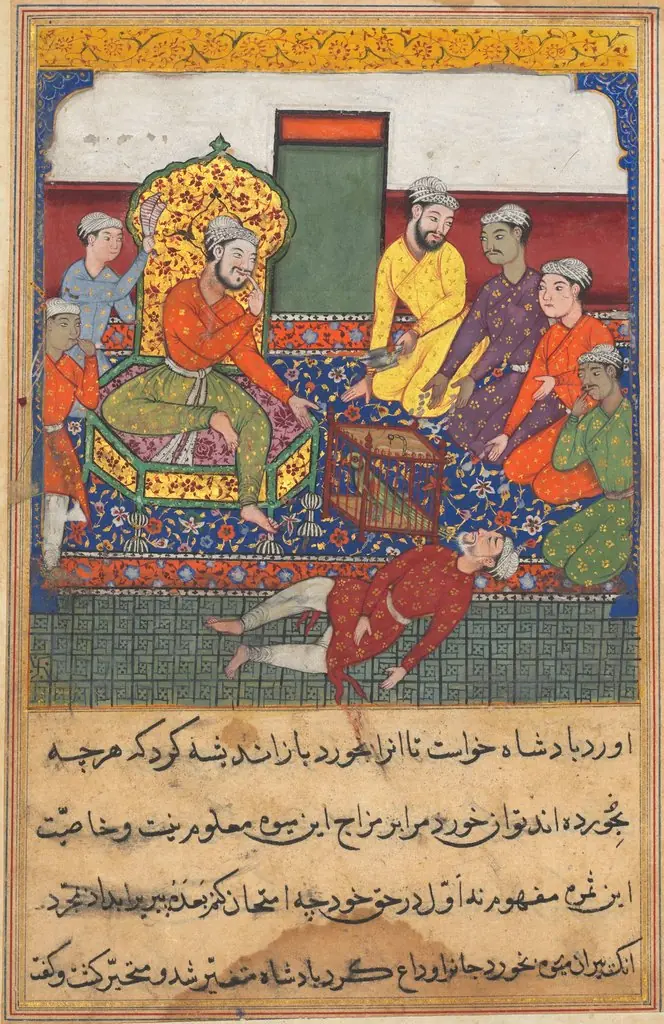 The old man eats of the fruit of the Tree of Life, but drops dead, from a Tuti-nama (Tales of a Parrot): Ninth Night
 The young prince recounts his experiences to his father, the king, from a Tuti-nama (Tales of a Parrot): Eighth Night