Artwork
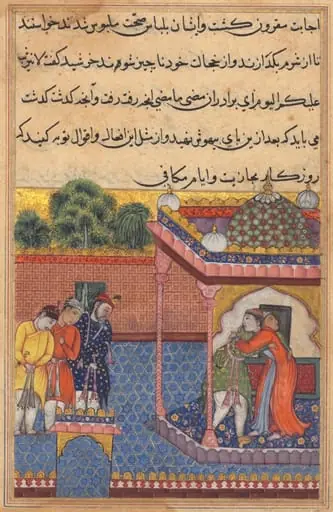
The three young men present themselves as suitors for the hand of Zuhra, the daughter of the merchant of Kabul, from a Tuti-nama (Tales of a Parrot): Thirty-fourth Night
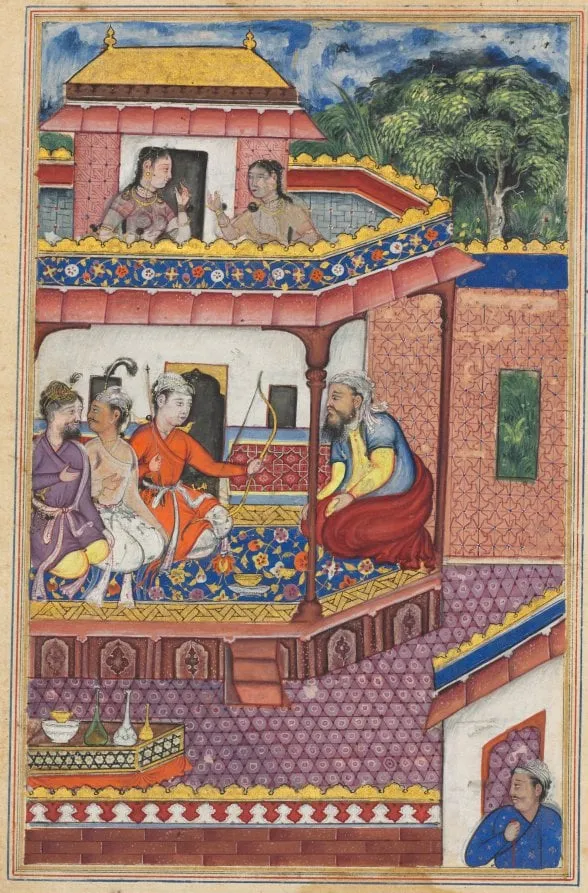
The three young men present themselves as suitors for the hand of Zuhra, the daughter of the merchant of Kabul, from a Tuti-nama (Tales of a Parrot): Thirty-fourth Night is an unspecified painting by the Mughal Painting artist Unknown. It dates from 1560 and is held in the collection of the Cleveland Museum of Art. The work illustrates a scene from the thirty‑fourth night of a Tuti‑nama, a collection of parrot‑told tales.
About this work
The men show off their skills—one reads fortunes, another brings wooden horses to life, and the third is a sharp shooter.
You see three young men standing before a merchant, each trying to win his daughter’s hand. Above them, two women peek through a lattice, listening. The men show off their skills—one reads fortunes, another brings wooden horses to life, and the third is a sharp shooter.
This painting comes from a book of stories told by a parrot to keep its owner from sneaking out at night. The tales were meant to entertain, but the art also shows how people dressed, talked, and lived in Mughal India.
To see more like this, look up Mughal India, court of Akbar (reigned 1556–1605).
Overview
The work illustrates a scene from the thirty‑fourth night of a Tuti‑nama, a collection of parrot‑told tales. Three young men stand before a Kabul merchant, each presenting a distinct talent in hopes of winning the hand of his daughter, Zuhra, while two women observe the proceedings from behind a lattice.
Subject & Meaning
The narrative shows the first suitor demonstrating divination, the second animating carved wooden horses, and the third displaying expert archery. Their demonstrations serve as tests of worthiness, yet the story takes a turn when an evil fairy abducts Zuhra before she can choose a husband, underscoring themes of fate and supernatural interference.
Technique & Style
Rendered in the refined Mughal miniature tradition, the painting combines delicate line work with a rich, flat colour palette. Figures are depicted in contemporary court attire, and the composition employs a shallow spatial depth, focusing attention on the interaction between the suitors, the merchant, and the concealed onlookers.
History & Provenance
The image originates from a manuscript of the Tuti‑nama, a literary genre that used a parrot’s narration to entertain nocturnal listeners. The manuscript was produced during the reign of Emperor Akbar (1556–1605), a period noted for the flourishing of illustrated books in the Mughal court.
Context
The scene offers visual documentation of Mughal‑era dress, courtly etiquette, and storytelling practices. It reflects the broader cultural milieu of Akbar’s empire, where Persian literary forms were adapted to Indian settings, and where illustrated manuscripts served both didactic and decorative purposes.
Artist & collection

 Domestic Scene
 Giacomo and Cardinal Marco, investing Andrea, Abbot of San Zeno, with his Benefice
 The Nymph of Fontainebleau
 Portrait of a Woman
 Madonna and Child with Saints in the Enclosed Garden
 Venus and Minerva
 Family Group of Four on Sofa
 Wall painting from Room H of the Villa of P. Fannius Synistor at Boscoreale
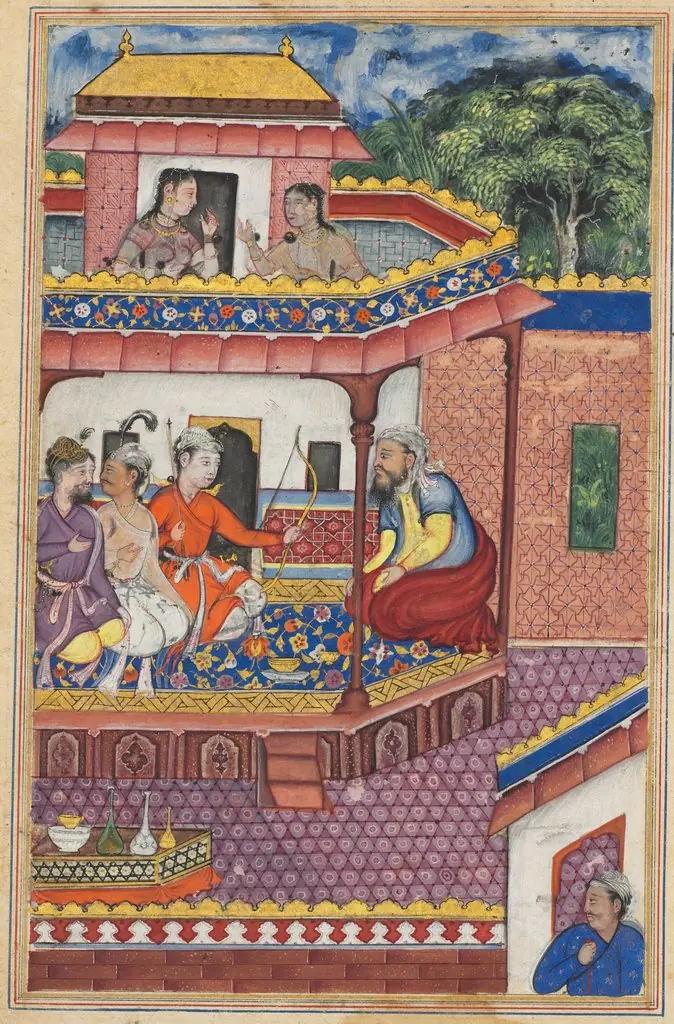 The three young men present themselves as suitors for the hand of Zuhra, the daughter of the merchant of Kabul, from a Tuti-nama (Tales of a Parrot): Thirty-fourth Night
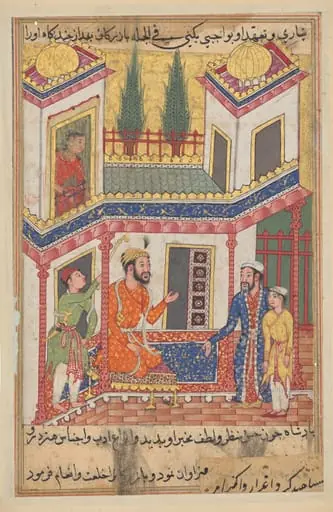 The merchant returns bringing a young slave who is really the son of the princess of Rum, now married to the king, from a Tuti-nama (Tales of a Parrot): Fiftieth Night
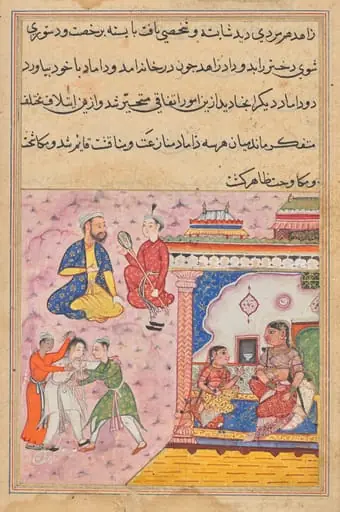 Three suitors fight amongst themselves for the hand of the devotee’s daughter, from a Tuti-nama (Tales of a Parrot): Twentieth Night
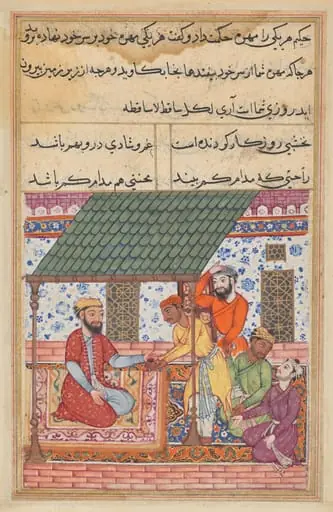 The four destitute friends go to a wise man who gives each one of them a magic shell to be placed on top of the turban, from a Tuti-nama (Tales of a Parrot): Forty-seventh Night
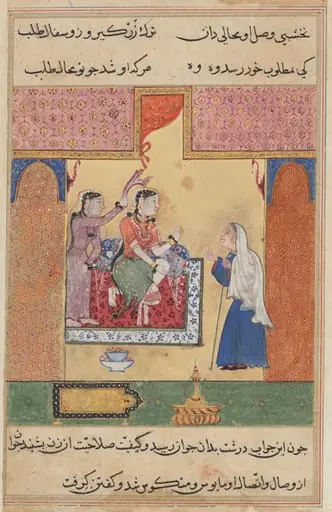 The old procuress conveys the young man’s message of love to Mansur’s wife, from a Tuti-nama (Tales of a Parrot: Seventeenth Night
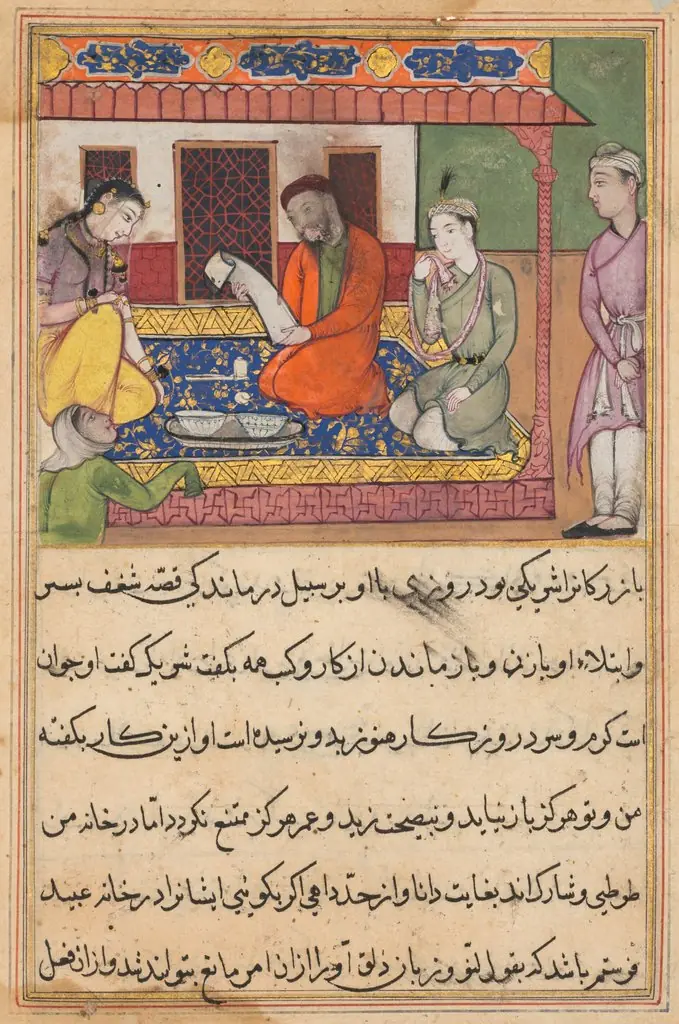 The marriage of ‘Ubaid, son of a merchant of Tirmiz, from a Tuti-nama (Tales of a Parrot): Forty-second Night
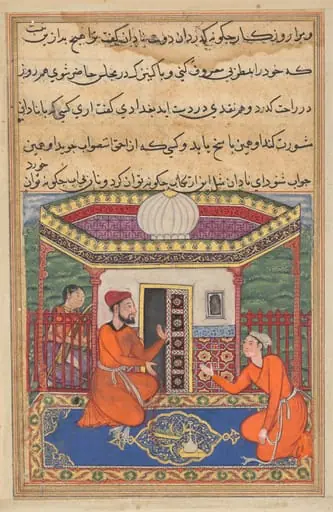 The young man of Baghdad solicits advice from a friend as his slave girl, who is adept at music, awaits, from a Tuti-nama (Tales of a Parrot): Forty-eighth Night
 Khurshid reunited with her husband Utarid, from a Tuti-nama (Tales of a Parrot): Thirty-second Night