Artwork
The Hunter, Tinnen or Kannappa.
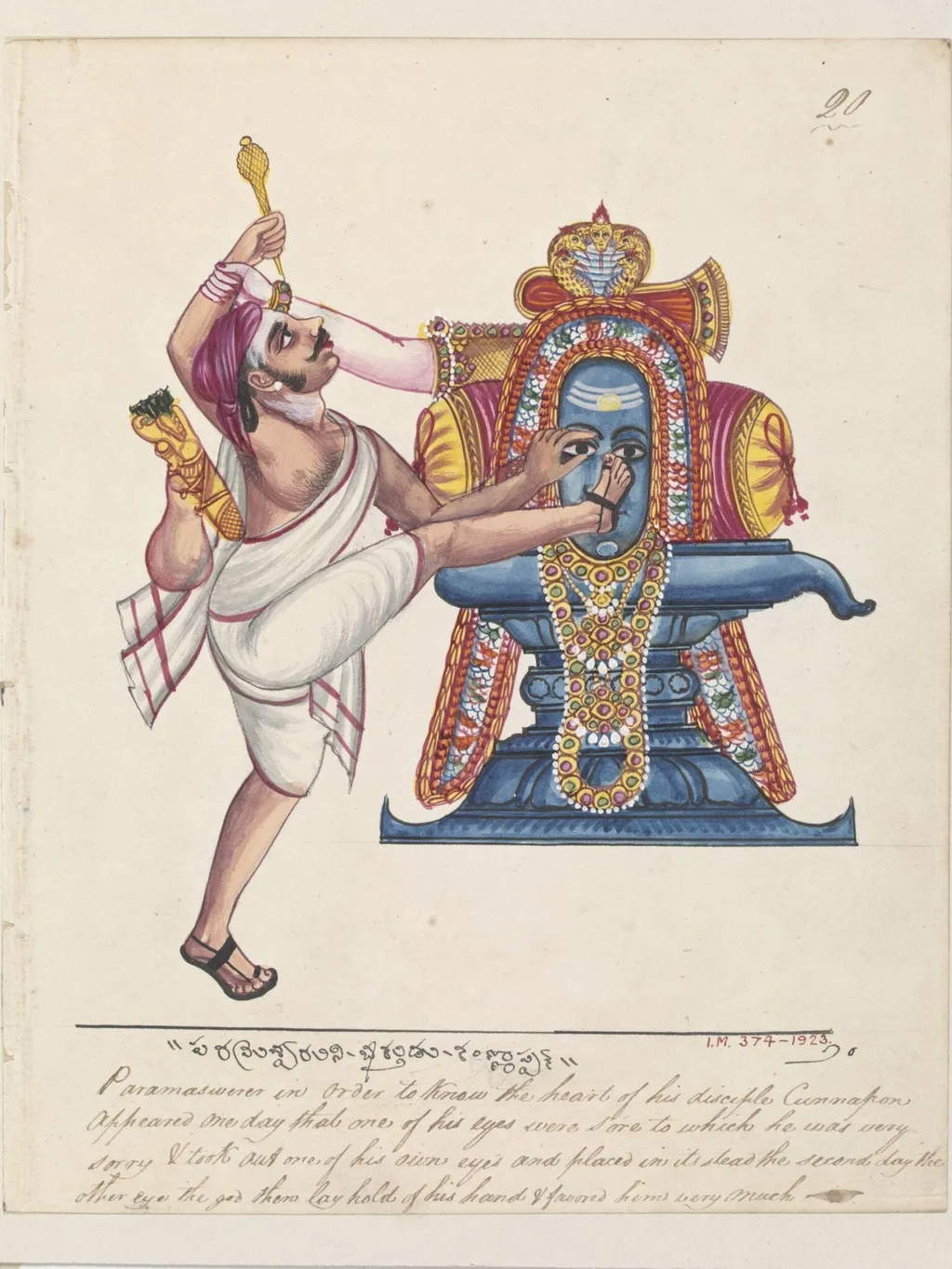
The Hunter, Tinnen or Kannappa. is a paint painting by the Romanticist artist Unknown. It dates from 1820 and is held in the collection of the Victoria and Albert Museum. This painting illustrates a moment from a Hindu devotional narrative involving a hunter and the deity Shiva.
About this work
Overview
This painting illustrates a moment from a Hindu devotional narrative involving a hunter and the deity Shiva. The scene centers on an act of profound surrender, where the hunter, depicted in white, offers his own eye as an act of worship. A blue-skinned figure, representing Shiva, emerges from a lingam, symbolizing divine presence and response to unwavering devotion.
Subject & Meaning
The hunter, traditionally known as Kannappa or Tinnen, is shown preparing to sacrifice his eye in devotion to Shiva. The deity, seated on a throne with three eyes and ornate adornments, extends a hand in blessing. The act reflects a core theme in Shaivite lore: that true devotion transcends physical form and demands total self-offering, even at great personal cost.
Technique & Style
The composition uses vivid color contrasts—white robes against deep blue skin and gold accents—to distinguish human and divine figures.
The composition uses vivid color contrasts—white robes against deep blue skin and gold accents—to distinguish human and divine figures. The hunter’s posture is tense, while Shiva’s form radiates calm authority. Decorative patterns on the throne and jewelry suggest regional artistic conventions, likely drawn from South Indian or Himalayan miniature traditions emphasizing symbolic detail over naturalism.
History & Provenance
The painting originates from a devotional manuscript or scroll tradition, possibly from the 18th or 19th century, created in a region with strong Shaivite practices. Its purpose was likely ritual or instructional, used to convey sacred stories to devotees. The exact origin remains undocumented, but its iconography aligns with regional temple art and illustrated hagiographies.
Context
This image belongs to a broader corpus of Hindu visual narratives that depict saints and devotees undergoing extreme trials to prove their faith. Stories like Kannappa’s were especially popular in South India, where temple culture and oral traditions sustained such tales. The pairing of human sacrifice with divine intervention reinforced the idea of grace earned through unwavering piety.
Legacy
The tale of Kannappa continues to be recounted in devotional practices and temple performances across South India. While this painting is one of many visual interpretations, it preserves a key moment in a living tradition. Its enduring presence in collections reflects the sustained cultural resonance of stories that equate devotion with radical self-giving.
Artist & collection

 Domestic Scene
 Giacomo and Cardinal Marco, investing Andrea, Abbot of San Zeno, with his Benefice
 The Nymph of Fontainebleau
 Portrait of a Woman
 Madonna and Child with Saints in the Enclosed Garden
 Venus and Minerva
 Family Group of Four on Sofa
 Wall painting from Room H of the Villa of P. Fannius Synistor at Boscoreale
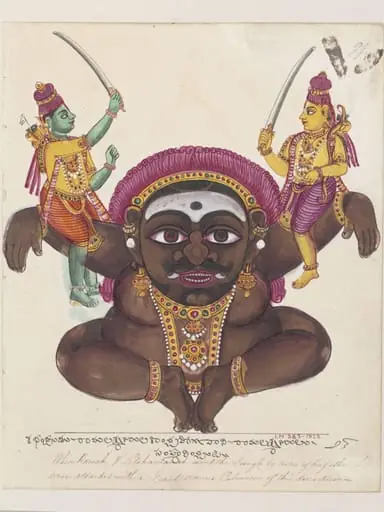 The rakshasa Kabandha supporting Rama and Lakshmana on his arms.
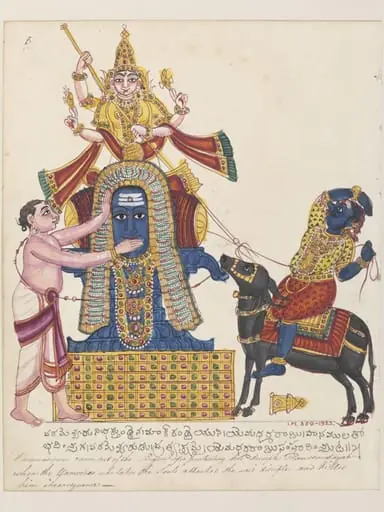 Shiva rescuing the young Markandeya from the noose of Yama, the god of death.
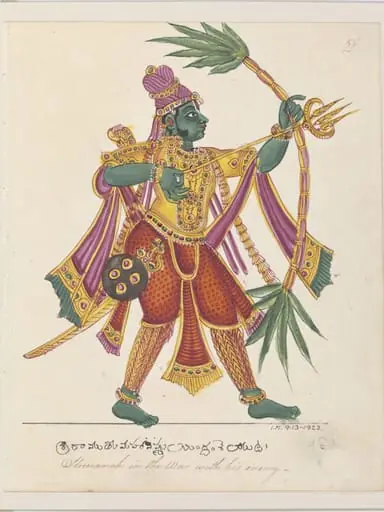 A green-skinned warrior
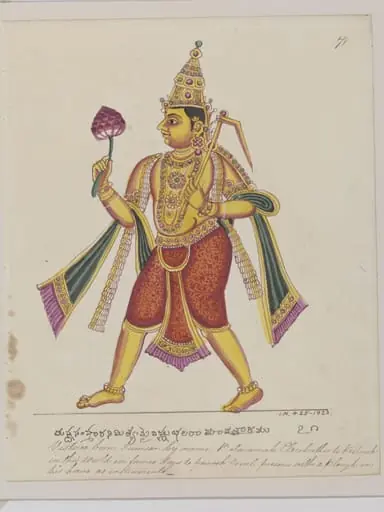 Balarama
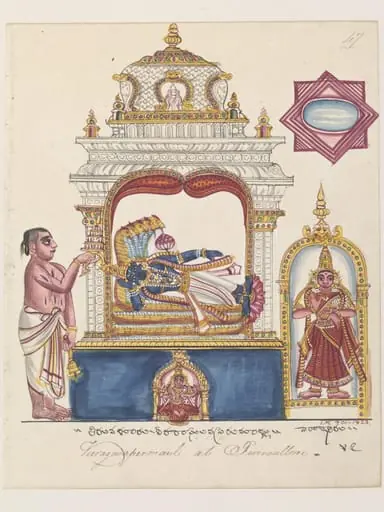 The shrine of Vishnu in the form of Viraraghavaswami, reclining on the serpent of eternity.
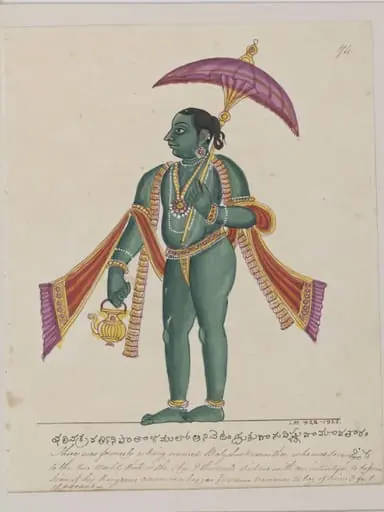 Vamana
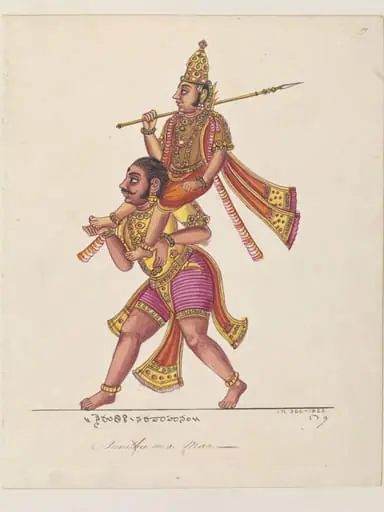 Niruti, the guardian of the south-west, riding on a man's shoulders.
 Krishna Holding a Flute and Dancing on a Lotus
 Shiva in his form as Bichandi or Bhikshatana
 Harihara attended by Parvati and Lakshmi