Artwork
The lion, suspecting treachery on the part of the monkey, slays him and flees, from a Tuti-nama (Tales of a Parrot): Twenty-ninth Night
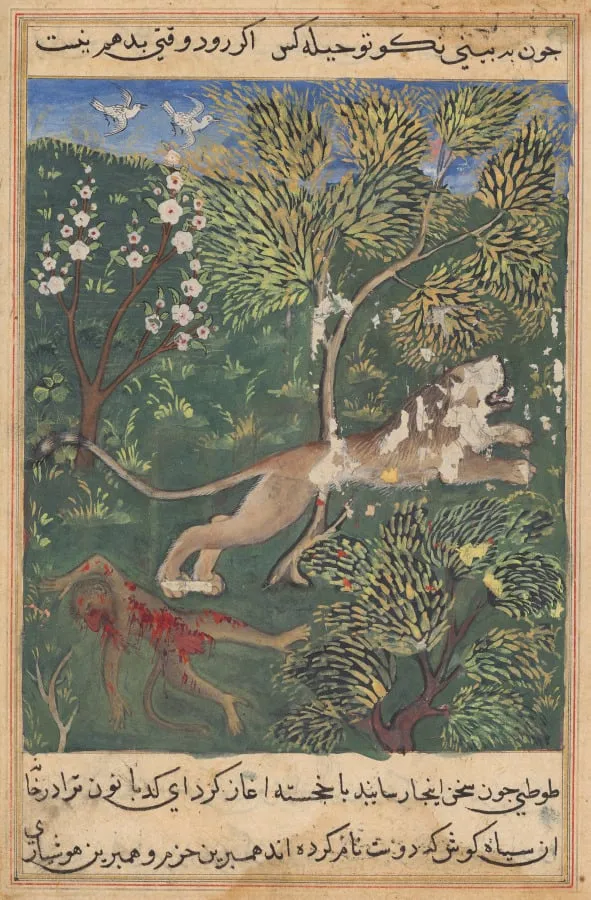
The lion, suspecting treachery on the part of the monkey, slays him and flees, from a Tuti-nama (Tales of a Parrot): Twenty-ninth Night is an unspecified painting by the Mughal Painting artist Unknown. It dates from 1560 and is held in the collection of the Cleveland Museum of Art. The work depicts a lion standing over a slain monkey in a vivid green meadow.
About this work
The story warns rulers not to trust rumors—here, the lion kills his loyal servant after being tricked by others.
A lion stands over a dead monkey in a bright green meadow. The lion’s claws are still bloody, and the monkey’s body is twisted in the grass.
This painting comes from a book of parrot tales told in Akbar’s court. The story warns rulers not to trust rumors—here, the lion kills his loyal servant after being tricked by others. The bright colors and flat shapes make the scene feel like a fable, not real life.
To see more art like this, look up Mughal India, court of Akbar (reigned 1556–1605).
Overview
The work depicts a lion standing over a slain monkey in a vivid green meadow. The lion’s claws are still stained with blood, while the monkey’s twisted form lies among the grass. Rendered in bright, flat colors, the scene resembles a narrative illustration rather than a realistic portrayal.
Subject & Meaning
The composition illustrates a tale from a collection of parrot stories associated with Emperor Akbar’s court. In the narrative, the lion, once a powerful ruler, is deceived by a family of lynx and comes to believe that his former chamberlain, the monkey, has betrayed him, prompting the fatal act.
Technique & Style
Executed with bold, saturated hues and simplified shapes, the painting employs a stylized, two‑dimensional approach typical of Mughal book illustration. The flat planes of color and lack of perspective emphasize the allegorical nature of the story over naturalistic detail.
History & Provenance
The image originates from a manuscript of the Tuti‑nama, a compilation of moral tales narrated in Akbar’s court (1556‑1605). The work was created within the Mughal artistic tradition that blended Persian influences with indigenous Indian elements.
Context
Mughal courtly art often served didactic purposes, using vivid storytelling to convey ethical lessons to rulers and officials. This particular scene warns against the dangers of acting on unverified rumors, a theme resonant with the political climate of Akbar’s empire.
Artist & collection

 Domestic Scene
 Giacomo and Cardinal Marco, investing Andrea, Abbot of San Zeno, with his Benefice
 The Nymph of Fontainebleau
 Portrait of a Woman
 Madonna and Child with Saints in the Enclosed Garden
 Venus and Minerva
 Family Group of Four on Sofa
 Wall painting from Room H of the Villa of P. Fannius Synistor at Boscoreale
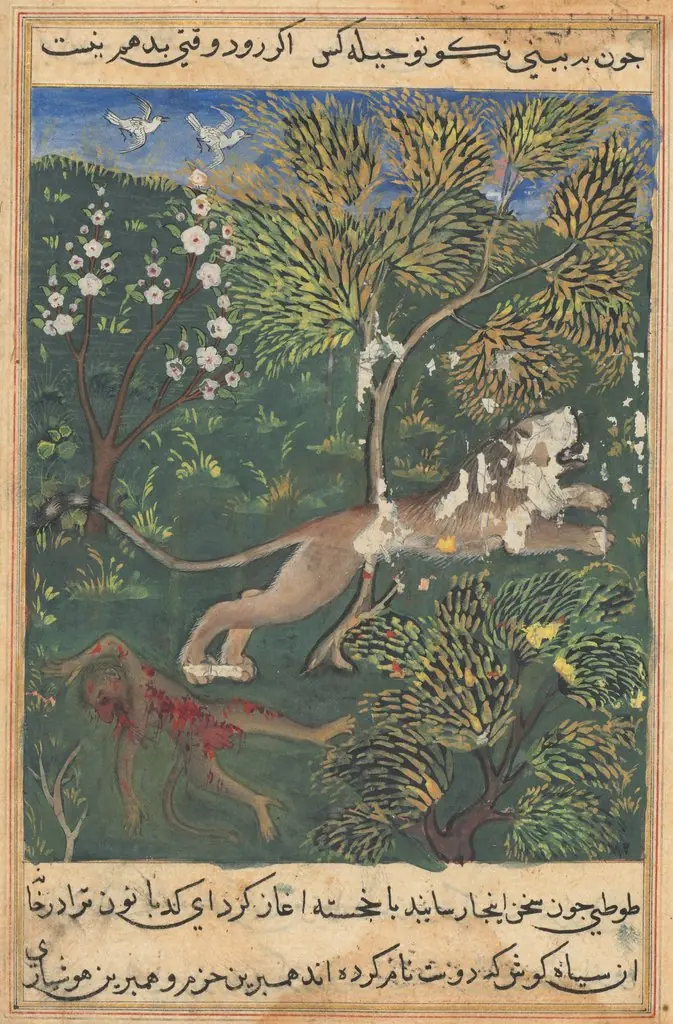 The lion, suspecting treachery on the part of the monkey, slays him and flees, from a Tuti-nama (Tales of a Parrot): Twenty-ninth Night
 The lion returns to his territory and sees the monkey conversing with the lynx, from a Tuti-nama (Tales of a Parrot): Twenty-ninth Night
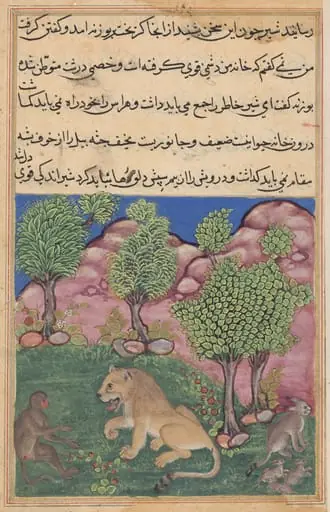 The monkey advises the suspicious lion to cast off fear and take possession of his territory, from a Tuti-nama (Tales of a Parrot): Twenty-ninth Night
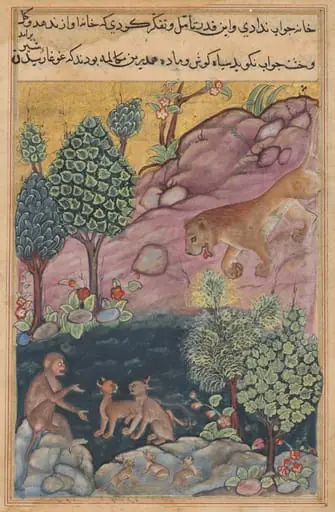
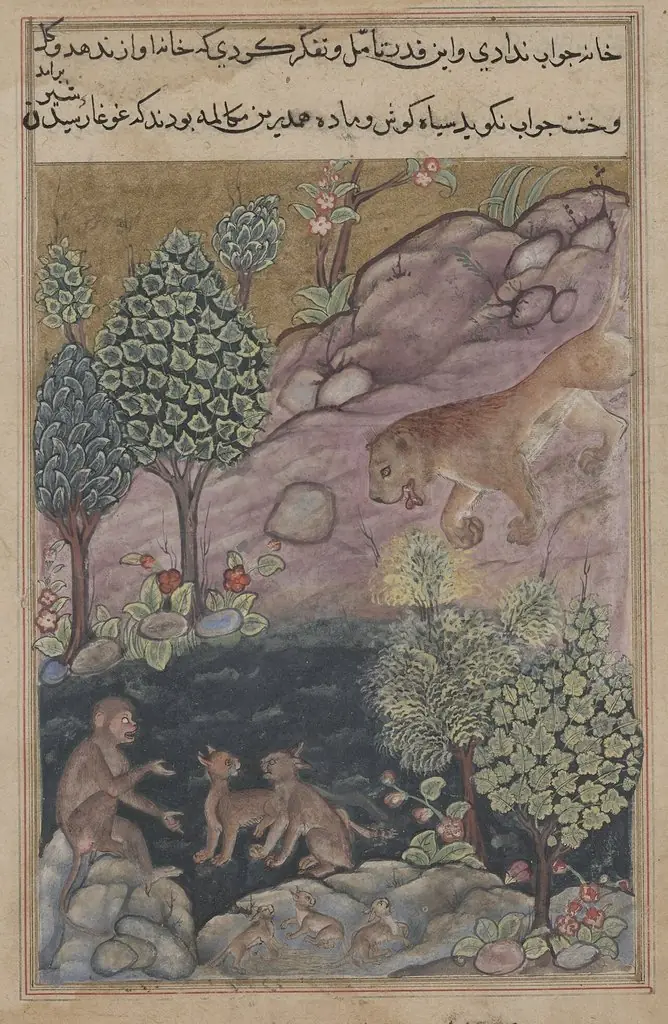 The lion returns to his territory and sees the monkey conversing with the lynx, from a Tuti-nama (Tales of a Parrot): Twenty-ninth Night
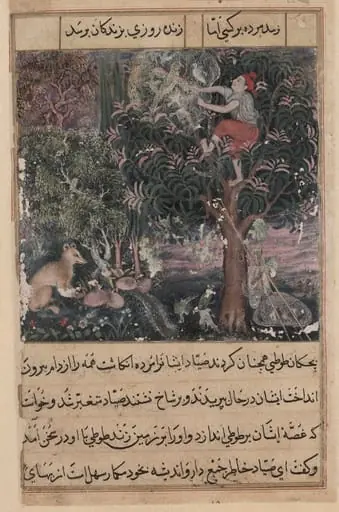 The hunter throws away the baby parrots, who pretend to be dead, and captures the mother, from a Tuti-nama (Tales of a Parrot): Fifth Night
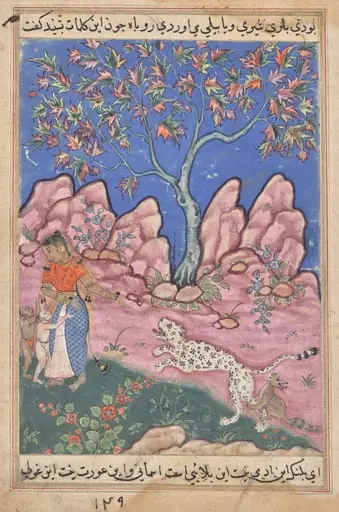 The woman conversing with her children, as the leopard returns, egged on by a fox who is tied to his leg, from a Tuti-nama (Tales of a Parrot): Thirtieth Night
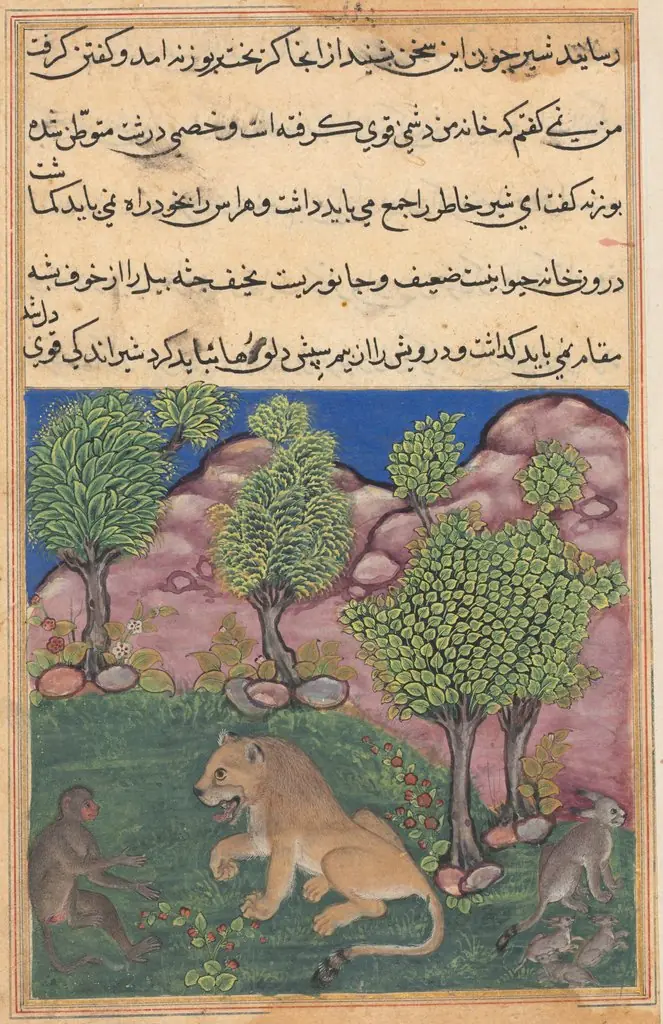 The monkey advises the suspicious lion to cast off fear and take possession of his territory, from a Tuti-nama (Tales of a Parrot): Twenty-ninth Night
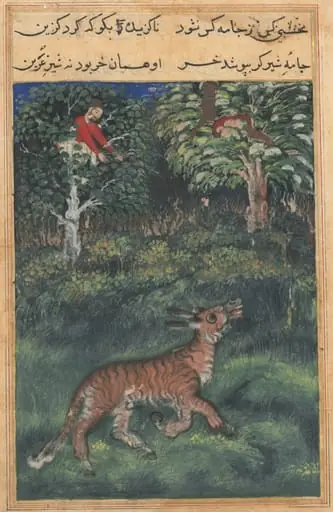 The donkey, in a tiger’s skin, reveals his identity by braying aloud, from a Tuti-nama (Tales of a Parrot): Thirty-first Night
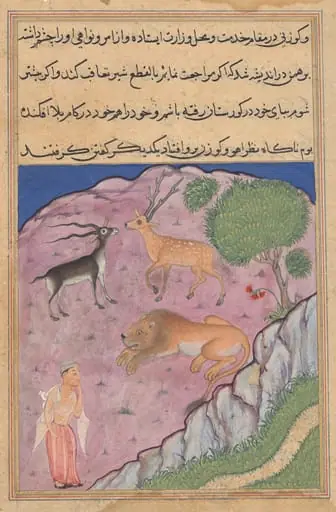 The Brahman comes upon a lion who has a deer and a gazelle as his viziers, from a Tuti-nama (Tales of a Parrot): Twenty-first Night
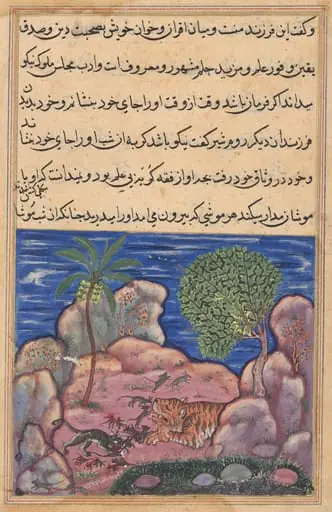 The cat attacks the mice which disturb the lion, from a Tuti-nama (Tales of a Parrot): Fifteenth Night