Artwork
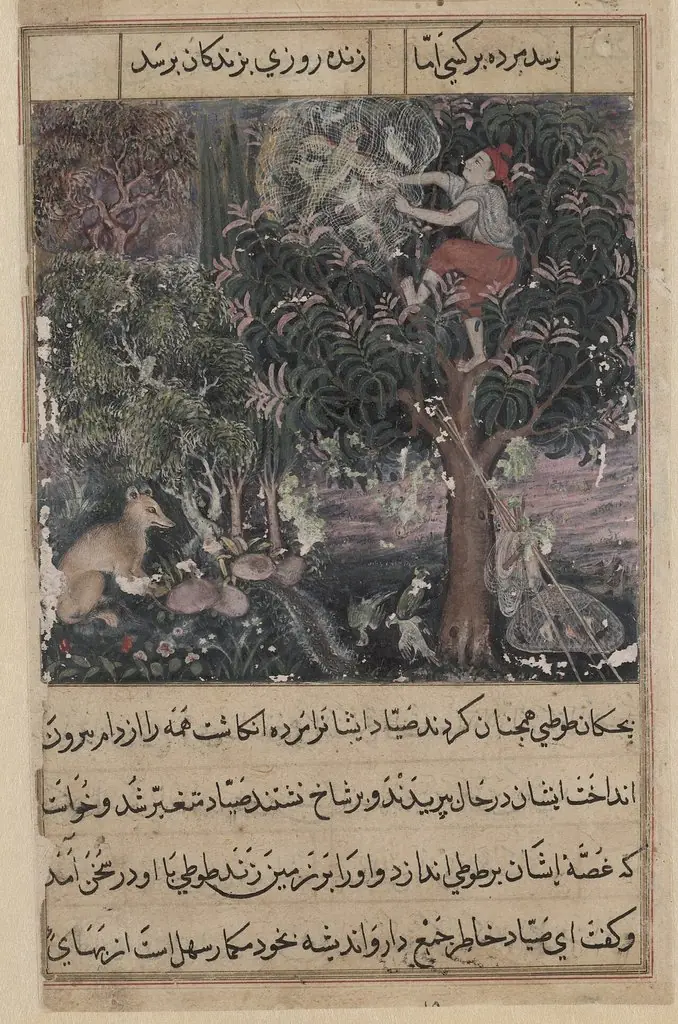
The hunter throws away the baby parrots, who pretend to be dead, and captures the mother, from a Tuti-nama (Tales of a Parrot): Fifth Night
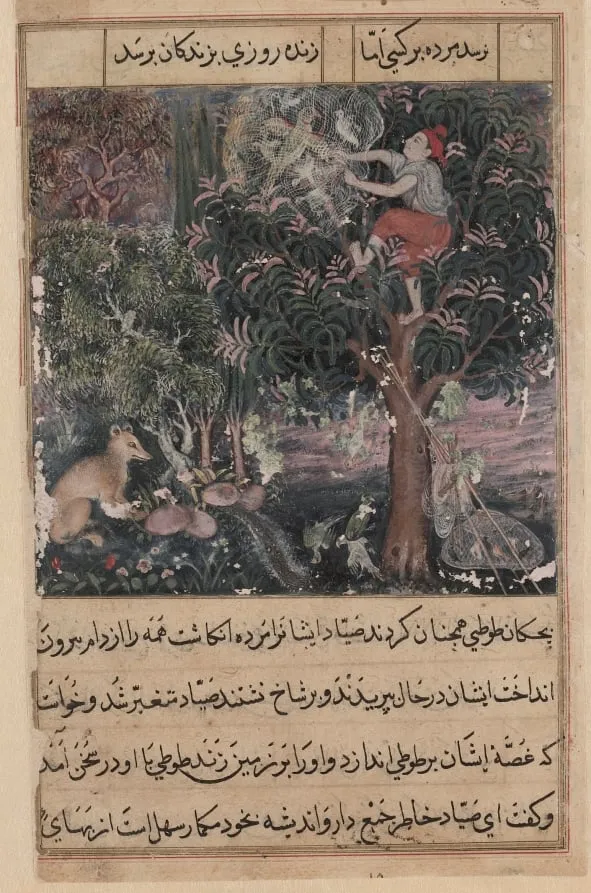
The hunter throws away the baby parrots, who pretend to be dead, and captures the mother, from a Tuti-nama (Tales of a Parrot): Fifth Night is an unspecified painting by the Patna School of Painting artist Basawan. It dates from 1560 and is held in the collection of the Cleveland Museum of Art.
About this work
This painting comes from a book of parrot tales told to a prince to keep him from sneaking out at night.
A hunter in a tree shakes baby parrots from their nest while the mother parrot watches. The babies lie still on the ground, pretending to be dead. The hunter grabs the mother in a net.
This painting comes from a book of parrot tales told to a prince to keep him from sneaking out at night. The story is dark—animals trick each other, and the hunter doesn’t know he’s being tricked too. The bright greens and reds make the scene feel alive, even though it’s about deception.
If you like this, look up more from mughal india, court of akbar (reigned 1556–1605).
Overview
This painting, 'The hunter throws away the baby parrots, who pretend to be dead, and captures the mother,' is an illustration from the Tuti-nama, a collection of parrot tales. It depicts a scene from the Fifth Night's story, showcasing the artistic style of Mughal India.
Subject & Meaning
The scene illustrates a deceptive encounter between a hunter, a mother parrot, and her babies. The parrots feign death to evade capture, while the mother attempts to persuade the hunter to spare her young. The narrative is characterized by trickery and deception among animals.
Technique & Style
The painting features lush vegetation and a stream rendered with soft brushstrokes, indicating a fresh stylistic approach that diverges from preceding Indian and Persian styles. The use of bright greens and reds creates a vivid atmosphere, underscoring the tension between the scene's dark narrative and its lively visual representation.
Context
The Tuti-nama was created for the entertainment of a prince, with the parrot tales intended to distract him from nocturnal escapades. The artwork is associated with the court of Akbar, who reigned from 1556 to 1605, a period significant for the development of Mughal art.
Artist & collection
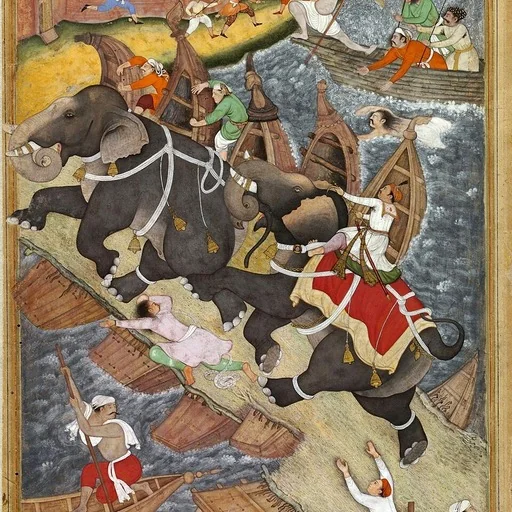
Artist
Basāwan, or Basāvan, was an Indian miniature painter in the Mughal style. He was known by his contemporaries as a skilled colorist and keen observer of human nature, and for his use of portraiture in the illustrations…

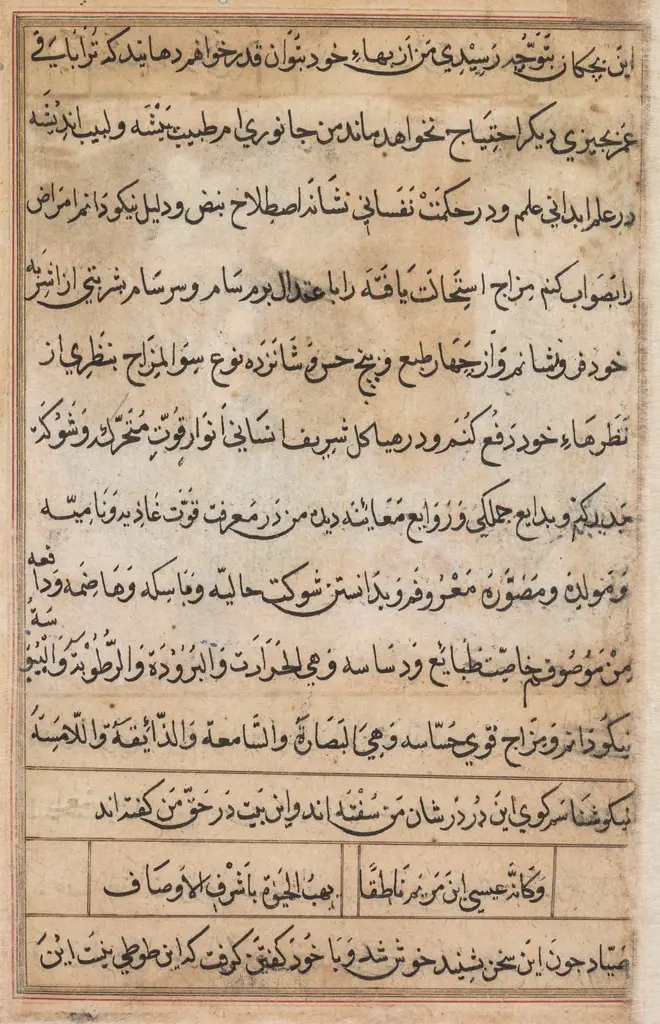
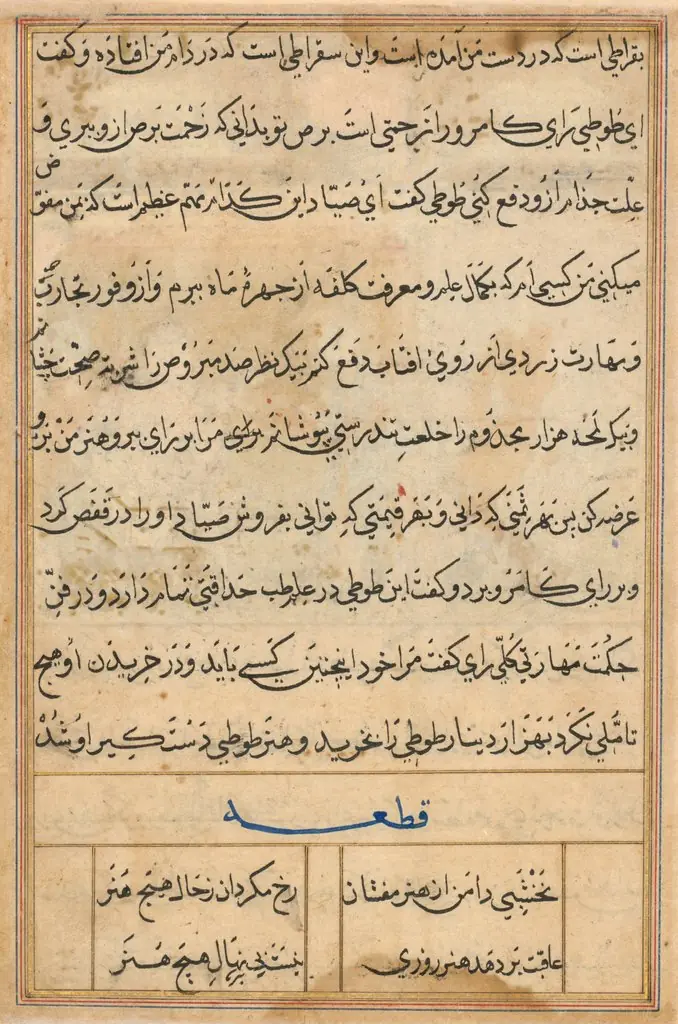 Page from Tales of a Parrot (Tuti-nama): text page
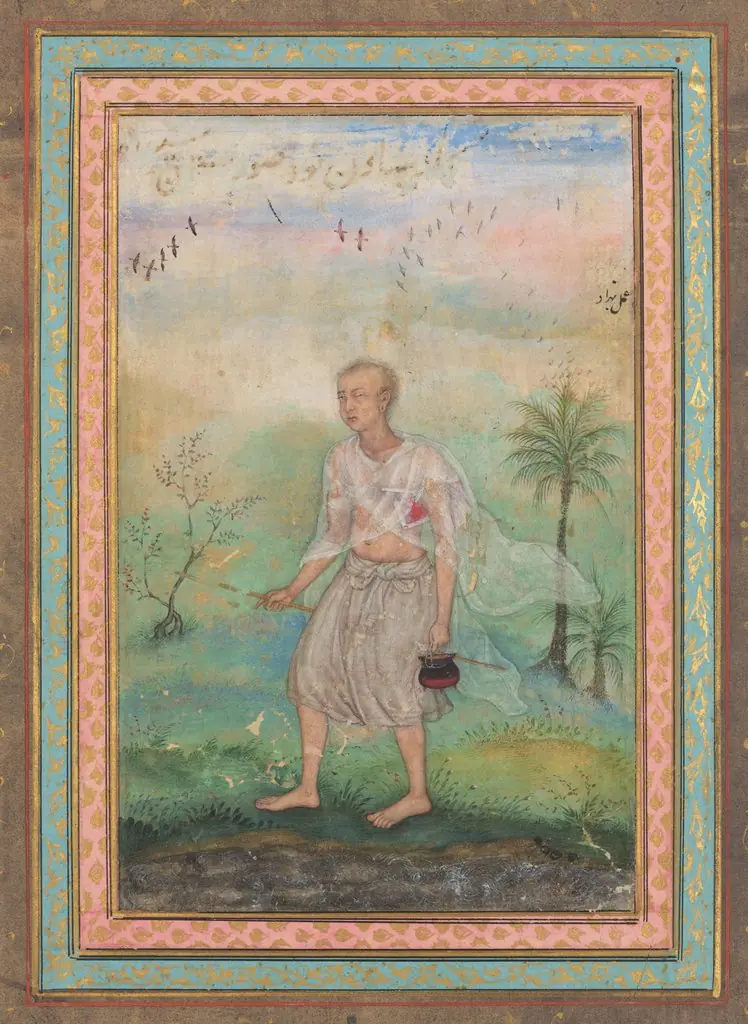 Jain Ascetic Walking Along a Riverbank
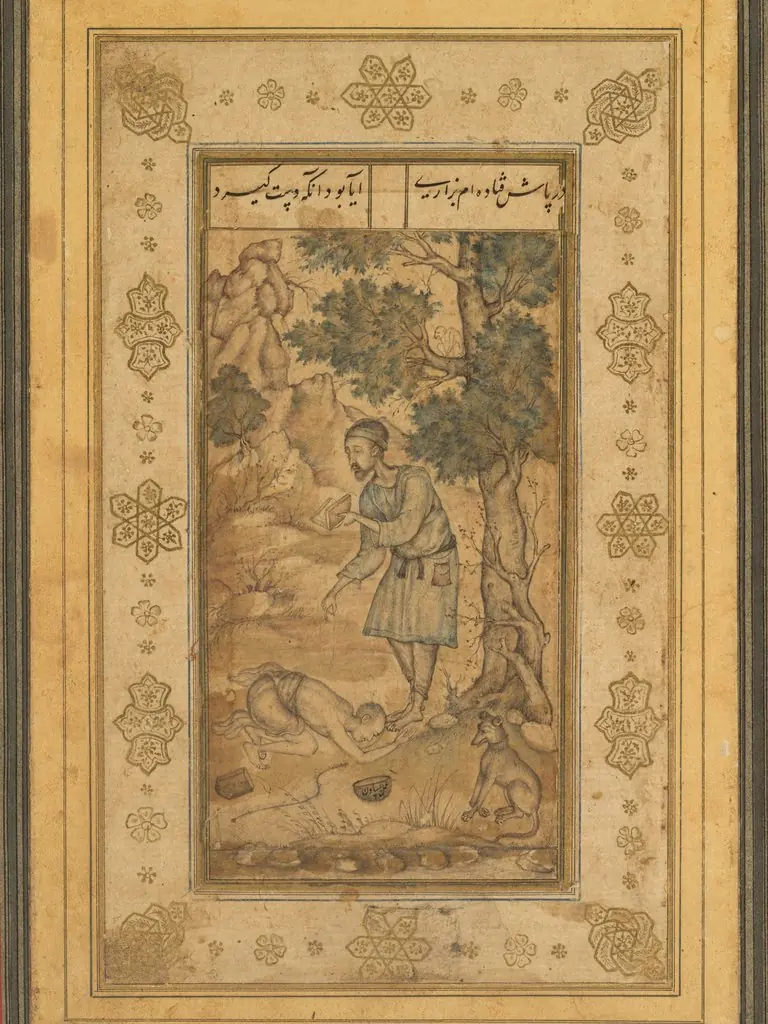 A mendicant bowing before a holy man, from the Prince Salim Album
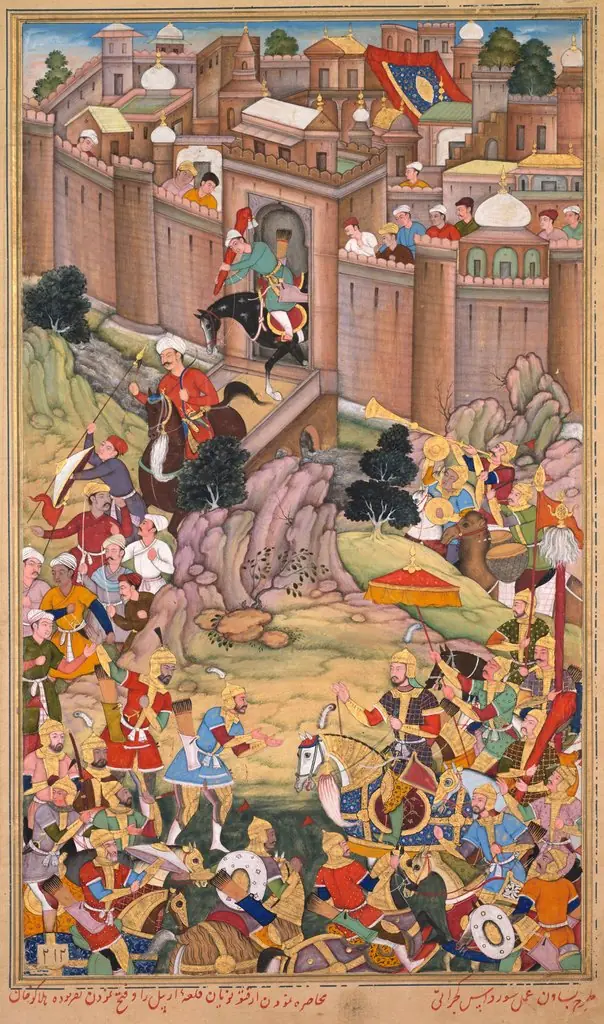 The siege of Arbela in the era of Hulagu Khan, from a Chingiz-nama (Book of Chingiz Khan) of the Jami al-tavarikh (Compendium of Chronicles) of Rashid al-Din (Persian, 1247–1318)
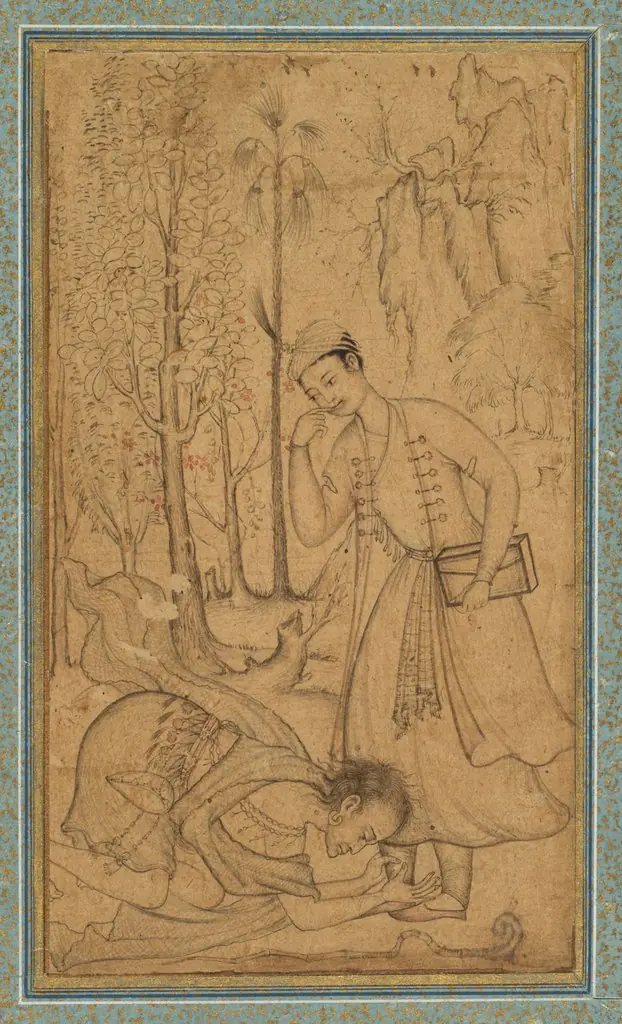 A holy man prostrating himself before a learned prince
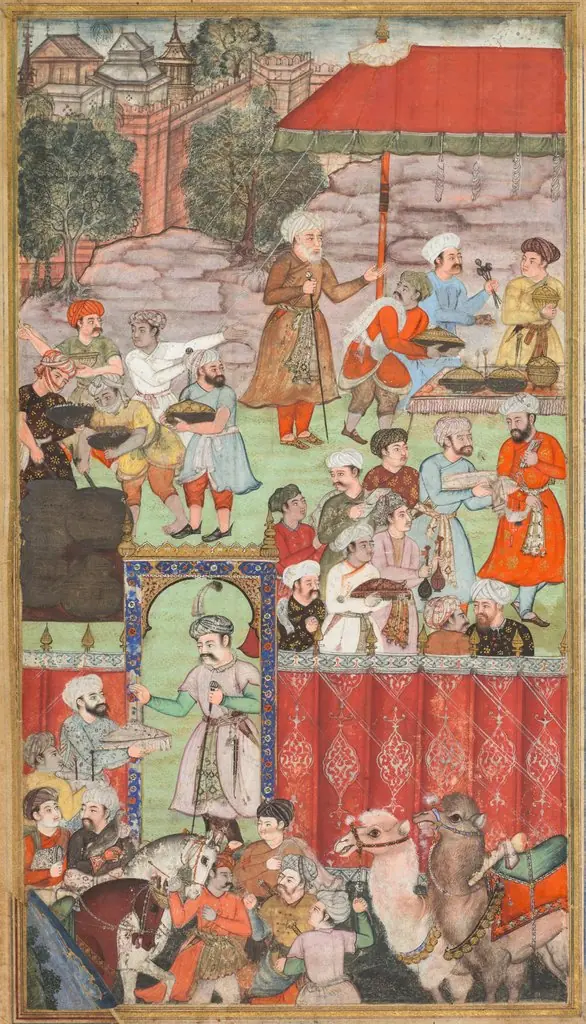 A feast for Babur hosted by his half-brother Jahangir Mirza in Ghazni in May 1505, from a Babur-nama (Memoirs of Babur)
 The hunter throws away the baby parrots, who pretend to be dead, and captures the mother, from a Tuti-nama (Tales of a Parrot): Fifth Night
 Page from Tales of a Parrot (Tuti-nama): text page
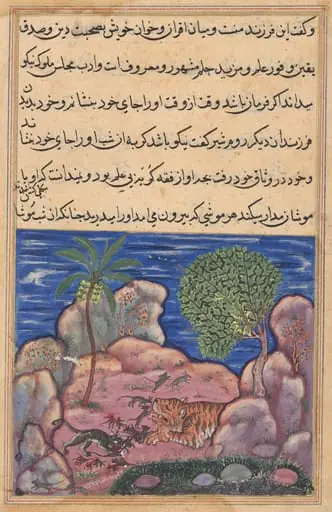 The cat attacks the mice which disturb the lion, from a Tuti-nama (Tales of a Parrot): Fifteenth Night
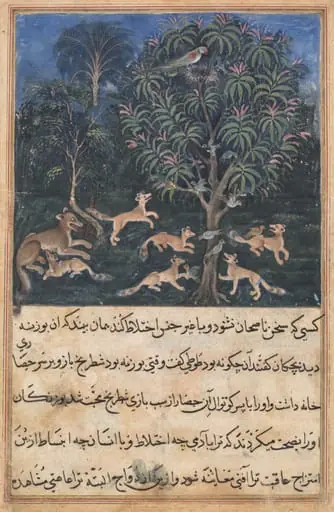 The parrot mother cautions her young on the danger of playing with foxes, from a Tuti-nama (Tales of a Parrot): Fifth Night
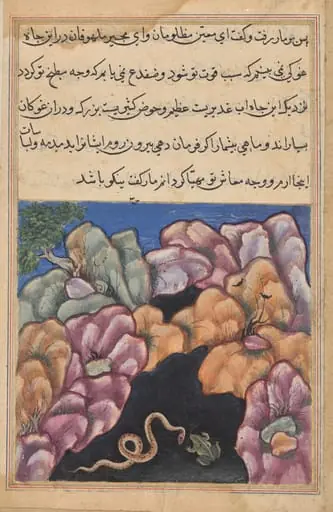 The snake enters into an argument with the frog, from a Tuti-nama (Tales of a Parrot): Twenty-sixth Night
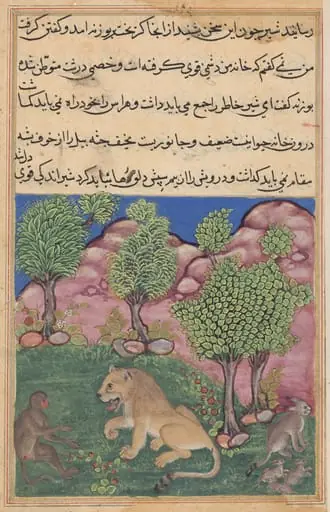 The monkey advises the suspicious lion to cast off fear and take possession of his territory, from a Tuti-nama (Tales of a Parrot): Twenty-ninth Night
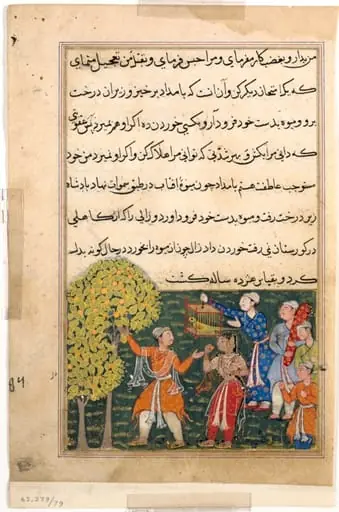 The king plucks fruit from the Tree of Life with his own hands and feeds it to a lady, from a Tuti-nama (Tales of a Parrot): Ninth Night
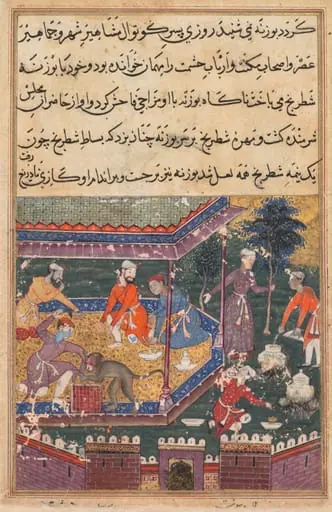 The wounded monkey bites the hand of the prince, his chessmate, in the presence of guests, from a Tuti-nama (Tales of a Parrot): Fifth Night
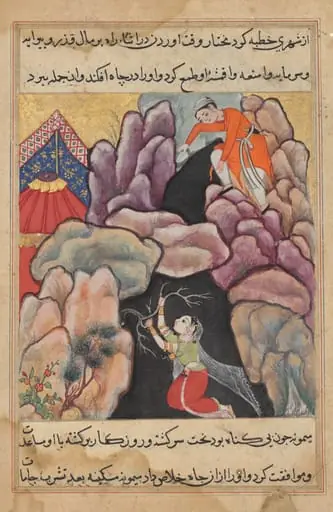 Mukhtar throws his wife Maimuna into the pit, but she saves herself, from a Tuti-nama (Tales of a Parrot): Twenty-fifth Night
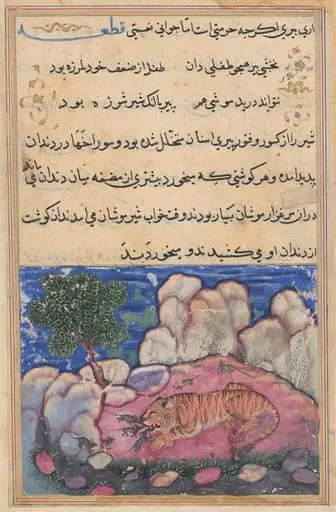 The lion disturbed by mice who eat the food trapped in his aging teeth, from a Tuti-nama (Tales of a Parrot): Fifteenth Night
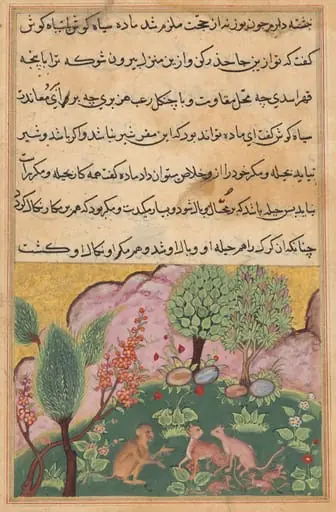 The monkey, serving as the lion’s chamberlain, converses with the lynx and its mate who have arrived with their cubs to settle in the lion’s domain, from a Tuti-nama (Tales of a Parrot): Twenty-ninth Night
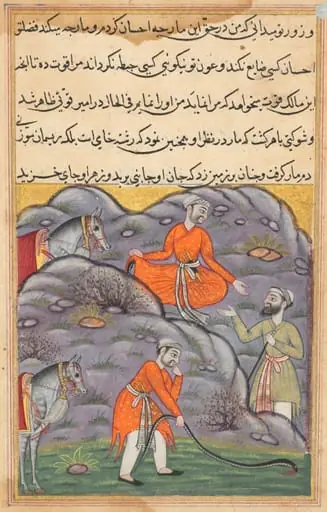 The emir slays the snake after giving it shelter, from a Tuti-nama (Tales of a Parrot): Forty-fifth Night