Artwork
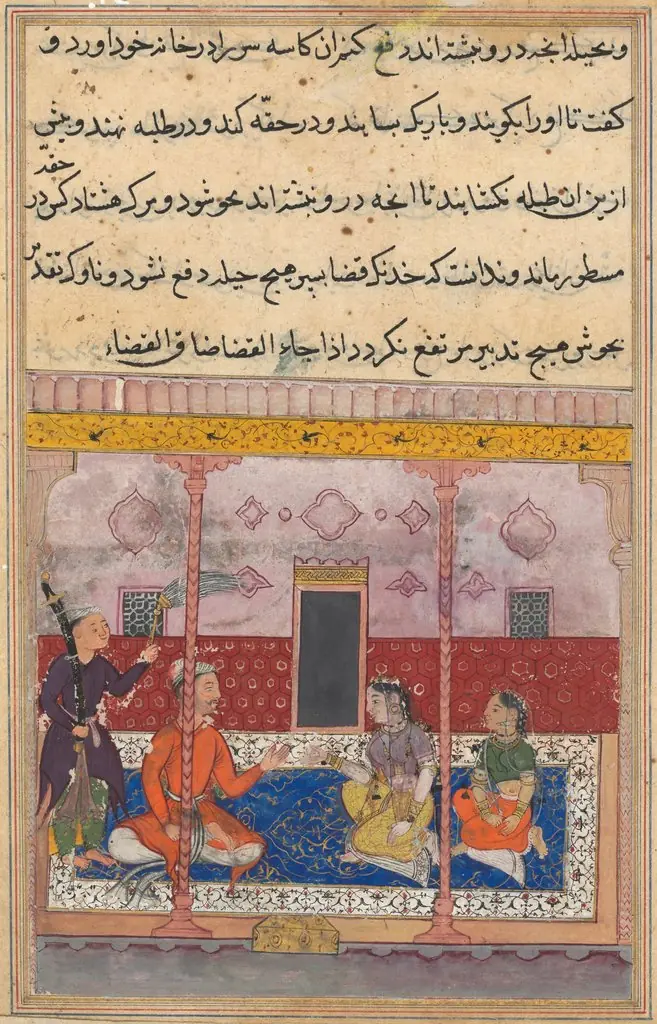
The merchant has the hateful skull ground and put into a box, from a Tuti-nama (Tales of a Parrot): Twenty-third Night
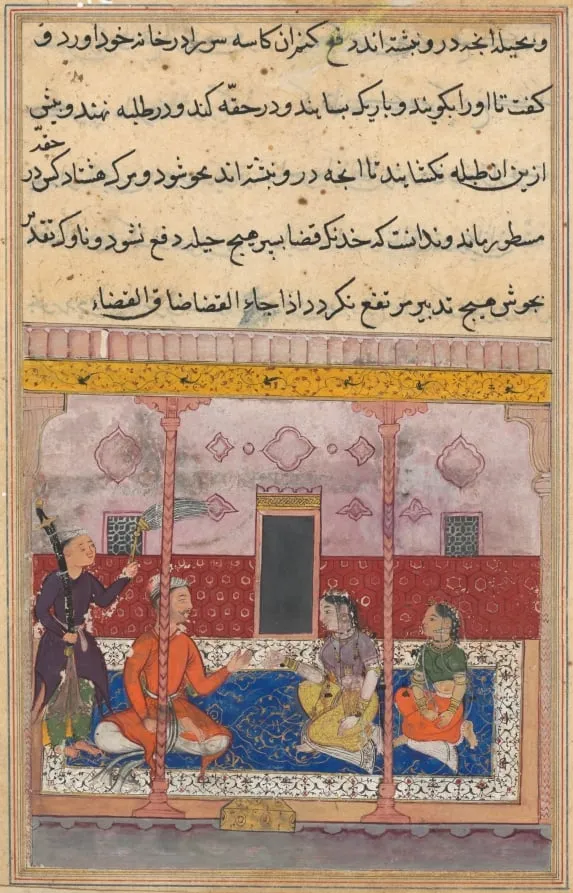
The merchant has the hateful skull ground and put into a box, from a Tuti-nama (Tales of a Parrot): Twenty-third Night is an unspecified painting by the Mughal Painting artist Unknown. It dates from 1560 and is held in the collection of the Cleveland Museum of Art. The painting depicts a small, yellow box placed on the ground in the central foreground, containing the powdered remains of a skull.
About this work
You see a merchant watching as a skull is ground to dust and sealed in a small yellow box.
You see a merchant watching as a skull is ground to dust and sealed in a small yellow box. Workers kneel around him, their faces calm.
The skull was said to have killed eighty men—and would kill eighty more. The merchant thought destroying it would stop fate. The warning was written right on the bone. This painting comes from a book of parrot tales made for Emperor Akbar’s court.
To see more stories like this, look up Mughal India, court of Akbar (reigned 1556–1605).
Overview
The painting depicts a small, yellow box placed on the ground in the central foreground, containing the powdered remains of a skull. A merchant stands to the left, observing the process, while several workers kneel nearby with composed expressions, witnessing the sealing of the skull fragments.
Subject & Meaning
The skull bears an inscription warning that it has already caused the deaths of eighty men and will claim another eighty. The merchant believes that grinding and enclosing the bone will thwart this fatal destiny, illustrating a tension between human agency and inevitable fate.
Technique & Style
Rendered in a detailed, narrative style characteristic of Mughal court paintings, the composition balances a clear foreground focus on the box with a broader scene of onlookers. The use of muted earth tones and precise line work emphasizes the solemnity of the ritual.
History & Provenance
The work originates from a manuscript of the Tuti‑nama, or "Tales of a Parrot," compiled for the court of Emperor Akbar (r. 1556–1605). It forms part of a series of illustrated stories intended for royal entertainment and moral instruction.
Context
Set within the cultural milieu of Mughal India, the scene reflects contemporary beliefs about curses, destiny, and the limits of human intervention. Such narratives were employed to convey ethical lessons to the emperor’s audience.
Artist & collection

 Domestic Scene
 Giacomo and Cardinal Marco, investing Andrea, Abbot of San Zeno, with his Benefice
 The Nymph of Fontainebleau
 Portrait of a Woman
 Madonna and Child with Saints in the Enclosed Garden
 Venus and Minerva
 Family Group of Four on Sofa
 Wall painting from Room H of the Villa of P. Fannius Synistor at Boscoreale
 The merchant has the hateful skull ground and put into a box, from a Tuti-nama (Tales of a Parrot): Twenty-third Night
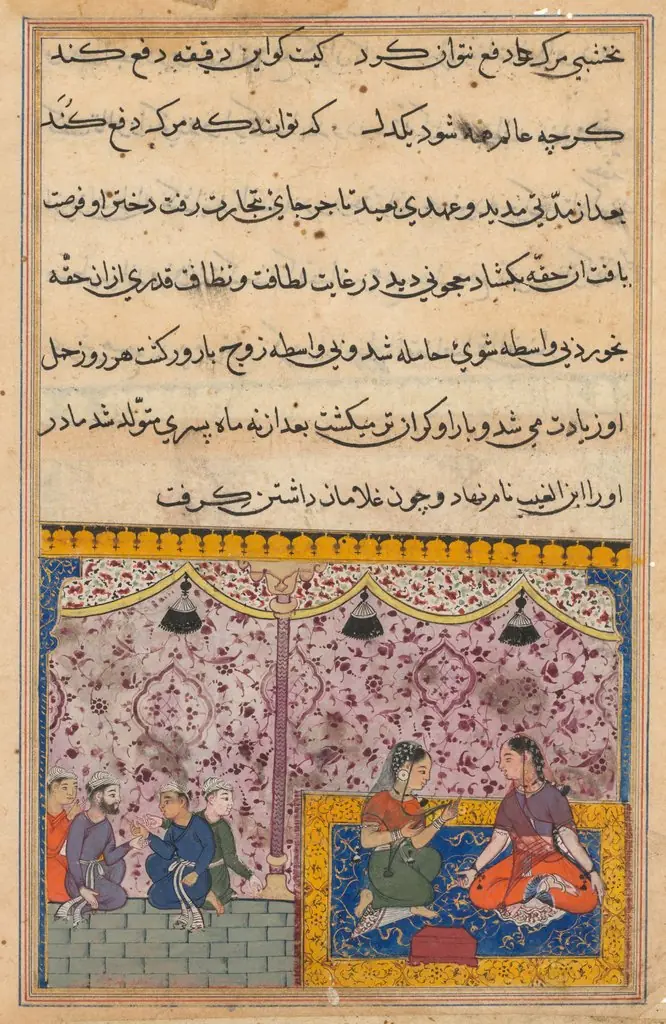
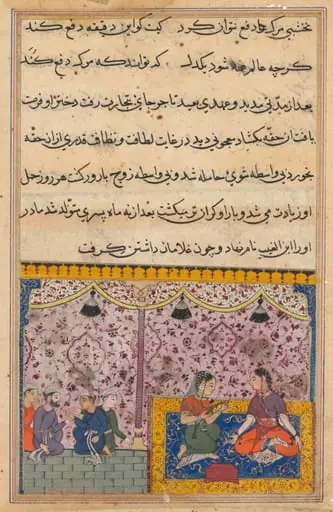 The merchant’s daughter gives birth to a son as a result of eating out of the box. The clever child recognizes the false gems from true, from a Tuti-nama (Tales of a Parrot): Twenty-third Night
 The merchant’s daughter gives birth to a son as a result of eating out of the box. The clever child recognizes the false gems from true, from a Tuti-nama (Tales of a Parrot): Twenty-third Night
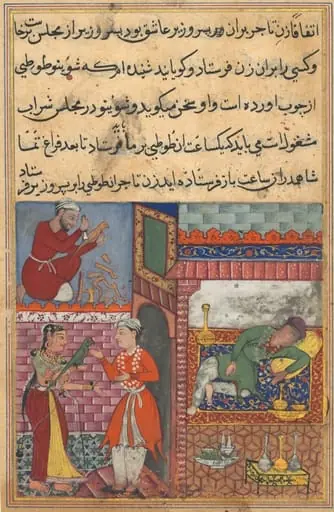 The vizier’s son receives the magic wooden parrot from the wife of the merchant, who is drunk, and has a replica made by a carpenter, from a Tuti-nama (Tales of a Parrot): Tenth Night
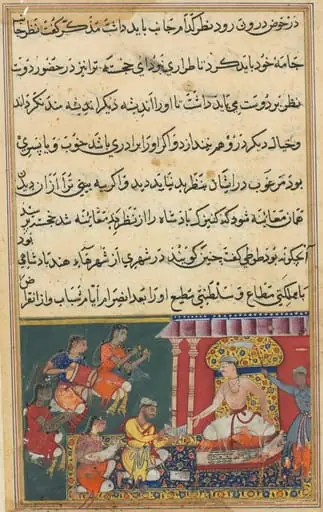 The astrologer predicts a calamity for the newly born prince in his thirteenth year, but one which he would be able to overcome, from a Tuti-nama (Tales of a Parrot): Eighth Night
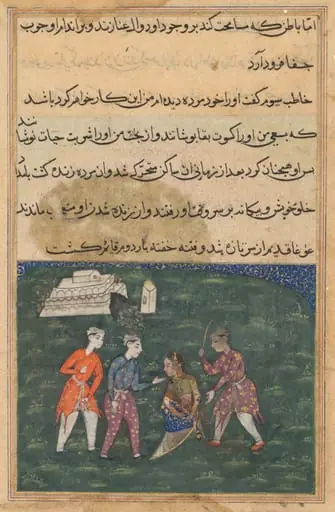 The third suitor strikes the devotee’s daughter and thus restores her to life, from a Tuti-nama (Tales of a Parrot): Twentieth Night
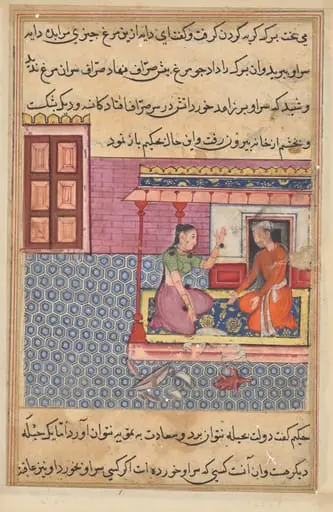 The pious man’s wife offers the seven-colored bird as food to her lover, but not finding its head, he breaks the pot and bowl in anger, from a Tuti-nama (Tales of a Parrot): Fifty-second Night