Artwork
The third suitor strikes the devotee’s daughter and thus restores her to life, from a Tuti-nama (Tales of a Parrot): Twentieth Night
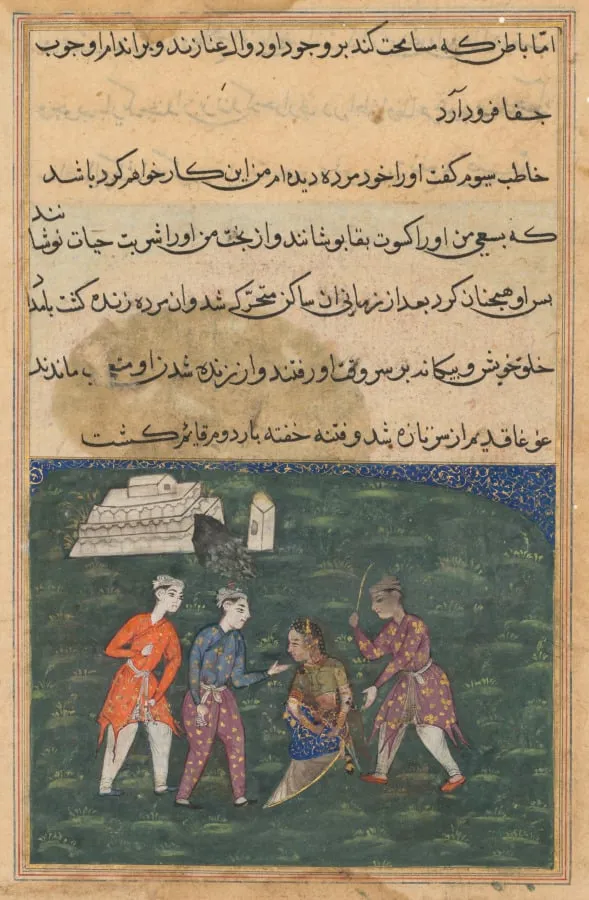
The third suitor strikes the devotee’s daughter and thus restores her to life, from a Tuti-nama (Tales of a Parrot): Twentieth Night is an unspecified painting by the Mughal Painting artist Unknown. It dates from 1560 and is held in the collection of the Cleveland Museum of Art.
About this work
This scene comes from a story told in Mughal India, where a doctor revives a woman by hitting her—believing she’s only in a deep sleep.
You see a small, bright painting of three men standing over a woman lying on the ground. One man swings a stick at her while the others watch.
This scene comes from a story told in Mughal India, where a doctor revives a woman by hitting her—believing she’s only in a deep sleep. The painting was made for Emperor Akbar’s court, where artists mixed Persian and Indian styles. The colors are vivid, and the figures look almost like paper cutouts.
To see more art from this time, look up Mughal India, court of Akbar (reigned 1556–1605).
Overview
This small, vivid painting depicts a dramatic scene from the Twentieth Night of a Tuti-nama (Tales of a Parrot), a collection of stories popular in Mughal India. Executed for Emperor Akbar’s court, the work showcases a blend of Persian and Indian artistic traditions.
Subject & Meaning
The scene illustrates a pivotal moment in a narrative: a devotee’s daughter, presumed dead, is revived by a suitor who, believing she is in a deep sleep, strikes her with a stick. The image captures the instant of revival, with one suitor in motion and the others observing.
Technique & Style
Characterized by bright colors and flat, two-dimensional figures resembling paper cutouts, the painting exemplifies the distinctive visual language of Mughal court art during Akbar’s reign. The style reflects the fusion of Persian miniature techniques with Indian artistic sensibilities.
History & Provenance
Created for the court of Emperor Akbar (r. 1556–1605), this painting was part of an illustrated Tuti-nama, suggesting its production within the imperial workshop during this period. Specific details about its post-imperial trajectory are not provided.
Context
Produced in a time of cultural and artistic flourishing under Akbar, the painting reflects the emperor’s interest in literature and the arts. It represents one of many illustrated manuscripts commissioned for the royal court, blending storytelling with visual innovation.
Artist & collection

 Domestic Scene
 Giacomo and Cardinal Marco, investing Andrea, Abbot of San Zeno, with his Benefice
 The Nymph of Fontainebleau
 Portrait of a Woman
 Madonna and Child with Saints in the Enclosed Garden
 Venus and Minerva
 Family Group of Four on Sofa
 Wall painting from Room H of the Villa of P. Fannius Synistor at Boscoreale
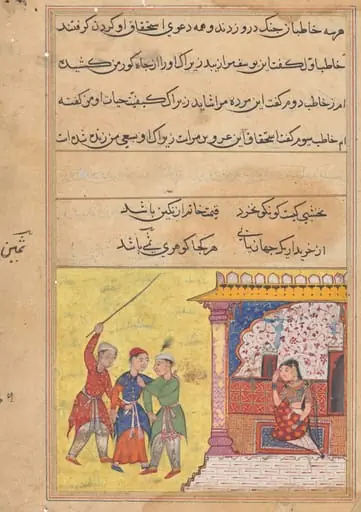 The three suitors again begin to quarrel among themselves for the hand of the devotee’s daughter, from a Tuti-nama (Tales of a Parrot): Twentieth Night
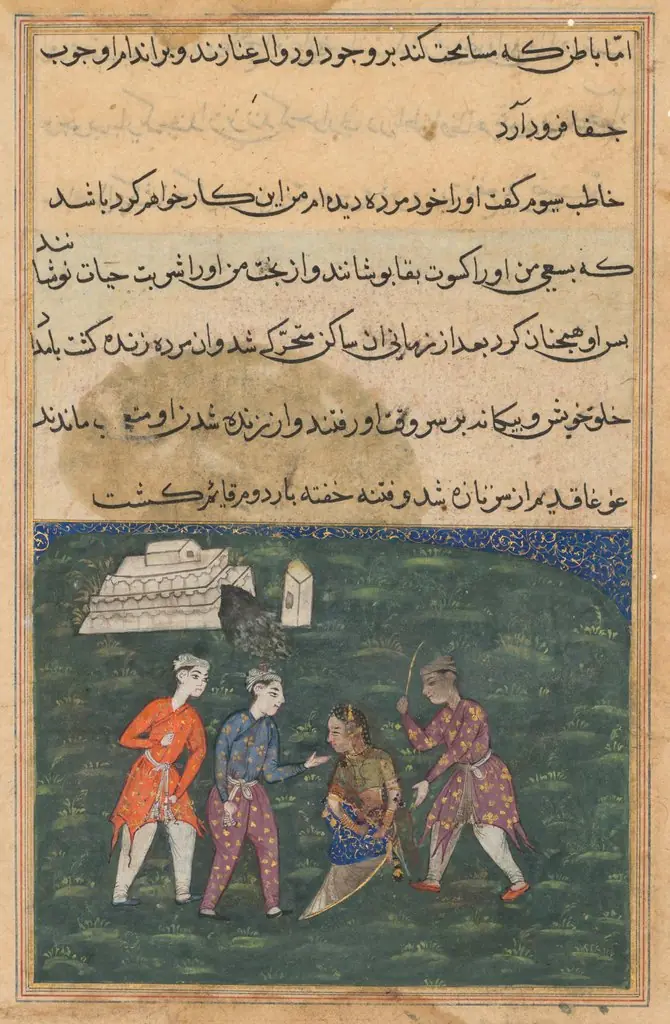 The third suitor strikes the devotee’s daughter and thus restores her to life, from a Tuti-nama (Tales of a Parrot): Twentieth Night
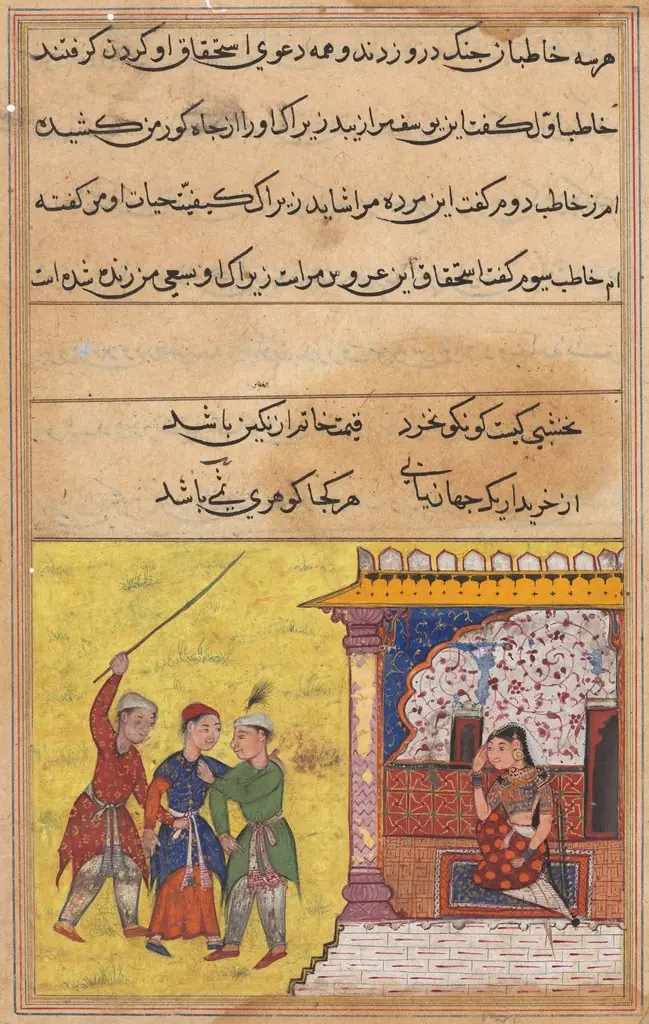 The three suitors again begin to quarrel among themselves for the hand of the devotee’s daughter, from a Tuti-nama (Tales of a Parrot): Twentieth Night
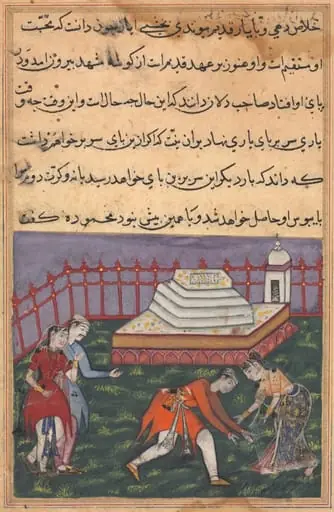 Hearing her declaration of love, Ayaz falls at the feet of Mahmuda at the holy shrine. The scene is witnessed by Salim, Ayaz’s friend, and a maid, from a Tuti-nama (Tales of a Parrot): Thirty-third Night
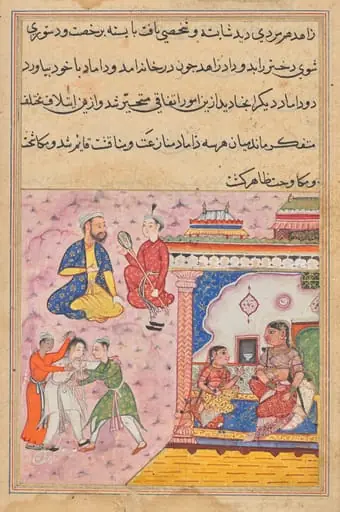 Three suitors fight amongst themselves for the hand of the devotee’s daughter, from a Tuti-nama (Tales of a Parrot): Twentieth Night
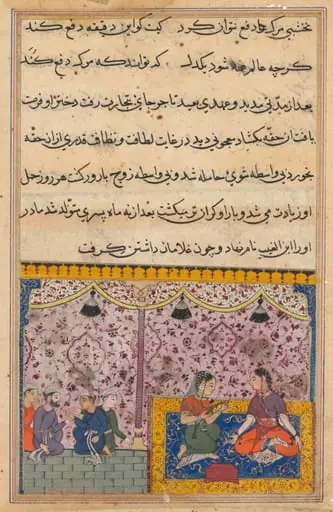 The merchant’s daughter gives birth to a son as a result of eating out of the box. The clever child recognizes the false gems from true, from a Tuti-nama (Tales of a Parrot): Twenty-third Night
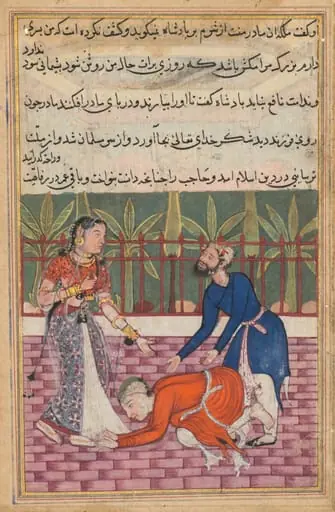 The guard restores the son who falls at his mother’s feet, from a Tuti-nama (Tales of a Parrot): Fiftieth Night
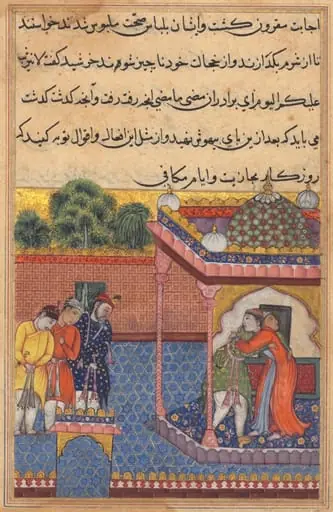 Khurshid reunited with her husband Utarid, from a Tuti-nama (Tales of a Parrot): Thirty-second Night
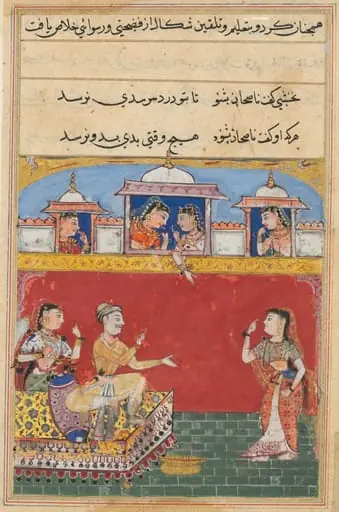 The daughter-in-law returns from her misadventure, feigning insanity, from a Tuti-nama (Tales of a Parrot): Sixteenth Night
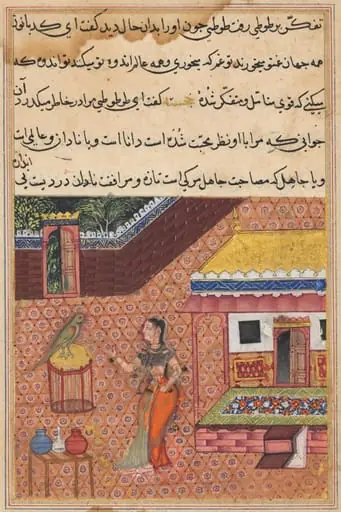 The parrot addresses Khujasta at the beginning of the thirty-fourth night, from a Tuti-nama (Tales of a Parrot)
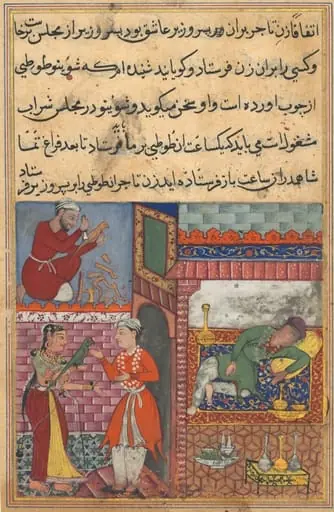 The vizier’s son receives the magic wooden parrot from the wife of the merchant, who is drunk, and has a replica made by a carpenter, from a Tuti-nama (Tales of a Parrot): Tenth Night