Artwork
The Raja’s daughter, born with three breasts, accompanies her blind husband and his hunchback guide on a journey, from a Tuti-nama (Tales of a Parrot): Forty-second Night
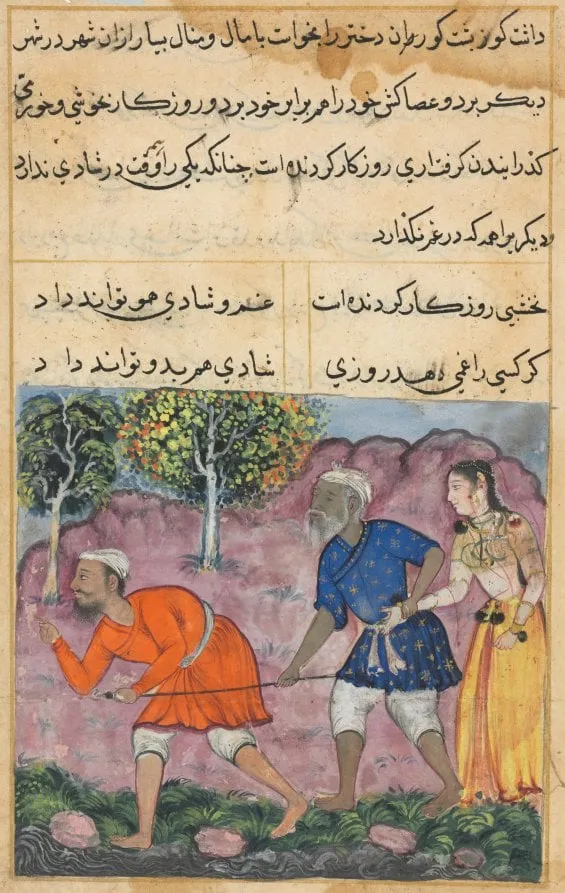
The Raja’s daughter, born with three breasts, accompanies her blind husband and his hunchback guide on a journey, from a Tuti-nama (Tales of a Parrot): Forty-second Night is an unspecified painting by the Mughal Painting artist Unknown. It dates from 1560 and is held in the collection of the Cleveland Museum of Art. This Mughal painting illustrates a narrative scene from the Tuti-nama (Tales of a Parrot), specifically the Forty-second Night.
About this work
The story was meant to distract him from his wife—each night, the parrot spun another tale, and this scene is one of them.
You see a woman with three breasts walking beside a blind man who holds her arm and a hunchback’s staff. The hunchback leads them toward a distant city under a flat, golden sky.
This painting comes from a book of parrot tales told to a lovesick merchant’s son. The story was meant to distract him from his wife—each night, the parrot spun another tale, and this scene is one of them.
To see more paintings like this, look up Mughal India, court of Akbar (reigned 1556–1605).
Overview
This Mughal painting illustrates a narrative scene from the Tuti-nama (Tales of a Parrot), specifically the Forty-second Night. It depicts a unique family group on a journey: a raja’s daughter with three breasts, her blind husband, and his hunchbacked guide.
Subject & Meaning
The scene conveys a story-within-a-story, where a parrot tells tales to ‘Ubaid, a merchant’s son, to cure his obsessive love for his wife. This particular tale may symbolize overcoming personal challenges and journeys, as embodied by the protagonists’ physical attributes and their path towards a distant city.
Technique & Style
Characterized by Mughal artistic traditions under Akbar’s court (1556–1605), the painting features a flat, golden sky, minimalistic landscape, and detailed, expressive figures. The composition emphasizes the interdependence of the trio through their physical connections.
History & Provenance
Originating from the court of Emperor Akbar, this painting is part of a Tuti-nama manuscript. While specific provenance details are not provided, its style and theme place it within the 16th-century Mughal illustrated book tradition.
Context
Created during Akbar’s reign, known for its cultural and artistic flourishing, this work reflects the period’s interest in Persian and Indian folktales. The Tuti-nama’s stories, including this one, were likely chosen for both entertainment and moral instruction.
Legacy
As part of the Tuti-nama illustrations, this painting contributes to the enduring legacy of Mughal art’s blend of Persian and Indian aesthetics. It influences subsequent illustrated manuscripts and remains a window into 16th-century Mughal storytelling and values.
Artist & collection

 Domestic Scene
 Giacomo and Cardinal Marco, investing Andrea, Abbot of San Zeno, with his Benefice
 The Nymph of Fontainebleau
 Portrait of a Woman
 Madonna and Child with Saints in the Enclosed Garden
 Venus and Minerva
 Family Group of Four on Sofa
 Wall painting from Room H of the Villa of P. Fannius Synistor at Boscoreale
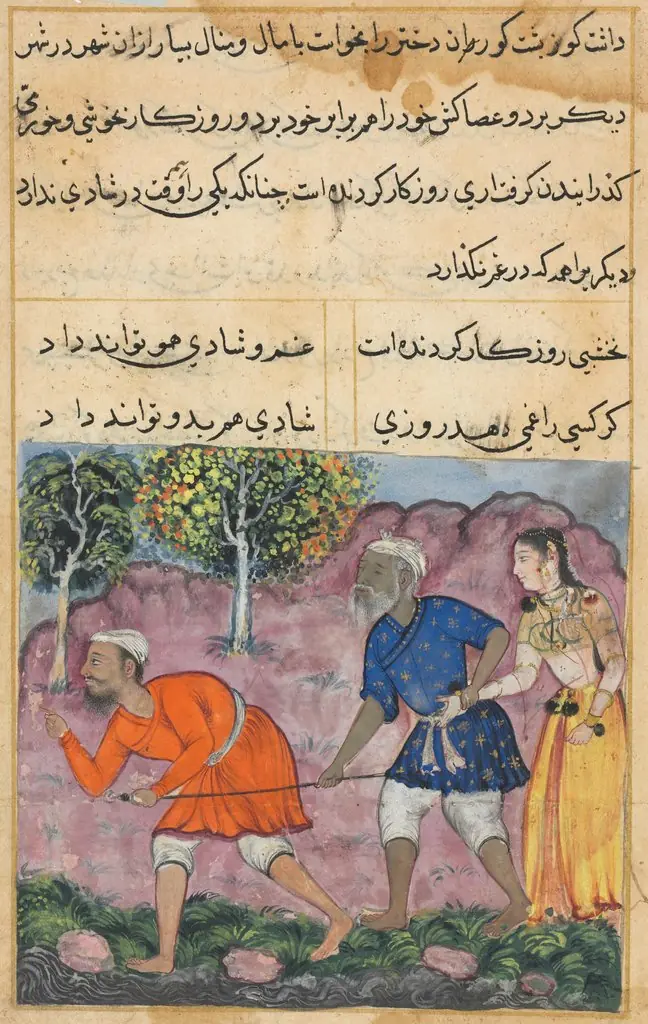 The Raja’s daughter, born with three breasts, accompanies her blind husband and his hunchback guide on a journey, from a Tuti-nama (Tales of a Parrot): Forty-second Night
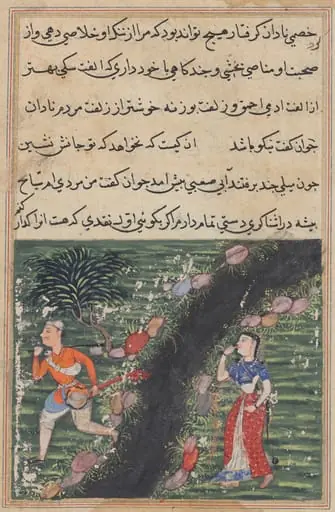 The vagabond crosses a stream with the possessions of the daughter-in-law of the king of Banaras and absconds, from a Tuti-nama (Tales of a Parrot): Sixteenth Night
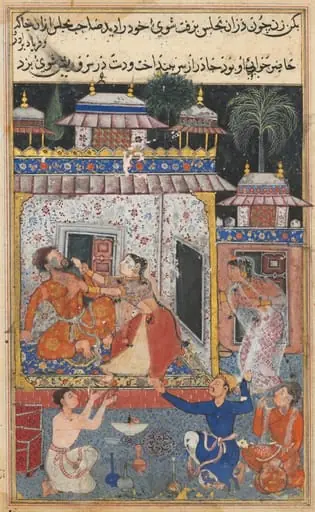 The deceitful wife assaults her erring husband, from a Tuti-nama (Tales of a Parrot): Eighth Night
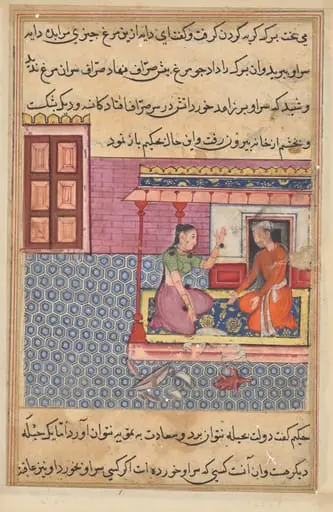 The pious man’s wife offers the seven-colored bird as food to her lover, but not finding its head, he breaks the pot and bowl in anger, from a Tuti-nama (Tales of a Parrot): Fifty-second Night
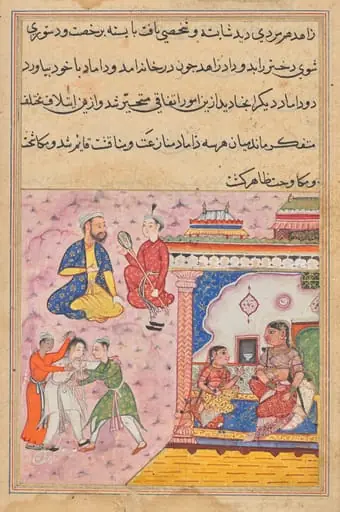 Three suitors fight amongst themselves for the hand of the devotee’s daughter, from a Tuti-nama (Tales of a Parrot): Twentieth Night
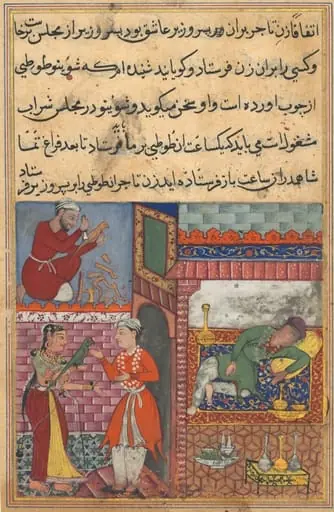 The vizier’s son receives the magic wooden parrot from the wife of the merchant, who is drunk, and has a replica made by a carpenter, from a Tuti-nama (Tales of a Parrot): Tenth Night
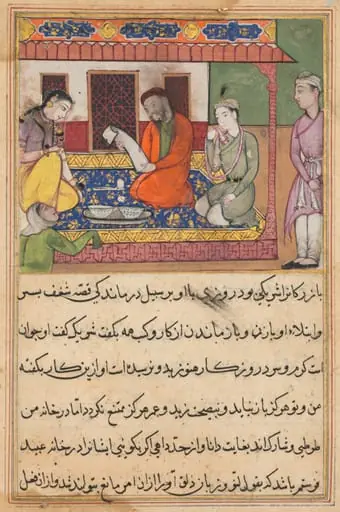 The marriage of ‘Ubaid, son of a merchant of Tirmiz, from a Tuti-nama (Tales of a Parrot): Forty-second Night